バッハ
1685–1750
#1憧れの人に会うため、約400キロを歩いた!?He walked about 400 km to hear his hero!
1705年、20歳のバッハは、北ドイツのリューベックで活躍していた名オルガン奏者ブクステフーデの演奏を聴くため、約400キロの道のりを歩いて出かけたと伝えられています。4週間の休みのはずが、4か月近くも帰らず、職場からきびしく注意されました。
In 1705, twenty-year-old Bach is said to have walked about 400 km to Lübeck to hear the great organist Buxtehude. He had four weeks off, but he stayed for nearly four months, and his employers were not happy.
バッハ
1685–1750
#2転職しようとしたら、牢屋に入れられた!He was put in jail for trying to quit!
1717年、ヴァイマルの殿様に仕えていたバッハは、ケーテンへ移りたいとしつこく願い出ました。怒った殿様は、なんとバッハを約4週間も拘束してしまいます。最後は「クビ」という形で、やっと自由になれました。
In 1717, Bach kept asking the Duke of Weimar to let him move to a new job in Köthen. The angry duke locked him up for about four weeks. In the end, Bach was dismissed and finally set free.
バッハ
1685–1750
#3コーヒーが大好きな娘のオペラ風カンタータ!He wrote a funny cantata about coffee!
まじめな教会音楽のイメージが強いバッハですが、「コーヒー・カンタータ」という楽しい曲も書いています。コーヒーがやめられない娘と、やめさせたいお父さんの言い合いを描いた曲で、ライプツィヒのコーヒーハウスで演奏されたと考えられています。
Bach is known for serious church music, but he also wrote the funny Coffee Cantata. It is about a girl who loves coffee and a father who wants her to stop. It was probably performed at a coffee house in Leipzig.
バッハ
1685–1750
#4自分の名前を「音」にした!He turned his own name into music!
ドイツ語では、B(シのフラット)・A(ラ)・C(ド)・H(シ)と、音の名前で「BACH」と書けます。バッハは、未完成に終わった「フーガの技法」の最後のフーガで、この4つの音をサインのように使いました。後の作曲家たちも、尊敬をこめてこの「BACH」の音を使っています。
In German note names, B-flat, A, C, and B natural spell B-A-C-H. Bach used these four notes like a signature in the unfinished last fugue of The Art of Fugue. Later composers also used the B-A-C-H notes to honor him.
バッハ
1685–1750
#5バッハの曲は宇宙を旅している!His music is traveling through space!
1977年に打ち上げられた探査機ボイジャーには、地球の音をおさめた「ゴールデンレコード」がのっています。その中にバッハの曲は3曲も入っていて、作曲家の中でいちばん多いのです。今も太陽系の外を飛び続けています。
The Voyager spacecraft, launched in 1977, carry a Golden Record of sounds from Earth. It includes three pieces by Bach, more than any other composer. They are still flying beyond our solar system.
バッハ
1685–1750
#6ヘンデルと同じ眼科医に手術された!He and Handel had the same eye doctor!
晩年のバッハの目を手術したのは、イギリス人の眼科医ジョン・テイラーでした。手術は失敗し、バッハはまもなく亡くなります。じつは同じ年に生まれたヘンデルも、のちに同じテイラーの手術を受け、目が見えなくなってしまいました。
In his last year, Bach's eyes were operated on by an English eye doctor named John Taylor. The operations failed, and Bach died soon after. Handel, born in the same year, was later treated by the same doctor and also went blind.

ヴィヴァルディ
1678–1741
#7楽譜を写すより速く作曲できた!?He could compose faster than a copyist could copy!
1739年にヴェネツィアを訪れたフランス人ド・ブロスは、手紙にこう書いています。ヴィヴァルディは「写譜屋が書き写すより速く、協奏曲を1曲作曲できる」と自慢していた、と。ものすごい早書きだったのはたしかなようです。
A French visitor, Charles de Brosses, wrote in 1739 that Vivaldi boasted he could compose a whole concerto faster than a copyist could copy it out. He was clearly a very fast composer.
ヴィヴァルディ
1678–1741
#8オペラを94曲書いた、と本人が言った!He claimed he had written 94 operas!
協奏曲で有名なヴィヴァルディですが、本人は1739年の手紙で「オペラを94曲書いた」と言っています。今わかっているのは約50曲ほど。ちょっと話を盛ったのか、楽譜がなくなったのかは、わかっていません。
Vivaldi is famous for concertos, but in a letter of 1739 he said he had written 94 operas. Only about 50 are known today. Nobody knows if he exaggerated or if many scores were lost.
ヴィヴァルディ
1678–1741
#9200年眠っていた楽譜が、修道院から出てきた!His lost music was found in a monastery!
死後のヴィヴァルディの作品は、ほとんど演奏されなくなっていました。ところが1926年、北イタリアの修道院で、彼の手書きの楽譜がどっさり見つかります。調べていくと、研究者もそれまで知らなかった協奏曲やオペラが大量に入っていて、大ニュースになりました。
After his death, Vivaldi's music was hardly ever played. Then in 1926, a large pile of his handwritten scores was found in a monastery in northern Italy. It contained many concertos and operas that modern scholars had never known, and it became big news.
ヴィヴァルディ
1678–1741
#10あのバッハが、ヴィヴァルディの曲を編曲した!Bach arranged Vivaldi's music!
ヴィヴァルディの協奏曲は、ドイツでも大人気でした。若いころのバッハはその楽譜を研究し、チェンバロやオルガン用に何曲も編曲しています。4台のチェンバロのための協奏曲も、元はヴィヴァルディの曲です。
Vivaldi's concertos were popular in Germany too. The young Bach studied them and arranged several for harpsichord and organ. His concerto for four harpsichords is based on a piece by Vivaldi.
ヴィヴァルディ
1678–1741
#11「四季」の詩は本人が書いた!?Did he write the poems in The Four Seasons himself?
「四季」の楽譜には、季節のようすを描いた短い詩がついていて、楽譜のどの部分が「鳥の声」や「犬の鳴き声」なのかまでわかるようになっています。作者の名前は書かれていませんが、ヴィヴァルディ本人が書いたという説もあります。
The score of The Four Seasons comes with short poems, and it even shows which notes are birds singing or a dog barking. The poet's name is not given, but some people think Vivaldi wrote the poems himself.
ヴィヴァルディ
1678–1741
#12「同じ協奏曲を何百回も書いた」と皮肉られた!?"He wrote the same concerto hundreds of times"?
20世紀には「ヴィヴァルディは同じ協奏曲を何百回も書いただけだ」という皮肉が広まりました。作曲家ストラヴィンスキーの言葉としてよく紹介されますが、本当にだれが言ったのかははっきりしません。もちろん、今では1曲1曲の工夫が高く評価されています。
In the 20th century, a joke spread that Vivaldi wrote the same concerto hundreds of times. It is often said to come from Stravinsky, but no one is sure who really said it. Today, of course, each of his concertos is admired for its own ideas.

ヘンデル
1685–1759
#13コートのボタンに命を救われた!A coat button saved his life!
1704年、ハンブルクでヘンデルは、仲間の音楽家マッテゾンとオペラの演奏をめぐって大げんかになり、剣を抜いての決闘さわぎになりました。マッテゾン本人の記録では、剣先がヘンデルのコートの金属ボタンに当たって止まったそうです。二人はその後、仲直りしました。
In 1704 in Hamburg, Handel and fellow musician Johann Mattheson had a fight over an opera performance that turned into a sword duel. According to Mattheson himself, his sword struck a metal button on Handel's coat and stopped. Later, the two made up.
ヘンデル
1685–1759
#14「ハレルヤ」で立ち上がるのは王様のマネ?Do people stand for Hallelujah because a king did?
「ハレルヤ・コーラス」で観客が立ち上がる習慣は、ロンドン公演で国王ジョージ2世が感動して立ったのが始まり、とよく言われます。でも王様がその場にいた記録はなく、この話が書かれたのは何十年も後のこと。真偽は不明です。
It is often said that audiences stand for the Hallelujah Chorus because King George II stood up at a London performance. But there is no record that the king was even there, and the story was first written down decades later. No one knows if it is true.
ヘンデル
1685–1759
#15リハーサルに1万2000人!大渋滞が発生!12,000 people came to a rehearsal!
1749年、「王宮の花火の音楽」の公開リハーサルが行われたロンドンの遊園地には、1万2000人以上が押しかけたと伝えられています。ロンドン橋は馬車で約3時間も大渋滞。さらに本番では、花火の飾りの建物が燃え出すハプニングまで起きました。
In 1749, more than 12,000 people are said to have come to a public rehearsal of the Music for the Royal Fireworks. London Bridge was jammed with carriages for about three hours. At the real event, part of the fireworks building even caught fire.
ヘンデル
1685–1759
#16お隣さんはなんとジミ・ヘンドリックス!?His neighbor was Jimi Hendrix!?
ヘンデルが30年以上住んだロンドンのブルック・ストリートの家のとなりには、ヘンデルの死から約200年後の1968年から、ロック・ギタリストのジミ・ヘンドリックスが住みました。今は二つの家が「ヘンデル・ヘンドリックス・ハウス」という博物館になっています。
Handel lived for over 30 years on Brook Street in London. About 200 years after his death, from 1968, rock guitarist Jimi Hendrix lived in the house next door. Today the two homes form a museum called Handel Hendrix House.
ヘンデル
1685–1759
#17大食いすぎてブタの姿にされた!He was drawn as a pig because he ate so much!
ヘンデルはたいへんな食いしん坊として有名でした。けんか別れした画家グーピーは、ヘンデルをブタの顔をしてオルガンを弾く姿にした風刺画をえがいています。「3人分の料理を1人で食べた」という逸話も伝わっていますが、こちらは本当かどうかわかりません。
Handel was famous for his big appetite. After a quarrel, the painter Joseph Goupy drew a cartoon of him playing the organ with the face of a pig. There is also a story that he ordered dinner for three and ate it all alone, but no one knows if it is true.
ヘンデル
1685–1759
#18「メサイア」で孤児たちを助けた!He used Messiah to help orphans!
ヘンデルはロンドンの「捨て子養育院」を応援し、1750年からは毎年のように「メサイア」の慈善公演を開きました。集まったお金は子どもたちのために使われ、楽譜も施設に寄付しました。「メサイア」が人気曲になったのは、この公演のおかげでもあります。
Handel supported the Foundling Hospital in London, a home for abandoned children. From 1750 he gave charity performances of Messiah there almost every year. The money helped the children, and the concerts also helped make Messiah famous.

パッヘルベル
1653–1706
#19バッハの「先生の先生」だった!He was the teacher of Bach's teacher!
幼くして両親を亡くしたバッハにオルガンを教えたのは、長兄のヨハン・クリストフでした。その兄の先生こそ、パッヘルベルです。つまりパッヘルベルの技は、兄を通して「音楽の父」バッハに受けつがれたのです。
After Bach lost his parents, his oldest brother, Johann Christoph, taught him the organ. And that brother's teacher was Pachelbel. So Pachelbel's skills were passed on to Bach through his brother.
パッヘルベル
1653–1706
#20「カノン」は約250年もほとんど知られていなかった!The Canon was almost unknown for about 250 years!
今では超有名な「カノン」ですが、楽譜が初めて出版されたのは1919年のこと。しかも人気が爆発したのは、1968年のパイヤール室内管弦楽団の録音からです。作曲家の死から250年以上たって、急にスターになった曲なのです。
The Canon is very famous today, but it was not published until 1919. It became a big hit only after a 1968 recording by Jean-François Paillard's orchestra, more than 250 years after the composer died.
パッヘルベル
1653–1706
#21低音は同じ8つの音を28回くり返す!The bass plays the same eight notes 28 times!
「カノン」の低音パートは、8つの音でできた短いメロディーを、最初から最後まで28回もくり返します。その上で3つのヴァイオリンが、同じメロディーを少しずつずらして追いかけっこします。シンプルなのに飽きないのが、この曲のマジックです。
In the Canon, the bass plays the same short pattern of eight notes 28 times from start to finish. Above it, three violins play the same melody, each starting a little later, like a game of tag. It is simple, but it never gets boring.
パッヘルベル
1653–1706
#22J-POPにも「カノン」がかくれている!The Canon is hidden in pop songs!
「カノン」の和音の流れはとても気持ちがいいので、世界中のポップスで使われています。日本でも「カノン進行」と呼ばれ、たくさんのヒット曲の土台になっています。気づかないうちに、パッヘルベルを聴いているかもしれません。
The chord pattern of the Canon sounds so good that it is used in pop songs all over the world. In Japan it is called the "Canon progression," and it is the base of many hit songs. You may be hearing Pachelbel without knowing it.
パッヘルベル
1653–1706
#23息子はアメリカで音楽家になった!His son became a musician in America!
パッヘルベルの息子カール・テオドールは、1730年代のはじめに海をわたり、まだイギリスの植民地だったアメリカへ移りました。ボストンなどでオルガン奏者として活躍し、アメリカ音楽の歴史の初めのころに名前を残しています。
Pachelbel's son Charles Theodore crossed the ocean in the early 1730s and moved to the American colonies. He worked as an organist in Boston and other towns, and his name appears in the early history of American music.
パッヘルベル
1653–1706
#24娘は画家・版画家として活躍した!His daughter was a painter and engraver!
パッヘルベルの子どもたちは多才でした。息子のヴィルヘルム・ヒエロニムスはオルガン奏者・作曲家になり、娘のアマーリアは画家・版画家として活躍しました。女性の芸術家がめずらしかった時代のことです。
Pachelbel's children were very talented. His son Wilhelm Hieronymus became an organist and composer, and his daughter Amalia became a painter and engraver at a time when women artists were rare.

パーセル
1659–1695
#25女王のための葬送音楽が、自分の葬儀で流れた!The funeral music he wrote for a queen was played at his own funeral!
1695年の春、パーセルは女王メアリー2世の葬儀のための音楽を書きました。ところがその年の11月、パーセル自身が亡くなります。そして彼の葬儀でも、この同じ音楽が演奏されたのです。歴史の悲しい偶然です。
In spring 1695, Purcell wrote music for the funeral of Queen Mary II. But in November of that year, Purcell himself died. The same music was played at his own funeral. It was a sad twist of history.
パーセル
1659–1695
#26名作オペラの初演は、女の子の学校だった!?His great opera was performed at a girls' school!
「ディドとエネアス」の、わかっている中でいちばん古い上演は、1689年ごろ、ロンドンのチェルシーにあった女の子の寄宿学校でのものです。生徒たちが歌ったと考えられています。最初から学校のために書かれたのかどうかは、研究者の間でも意見が分かれています。
The earliest known performance of Dido and Aeneas took place around 1689 at a girls' boarding school in Chelsea, London. The students probably sang in it. Experts still disagree about whether the opera was first written for the school.
パーセル
1659–1695
#27「トランペット・ヴォランタリー」はパーセルの曲じゃなかった!The Trumpet Voluntary wasn't by Purcell!
結婚式で人気の「トランペット・ヴォランタリー」は、19世紀後半から約70年もパーセルの作品だと思われていました。ところが本当の作曲者は、パーセルの後輩にあたるジェレマイア・クラーク。今の正式な題名は「デンマーク王子の行進曲」です。
The Trumpet Voluntary, a wedding favorite, was thought to be by Purcell for about 70 years from the late 1800s. But the real composer was Jeremiah Clarke, a younger musician. Its proper title is The Prince of Denmark's March.
パーセル
1659–1695
#28オーケストラ入門の名曲のテーマになった!His tune became the theme of a famous guide to the orchestra!
イギリスの作曲家ブリテンは1946年、子どもたちにオーケストラの楽器を紹介する「青少年のための管弦楽入門」を作りました。そのテーマに選ばれたのが、パーセルの劇音楽「アブデラザール」の中の曲です。今も学校の音楽の授業でよく使われます。
In 1946, the English composer Benjamin Britten wrote The Young Person's Guide to the Orchestra to introduce children to the instruments. For its theme, he chose a tune from Purcell's theater music for Abdelazer. It is still used in music classes today.
パーセル
1659–1695
#29帰りがおそくて家に入れてもらえなかった!?Locked out for coming home late?
パーセルの死因については、「夜おそくまで出かけていたら、怒った奥さんに家から閉め出され、寒さでかぜをひいた」という言い伝えがあります。でもこれは後の時代に書かれた話で、本当かどうかはわかりません。ほかに、結核だったという説もあります。
There is a story that Purcell came home very late one night, his angry wife locked him out, and he caught a fatal chill. But this story was written down much later, and no one knows if it is true. Another theory is tuberculosis.
パーセル
1659–1695
#30お墓の言葉は「天国でしか、彼の音楽はこえられない」His memorial says only heaven's harmony is greater!
ウェストミンスター寺院にあるパーセルの記念の銘板には、「彼は、その調べだけがこえられる、あの祝福された場所へ旅立った」という意味の言葉が刻まれています。つまり天国でしか、パーセルの音楽より美しいものはない、というわけです。
Purcell's memorial in Westminster Abbey says that he has gone to "that blessed place where only his harmony can be exceeded." In other words, only heaven has music more beautiful than his.

クラーク
c. 1674–1707
#31名曲が70年近くパーセルの作品とされていた!His hit was credited to Purcell for decades!
「トランペット・ヴォランタリー」は1878年ごろ、パーセルの作品として出版されました。指揮者ヘンリー・ウッドの編曲と録音も広まり、1940年代まで「パーセルの名曲」と信じられていたのです。本当の作曲者がクラークとわかったのは、研究が進んでからでした。
Around 1878, the Trumpet Voluntary was published as a work by Purcell. Conductor Henry Wood's arrangement and recordings spread it widely, and until the 1940s most people believed it was Purcell's. Only later did research show that Clarke was the real composer.
クラーク
c. 1674–1707
#32「トランペット・チューン」も、まちがえられていた!His Trumpet Tune was mixed up too!
もう一つの人気曲「トランペット・チューン ニ長調」も、パーセルの作品とまちがえられてきました。この曲は、クラークがパーセルの弟ダニエル・パーセルと共同で手がけた劇「島の王女」のための音楽です。共同作業だったことが、取りちがえの原因と考えられています。
Another favorite, the Trumpet Tune in D, was also thought to be by Purcell. It comes from The Island Princess, a stage work Clarke created together with Daniel Purcell, Henry Purcell's brother. Working together probably caused the mix-up.
クラーク
c. 1674–1707
#33ダイアナ妃の結婚式で使われた!It was played at Princess Diana's wedding!
1981年、ロンドンのセント・ポール大聖堂で行われたチャールズ皇太子とダイアナさんの結婚式では、「トランペット・ヴォランタリー」が演奏されました。クラーク自身がオルガン奏者をつとめた大聖堂で、彼の曲が世界中にテレビ中継されたのです。
In 1981, the Trumpet Voluntary was played at the wedding of Prince Charles and Lady Diana Spencer at St. Paul's Cathedral. Clarke's music was broadcast around the world from the very cathedral where he had been organist.
クラーク
c. 1674–1707
#34先輩パーセルの死をいたむ曲を書いた!He wrote music in memory of Purcell!
1695年に、聖歌隊の先輩にあたるパーセルが30代で亡くなると、クラークは「パーセルの死によせる頌歌(オード)」を書きました。のちに自分の曲がパーセルの名前で広まることになるとは、思いもしなかったでしょう。
When Purcell died in 1695, Clarke wrote an Ode on the Death of Henry Purcell. He could never have imagined that his own music would later become famous under Purcell's name.

ハイドン
1732–1809
#35音楽で「もう家に帰らせて」とお願いした!He used music to say, "Please let us go home!"
1772年、殿様の別荘での滞在が長引き、楽団員たちは家族に会えずに困っていました。そこでハイドンは、最後の楽章で演奏者が1人ずつ演奏をやめ、ろうそくを消して出ていく交響曲を書きます。意味をさとった殿様は、次の日に全員を帰らせたと伝えられています。これが交響曲第45番「告別」です。
In 1772, the prince stayed at his summer palace so long that the musicians could not go home to their families. So Haydn wrote a symphony in which the players stop one by one in the last movement, put out their candles, and leave. The prince got the message and, it is said, let everyone go home the next day. This is Symphony No. 45, the Farewell.
ハイドン
1732–1809
#36「驚愕」の大きな音は、いねむり対策じゃなかった?Was the Surprise chord really meant to wake people up?
交響曲第94番「驚愕」は、静かなメロディーのあとで突然ドン!と大きな音が鳴ります。「いねむりする客を起こすため」とよく言われますが、ハイドン本人は後に、伝記作家に「起こすためではなく、何か新しいことで驚かせたかった」と語っています。
In Symphony No. 94, the Surprise, a quiet tune is suddenly interrupted by a loud chord. People often say it was meant to wake up sleeping listeners. But Haydn later told his biographer that he only wanted to surprise the audience with something new.
ハイドン
1732–1809
#37楽譜をカーラー代わりにされた!?His scores used as hair curlers?
ハイドンと妻の仲はよくありませんでした。妻は夫の音楽にまったく興味がなく、楽譜をケーキの型の下じきや髪を巻くカーラーに使ってしまった、という話が伝わっています。ただし、どこまで本当かはわかりません。
Haydn and his wife did not get along. There is a story that she had no interest in his music and used his manuscripts to line cake pans and curl her hair. But no one knows how much of this is true.
ハイドン
1732–1809
#38ドイツ国歌のメロディーはハイドン作!Germany's national anthem uses Haydn's melody!
1797年、ハイドンはオーストリア皇帝のための讃歌「神よ、皇帝フランツを守りたまえ」を作曲しました。このメロディーは今、ドイツの国歌に使われています。ハイドン自身もこの曲を気に入り、弦楽四重奏曲「皇帝」の中でも変奏曲にしています。
In 1797, Haydn wrote a hymn for the Austrian emperor called "God Save Emperor Francis." Today the same melody is used for the national anthem of Germany. Haydn liked the tune so much that he also used it for variations in his Emperor Quartet.
ハイドン
1732–1809
#39頭の骨が145年も行方不明だった!His skull was missing for 145 years!
ハイドンが亡くなったあと、「頭の形で才能がわかる」という当時はやった学問に夢中な人たちが、こっそりお墓から頭の骨を持ち去ってしまいました。骨はあちこちを転々とし、体と同じお墓に戻されたのは、なんと1954年のことでした。
After Haydn died, people who believed you could read a person's talent from the shape of the head secretly took his skull from the grave. It passed through many hands and was not reunited with the rest of his body until 1954.
ハイドン
1732–1809
#40オックスフォード大学から博士号をもらった!Oxford University made him a doctor of music!
1791年、ロンドンに招かれたハイドンは、オックスフォード大学から名誉音楽博士の称号を受けました。その記念の演奏会で演奏された交響曲第92番は、今も「オックスフォード」という愛称で呼ばれています。村の車大工の息子が、大出世したのです。
In 1791, during his first visit to England, Haydn received an honorary doctorate in music from Oxford University. Symphony No. 92, played at the celebration concerts, is still nicknamed the Oxford. The son of a village wheelmaker had come a very long way.

モーツァルト
1756–1791
#41門外不出の曲を、一度聴いただけで書き取った!He wrote down a secret piece after hearing it once!
1770年、14歳のモーツァルトはローマで、バチカンの礼拝堂だけで歌われていたアレグリの「ミゼレーレ」を聴きました。楽譜を外に出すことは禁じられていましたが、彼は帰ってから記憶だけで楽譜に書き起こしたと、父レオポルトが手紙に書いています。
In 1770, fourteen-year-old Mozart heard Allegri's Miserere in Rome. It was sung only in the Pope's chapel, and copying the music was not allowed. According to his father's letter, Mozart went home and wrote the whole piece down from memory.
モーツァルト
1756–1791
#42ペットのムクドリが、新曲を歌った!His pet bird sang his new tune!
1784年、モーツァルトはペット屋でムクドリを買いました。その鳥は、彼のピアノ協奏曲第17番のメロディーを少しまちがえて歌ったそうで、家計簿に楽譜つきでメモしています。3年後に鳥が死ぬと、お葬式をして詩までささげました。
In 1784, Mozart bought a starling at a pet shop. The bird could sing a tune from his Piano Concerto No. 17, with one small mistake, and he wrote it down with musical notes in his expense book. When the bird died three years later, he held a funeral and wrote a poem for it.
モーツァルト
1756–1791
#43「きらきら星」のメロディーは、モーツァルト作じゃない!He didn't write the Twinkle Twinkle melody!
モーツァルトの「きらきら星変奏曲」は有名ですが、元のメロディーはフランスの古い歌「ああ、お母さん、聞いてちょうだい」です。モーツァルトはこの歌をもとに、12の変奏曲を作りました。作者不明のメロディーを、天才がおしゃれに変身させたのです。
Mozart's "Twinkle Twinkle" Variations are famous, but the melody comes from an old French song, "Ah, vous dirai-je, maman." Mozart wrote twelve variations on it. He took a simple tune by an unknown author and made it dazzling.
モーツァルト
1756–1791
#44サリエリが毒殺した?それは根拠のないうわさ!Did Salieri poison him? No, that's just a rumor!
モーツァルトの死後、「ライバルの作曲家サリエリが毒を盛った」といううわさが広まり、のちに劇や映画「アマデウス」の題材にもなりました。でもこれは根拠のない話です。実際のサリエリは尊敬される音楽家で、ベートーヴェンやシューベルトの先生でもありました。
After Mozart's death, a rumor spread that his rival Antonio Salieri had poisoned him. It later inspired a play and the film Amadeus. But there is no evidence for it. The real Salieri was a respected musician who also taught Beethoven and Schubert.
モーツァルト
1756–1791
#45「レクイエム」の注文主はナゾの人物だった!The Requiem was ordered by a mystery man!
1791年、モーツァルトは名前を明かさない人物から「レクイエム(死者のためのミサ曲)」の作曲を頼まれました。正体は、亡くなった妻のために、自分の作品として発表しようとしたヴァルゼック伯爵という貴族だったことが、のちにわかっています。
In 1791, Mozart was asked to write a Requiem by someone who would not give his name. It was later found that he was Count Walsegg, a nobleman who wanted to present the piece as his own work in memory of his late wife.
モーツァルト
1756–1791
#46ビリヤードが大好きだった!He loved playing billiards!
モーツァルトはビリヤードが大好きで、ウィーンの家に自分のビリヤード台を置いていました。遊びながら新しいメロディーを考えていた、という話もあります。ダンスや冗談、言葉遊びも大好きで、手紙にはふざけた言葉がたくさん出てきます。
Mozart loved billiards and kept his own billiard table at his home in Vienna. Some say he thought up new melodies while playing. He also loved dancing, jokes, and wordplay, and his letters are full of silly words.
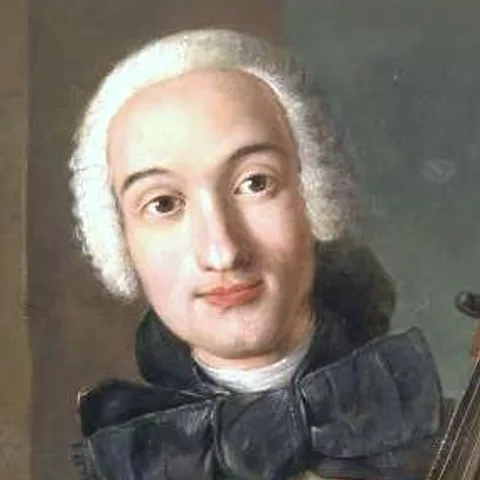
ボッケリーニ
1743–1805
#47映画で、どろぼうたちが「演奏するふり」をした曲!Movie crooks pretended to play it!
1955年のイギリス映画「マダムと泥棒」では、どろぼうの一味が弦楽五重奏団のふりをして、下宿の部屋にあつまります。そのとき、レコードで流してごまかす曲が、ボッケリーニの「メヌエット」なのです。名曲がコメディの小道具になりました。
In the 1955 British comedy The Ladykillers, a gang of crooks pretend to be a string quintet while they plan a robbery. To fool their landlady, they play a record of Boccherini's Minuet. The famous tune became a funny movie prop.
ボッケリーニ
1743–1805
#48ハリウッドの海洋大作にも登場!His music sails in a Hollywood film!
2003年の映画「マスター・アンド・コマンダー」では、船長と軍医がヴァイオリンとチェロで合奏する場面があり、ボッケリーニの「マドリードの通りの夜の音楽」が使われています。この音楽が、映画の場面に生き生きとしたスペインの色どりをそえています。
In the 2003 film Master and Commander, the captain and the ship's doctor play music together on violin and cello. The film uses Boccherini's Night Music of the Streets of Madrid, which adds a lively Spanish color to the scene.
ボッケリーニ
1743–1805
#49王様に「直せ」と言われて、逆に倍にした!?Told to change a passage, he doubled it!?
スペイン国王カルロス3世が、ボッケリーニの新しい曲の一部が気に入らず「直すように」と言ったところ、ボッケリーニは直すどころかその部分をくり返して2倍の長さにした、という逸話が伝わっています。そのせいで国王の機嫌をそこねた、とも言われます。
There is a story that King Charles III of Spain disliked a passage in one of Boccherini's new pieces and told him to change it. Instead, Boccherini repeated the passage, making it twice as long. It is said that this cost him the king's favor.
ボッケリーニ
1743–1805
#50カスタネットが鳴りひびく「ファンダンゴ」!A quintet with castanets!
スペインで長く暮らしたボッケリーニは、スペインの踊りの音楽も取り入れました。ギター五重奏曲第4番の終楽章「ファンダンゴ」は、カスタネットを加えて演奏されることがよくあります。ただし作曲者の自筆譜は失われていて、カスタネットの使い方については専門家の意見が分かれています。
After living in Spain for many years, Boccherini used Spanish dance music in his works. Performers often add castanets to the Fandango finale of his Guitar Quintet No. 4. However, the composer's own manuscript is lost, and experts disagree about how he meant the castanets to be used.
ボッケリーニ
1743–1805
#51チェロ好きの王様に、遠くから曲を届けた!He sent music to a cello-loving king far away!
プロイセン国王フリードリヒ・ヴィルヘルム2世は、自分でもチェロを弾く音楽好きでした。ボッケリーニはこの王の宮廷作曲家になりましたが、ドイツへは引っこさず、スペインから新しい曲を送り続けたのです。今でいう「リモートワーク」のような働き方でした。
King Frederick William II of Prussia loved music and played the cello himself. Boccherini became his court composer, but he did not move to Germany. He kept sending new works from Spain, a bit like working remotely today.
ボッケリーニ
1743–1805
#52「ハイドンの奥さん」と呼ばれた!?Called "Haydn's wife"!?
ボッケリーニの音楽はハイドンに似ているけれど、もっとやさしい、ということから、ヴァイオリン奏者ジュゼッペ・プッポが「ボッケリーニはハイドンの奥さんだ」と言ったと伝えられています。ただし今では、彼は独自の個性をもつ作曲家として高く評価されています。
Because Boccherini's music sounded like Haydn's but gentler, the violinist Giuseppe Puppo is said to have called him "Haydn's wife." Today, however, he is highly valued as a composer with his own unique style.
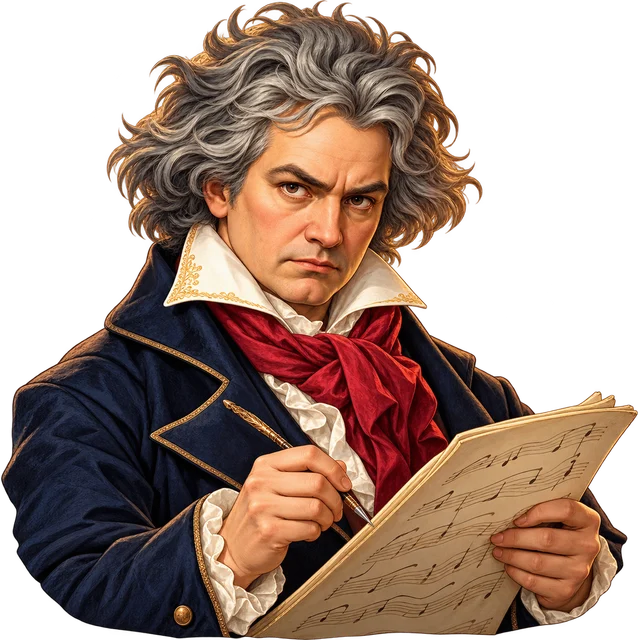
ベートーヴェン
1770–1827
#53コーヒー豆はきっかり60粒!?Exactly 60 coffee beans per cup!?
ベートーヴェンはコーヒーが大好きで、1杯につき豆を60粒、きっちり数えてからいれた、という話が有名です。ただしこれは、秘書だったシンドラーが伝えた話。シンドラーは話を大げさにしたり作ったりしたことでも知られているので、本当かどうかはわかりません。
There is a famous story that Beethoven loved coffee and counted exactly 60 beans for each cup. But it comes from his secretary, Anton Schindler, who is known for exaggerating or even inventing stories. So no one knows if it is true.
ベートーヴェン
1770–1827
#54ナポレオンの名前を、紙に穴があくほど消した!He scratched out Napoleon's name so hard it made a hole!
交響曲第3番は、はじめナポレオンをたたえる気持ちで書かれました。ところがナポレオンが皇帝になったと聞いたベートーヴェンは激怒。弟子リースによると、表紙を破り捨てたそうです。残っている楽譜の写しにも、名前を消した跡があり、紙に穴があいています。
Beethoven first wrote his Third Symphony to honor Napoleon. But when he heard Napoleon had made himself emperor, he was furious. According to his pupil Ferdinand Ries, he tore up the title page. On a surviving copy of the score, Napoleon's name was scratched out so hard that the paper has a hole.
ベートーヴェン
1770–1827
#55「不滅の恋人」はだれだった?Who was the "Immortal Beloved"?
ベートーヴェンが亡くなったあと、机の引き出しから「不滅の恋人へ」と書かれた熱いラブレターが見つかりました。1812年に書かれたものとわかっていますが、相手の名前はありません。何人もの女性が候補にあがり、200年近くたった今もナゾのままです。
After Beethoven died, a passionate love letter addressed to his "Immortal Beloved" was found in his desk. It is known to date from 1812, but it does not name the woman. Several candidates have been suggested, and after about 200 years it is still a mystery.
ベートーヴェン
1770–1827
#56大拍手に気づかず、歌手にふり向かされた!He had to be turned around to see the applause!
1824年、交響曲第9番の初演で、ベートーヴェンは舞台に立って指揮者を手伝いました。曲が終わっても、耳の聞こえない彼は客席の大喝采に気づきません。そこで歌手の一人が彼をそっと客席の方へ向かせた、と伝えられています。
At the premiere of the Ninth Symphony in 1824, Beethoven stood on stage to help the conductor. When the music ended, he could not hear the huge applause. It is said that one of the singers gently turned him around to face the cheering audience.
ベートーヴェン
1770–1827
#57髪の毛のDNAで、病気のナゾにせまった!His hair DNA revealed new clues!
2023年、イギリスなどの研究チームが、ベートーヴェンの髪の毛のDNAを調べた結果を発表しました。肝臓の病気になりやすい体質や、B型肝炎ウイルスへの感染がわかりました。また、有名だった髪の束の一つは、別人のものだったことも判明しています。
In 2023, an international research team led from Britain published a study of DNA from Beethoven's hair. It showed he had a high genetic risk of liver disease and had been infected with hepatitis B. It also showed that one famous lock of "Beethoven's hair" actually came from someone else.
ベートーヴェン
1770–1827
#58「エリーゼ」はだれなのか、わかっていない!Nobody knows who "Elise" was!
ピアノ曲「エリーゼのために」は、ベートーヴェンが亡くなって40年ほどたった1867年に、初めて出版されました。元の手書きの楽譜は今は行方不明です。「エリーゼ」がだれなのかは、テレーゼという女性の名前の読みまちがいという説など、いくつもの説があります。
The piano piece Für Elise was first published in 1867, about 40 years after Beethoven's death. The original manuscript is now lost. No one knows who "Elise" was. One theory says the name was a misreading of "Therese," but there are several other ideas.
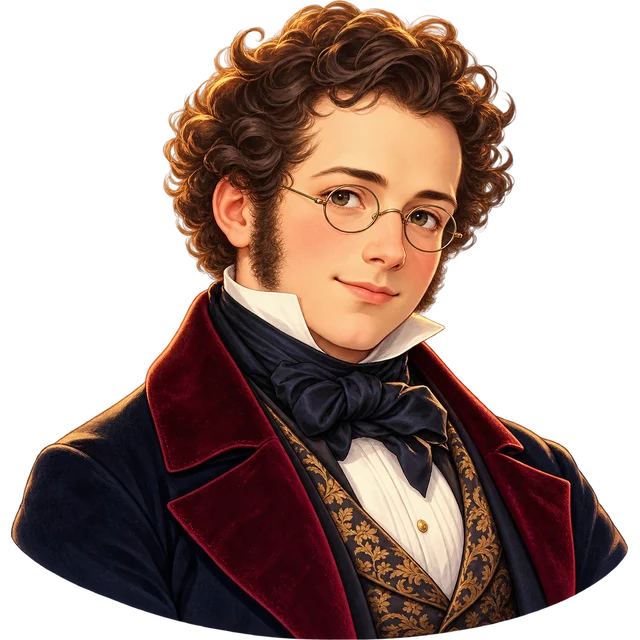
シューベルト
1797–1828
#59あだ名は「キノコちゃん」!His nickname was "Little Mushroom"!
シューベルトは背が低く、ぽっちゃりした体つきでした。そのため友人たちからは、ウィーンの方言で「小さなキノコ」を意味する「シュヴァンメルル」というあだ名で呼ばれていました。親しみをこめた、かわいいあだ名です。
Schubert was short and a little chubby, so his friends called him "Schwammerl," a Viennese word meaning "little mushroom." It was a cute nickname full of affection.
シューベルト
1797–1828
#60めがねをかけたまま寝ていた!?Did he sleep with his glasses on?
シューベルトは強い近視で、いつも丸いめがねをかけていました。朝起きてすぐ作曲できるように、めがねをかけたまま寝ていた、という話が伝わっています。友人の思い出話によるもので、本当かどうかはわかりませんが、それほど作曲に夢中だったのでしょう。
Schubert was very nearsighted and always wore round glasses. There is a story that he slept with them on so he could start composing as soon as he woke up. It comes from friends' memories, so no one knows if it is true, but it shows how much he loved to write music.
シューベルト
1797–1828
#61ゲーテに送った「魔王」は、返事なしで送り返された!Goethe sent back "The Erl-King" without a word!
1816年、友人がシューベルトの「魔王」などゲーテの詩による歌の楽譜を、大詩人ゲーテ本人に送りました。ところがゲーテからの返事はなく、楽譜はそのまま送り返されてきました。今では「魔王」は、ゲーテの詩につけられた歌の中でも特に有名な1曲です。
In 1816, a friend sent Schubert's settings of Goethe's poems, including "The Erl-King," to the great poet himself. But Goethe never replied, and the music was simply sent back. Today, "The Erl-King" is one of the most famous songs ever set to Goethe's words.
シューベルト
1797–1828
#62「未完成」の初演まで40年以上かかった!The Unfinished waited over 40 years for its premiere!
「未完成交響曲」は1822年に書かれましたが、楽譜は友人ヒュッテンブレンナーの手元にしまわれたままでした。世に出て初演されたのは、シューベルトの死から37年後の1865年。なぜ2つの楽章で止まったのかは、今もナゾです。
Schubert wrote the Unfinished Symphony in 1822, but the score stayed with his friend Anselm Hüttenbrenner. It was not performed until 1865, 37 years after Schubert's death. Why he stopped after two movements is still a mystery.
シューベルト
1797–1828
#63シューマンが「お宝交響曲」を発見した!Schumann discovered a hidden symphony!
1839年、作曲家シューマンはウィーンでシューベルトの兄フェルディナントを訪ね、しまわれていた大きな交響曲の楽譜を見つけました。これが交響曲「グレート」です。シューマンはすぐに友人メンデルスゾーンに知らせ、同じ年にライプツィヒで初演されました。
In 1839, Robert Schumann visited Schubert's brother Ferdinand in Vienna and found the score of a large symphony that had been put away. It was the Great C major Symphony. Schumann told his friend Mendelssohn, who premiered it in Leipzig that same year.
シューベルト
1797–1828
#64サリエリの生徒だった!He was a student of Salieri!
映画「アマデウス」では悪役のイメージがあるサリエリですが、じつはすぐれた先生でした。少年シューベルトは、ウィーンの宮廷楽長だったサリエリに作曲を習っています。サリエリはベートーヴェンやリストにも教えた、名指導者だったのです。
Salieri is often seen as a villain because of the film Amadeus, but he was actually a fine teacher. As a boy, Schubert studied composition with Salieri, the court music director in Vienna. Salieri also taught Beethoven and Liszt.
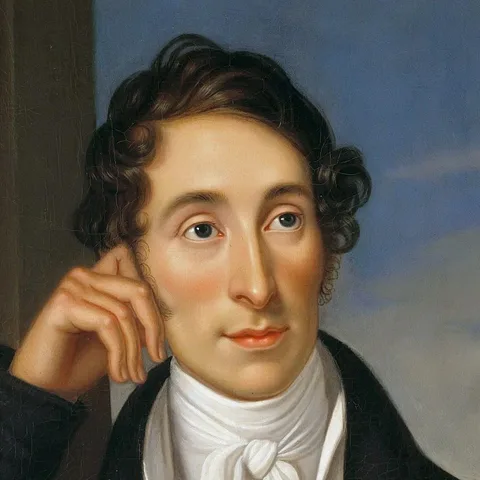
ウェーバー
1786–1826
#65モーツァルトと親せきだった!He was related to Mozart by marriage!
ウェーバーの父の異母兄弟の娘コンスタンツェは、モーツァルトと結婚しました。つまりモーツァルトは、ウェーバーのいとこのだんなさん。ウェーバーの父が息子を「第2のモーツァルト」にしたがったのも、こんな縁があったからかもしれません。
Constanze, the daughter of Weber's father's half-brother, married Mozart. So Mozart was the husband of Weber's cousin. Perhaps that is one reason Weber's father dreamed of making his son a second Mozart.
ウェーバー
1786–1826
#66ワインとまちがえて薬品を飲んだ?Did he drink from the wrong bottle?
1806年ごろのブレスラウでのこと。夜おそく帰ったウェーバーがワインだと思って瓶の中身を飲むと、それは版画の仕事をしていた父が入れておいた薬品だった、という話が伝わっています。2か月ほど寝こみ、歌う声はもとに戻らなかったと言われます。ただし確かな記録は少なく、どこまで本当かはわかっていません。
A story says that around 1806 in Breslau, Weber came home late and drank from a bottle he thought held wine. But it was a chemical his father used for engraving. He is said to have been ill for about two months and to have lost his singing voice. However, there is little firm evidence, and no one knows how much of the story is true.
ウェーバー
1786–1826
#67借金さわぎで逮捕され、国から追い出された!Arrested and thrown out of the country over debts!
シュトゥットガルトで公爵の秘書をしていた若いころ、ウェーバーは借金をかかえ、さらにお金をめぐる疑いもかけられて、1810年に逮捕されてしまいます。結局、父とともにヴュルテンベルクの国から追放されました。この苦い経験のあと、彼は心を入れかえて音楽にうちこんだと言われます。
As a young man working as a duke's secretary in Stuttgart, Weber ran up debts and was also accused of money crimes. In 1810 he was arrested, and in the end he and his father were banished from Württemberg. It is said that after this bitter experience, he turned over a new leaf and threw himself into music.
ウェーバー
1786–1826
#68「舞踏への勧誘」は、終わったと思ったらまだ続く!Invitation to the Dance has a trick ending!
「舞踏への勧誘」は、紳士が女性をダンスにさそい、ワルツをおどって別れるまでを描いたピアノ曲です。にぎやかなワルツが終わると、つい拍手したくなりますが、そのあとに静かな結びがあります。のちにベルリオーズがオーケストラ用に編曲し、バレエ「薔薇の精」にも使われました。
Invitation to the Dance is a piano piece that shows a gentleman inviting a lady to dance, their waltz, and their goodbye. When the lively waltz ends, people often want to clap, but there is still a quiet ending to come. Berlioz later arranged it for orchestra, and it was used for the ballet Le Spectre de la rose.
ウェーバー
1786–1826
#69自分で楽譜を印刷する技術を学んだ!He learned to print his own music!
版画の仕事をしていた父の影響もあって、ウェーバーは少年時代に、石の板を使う新しい印刷技術「リトグラフ」を学びました。自作のピアノ変奏曲(作品2)も、この新しい技術で出版されています。作曲家なのに、印刷の技術にもくわしかったのです。
Partly because of his father's interest in engraving, Weber learned lithography, a new printing method using stone plates, as a boy. His Piano Variations, Op. 2, were published using this new method. He was a composer who also knew a lot about printing.
ウェーバー
1786–1826
#7018年後、ワーグナーがふるさとへ連れ帰った!Wagner brought him home 18 years later!
ロンドンで亡くなったウェーバーは、そのままロンドンの教会に葬られました。18年後の1844年、ウェーバーを尊敬していたワーグナーらの働きかけで、遺骨はドレスデンへ戻されます。ワーグナーはこのとき、お墓の前で追悼のことばを述べ、音楽もささげました。
When Weber died in London, he was buried in a London church. Eighteen years later, in 1844, his remains were brought back to Dresden, thanks partly to the efforts of Wagner, who admired him. At the grave, Wagner gave a speech in his memory and also offered music.
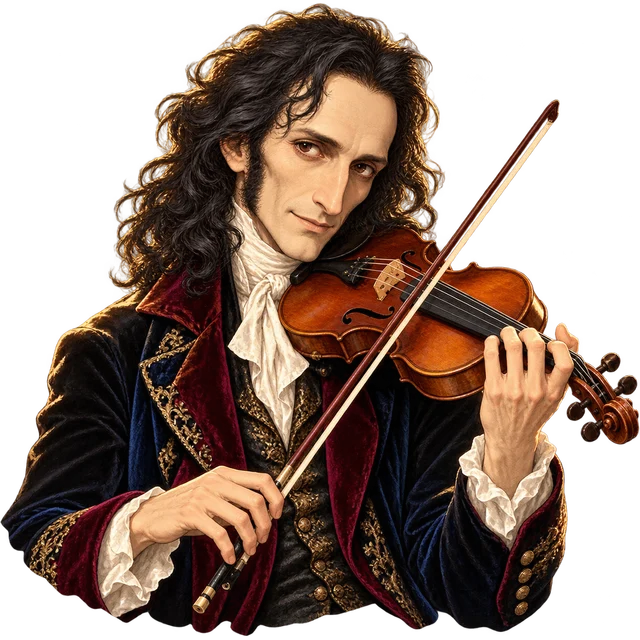
パガニーニ
1782–1840
#71たった1本の弦で、ナポレオンをたたえる曲をひいた!He played a whole sonata on one string for Napoleon!
ルッカの宮廷にいたころ、パガニーニはナポレオンの誕生日のために、ヴァイオリンのいちばん低いG線1本だけで演奏する「ナポレオン・ソナタ」を作曲しました。4本ある弦のうち1本しか使わずに、高い音から低い音まで弾きこなしたのです。
While he was at the court in Lucca, Paganini wrote the Napoleon Sonata for Napoleon's birthday. It is played only on the violin's lowest string, the G string. Using just one of the four strings, he covered notes from low to high.
パガニーニ
1782–1840
#72「大砲」という名前のヴァイオリン!A violin nicknamed "the Cannon"!
パガニーニの愛器は、名工グァルネリ・デル・ジェズが作ったヴァイオリンで、力強い音から「イル・カノーネ(大砲)」と呼ばれました。彼はこの楽器をジェノヴァ市に遺し、今も市庁舎で保管されています。パガニーニ国際コンクールの優勝者などが、特別に演奏することもあります。
Paganini's beloved violin was made by the great maker Guarneri del Gesù. Because of its powerful sound, it was nicknamed "Il Cannone," the Cannon. He left it to the city of Genoa, where it is still kept at the city hall. Winners of the Paganini Competition are sometimes allowed to play it.
パガニーニ
1782–1840
#73借りたヴァイオリンが、一生の名器に!?A borrowed violin became his treasure!?
10代のころ、パガニーニはリヴォルノで、商人リヴロンからグァルネリのヴァイオリンを借りて演奏しました。あまりのすばらしさに、リヴロンは楽器を返してもらうのをことわり、そのまま贈ったと言われます。ギャンブルで自分の楽器を手放していたから借りた、という話もありますが、真偽はわかりません。
As a teenager in Livorno, Paganini borrowed a Guarneri violin from a businessman named Livron for a concert. It is said that Livron was so impressed that he refused to take it back and gave it to him. Some stories say Paganini needed it because he had lost his own violin through gambling, but no one knows if that is true.
パガニーニ
1782–1840
#74「パガニーニはくり返さない」"Paganini does not repeat"
パガニーニは、その場のひらめきで演奏することが多く、アンコールで同じ曲をもう一度弾くことをいやがったと言われます。1818年、トリノで国王にアンコールを求められたときも「パガニーニはくり返さない」と答えたという話が伝わり、この言葉はイタリアのことわざのようになりました。
Paganini is said to have often improvised as he played and to have disliked repeating a piece as an encore. A story goes that in 1818 in Turin, when the king asked for an encore, he replied, "Paganini does not repeat." The phrase became a kind of Italian saying.
パガニーニ
1782–1840
#75ベルリオーズに2万フランをプレゼント!He gave Berlioz 20,000 francs!
パガニーニは作曲家ベルリオーズに、ヴィオラが活躍する曲を頼みました。こうして生まれたのが「イタリアのハロルド」です。ところがヴィオラの見せ場が少なく、パガニーニは演奏しませんでした。それでも後にこの曲を聴いて感動し、1838年、ベルリオーズに2万フランという大金を贈っています。
Paganini asked Berlioz to write a piece featuring the viola, and the result was Harold in Italy. But the viola part was not showy enough, and Paganini never played it. Later, after hearing it, he was so moved that in 1838 he gave Berlioz the huge sum of 20,000 francs.
パガニーニ
1782–1840
#76指がふつうの人より柔らかかった!?Were his fingers unusually flexible?
パガニーニは手が大きく、指がおどろくほど柔らかく動いたと伝えられています。そのため、関節がとても柔らかくなる体質(マルファン症候群やエーラス・ダンロス症候群)だったのでは、という説がありますが、はっきりした証拠はありません。
It is said that Paganini had large hands and amazingly flexible fingers. Some experts think he may have had a condition that makes joints very loose, such as Marfan syndrome or Ehlers-Danlos syndrome. But there is no clear proof.

ロッシーニ
1792–1868
#7776歳なのに、誕生日は18回目?Only 18 birthdays by the age of 76?
ロッシーニは2月29日生まれです。この日は4年に1度しか来ないうえ、1800年は暦の決まりで「うるう年」になりませんでした。そのため76歳になった1868年の2月29日は、本物の誕生日としてはわずか18回目だったのです。
Rossini was born on February 29, a date that comes only once every four years. On top of that, 1800 was not a leap year under the calendar rules. So when February 29, 1868, came around and he turned 76, it was only his eighteenth real birthday.
ロッシーニ
1792–1868
#78名作『セビリアの理髪師』、初日は大失敗!The Barber of Seville flopped on opening night!
1816年ローマでの初演は、ブーイングと笑い声で大荒れでした。同じ物語のオペラで人気だったパイジエッロのファンが騒いだとも言われ、舞台にネコが出てきたという話まで伝わっています。ところが2日目からは大成功し、今では世界で最も上演されるオペラの1つです。
The 1816 premiere in Rome was a disaster, full of booing and laughter. Some say fans of Paisiello, who had written a popular opera on the same story, caused trouble, and there is even a story that a cat wandered onto the stage. From the second night, however, it was a hit, and today it is one of the most performed operas in the world.
ロッシーニ
1792–1868
#79あの序曲は「使い回し」だったThat overture was recycled
『セビリアの理髪師』の明るい序曲は、じつはこのオペラのために書かれたものではありません。ロッシーニは同じ序曲を、それ以前のオペラ『パルミラのアウレリアーノ』や『イングランドの女王エリザベッタ』ですでに使っていました。忙しい人気作曲家ならではの早わざです。
The cheerful overture to The Barber of Seville was not actually written for that opera. Rossini had already used the same overture for his earlier operas Aureliano in Palmira and Elisabetta, Queen of England. It was a typical shortcut for a busy, popular composer.
ロッシーニ
1792–1868
#80ベートーヴェンとの面会はまぼろし?Did he really meet Beethoven?
1822年、ロッシーニはウィーンでベートーヴェンを訪ね、『セビリアの理髪師』をほめられた――ロッシーニの後年の思い出話をもとに、長くそう語られてきました。ところがロッシーニ財団の研究によると、このとき会えたのはベートーヴェンの弟で、本人には会えなかったと考えられています。
For a long time, people said that in 1822 Rossini visited Beethoven in Vienna and was praised for The Barber of Seville. The story came from Rossini's own later memories. But research by the Rossini Foundation suggests that he met only Beethoven's brother and never met Beethoven himself.
ロッシーニ
1792–1868
#81ベッドから出たくない作曲家?Too lazy to get out of bed?
ロッシーニにはこんな言い伝えがあります。ベッドの中で作曲していて楽譜を床に落としたとき、拾いに出るのが面倒で、新しく書き直してしまったというのです。作曲がとても速かったことから生まれた話で、本当かどうかはわかっていません。
There is a famous legend about Rossini. One day, while composing in bed, he dropped a page of music on the floor. Instead of getting up to fetch it, he simply wrote a new one. The story grew from how fast he composed, and nobody knows if it is true.
ロッシーニ
1792–1868
#82お墓が国境をこえて引っこしHis grave moved to another country
ロッシーニは亡くなったあと、パリのペール・ラシェーズ墓地にほうむられました。ところが1887年、遺体はイタリアへ運ばれ、ミケランジェロやガリレオも眠るフィレンツェのサンタ・クローチェ教会に移されました。イタリアが自国の英雄として迎えたのです。
After his death, Rossini was buried in Père Lachaise Cemetery in Paris. But in 1887 his remains were taken to Italy and placed in the Church of Santa Croce in Florence, where Michelangelo and Galileo also rest. Italy welcomed him home as a national hero.
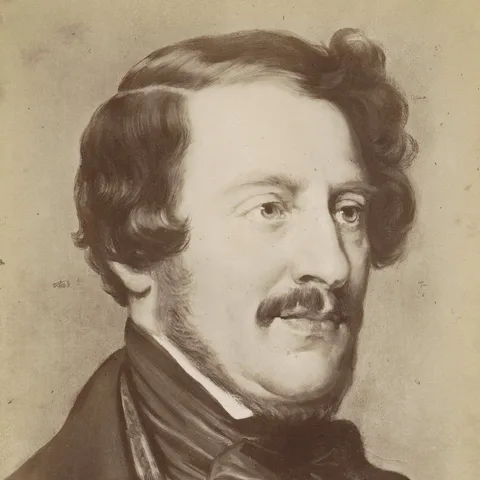
ドニゼッティ
1797–1848
#83お兄さんはトルコの宮廷音楽家!His brother worked for the Ottoman sultan!
兄のジュゼッペ・ドニゼッティは1828年、オスマン帝国の都イスタンブールにまねかれ、宮廷の軍楽隊を指導しました。西洋式の軍楽をトルコに広めた人物として知られ、「ドニゼッティ・パシャ」とも呼ばれました。兄弟そろって国際的に活躍したのです。
His older brother Giuseppe Donizetti was invited to Istanbul, the capital of the Ottoman Empire, in 1828 to lead the sultan's military band. He is known for bringing Western-style military music to Turkey and was even called 'Donizetti Pasha'. Both brothers made careers far beyond their hometown.
ドニゼッティ
1797–1848
#84狂乱の場の伴奏は、ガラスの楽器The mad scene was written for a glass instrument
『ルチア』の有名な「狂乱の場」で、ドニゼッティは最初、回るガラスの器にぬれた指でふれて音を出す「グラス・ハーモニカ」の伴奏を書きました。この世のものとは思えない響きで、ルチアの心の乱れを表すためです。けれども初演の前にフルートに書きかえられ、今もふつうはフルートで演奏されます。
For the famous mad scene in Lucia, Donizetti first wrote the accompaniment for the glass harmonica, an instrument played by touching spinning glass bowls with wet fingers. Its strange, unearthly sound was meant to show Lucia's troubled mind. But before the premiere, the part was rewritten for flute, and it is still usually played on the flute.
ドニゼッティ
1797–1848
#85SF映画で宇宙人の歌姫が歌ったSung by an alien diva in a sci-fi film
1997年のSF映画『フィフス・エレメント』では、青い肌の宇宙人の歌姫が『ルチア』の「狂乱の場」のアリアを歌います。途中から現代風のダンス音楽に変わる場面は、オペラを知らない人にも強い印象を残しました。
In the 1997 science fiction film The Fifth Element, a blue-skinned alien opera singer performs music from the mad scene of Lucia di Lammermoor. Halfway through, it turns into modern dance music, and the scene made a strong impression even on people who knew nothing about opera.
ドニゼッティ
1797–1848
#86有名な小説にも登場It appears in a famous novel
フランスの作家フロベールの小説『ボヴァリー夫人』では、主人公エンマがルーアンの劇場で『ランメルモールのルチア』を観る場面があります。19世紀の人々にとって、このオペラがどれほど身近で人気があったかがわかります。
In Gustave Flaubert's French novel Madame Bovary, the heroine Emma goes to a theater in Rouen to see Lucia di Lammermoor. The scene shows how popular and familiar this opera was to people in the nineteenth century.
ドニゼッティ
1797–1848
#87ロッシーニと同じ先生、そして頼れる後輩Same teacher as Rossini, and a trusted helper
ドニゼッティがボローニャで学んだマッテイ神父は、ロッシーニの先生でもありました。1842年、ロッシーニは自作『スターバト・マーテル』のボローニャでの演奏の指揮をドニゼッティにたのんでいます。先輩からの信頼が厚かったことがわかります。
Father Mattei, who taught Donizetti in Bologna, had also been Rossini's teacher. In 1842 Rossini asked Donizetti to conduct a performance of his Stabat Mater in Bologna. It shows how much the older master trusted him.
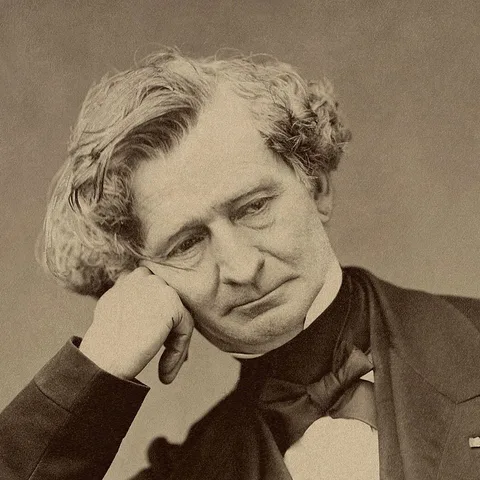
ベルリオーズ
1803–1869
#88パガニーニからの大きなプレゼントA big gift from Paganini
ヴァイオリンの名人パガニーニは、ヴィオラで弾く曲をベルリオーズにたのみました。できた『イタリアのハロルド』は独奏の出番が少なく、パガニーニは弾きませんでした。ところが1838年、ベルリオーズの演奏会に感動したパガニーニは、2万フランもの大金を贈ったのです。
The violin genius Paganini asked Berlioz for a piece he could play on the viola. The result, Harold in Italy, gave the soloist too little to do, and Paganini never played it. But in 1838, deeply moved by one of Berlioz's concerts, Paganini gave him a gift of 20,000 francs.
ベルリオーズ
1803–1869
#89変装して乗りこもうとした?A plan in disguise
ローマ留学中、婚約者だったピアニストのマリー・モークが、別の人と結婚することになりました。怒ったベルリオーズは、女性の服に変装してパリへ乗りこもうと旅に出ます。しかし途中のニースで思いとどまりました。この話は本人が『回想録』に書いています。
While he was studying in Rome, his fiancée, the pianist Marie Moke, was promised to another man. Furious, Berlioz set off for Paris planning to sneak in disguised in women's clothes. But he changed his mind on the way, in Nice. He tells this story himself in his Memoirs.
ベルリオーズ
1803–1869
#90恋した女優の言葉がわからなかったHe fell for an actress he could not understand
1827年にベルリオーズが観たシェイクスピア劇は、イギリスの劇団による英語の上演でした。ベルリオーズは英語がほとんどわかりませんでしたが、オフィーリア役のハリエットにひと目で夢中になりました。言葉より先に、心がうばわれてしまったのです。
The Shakespeare plays Berlioz saw in 1827 were performed in English by a British company. He hardly understood a word of English, yet he fell head over heels for Harriet as Ophelia. His heart was captured before he knew what she was saying.
ベルリオーズ
1803–1869
#91四方から鳴りひびくレクイエムA Requiem that roars from every corner
1837年の『レクイエム』では、大オーケストラと合唱に加えて、4つの金管楽器のグループを会場の四方に置くように指示しました。「最後の審判」の場面では、まわりじゅうからトランペットなどが鳴りひびきます。まるで音のサラウンドです。
In his Requiem of 1837, Berlioz added four separate groups of brass players to the large orchestra and chorus, placed around the hall. At the Last Judgment, trumpets and trombones blast from every direction. It is like surround sound, long before speakers existed.
ベルリオーズ
1803–1869
#92交響曲で鐘が鳴る、魔女の夜Bells ring at the witches' night
『幻想交響曲』の最後の楽章は、魔女たちが集まる不気味な夜のお祭りの場面です。教会の鐘が鳴り、死者のためのミサ(レクイエム)で歌われる古い聖歌「怒りの日」のメロディが登場します。1830年当時、交響曲に鐘を使うのはとても珍しいことでした。
The last movement of the Symphonie fantastique shows a spooky night when witches gather. Church bells ring, and the old chant Dies irae from the Mass for the dead appears. In 1830, using bells in a symphony was very unusual.
ベルリオーズ
1803–1869
#93フランスより外国で人気者More popular abroad than at home
パリではなかなか正当に評価されなかったベルリオーズですが、ドイツやロシアなどでは熱狂的にむかえられました。各地へ演奏旅行に出て自作を指揮し、1867年から翌年にかけても、体が弱っていたのにロシアへ出かけて大成功をおさめています。
Berlioz was often underrated in Paris, but in Germany, Russia and elsewhere he was greeted with great enthusiasm. He toured widely, conducting his own works, and even in 1867 and 1868, when his health was poor, he traveled to Russia and won great success.
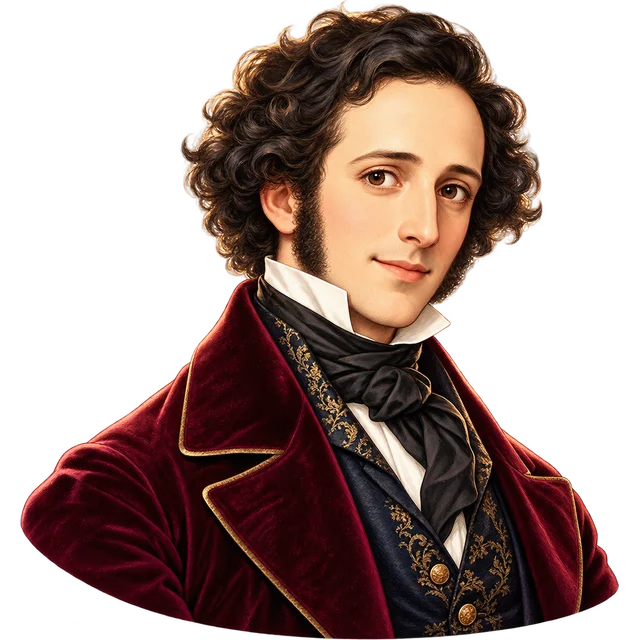
メンデルスゾーン
1809–1847
#94女王が歌ったのは、じつはお姉さんの曲!The queen sang a song by his sister!
1842年、バッキンガム宮殿でヴィクトリア女王が、メンデルスゾーン作として出版されていた歌曲「イタリア」を歌ってくれました。ところがこれは、じつは姉ファニーの作品でした。当時は女性が作曲家として名を出しにくく、彼は正直に女王へ打ち明けたそうです。
In 1842, at Buckingham Palace, Queen Victoria sang him the song 'Italien', which had been published under Felix's name. In fact, it had been written by his sister Fanny. In those days it was hard for women to publish music under their own names, and Felix honestly confessed the truth to the queen.
メンデルスゾーン
1809–1847
#95結婚行進曲を広めたのは、王女の結婚式A royal wedding made the march famous
1858年、ヴィクトリア女王の長女ヴィクトリア王女がプロイセンの王子と結婚したとき、メンデルスゾーンの「結婚行進曲」が演奏されました。これがきっかけで、結婚式の退場曲として世界中に広まったと言われています。
In 1858, when Queen Victoria's eldest daughter, Princess Victoria, married a Prussian prince, Mendelssohn's Wedding March was played at the ceremony. This is said to be how it spread around the world as the music for leaving the church after a wedding.
メンデルスゾーン
1809–1847
#96名曲のメロディは旅の手紙に、そして船酔いA tune in a letter, and a seasick composer
序曲『フィンガルの洞窟』の最初のメロディは、スコットランド旅行の途中、家族への手紙にさっそく書きとめられていました。ところが洞窟のあるスタッファ島へ向かう船では、ひどい船酔いに苦しんだと、旅の仲間クリンゲマンが書き残しています。
The opening tune of The Hebrides overture was jotted down in a letter to his family during the Scottish trip itself. Yet his travel companion Karl Klingemann wrote that Felix was terribly seasick on the boat to Staffa, the island with the famous cave.
メンデルスゾーン
1809–1847
#9712歳で文豪ゲーテのお気に入りにGoethe's young favorite at twelve
1821年、12歳のメンデルスゾーンは先生に連れられてワイマールのゲーテをたずね、2週間ほど滞在してピアノを弾きました。70歳をこえていたゲーテは少年の才能に驚き、そのあとも何度も彼をまねいています。
In 1821 his teacher took twelve-year-old Felix to visit Goethe in Weimar, where he stayed for about two weeks and played the piano. Goethe, then over seventy, was amazed by the boy's talent and invited him back again and again.
メンデルスゾーン
1809–1847
#98作曲家なのに、絵の腕前もプロ級A composer with a painter's skill
メンデルスゾーンは旅先でスケッチや水彩画をたくさん描きました。スイスやイギリスの風景を描いた作品は、今も美術館や図書館に大切に保管されています。音楽だけでなく、絵や語学など何をしても上手な人でした。
Mendelssohn made many sketches and watercolors during his travels. His paintings of Swiss and British landscapes are still kept carefully in museums and libraries. He was good at almost everything, from music to painting and languages.
メンデルスゾーン
1809–1847
#99夜のうちに消えた銅像The statue that disappeared overnight
ライプツィヒのゲヴァントハウスの前には、メンデルスゾーンの銅像が立っていました。しかし1936年、ナチスによって取りこわされてしまいます。長い年月がたった2008年、新しい像がライプツィヒにふたたび建てられました。
A statue of Mendelssohn once stood in front of the Gewandhaus concert hall in Leipzig. But in 1936 the Nazis had it torn down. Many years later, in 2008, a new statue of him was set up in Leipzig again.
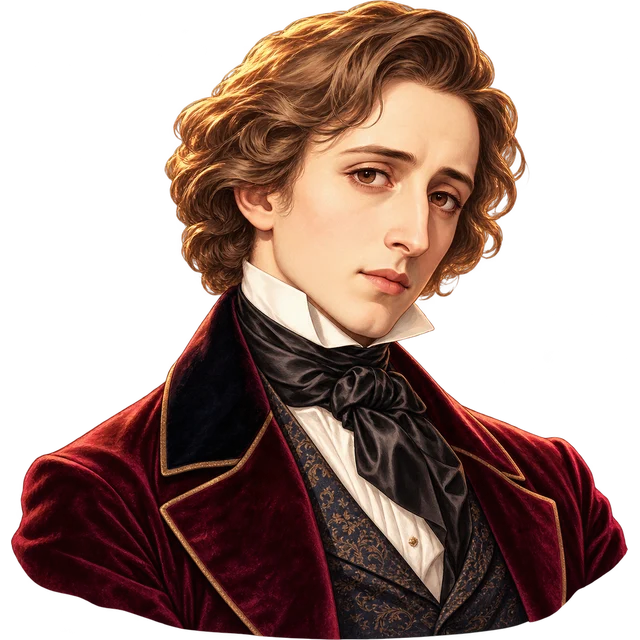
ショパン
1810–1849
#100「諸君、脱帽したまえ。天才だ!」'Hats off, gentlemen, a genius!'
1831年、まだ無名だったショパンの『「ドン・ジョヴァンニ」の主題による変奏曲』を、若き日のシューマンが音楽新聞で紹介しました。そのときの言葉が「諸君、脱帽したまえ。天才だ!」。ショパンの名を広めた、音楽史に残る名評論です。
In 1831, the young Robert Schumann reviewed Chopin's Variations on a theme from Don Giovanni in a music newspaper, when Chopin was still unknown. He wrote, 'Hats off, gentlemen, a genius!' It became one of the most famous reviews in music history and helped make Chopin better known.
ショパン
1810–1849
#101「子犬のワルツ」は1分で弾く曲ではないThe Minute Waltz is not a one-minute waltz
英語で「ミニット・ワルツ」と呼ばれる曲がありますが、ミニットは「1分」ではなく「小さな」という意味です。サンドの飼っていた子犬が自分のしっぽを追いかけてくるくる回る様子から生まれた、と言われています。
In English this piece is called the Minute Waltz, but 'minute' here means 'tiny', not 'sixty seconds'. It is said that the music was inspired by George Sand's little dog chasing its own tail round and round.
ショパン
1810–1849
#102「雨だれ」の伝説The legend of the Raindrop Prelude
マヨルカ島の古い修道院で、ショパンは雨の夜にひとりで作曲していました。サンドはのちに、そのとき屋根を打つ雨の音が曲にとけこんでいたと書いています。ただ、それがどの前奏曲なのかは書いていません。一方で、ショパン自身がのちに弟子の楽譜で、第15番に雨と結びつく言葉を書きこんだ、という研究もあります。
In an old monastery on Majorca, Chopin composed alone on rainy nights. George Sand later wrote that the sound of rain falling on the roof seemed to flow into his music. But she did not say which prelude it was. On the other hand, some research says that Chopin himself later wrote a word about rain on a pupil's copy of Prelude No. 15.
ショパン
1810–1849
#103心臓だけが祖国へ帰ったOnly his heart went home
ショパンの心臓は、お酒のような液体の入ったびんに納められ、姉がワルシャワへ運びました。第二次世界大戦中には教会から運び出され、戦後に戻されています。2014年にはひそかに調べられ、結核による病気が死因だった可能性が高いと発表されました。
Chopin's heart was sealed in a jar of liquid, thought to be a kind of strong spirit, and his sister took it to Warsaw. During the Second World War it was removed from the church and returned after the war. In 2014 it was quietly examined, and scientists reported that he most likely died of complications from tuberculosis.
ショパン
1810–1849
#104恋人サンドは男性の名前で書く作家His partner wrote under a man's name
ジョルジュ・サンドは女性の作家ですが、男性のペンネームを使い、ときには男性の服を着て街を歩いたことで知られています。当時としてはとても自由な生き方でした。最初に会ったとき、ショパンはサンドにあまり良い印象を持たなかったと言われています。
George Sand was a woman writer who used a man's pen name and was known for sometimes walking around Paris in men's clothes. That was a very free way of living for the time. It is said that when Chopin first met her, he was not very impressed.
ショパン
1810–1849
#105お葬式で流れたのはモーツァルトMozart at his funeral
ショパンの希望により、パリのマドレーヌ教会で行われたお葬式では、モーツァルトの『レクイエム』が演奏されました。ショパンはモーツァルトを心から尊敬していたのです。お葬式には大勢の人が集まりました。
At Chopin's own wish, Mozart's Requiem was performed at his funeral in the Church of the Madeleine in Paris. Chopin deeply admired Mozart. A large crowd came to say goodbye.
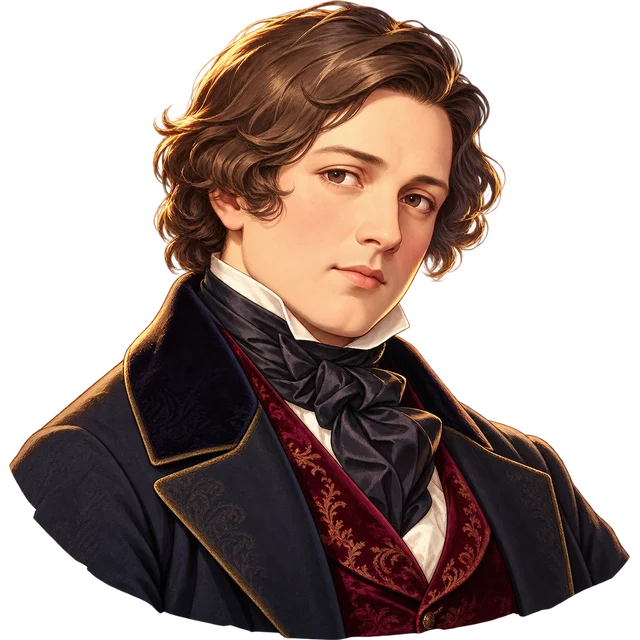
シューマン
1810–1856
#106心の中に、性格のちがう二人がいたTwo different people inside him
シューマンは自分の中の二つの面を、情熱的な「フロレスタン」と、夢見がちな「オイゼビウス」という架空の人物で表しました。評論にもこの名前でサインし、ピアノ曲『謝肉祭』には二人の名前がついた曲も入っています。
Schumann expressed two sides of his personality through two imaginary characters: fiery Florestan and dreamy Eusebius. He even signed his reviews with these names, and his piano work Carnaval includes pieces named after both of them.
シューマン
1810–1856
#107楽譜にかくされた暗号Secret codes in the music
シューマンは文字を音名に置きかえる遊びが大好きでした。初めて出版した『アベッグ変奏曲』はA・B♭(シのフラット)・E・G・Gの音から作られ、『謝肉祭』には、当時の婚約者の故郷の町アッシュ(ASCH)の文字が音でかくされています。
Schumann loved turning letters into musical notes. His first published work, the Abegg Variations, is built on the notes A, B-flat, E, G, G. Carnaval hides the letters of Asch, the hometown of his fiancée at the time, in its notes.
シューマン
1810–1856
#108結婚は裁判で勝ちとったHe won his marriage in court
クララの父ヴィークがどうしても結婚を許さなかったため、二人は裁判所に訴え、ついに結婚の許可を得ました。結婚式は1840年9月12日。クララが21歳の誕生日をむかえる、ちょうど前の日のことでした。
Because Clara's father refused to allow the marriage, the couple took the case to court and finally won permission. Their wedding was on September 12, 1840, the day before Clara's twenty-first birthday.
シューマン
1810–1856
#109『子供の情景』は大人のための曲Scenes from Childhood is for grown-ups
「トロイメライ」が入った『子供の情景』は、子どもが弾くための練習曲ではありません。シューマン自身、大人が子ども時代をふり返る曲だと説明しています。子ども向けには、別に『子供のためのアルバム』という曲集を書いています。
Scenes from Childhood, which includes Träumerei, is not a set of pieces for children to practice. Schumann himself explained that it shows a grown-up looking back on childhood. For young players he wrote a different collection, the Album for the Young.
シューマン
1810–1856
#110「春」の交響曲を初演したのはメンデルスゾーンMendelssohn premiered his 'Spring' Symphony
1841年、シューマンの『交響曲第1番「春」』は、ライプツィヒでメンデルスゾーンの指揮によって初演されました。二人は互いを尊敬し合う友人で、シューマンはメンデルスゾーンを「19世紀のモーツァルト」とたたえています。
In 1841 Schumann's Symphony No. 1, the 'Spring' Symphony, was first performed in Leipzig with Mendelssohn conducting. The two men admired each other, and Schumann praised Mendelssohn as 'the Mozart of the 19th century'.
シューマン
1810–1856
#111ブラームスとの深いきずなA deep bond with Brahms
1853年にシューマン家を訪ねた20歳のブラームスは、夫妻にあたたかく迎えられました。シューマンが療養所に入ると、ブラームスはクララと子どもたちを支えます。ブラームスとクララの友情は、その後40年以上も続きました。
When twenty-year-old Brahms visited the Schumanns in 1853, the couple welcomed him warmly. After Robert entered the sanatorium, Brahms helped support Clara and the children. The friendship between Brahms and Clara lasted for more than forty years.

リスト
1811–1886
#112ファンが手袋やハンカチを取り合った?Fans fought over his gloves?
リストの演奏会では、ファンの熱狂ぶりがすさまじかったと伝えられています。リストが落とした手袋やハンカチを取り合ったり、飲み残したコーヒーや葉巻の吸いがらを記念に持ち帰ったりする人もいたそうです。まさに今のアイドルのような人気でした。
Reports say that his fans went completely wild. People fought over gloves or handkerchiefs he dropped, and some even took home his leftover coffee or cigar ends as souvenirs. His popularity was like that of a modern pop idol.
リスト
1811–1886
#113ベートーヴェンからのキスの真相The truth about Beethoven's kiss
少年リストが演奏したあと、ベートーヴェンがおでこにキスをして祝福した、という有名な話があります。リスト自身も後年そう語りましたが、当時ベートーヴェンは耳がほとんど聞こえず、本当にあったかどうかは研究者のあいだでも疑われています。
There is a famous story that after the boy Liszt played, Beethoven kissed him on the forehead as a blessing. Liszt himself told this story later in life, but Beethoven was almost completely deaf by then, and historians doubt whether it really happened.
リスト
1811–1886
#114アニメのネコも弾いた名曲A cartoon cat played it too
「ハンガリー狂詩曲第2番」は、アニメ『トムとジェリー』の「ピアノ・コンサート」(1947年)で、トムがピアノで演奏する曲として使われました。1946年のバッグス・バニーのアニメ『ラプソディー・ラビット』にも登場し、演奏会場の外でも広く親しまれる曲になりました。
Hungarian Rhapsody No. 2 was used in the 1947 Tom and Jerry cartoon The Cat Concerto, where Tom plays it on the piano. It also appears in the 1946 Bugs Bunny cartoon Rhapsody Rabbit, helping make the piece familiar far beyond concert halls.
リスト
1811–1886
#115ベートーヴェン像のために大金を寄付A big donation for Beethoven's statue
故郷ボンにベートーヴェンの記念像を建てる計画が、お金が足りずに止まりかけたとき、リストは演奏会でかせいだ大金を寄付しました。1845年、像はぶじ完成しています。リストは生涯、慈善のための演奏会をたくさん開きました。
When a plan to build a monument to Beethoven in his hometown of Bonn nearly stalled for lack of money, Liszt donated a large sum he had earned from concerts. The statue was completed in 1845. Throughout his life Liszt gave many concerts for charity.
リスト
1811–1886
#116結婚式の前の日に中止A wedding called off the day before
ワイマール時代のパートナー、カロリーネ・ザイン=ヴィトゲンシュタイン侯爵夫人とリストは、1861年、リストの50歳の誕生日にローマで結婚式をあげる予定でした。ところが前の日になって、教会からの許可が取り消され、二人は結婚できませんでした。
Liszt and his partner from the Weimar years, Princess Carolyne zu Sayn-Wittgenstein, planned to marry in Rome in 1861, on his fiftieth birthday. But on the day before the wedding, the Church withdrew its permission, and they never married.
リスト
1811–1886
#117「アベ」と呼ばれたけれど、司祭ではなかったCalled 'Abbé', but not a priest
晩年のリストは黒い僧服を着て「アベ・リスト(リスト師)」と呼ばれましたが、受けたのは下級の聖職の位だけでした。聖職者ではあっても司祭には叙階(任命)されていないので、ミサをとり行うことはできませんでした。それでも宗教的な合唱曲などをたくさん書いています。
In later life Liszt wore a black cassock and was called 'Abbé Liszt', but he had only taken minor orders. He was a cleric, but he was never ordained as a priest, so he could not celebrate Mass. Even so, he wrote a great deal of religious music, including choral works.

ワーグナー
1813–1883
#118階段で演奏された誕生日プレゼントA birthday present played on the stairs
1870年のクリスマスの朝、コジマが目をさますと、家の階段に並んだ小さなオーケストラが美しい曲を演奏していました。コジマの誕生日を祝って、ワーグナーがこっそり書いた『ジークフリート牧歌』です。息子ジークフリートの誕生もこめられています。
On Christmas morning in 1870, Cosima woke up to a small orchestra playing beautiful music on the staircase of their house. It was the Siegfried Idyll, which Wagner had secretly written to celebrate her birthday. The music also celebrates the birth of their son, Siegfried.
ワーグナー
1813–1883
#119借金から逃げた、犬づれの船旅Escaping debts, with a dog on board
1839年、借金に追われたワーグナーは、妻ミンナと大きな飼い犬ロバーを連れて、リガからこっそり国境をこえました。乗りこんだ小さな船は嵐にあい、ノルウェーの港に避難します。この体験が『さまよえるオランダ人』に生かされたと本人は語っています。
In 1839, chased by people he owed money to, Wagner secretly crossed the border from Riga with his wife Minna and their big dog, Robber. Their small ship was caught in a storm and had to shelter in a Norwegian harbor. Wagner said this adventure inspired The Flying Dutchman.
ワーグナー
1813–1883
#120おとぎ話の城の王様が大ファンThe fairy-tale king was his biggest fan
ワーグナーを支えたバイエルン国王ルートヴィヒ2世は、ノイシュヴァンシュタイン城を建てたことで有名です。城の中には『ローエングリン』や『タンホイザー』など、ワーグナーのオペラの場面をえがいた絵がたくさんかざられています。
King Ludwig II of Bavaria, Wagner's great supporter, is famous for building Neuschwanstein Castle. Inside, the walls are decorated with many paintings of scenes from Wagner's operas, such as Lohengrin and Tannhäuser.
ワーグナー
1813–1883
#121オーケストラが見えない劇場A theater where the orchestra is hidden
バイロイト祝祭劇場では、オーケストラが舞台の下に深くもぐり、屋根のようなおおいで客席から見えないように作られています。観客が舞台に集中できるようにするためで、音がやわらかく混ざり合って聞こえる効果もあります。
At the Bayreuth Festival Theater, the orchestra sits deep below the stage under a hood, so the audience cannot see it. This helps people focus on the drama, and it also makes the sound blend together softly.
ワーグナー
1813–1883
#122新しい楽器まで作らせたHe even had a new instrument made
『ニーベルングの指環』のために、ワーグナーはホルンとチューバの中間のような、新しい金管楽器を考えました。これが「ワーグナー・チューバ」です。のちにブルックナーやリヒャルト・シュトラウスなども作品に使っています。
For The Ring of the Nibelung, Wagner came up with a new brass instrument somewhere between a horn and a tuba. It is called the Wagner tuba, and later composers such as Bruckner and Richard Strauss used it too.
ワーグナー
1813–1883
#123ヘリコプターの場面で大活躍A star of a helicopter scene
『ワルキューレ』の「ワルキューレの騎行」は、1979年の映画『地獄の黙示録』のヘリコプターの場面で使われ、映画の中のクラシック音楽として特に有名な例になりました。今でもCMやテレビ番組で、迫力のある場面によく使われています。
The Ride of the Valkyries was used in a famous helicopter scene in the 1979 film Apocalypse Now, one of the best-known uses of classical music in film. Today it is still often used on TV and in commercials for dramatic, action-packed moments.

ヴェルディ
1813–1901
#124「ヴェルディ万歳」はひみつの合言葉?Was 'Viva Verdi' a secret code?
「VIVA VERDI(ヴェルディ万歳)」という落書きは、「イタリア王ヴィットーリオ・エマヌエーレ万歳」の頭文字を並べた、統一運動の合言葉だったと言われています。ただし、実際どれほど広く使われたのかについては、研究者のあいだで意見が分かれています。
The slogan 'VIVA VERDI' is said to have been a secret code of the Italian unification movement, because the letters VERDI also stood for 'Vittorio Emanuele, Re d'Italia', the hoped-for king of Italy. However, historians disagree about how widely it was really used.
ヴェルディ
1813–1901
#125『アイーダ』はスエズ運河のため、はまちがいAida was not written for the Suez Canal
『アイーダ』はスエズ運河の開通を祝って作られた、とよく言われますが、これはまちがいです。1869年にカイロの歌劇場が開いたときに上演されたのは、ヴェルディの『リゴレット』でした。『アイーダ』の初演は1871年のことです。
People often say that Aida was written to celebrate the opening of the Suez Canal, but that is not true. When the Cairo opera house opened in 1869, the opera performed was Verdi's Rigoletto. Aida did not have its premiere until 1871.
ヴェルディ
1813–1901
#126「女心の歌」は初演までひみつ'La donna è mobile' was kept secret
ヴェルディは「女心の歌」があまりに覚えやすいため、初演前に町で広まってしまうのを心配し、テノール歌手にぎりぎりまで楽譜をわたさなかったと言われています。ねらいどおり初演で大評判になり、翌日には町じゅうで歌われたそうです。
It is said that Verdi worried 'La donna è mobile' was so catchy it would spread around town before the premiere, so he did not give the music to the tenor until the last moment. Just as he expected, it was a sensation, and people were singing it in the streets the next day.
ヴェルディ
1813–1901
#127入れなかった学校に、自分の名前The school that rejected him now bears his name
若いヴェルディの入学を断ったミラノ音楽院は、今では「ジュゼッペ・ヴェルディ音楽院」という名前になっています。ヴェルディが亡くなった1901年に、彼の名前がつけられました。人生とはわからないものです。
The Milan Conservatory, which once turned the young Verdi away, is now called the Giuseppe Verdi Conservatory. It took his name in 1901, the year he died. Life can be full of surprises.
ヴェルディ
1813–1901
#128音楽家のための「憩いの家」A home for retired musicians
ヴェルディは晩年、年をとって生活に困る音楽家のために、ミラノに「音楽家のための憩いの家」を建てました。自分の作品の著作権料をその運営にあてるようにし、ヴェルディ自身も妻ジュゼッピーナとともに、この建物の中に眠っています。
In his later years Verdi built the Casa di Riposo in Milan, a home for elderly musicians in need. He arranged for the royalties from his works to support it, and Verdi himself rests there today, together with his wife Giuseppina.
ヴェルディ
1813–1901
#129名作『椿姫』も初演は失敗Even La traviata flopped at first
1853年、ヴェネツィアでの『椿姫』の初演は失敗に終わりました。ヴェルディは友人への手紙に「失敗は私のせいか、歌手のせいか。時がそれを決めるだろう」という意味のことを書いています。翌年の再演では大成功しました。
The premiere of La traviata in Venice in 1853 was a failure. Verdi wrote to a friend, in effect, 'Was it my fault or the singers'? Time will tell.' When it was staged again the next year, it was a great success.
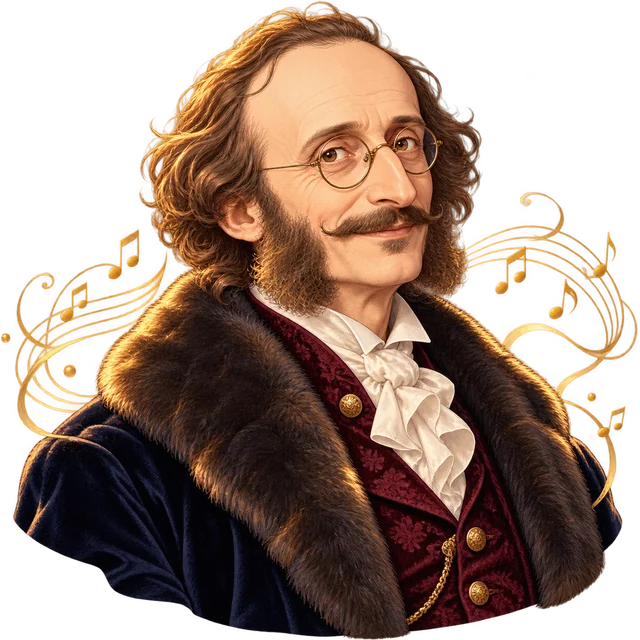
オッフェンバック
1819–1880
#130運動会のあの曲は、別の人の編曲だったThe famous sports-day version was arranged by someone else
運動会でおなじみのカンカンのメロディは、もちろんオッフェンバックの作曲です。ただ、『天国と地獄』序曲として演奏される長い序曲は、1860年、ウィーンでの上演のために、作曲家カール・ビンダーがオペレッタのメロディをつなぎ合わせて作ったものなのです。
The famous can-can melody heard at Japanese sports days is Offenbach's own. But the long 'Heaven and Hell' overture often played in concerts was put together in 1860 by the composer Carl Binder, who joined melodies from the operetta for a production in Vienna.
オッフェンバック
1819–1880
#131悪口を言われて大ヒットBad reviews made it a hit
『地獄のオルフェ』は、有名な評論家ジュール・ジャナンに「神聖な神話をけがすものだ」と激しく批判されました。オッフェンバックが新聞で言い返すと、この言い争いが話題になり、かえって客が劇場におしよせたのです。
The famous critic Jules Janin attacked Orpheus in the Underworld as an insult to sacred myth. Offenbach answered back in the newspaper, and the argument became the talk of Paris. As a result, even more people rushed to see the show.
オッフェンバック
1819–1880
#132名曲「舟歌」は使い回しThe famous Barcarolle was recycled
『ホフマン物語』の「舟歌」のメロディは、もともと1864年にウィーンで上演されたオッフェンバックのドイツ語のオペラ『ラインの妖精』で使われたものでした。あまり成功しなかった作品から、名曲が新しい場所でよみがえったのです。
The melody of the Barcarolle in The Tales of Hoffmann first appeared in Die Rheinnixen, a German-language opera by Offenbach staged in Vienna in 1864. A tune from a not-very-successful work found new life and became world-famous.
オッフェンバック
1819–1880
#133名前は町の名前からHis name came from a town
オッフェンバックという名字は、父の故郷であるドイツの町「オッフェンバッハ・アム・マイン」に由来します。父はもともと別の名字でしたが、この町の名前を名乗るようになりました。ジャックという名前も、パリで使いはじめたものです。
The family name Offenbach comes from Offenbach am Main, the German town where his father came from. His father originally had a different surname but began calling himself after the town. The name Jacques was also one Offenbach started using in Paris.
オッフェンバック
1819–1880
#134ロッシーニがつけたあだ名A nickname from Rossini
ロッシーニはオッフェンバックを「シャンゼリゼのモーツァルト」と呼んだと伝えられています。パリの大通りシャンゼリゼの近くに劇場があったことと、軽やかで美しいメロディをたたえた言葉です。
Rossini is said to have called Offenbach 'the Mozart of the Champs-Élysées'. The nickname referred to his theater near that famous Paris avenue, and praised his light and lovely melodies.
オッフェンバック
1819–1880
#135アメリカ旅行を本にしたHe wrote a book about America
1876年、アメリカ独立100周年の年に、オッフェンバックはニューヨークやフィラデルフィアで演奏会を開きました。帰国後には、旅で見たアメリカの様子をユーモアたっぷりに書いた本を出版しています。
In 1876, the hundredth anniversary of American independence, Offenbach gave concerts in New York and Philadelphia. After returning home, he published a book full of humor about what he had seen in America.
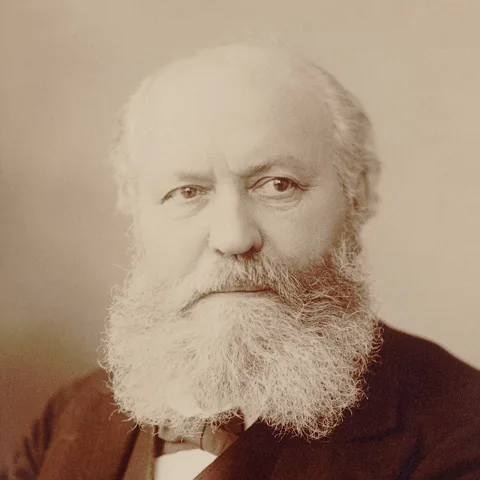
グノー
1818–1893
#136作った行進曲が、国の国歌に!His march became a national anthem!
グノーが1869年に作曲した『教皇の行進曲』は、1949年にバチカン市国の正式な国歌になりました。世界でいちばん小さな国の国歌を、フランスの作曲家が書いていたのです。今もローマ教皇の大切な行事で演奏されています。
The Pontifical March, which Gounod composed in 1869, became the official anthem of Vatican City in 1949. The anthem of the world's smallest country was written by a French composer, and it is still played at important events with the Pope.
グノー
1818–1893
#137「アヴェ・マリア」は最初、歌詞がなかったHis Ave Maria had no words at first
バッハ=グノーの「アヴェ・マリア」は、1853年に『バッハの前奏曲による瞑想曲』という器楽曲として生まれました。そのメロディが人気を集め、のちに祈りの言葉「アヴェ・マリア」がつけられて、今の形の歌になったのです。
The Bach-Gounod Ave Maria began in 1853 as an instrumental piece called Meditation on Bach's First Prelude. The melody became so popular that the words of the prayer Ave Maria were later added, turning it into the song we know today.
グノー
1818–1893
#138ヒッチコックのテーマ曲Hitchcock's theme tune
グノーのユーモラスな小品『あやつり人形の葬送行進曲』は、1950年代から放送されたアメリカのテレビ番組『ヒッチコック劇場』のテーマ曲に使われました。こわい話の番組にぴったりの、ちょっととぼけた不気味なメロディです。
Gounod's humorous little piece Funeral March of a Marionette was used as the theme tune of the American TV series Alfred Hitchcock Presents, which began in the 1950s. Its odd, slightly spooky melody was perfect for a show of mystery stories.
グノー
1818–1893
#139メトロポリタン歌劇場の最初の演目The very first opera at the Met
1883年、ニューヨークに今も世界有数の歌劇場として知られるメトロポリタン歌劇場が開きました。記念すべきこけら落とし公演に選ばれたのが、グノーの『ファウスト』です。当時この作品がどれほど人気だったかがわかります。
In 1883 the Metropolitan Opera, still one of the world's great opera houses, opened in New York. The opera chosen for its historic first night was Gounod's Faust, which shows just how popular the work was at the time.
グノー
1818–1893
#140神父見習いの作曲家A composer who almost became a priest
1840年代、グノーは神学校で学び、黒い僧服を着て過ごした時期がありました。そのため周りから「アベ(神父)・グノー」と呼ばれたこともあります。結局は神父にならず、作曲家として生きる道を選びました。
In the 1840s Gounod studied at a seminary and for a while wore the black clothes of a churchman. Because of this, people sometimes called him 'Abbé Gounod'. In the end he did not become a priest and chose life as a composer.
グノー
1818–1893
#141ロンドンの大合唱団の初代指揮者First conductor of a great London choir
ロンドンで暮らしていた1871年、グノーは新しくできたロイヤル・アルバート・ホールの合唱団の初代指揮者になりました。この合唱団は今も「ロイヤル・コーラル・ソサエティ」として活動しています。
While living in London in 1871, Gounod became the first conductor of the new choir at the Royal Albert Hall. The choir is still active today as the Royal Choral Society.
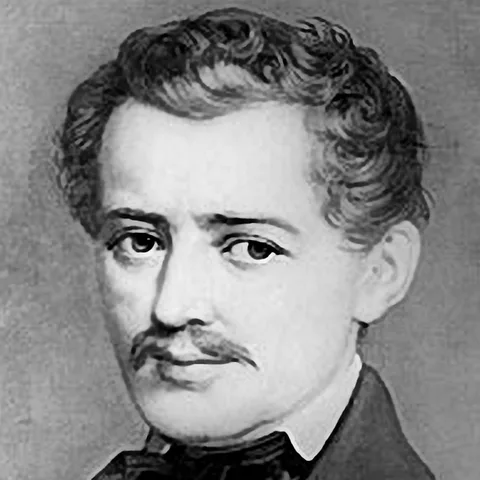
シュトラウス1世
1804–1849
#142手拍子をするのがお約束Clapping along is a tradition
元日のウィーン・フィルのニューイヤーコンサートでは、伝統的に最後のアンコールで『ラデツキー行進曲』が演奏されます。このとき観客は指揮者の合図に合わせて手拍子をし、大きくしたり小さくしたりします。会場と演奏が一体になる名物の場面です。
At the Vienna Philharmonic's New Year's Concert on January 1, the Radetzky March is traditionally played as the final encore. The audience claps along, following the conductor's signals to clap louder or softer. It is a famous moment when the hall and the orchestra become one.
シュトラウス1世
1804–1849
#143ラデツキーってだれ?Who was Radetzky?
曲の名前になっているラデツキーは、オーストリア軍の名将ヨーゼフ・ラデツキー将軍です。1848年、80歳をこえていた将軍がイタリアで勝利をおさめたことを祝って、この行進曲が作られました。今では将軍よりも曲のほうがずっと有名です。
The Radetzky in the title is Field Marshal Joseph Radetzky, a famous Austrian general. The march was written in 1848 to celebrate a victory he won in Italy when he was over eighty years old. Today the music is far more famous than the general himself.
シュトラウス1世
1804–1849
#144息子の音楽に大反対He did not want his son to be a musician
シュトラウス1世は、長男ヨハンには銀行員のような安定した仕事についてほしいと考え、音楽家になることに反対しました。ところが母アンナがこっそり応援し、息子は父の楽団のヴァイオリン奏者からひそかにレッスンを受けていたのです。
Strauss I wanted his eldest son, Johann, to have a safe career, such as working in a bank, and opposed his becoming a musician. But the boy's mother, Anna, secretly supported him, and he secretly took violin lessons from a violinist in his father's own orchestra.
シュトラウス1世
1804–1849
#145父と子が、ライバルにFather and son became rivals
1844年、18歳の息子ヨハン2世が自分の楽団でデビューすると、父と子は人気を争うライバルになりました。1848年の革命のときには、父は皇帝側を応援する『ラデツキー行進曲』を書き、息子は革命側に共感する曲を書いています。
When his eighteen-year-old son, Johann II, made his debut with his own orchestra in 1844, father and son became rivals. During the revolution of 1848, the father wrote the Radetzky March in support of the emperor's side, while the son wrote music that sympathized with the revolutionaries.
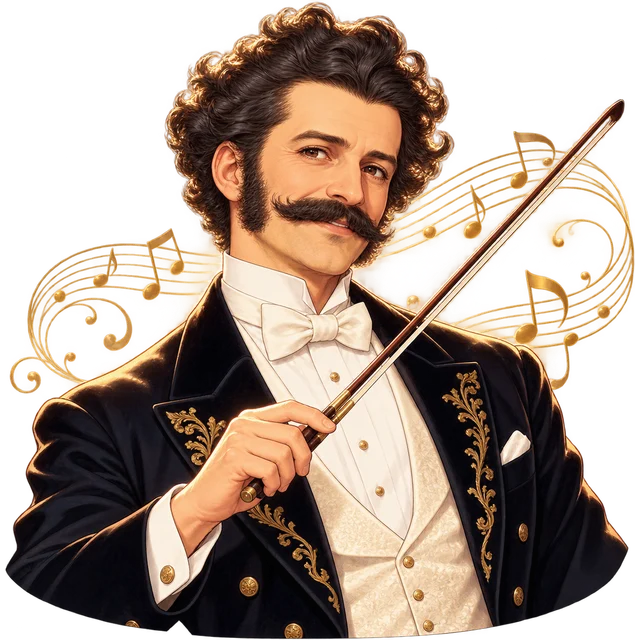
シュトラウス2世
1825–1899
#146ブラームスが書いた「残念ながら」Brahms wrote 'unfortunately'
シュトラウスの妻アデーレ(その娘アリーチェだったとも言われます)がブラームスに扇子へのサインをたのむと、ブラームスは「美しく青きドナウ」の最初のメロディを書き、「残念ながら、ブラームスの作ではない」と書きそえたと伝えられています。大作曲家も認めるワルツだったのです。
It is said that when Strauss's wife, Adele (or, in some versions, her daughter Alice), asked Brahms to sign a fan, he wrote down the opening bars of The Blue Danube and added, 'Unfortunately not by Johannes Brahms.' Even a great composer wished he had written that waltz.
シュトラウス2世
1825–1899
#147宇宙を舞うワルツA waltz in outer space
1968年のSF映画『2001年宇宙の旅』では、宇宙船がゆっくり回りながら宇宙ステーションに近づく場面で「美しく青きドナウ」が流れます。19世紀のワルツと未来の宇宙の組み合わせが、映画史に残る名場面になりました。
In the 1968 science fiction film 2001: A Space Odyssey, The Blue Danube plays as a spaceship slowly turns and approaches a space station. Pairing a 19th-century waltz with a vision of the future created one of the most famous scenes in film history.
シュトラウス2世
1825–1899
#148アメリカで超巨大コンサートA giant concert in America
1872年、シュトラウスはアメリカのボストンで開かれた「世界平和記念祭」にまねかれました。巨大なオーケストラを、たくさんの副指揮者の助けを借りて指揮し、何万人もの聴衆をわかせました。まさにワルツ王のワールドツアーです。
In 1872 Strauss was invited to the World's Peace Jubilee in Boston, in the United States. With the help of many assistant conductors, he led a giant orchestra in front of tens of thousands of listeners. It was truly a world tour for the Waltz King.
シュトラウス2世
1825–1899
#149ドナウ川は、本当は青くない?Is the Danube really blue?
「美しく青きドナウ」という題名は、詩人カール・イシドール・ベックの詩の一節からとられたと言われています。実際のドナウ川は、ウィーンあたりでは青というより緑がかった色に見えることが多いと言われています。初演の評判は「まずまずだった」とよく言われますが、当時の新聞には好評だったとする記事もあります。
The title The Blue Danube is said to come from a line in a poem by Karl Isidor Beck. Around Vienna, the real Danube is often said to look more greenish than blue. Its first performance is often said to have had only a modest welcome, but some newspaper reports of the time called it a hit.
シュトラウス2世
1825–1899
#150結婚のために国籍まで変えたHe changed his nationality to marry
3人目の妻アデーレと結婚するため、シュトラウスはオーストリアの国籍を手放し、ドイツのザクセン=コーブルク=ゴータ公国の国民になって、宗派もプロテスタントに改めました。当時のオーストリアの法律では、カトリック教徒の結婚を完全に解消して再婚することが認められていなかったからです。
To marry his third wife, Adele, Strauss gave up his Austrian citizenship, became a citizen of the German duchy of Saxe-Coburg and Gotha, and changed his religion to Protestant. Under Austrian law at the time, a Catholic marriage could not be fully ended to allow a new marriage.
シュトラウス2世
1825–1899
#151「おはよう、シュトラウス2世!」'Good morning, Strauss the son!'
1844年のデビューの大成功のあと、ウィーンの新聞には「おやすみランナー、こんばんは父シュトラウス、おはよう息子シュトラウス」という言葉がのったと伝えられています。ワルツの主役が次の世代へ移る、夜明けを告げる言葉でした。
After his triumphant debut in 1844, a Viennese newspaper is said to have written, 'Good night, Lanner! Good evening, Father Strauss! Good morning, Strauss Son!' The words announced the dawn of a new generation of waltz music.
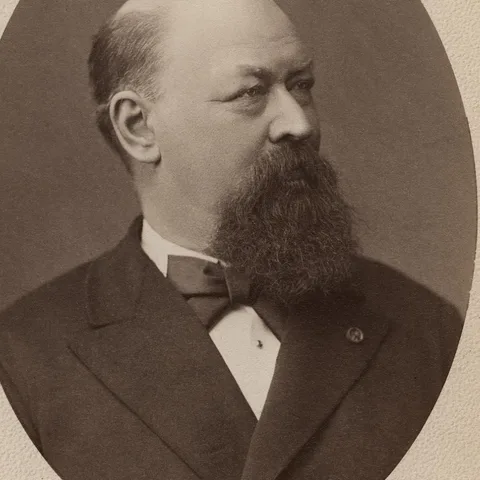
スッペ
1819–1895
#152名前が長すぎる!?A name that never ends?
スッペが生まれたときの名前は、イタリア風の「フランチェスコ・エゼキエーレ・エルメネジルド」。古い本ではさらに「デメッリ」などがついた長い名前で紹介されますが、これはのちの研究でまちがいとされています。ウィーンではドイツ風に「フランツ」を名乗り、「フランツ・フォン・スッペ」として知られるようになりました。
At birth Suppé was given the Italian names Francesco Ezechiele Ermenegildo. Older books add even more names, such as 'Demelli', but later research has shown this to be wrong. In Vienna he used the German form Franz, and the world came to know him as Franz von Suppé.
スッペ
1819–1895
#153陽気な作曲家のレクイエムA Requiem from the king of fun
楽しい舞台音楽の名人スッペは、1855年、恩人の劇場支配人ポコルニーのためにレクイエム(死者のためのミサ曲)も書いています。モーツァルトのレクイエムへのあこがれが強く、同じニ短調で、その旋律を引用した部分もあります。長く忘れられていましたが、1984年にイギリスのBBCラジオで復活しました。
Suppé, the master of cheerful stage music, also wrote a Requiem in 1855 for his patron, the theater manager Pokorny. It shows his deep love of Mozart's Requiem: it is in the same key of D minor and even quotes Mozart directly. Long forgotten, it was revived by BBC Radio 3 in 1984.
スッペ
1819–1895
#154ドニゼッティと親戚?Related to Donizetti?
イタリア・オペラの大作曲家ドニゼッティは、スッペ家の遠い親戚だったと言われています。ただし、はっきりした証拠があるわけではなく、確かなことはわかっていません。スッペがイタリア・オペラの明るい歌心を身につけていたことは、序曲のメロディーからもよく伝わってきます。
The great Italian opera composer Gaetano Donizetti is said to have been a distant relative of the Suppé family. However, there is no firm proof, so we cannot be sure. What is certain is that Suppé had a feel for sunny Italian melody, as you can hear in his overtures.
スッペ
1819–1895
#155自分の生い立ちを「盛って」いた?Did he exaggerate his own life story?
スッペの若いころの話は、1905年に出た伝記がもとになっていますが、その中身は本人や周りの人のあいまいな思い出にたよっていました。のちの研究では、スッペ自身が生い立ちを少しドラマチックに話を盛っていたらしいことがわかり、大学で何を学んだかなども説が分かれています。
Much of what we know about Suppé's youth comes from a 1905 biography based on unreliable memories. Later research suggests that Suppé himself made parts of his life story more dramatic than they really were. Even what he studied at university is unclear: some accounts say law, others philosophy.
スッペ
1819–1895
#156「オーストリア第2の国歌」を作曲Austria's second national song
スッペが書いた歌「おお、わがオーストリア(O du mein Österreich)」は、オーストリアでとても愛され、音楽学者から「オーストリア第2の国歌」とまで呼ばれています。行進曲としても演奏され、外国生まれのスッペが、すっかりウィーンっ子になっていたことがわかります。
Suppé's song O du mein Österreich (Oh, My Austria) became so beloved that one music scholar called it Austria's second national song. It is also played as a march. It shows how completely this composer, born far from Vienna, became a true Viennese.
スッペ
1819–1895
#157あのブラームスが「スッペ風」と言った?Brahms joked about sounding like Suppé?
まじめな作風で知られるブラームスは、学生歌をつなぎ合わせた自作『大学祝典序曲』(1880)のことを、冗談まじりに「スッペ風の、にぎやかな学生歌のメドレー」と表現したと伝えられています。にぎやかで楽しい序曲といえばスッペ、というイメージが当時のウィーンで広まっていたことがわかります。
Brahms, known for his serious music, is reported to have joked that his Academic Festival Overture (1880), built from student songs, was a noisy medley of student songs in the style of Suppé. It shows that in Vienna at the time, a fun and boisterous overture meant one name: Suppé.
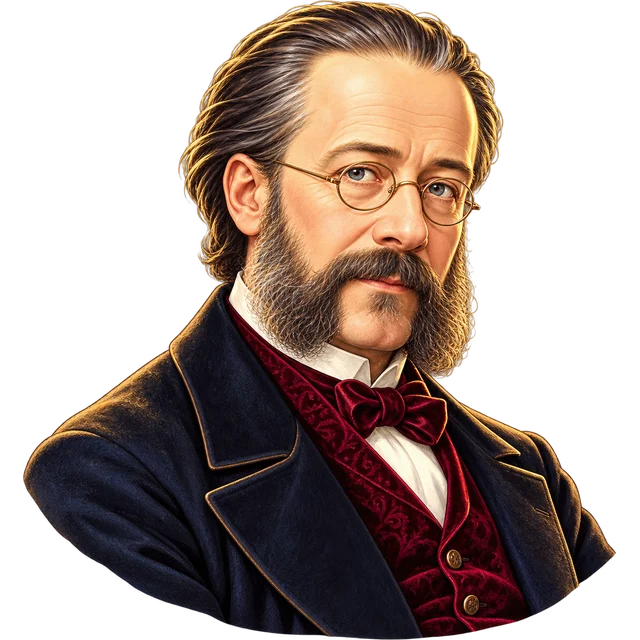
スメタナ
1824–1884
#158「チェコ音楽の父」はドイツ語育ち!?The father of Czech music grew up speaking German?
スメタナが育ったころ、ボヘミアの学校や上流の家庭ではドイツ語が中心でした。そのため彼は日記や手紙を長くドイツ語で書いていて、チェコ語の文法をきちんと勉強したのは大人になってから。チェコ語で歌うオペラを作るために、書きことばのチェコ語をきちんと身につけ直した努力の人だったのです。
When Smetana was young, German was the main language of schools and educated families in Bohemia. For years he wrote his diaries and letters in German, and he only studied Czech grammar properly as an adult. To write operas in Czech, he worked hard to master the written language as well.
スメタナ
1824–1884
#159四重奏に鳴り響く「耳鳴り」の音The ringing in his ears, written into music
弦楽四重奏曲『わが生涯より』の最後の楽章では、明るい音楽が急に止まり、第1バイオリンが高い「ミ」の音を長くのばします。スメタナ自身の説明によると、これは耳が聞こえなくなる前に彼を苦しめた、甲高い耳鳴りを表しているのです。
In the last movement of his quartet From My Life, the happy music suddenly stops and the first violin holds a very high E. According to Smetana's own explanation, this note stands for the piercing ringing in his ears that came before he lost his hearing.
スメタナ
1824–1884
#160『モルダウ』は2つの泉から始まるThe Moldau starts with two little springs
『モルダウ』の冒頭、2本のフルートがさらさらと流れるような音型を重ねます。スメタナが付けた説明では、これは冷たい泉と温かい泉、2つの源流です。小さな流れが合わさって大河となり、森や村の結婚式、月夜の妖精たちのそばを通ってプラハへ流れていきます。
At the start of The Moldau, two flutes trickle over each other. In Smetana's own description, these are two springs, one cold and one warm. The streams join to become a great river that flows past forests, a village wedding and moonlit water nymphs on its way to Prague.
スメタナ
1824–1884
#1616歳でデビューした神童A child star at six
スメタナは小さいころから天才ぶりを発揮し、6歳のとき、生まれた町リトミシュルで初めて人前でピアノを演奏しました。曲はオペラの序曲をピアノ用にしたものだったと言われます。父は息子が音楽家になることには反対でしたが、その才能はおさえきれませんでした。
Smetana showed his talent early. At six he gave his first public piano performance in his hometown of Litomyšl, reportedly playing a piano version of an opera overture. His father did not want him to become a professional musician, but the boy's gift could not be held back.
スメタナ
1824–1884
#162スウェーデンで5年間の再出発A fresh start in Sweden
1856年、スメタナは故郷を離れ、スウェーデンの港町ヨーテボリに移りました。そこで指揮者やピアノ教師として人気者になり、交響詩もいくつか書いています。遠い北の国で暮らしたことで、かえって故郷チェコへの思いが強くなり、帰国後のチェコ語オペラにつながっていきました。
In 1856 Smetana left home for the Swedish port city of Gothenburg. There he became popular as a conductor and piano teacher, and he wrote several symphonic poems. Living so far north made his love for his homeland even stronger, and it led to the Czech operas he wrote after returning.
スメタナ
1824–1884
#163リストへのSOSの手紙An SOS letter to Liszt
若いころお金に困っていたスメタナは、音楽学校を開くために、あこがれの大ピアニスト、リストへ助けを求める手紙を送りました。リストはお金は出しませんでしたが、彼の作品『6つの性格的小品』の献呈を受け入れ、出版社を見つけて応援してくれたのです。
As a struggling young man, Smetana wrote to his hero Franz Liszt, asking for help to open a music school. Liszt did not send money, but he accepted the dedication of Smetana's Six Characteristic Pieces and found a publisher for them.

ブラームス
1833–1897
#164「残念ながらブラームスの作ではない」"Unfortunately not by Johannes Brahms"
ブラームスは「ワルツ王」ヨハン・シュトラウス2世と仲良しでした。シュトラウスの妻アデーレにサインを頼まれたとき、彼は扇に『美しく青きドナウ』の最初のメロディーを書き、「残念ながら、ヨハネス・ブラームスの作ではない」と添えたという有名な話があります。
Brahms was good friends with Johann Strauss II, the Waltz King. There is a famous story that when Strauss's wife Adele asked for his autograph, Brahms wrote the opening tune of The Blue Danube on her fan and added: "Unfortunately not by Johannes Brahms."
ブラームス
1833–1897
#165『ハンガリー舞曲』第5番のもとネタThe secret source of Hungarian Dance No. 5
超有名な『ハンガリー舞曲』第5番のメロディーは、じつはハンガリーの作曲家ケーレル・ベーラが書いたチャールダーシュ(ハンガリーの踊りの曲)がもとになっています。ブラームスはこれを民謡だと思いこんで編曲したと言われています。もともと彼は『ハンガリー舞曲』を「作曲」ではなく「編曲」として出版していました。
The famous tune of Hungarian Dance No. 5 is actually based on a csárdás, a Hungarian dance, written by the composer Béla Kéler. Brahms is said to have believed it was a folk tune. In fact, he published the Hungarian Dances as arrangements, not as his own original compositions.
ブラームス
1833–1897
#166子守歌は友だちの赤ちゃんへのプレゼントA lullaby as a baby gift
「ブラームスの子守歌」は1868年、ハンブルク時代に知り合った友人ベルタ・ファーバーに2人目の子どもが生まれたお祝いに書かれました。伴奏には、ベルタが昔ブラームスに歌って聞かせたオーストリアの歌のメロディーがこっそり織り込まれていると言われています。
Brahms's Lullaby was written in 1868 to celebrate the birth of the second child of Bertha Faber, a friend from his Hamburg days. The accompaniment is said to hide an Austrian song that Bertha used to sing to him years before.
ブラームス
1833–1897
#167博士号のお礼が「学生の歌メドレー」He thanked a university with student songs
1879年、ブレスラウ大学(いまのポーランド)から名誉博士号を贈られたブラームスは、お礼に『大学祝典序曲』を書きました。ところが中身は、学生たちが酒場で歌う陽気な歌をつなぎ合わせたもの。おごそかな曲を期待した先生たちを、ユーモアでびっくりさせたのです。
In 1879 the University of Breslau (now in Poland) gave Brahms an honorary doctorate. As thanks, he wrote the Academic Festival Overture. But instead of solemn music, he built it from cheerful songs that students sang in taverns, surprising the professors with his sense of humor.
ブラームス
1833–1897
#168若いころはひげなしのイケメンYoung Brahms had no beard
ブラームスといえば、もじゃもじゃのひげのおじいさんの姿が有名です。でも、ひげをのばし始めたのは40代半ばになってからでした。20歳ごろの肖像を見ると、金髪で細身の、ひげのない若者です。初めて会った人には、あまりに若く見えて驚かれたと言われます。
Most people picture Brahms as an old man with a huge beard. But he only grew it in his mid-forties. Portraits from around age twenty show a slim, fair-haired young man with no beard at all. People who met him then were reportedly surprised by how young he looked.
ブラームス
1833–1897
#169自分の作品をどんどん処分He destroyed much of his own music
ブラームスは自分にとても厳しい人で、満足できない作品や下書きをたくさん捨てたり燃やしたりしました。初めての弦楽四重奏曲を出版するまでに、20曲ほどを書いては処分したと本人が語ったとも伝えられています。だからこそ、残された作品はどれも完成度が高いのです。
Brahms was very hard on himself and threw away or burned many works and sketches he was not happy with. He is reported to have said that he wrote and destroyed around twenty string quartets before publishing his first one. That is one reason his surviving works are so polished.
ボロディン
1833–1887
#170化学の教科書に名前が残る作曲家A composer in chemistry textbooks
ボロディンは一流の化学者でした。カルボン酸の銀塩から有機化合物を作る反応は、のちに「ハンスディーカー・ボロディン反応」と呼ばれるようになります。また、有機化学でとても大切な「アルドール反応」も、フランスのヴュルツとほぼ同じころに発見しました。
Borodin was a first-class chemist. A reaction he studied, which turns the silver salts of carboxylic acids into new organic compounds, is now called the Hunsdiecker–Borodin reaction. He also discovered the important aldol reaction at about the same time as the French chemist Charles-Adolphe Wurtz.
ボロディン
1833–1887
#171本当の父はジョージアの貴族His real father was a Georgian prince
ボロディンという名字は、じつは実の父のものではありません。父はジョージアの貴族ゲデヴァニシヴィリでしたが、正式な結婚による子ではなかったため、家の農奴の子として届け出られたのです。父は彼が7歳のときに自由の身にし、教育も受けさせました。
The name Borodin did not come from his real father. His father was a Georgian nobleman named Gedevanishvili, but since Alexander was born outside marriage, he was registered as the son of a serf. His father freed him when he was seven and made sure he got a good education.
ボロディン
1833–1887
#172死後にトニー賞を受けた作曲家A Tony Award, long after his death
1953年のブロードウェイ・ミュージカル『キスメット』は、ボロディンのメロディーを使って作られました。ヒット曲『ストレンジャー・イン・パラダイス』は『ダッタン人の踊り』のメロディーがもとです。作品は1954年にトニー賞を受け、ボロディンにも死後にトニー賞が贈られたと紹介されています。
The 1953 Broadway musical Kismet was built from Borodin's melodies. Its hit song Stranger in Paradise comes from a tune in the Polovtsian Dances. The show won the Tony Award in 1954, and Borodin is described as having received a Tony Award long after his death.
ボロディン
1833–1887
#173「病気になってね」とあいさつされた?"I hope you're ill!"
ボロディンは、作曲できるのは病気で大学の講義を休んだときぐらいだ、と冗談まじりに語ったと伝えられています。そのため友人たちは、ふつうの「お元気で」ではなく「病気になってね」とあいさつした、という話が残っています。本当かどうかはわかりませんが、忙しさがよく伝わる話です。
Borodin is reported to have joked that he could only compose when he was too ill to give his lectures. So, the story goes, his friends greeted him not with "I hope you're well" but "I hope you're ill!" It may not be literally true, but it shows how busy he was.
ボロディン
1833–1887
#174リストが応援した交響曲Liszt's support
ボロディンは1877年、ドイツのワイマールで大作曲家リストに会い、作品を高く評価されました。リストは彼の交響曲第1番をドイツで演奏する手助けをし、1880年に実現しています。ロシアの外で、ボロディンの名が知られるきっかけになりました。
In 1877 Borodin met the great Franz Liszt in Weimar, Germany, and Liszt praised his music highly. Liszt helped arrange a performance of Borodin's First Symphony in Germany, which took place in 1880. It helped make Borodin's name known outside Russia.
ボロディン
1833–1887
#175ラヴェルが書いた「ボロディン風」Ravel wrote in the style of Borodin
フランスの作曲家ラヴェルは、ピアノ曲『ボロディン風に』(1913年初演)を書いています。名作曲家の作風をまねした小品で、ボロディンへの尊敬の気持ちがこめられています。「日曜作曲家」の音楽は、のちの世代の作曲家たちにも大きな影響を与えたのです。
The French composer Maurice Ravel wrote a short piano piece called À la manière de Borodine (In the Style of Borodin), first performed in 1913. It imitates Borodin's style as a tribute. The music of this Sunday composer inspired later generations of composers too.
サン=サーンス
1835–1921
#176『動物の謝肉祭』は内輪のおふざけThe Carnival of the Animals was a private joke
『動物の謝肉祭』は1886年、仲間うちの楽しい集まりのために書かれました。サン=サーンスは「まじめな作曲家」という評判がくずれるのを心配したのか、生きている間は『白鳥』以外の出版を許しませんでした。全曲が出版されたのは、彼が亡くなった翌年の1922年です。
The Carnival of the Animals was written in 1886 for a private party among friends. Perhaps worried about his reputation as a serious composer, Saint-Saëns refused to let it be published in his lifetime, except for The Swan. The full work was only published in 1922, the year after his death.
サン=サーンス
1835–1921
#177「化石」は自分の曲のパロディーThe Fossils make fun of his own music
『動物の謝肉祭』の『化石』では、木琴がカタカタと骨のような音を鳴らします。じつはこのメロディー、彼自身の交響詩『死の舞踏』のもの。ほかにも古い民謡やオペラのメロディーがまぜこまれていて、「古くさい音楽=化石」というジョークになっているのです。
In The Fossils from The Carnival of the Animals, a xylophone rattles like old bones. The tune is actually from his own Danse macabre. Old folk songs and opera tunes are mixed in too, as a joke that old-fashioned music is a kind of fossil.
サン=サーンス
1835–1921
#178映画音楽のパイオニアA pioneer of film music
1908年、73歳のサン=サーンスは、フランスの映画『ギーズ公の暗殺』のために音楽を書きました。既成の曲をつなぐのではなく、映画のために新しく作曲された、もっとも早い例のひとつです。19世紀生まれの大作曲家が、映画の時代の扉も開いていたのです。
In 1908, at the age of 73, Saint-Saëns wrote music for the French film The Assassination of the Duke of Guise. Instead of borrowing existing pieces, he composed a new score just for the film, one of the earliest examples ever. A great composer of the 1800s helped open the door to the age of cinema.
サン=サーンス
1835–1921
#179星と化石にも夢中Stars and fossils, too
サン=サーンスの好奇心は音楽だけにとどまりませんでした。天文学が大好きでフランス天文学会の会員になり、考古学や自然科学にも熱中しました。さらに詩集や劇、哲学的な本まで書いています。まさに「なんでもできる人」だったのです。
His curiosity went far beyond music. He loved astronomy and became a member of the Astronomical Society of France, and he was also passionate about archaeology and natural science. On top of that, he published poetry, plays and even books on philosophy. He truly could do almost anything.
サン=サーンス
1835–1921
#18010歳の少年が「32曲どれでも」"Pick any of the 32"
1846年、10歳のサン=サーンスはパリのサル・プレイエルでデビュー演奏会を開き、モーツァルトやベートーヴェンの協奏曲を見事に弾きました。そしてアンコールに、ベートーヴェンのピアノ・ソナタ32曲のどれでも暗譜で弾くと申し出たと伝えられています。
In 1846, the ten-year-old Saint-Saëns gave his debut concert at the Salle Pleyel in Paris, playing concertos by Mozart and Beethoven brilliantly. As an encore, he is said to have offered to play any of Beethoven's 32 piano sonatas from memory.
サン=サーンス
1835–1921
#181『春の祭典』の初演で席を立った?Did he walk out of The Rite of Spring?
1913年、ストラヴィンスキーのバレエ『春の祭典』の初演は大騒ぎになりました。このとき、冒頭のファゴットの高い音を聞いたサン=サーンスが怒って席を立った、という話がよく語られます。ただし、本当に彼がその場にいたかどうかを疑う声もあり、真偽ははっきりしません。
The 1913 premiere of Stravinsky's ballet The Rite of Spring caused a riot. A popular story says that Saint-Saëns heard the high bassoon solo at the start and walked out in anger. However, some doubt that he was even there, so the story may not be true.
ビゼー
1838–1875
#18280年眠っていた交響曲A symphony that slept for eighty years
ビゼーが17歳の1855年に書いた交響曲ハ長調は、生前に演奏されることなく忘れられていました。1933年にパリ音楽院の図書館で楽譜が見つかり、1935年、スイスのバーゼルで指揮者ワインガルトナーによって初演されます。今では明るく若々しい名曲として人気です。
Bizet wrote his Symphony in C in 1855, when he was seventeen, but it was never performed in his lifetime and was forgotten. The score was found in the Paris Conservatoire library in 1933, and Felix Weingartner conducted its premiere in Basel, Switzerland, in 1935. It is now loved as a bright, youthful masterpiece.
ビゼー
1838–1875
#183有名な『ハバネラ』は借りものだったThe famous Habanera was borrowed
『カルメン』でいちばん有名な歌『ハバネラ』のメロディーは、スペインの作曲家イラディエルの歌『エル・アレグリート』がもとです。ビゼーは民謡だと思って使ったそうで、あとで作曲者がいると知り、楽譜にそのことを書き添えました。
The tune of the Habanera, the most famous song in Carmen, comes from El Arreglito, a song by the Spanish composer Sebastián Iradier. Bizet reportedly thought it was a folk song. When he learned it had a composer, he added a note saying so in the score.
ビゼー
1838–1875
#184スペインに行ったことがないHe never went to Spain
スペインのセビリアを舞台に、スペインらしいリズムがあふれる『カルメン』。でもビゼーは、一度もスペインを訪れたことがありませんでした。原作のメリメの小説や、スペインの歌の楽譜などを研究して、あのエキゾチックな世界を想像力で作り上げたのです。
Carmen is set in Seville and full of Spanish rhythms. Yet Bizet never once visited Spain. He studied Prosper Mérimée's original novella and collections of Spanish songs, and he built that exotic world from his imagination.
ビゼー
1838–1875
#185リストも驚いたピアノの腕前A pianist who amazed Liszt
ビゼーはすばらしいピアニストでもありました。ある集まりで、リストの難しい新作を初見(その場で楽譜を見てすぐ)で完ぺきに弾き、リスト本人を驚かせたと伝えられています。作曲だけでなく演奏家としても一流になれた人でした。
Bizet was also a superb pianist. At one gathering, he is said to have sight-read a difficult new piece by Liszt perfectly, astonishing Liszt himself. He could have been a top concert pianist as well as a composer.
ビゼー
1838–1875
#186哲学者ニーチェが大ファンThe philosopher Nietzsche was a big fan
ドイツの哲学者ニーチェは『カルメン』が大好きで、何度も劇場に通いました。1888年の本『ワーグナーの場合』では、『カルメン』の明るさ・軽やかさ・情熱をほめちぎり、ワーグナーの音楽と対照的なものとして持ち上げています。
The German philosopher Friedrich Nietzsche loved Carmen and went to see it many times. In his 1888 book The Case of Wagner, he praised Carmen for its clarity, lightness and passion, using Bizet's music as a sharp contrast to Wagner's.
ビゼー
1838–1875
#187『ファランドール』は古いクリスマスの歌The Farandole uses an old Christmas song
『アルルの女』の『ファランドール』で、力強く始まる行進のようなメロディーは、南フランスのプロヴァンス地方に伝わる古いクリスマスの歌『三人の王の行進』です。ビゼーは物語の舞台プロヴァンスの空気を出すため、この民謡を見事に使いました。
The bold, march-like opening tune of the Farandole from L'Arlésienne is an old Christmas carol from Provence called the March of the Kings. Bizet used this folk tune brilliantly to capture the atmosphere of Provence, where the story takes place.

ムソルグスキー
1839–1881
#188「プロムナード」を歩くのは作曲家本人The man walking in the Promenade is the composer
『展覧会の絵』では、絵と絵のあいだに「プロムナード(散歩)」という曲がはさまっています。これは会場を歩きながら絵を見て回る人の姿。ムソルグスキーは友人への手紙で、この間奏の部分に自分の姿がのぞいている、という意味のことを書いています。
In Pictures at an Exhibition, a piece called Promenade appears between the pictures. It shows a visitor strolling through the gallery. In a letter to a friend, Mussorgsky hinted that his own personality peeks through these walking interludes.
ムソルグスキー
1839–1881
#189ピアノ1台を2人で取り合い?Two composers, one piano
1871年から約1年、ムソルグスキーはリムスキー=コルサコフと同じ部屋で暮らしました。部屋にはピアノが1台だけ。2人は時間を分けてかわりばんこに使い、ムソルグスキーは『ボリス・ゴドゥノフ』の改訂を、リムスキー=コルサコフはオペラを書き進めたと伝えられています。
From 1871, for about a year, Mussorgsky shared a room with Rimsky-Korsakov. They had only one piano, so they reportedly took turns using it, with Mussorgsky revising Boris Godunov while Rimsky-Korsakov worked on his own opera.
ムソルグスキー
1839–1881
#190有名な『禿山の一夜』は別人の手が入っているThe famous Night on Bald Mountain is a remix
ふだん演奏される『禿山の一夜』は、ムソルグスキーの死後にリムスキー=コルサコフが大きく書き直した版です。1867年に書かれたもとの版は、もっと荒々しく、作曲者の生きている間は演奏されませんでした。最近は原典版が演奏されることも増えています。
The Night on Bald Mountain we usually hear is a version heavily rewritten by Rimsky-Korsakov after Mussorgsky's death. The original from 1867 is wilder, and it was never performed during the composer's lifetime. Today the original version is performed more and more often.
ムソルグスキー
1839–1881
#191『ボリス』は一度劇場に断られたBoris was rejected the first time
1869年に完成した『ボリス・ゴドゥノフ』の最初の版は、マリインスキー劇場に上演を断られてしまいました。理由のひとつは、大事な女性の役がほとんどなかったこと。そこでムソルグスキーはポーランドの場面と女性の主役を書き足して作り直し、1874年にようやく初演されました。
The first version of Boris Godunov, finished in 1869, was turned down by the Mariinsky Theatre. One reason was that it had almost no major female role. Mussorgsky rewrote it, adding a Polish act with a leading female character, and it finally reached the stage in 1874.
ムソルグスキー
1839–1881
#192名画になった最後の肖像A last portrait that became a masterpiece
画家イリヤ・レーピンは、入院中のムソルグスキーを病室で数日かけて描きました。乱れた髪と赤い顔、遠くを見つめる目。飾らない姿を描いたこの肖像画は、亡くなる数週間前の作品で、いまはモスクワのトレチャコフ美術館にあるロシア美術の名作です。
The painter Ilya Repin portrayed Mussorgsky in his hospital room over several days. With messy hair, a flushed face and a faraway look, it shows him exactly as he was. Painted a few weeks before his death, it now hangs in the Tretyakov Gallery in Moscow as a masterpiece of Russian art.
ムソルグスキー
1839–1881
#193「キエフの大門」は建たなかった門The Great Gate that was never built
『展覧会の絵』のしめくくり「キエフ(キーウ)の大門」は、ハルトマンが町の門のコンテストのために描いたデザイン画がもとです。ところがこの門は実際には建てられませんでした。ムソルグスキーは、幻に終わった門を音楽の中で堂々と完成させたのです。
The grand finale of Pictures at an Exhibition, The Great Gate of Kiev (Kyiv), is based on a design Hartmann drew for a competition to build a city gate. But the gate was never built. Mussorgsky completed this dream gate in music instead, in magnificent style.
チャイコフスキー
1840–1893
#194新しい楽器をこっそり輸入A new instrument, smuggled in secret
1891年、チャイコフスキーはパリで、鉄琴のような澄んだ音がする新しい楽器チェレスタに出会いました。彼は出版社に、ほかの作曲家に先に使われないよう秘密にして取り寄せてほしいと手紙で頼んでいます。こうして『くるみ割り人形』の『金平糖の精の踊り』が生まれました。
In 1891 in Paris, Tchaikovsky discovered the celesta, a new instrument with a pure, bell-like sound. He wrote to his publisher asking him to order one in secret, so that other Russian composers would not use it first. That is how the Dance of the Sugar Plum Fairy in The Nutcracker got its magical sound.
チャイコフスキー
1840–1893
#195「弾けない」と言われた協奏曲The concerto called unplayable
ピアノ協奏曲第1番を書き上げたチャイコフスキーは、尊敬するピアニストのニコライ・ルビンシテインに聴かせました。ところが返ってきたのは「弾けない、価値がない」という厳しい言葉。彼は書き直しを断り、1875年にドイツのビューローがアメリカのボストンで初演して大成功しました。
When Tchaikovsky finished his Piano Concerto No. 1, he played it for the pianist Nikolai Rubinstein, whom he respected. Rubinstein harshly called it unplayable and worthless. Tchaikovsky refused to change it, and in 1875 the German pianist Hans von Bülow gave the premiere in Boston, USA, with great success.
チャイコフスキー
1840–1893
#196『白鳥の湖』の初演は本当に失敗?Did Swan Lake really flop?
いまでは世界でもっとも有名なバレエのひとつですが、1877年のモスクワ初演は評価が分かれました。それでも初演版は1883年までに計41回上演されていて、ただの「大失敗」ではありません。死後の1895年、プティパとイワノフによる新しい版が、今日につながる名声を確立しました。
Swan Lake is now one of the world's most famous ballets, but reactions to its 1877 Moscow premiere were mixed. Even so, the original production received 41 performances by 1883, so it was not simply a complete failure. After Tchaikovsky's death, the landmark 1895 revival by Marius Petipa and Lev Ivanov established the ballet's lasting fame.
チャイコフスキー
1840–1893
#197本物の大砲が鳴る序曲An overture with real cannons
序曲『1812年』は、ナポレオンのロシア遠征の失敗を描いた曲で、楽譜にはなんと大砲の音が書き込まれています。野外コンサートでは本物の大砲を使うこともあります。ところが本人は手紙で、この曲を「とても騒がしく、あまり愛情をこめずに書いた」と書いているのです。
The 1812 Overture celebrates the defeat of Napoleon's invasion of Russia, and the score actually includes cannon fire. Real cannons are sometimes used at outdoor concerts. Yet Tchaikovsky himself wrote in a letter that the piece was very loud and noisy and written without much love.
チャイコフスキー
1840–1893
#198会わない約束の相手と鉢合わせ!?An accidental meeting
チャイコフスキーとフォン・メック夫人は、会わないという約束を13年間守りましたが、偶然顔を合わせたことはありました。そのひとつは、夫人の領地の近くで2人の馬車がすれちがったときで、言葉を交わさずにそのまま別れたと伝えられています。
Tchaikovsky and Madame von Meck kept their promise not to meet for thirteen years, but they did see each other by accident. On one such occasion, their carriages passed each other near her estate, and they went on their way without a word.
チャイコフスキー
1840–1893
#199ケンブリッジ大学の名誉博士An honorary doctor of Cambridge
1893年6月、チャイコフスキーはイギリスのケンブリッジ大学から名誉音楽博士の称号を受けました。同じ日に称号を受けた作曲家には、フランスのサン=サーンスやドイツのブルッフらもいました。亡くなるわずか数か月前の、晴れやかな出来事でした。
In June 1893, Tchaikovsky received an honorary doctorate in music from the University of Cambridge in England. Other composers honored at the same ceremony included Camille Saint-Saëns of France and Max Bruch of Germany. It was a joyful moment, just a few months before his death.
ドヴォルザーク
1841–1904
#200筋金入りの「鉄道ファン」A true railway fan
ドヴォルザークは一生、汽車が大好きでした。プラハでは駅に通って機関車を眺め、ニューヨークでも駅や港に出かけて汽車や船を見るのを楽しんだと伝えられています。弟子に機関車の番号を確かめに行かせたという話まで残っています。
Dvořák loved trains all his life. In Prague he often went to the station to watch the locomotives, and in New York he reportedly enjoyed visiting stations and the harbor to see trains and ships. There is even a story that he sent a student to check the number of a locomotive for him.
ドヴォルザーク
1841–1904
#201月まで行った交響曲A symphony that went to the Moon
1969年、アポロ11号で人類初の月面着陸をなしとげたニール・アームストロング船長は、『新世界より』の録音を宇宙へ持っていったと伝えられています。「新世界」へ旅立つ宇宙飛行士にぴったりの音楽として選ばれたのかもしれません。
In 1969, Neil Armstrong, the Apollo 11 commander who became the first person to walk on the Moon, is said to have taken a recording of the New World Symphony with him. It was the perfect soundtrack for a journey to a truly new world.
ドヴォルザーク
1841–1904
#202『家路』の歌詞はあとから付いたThe words of Going Home came later
『新世界より』第2楽章のメロディーには、もともと歌詞はありません。1922年、ドヴォルザークの弟子だったアメリカのウィリアム・アームズ・フィッシャーが英語の歌詞を付けて『ゴーイン・ホーム』という歌にしました。日本では堀内敬三らの訳詞で『家路』として親しまれています。
The melody from the second movement of the New World Symphony originally had no words. In 1922, William Arms Fisher, an American who had been Dvořák's student, added English lyrics and turned it into the song Goin' Home. In Japan it is loved as Ieji, with Japanese lyrics by Keizō Horiuchi and others.
ドヴォルザーク
1841–1904
#203アメリカのチェコ人村で過ごした夏A summer in a Czech village in America
1893年の夏、ドヴォルザーク一家はアメリカ・アイオワ州のスピルヴィルで過ごしました。チェコからの移民が多く住む村で、故郷の言葉が通じたのです。すっかりくつろいだ彼は、ここで弦楽四重奏曲『アメリカ』をわずか数週間で書き上げました。
In the summer of 1893, Dvořák and his family stayed in Spillville, Iowa, a village full of Czech immigrants where people spoke his own language. Feeling completely at home, he wrote his American String Quartet there in just a few weeks.
ドヴォルザーク
1841–1904
#204チェロ協奏曲にこめた初恋の人への思いA first love hidden in the Cello Concerto
チェロ協奏曲の第2楽章には、ドヴォルザークの歌曲「ひとりにさせて」のメロディーが出てきます。これは初恋の人で、のちに妻の姉となったヨゼフィーナが好きだった歌でした。1895年に彼女が亡くなると、彼は協奏曲の終わりを書き直し、もう一度この歌を思い出させる部分を加えました。
The second movement of the Cello Concerto quotes Dvořák's song Leave Me Alone, a favorite of Josefína, his first love and later his sister-in-law. After she died in 1895, he rewrote the ending of the concerto to recall the song once more.
ドヴォルザーク
1841–1904
#205シンバルの出番はたった1回The cymbal plays just once
大編成の交響曲『新世界より』ですが、シンバルが鳴るのは第4楽章の1か所、それもたった1回だけです。そのため、この曲のシンバル奏者は「いちばん緊張する仕事」とよく言われます。演奏会では、ぜひその一瞬に耳をすませてみてください。
The New World Symphony uses a large orchestra, but the cymbal is struck only once, at a single moment in the fourth movement. That is why playing cymbals in this piece is often called one of the most nerve-racking jobs in the orchestra. Listen carefully for that one moment at a concert.
グリーグ
1843–1907
#206ポケットにカエルのお守りA lucky frog in his pocket
グリーグは小さなカエルの置物をお守りとしていつもポケットに入れ、演奏会の前にはそれをなでてから舞台に出た、という話が伝わっています。緊張しやすいと言われる彼の、かわいらしい習慣でした。
There is a well-known story that Grieg always carried a small frog figurine in his pocket as a good-luck charm, and that he would stroke it before walking on stage. It was a sweet habit for a man who got nervous before concerts.
グリーグ
1843–1907
#207背の高さは約152センチA small man with a big voice
世界的な大作曲家グリーグは、背の高さが約152センチほどだったと言われています。トロルハウゲンにある彼の銅像も、本人と同じくらいの背丈で作られているそうです。小柄な体から、雄大なフィヨルドを思わせる大きな音楽が生まれたのです。
Grieg, a giant of music, is said to have been only about 152 centimeters tall. A statue of him at Troldhaugen is reportedly life-size. From that small body came music as grand as Norway's fjords.
グリーグ
1843–1907
#208リストが初見で協奏曲を弾いたLiszt sight-read his concerto
1870年、ローマで大ピアニストのリストを訪ねたグリーグは、ピアノ協奏曲イ短調の楽譜を見せました。するとリストはその場で、初めて見る楽譜をすらすらと弾きこなし、大いにほめて励ましてくれました。グリーグにとって一生の自信になった出来事です。
In 1870, Grieg visited the great pianist Franz Liszt in Rome and showed him the score of his Piano Concerto in A minor. Liszt played it straight through at sight, praising it and encouraging the young composer. It was a moment that gave Grieg confidence for the rest of his life.
グリーグ
1843–1907
#209「山の魔王」は本人のお気に入りではなかった?He didn't love The Mountain King?
今ではCMや映画でもおなじみの『山の魔王の宮殿にて』。ところがグリーグ本人は、作曲中に友人への手紙で、この曲は聞くのも耐えられない、ノルウェーらしさを大げさにしすぎた、という意味のことを書いています。名曲は作曲者の評価とは関係なく愛されることもあるのです。
In the Hall of the Mountain King is now heard everywhere, from ads to films. Yet while writing it, Grieg told a friend in a letter that he could hardly bear to listen to it, calling it over-the-top Norwegian. Sometimes a piece becomes beloved no matter what its composer thought.
グリーグ
1843–1907
#210無実の人のためにフランス公演を断ったHe refused to play in France for justice
1899年、フランスでユダヤ系の軍人ドレフュスが無実の罪を着せられた「ドレフュス事件」に抗議して、グリーグはパリの演奏会への招待を断りました。そのためフランスでは一時、彼への反発も起きました。正しいと思うことをはっきり言う人だったのです。
In 1899, Grieg turned down an invitation to perform in Paris in protest against the Dreyfus affair, in which a Jewish French army officer had been wrongly convicted. Some people in France turned against him for a time. He was a man who spoke out for what he believed was right.
グリーグ
1843–1907
#211本人の演奏が録音で聴けるYou can still hear him play
グリーグは1903年、パリで自分のピアノ演奏を録音しました。また晩年には、演奏を自動ピアノ用のロールにも残しています。音は古くて雑音も多いものの、100年以上前の作曲家自身の演奏を、今でも聴くことができるのです。
In 1903 Grieg recorded some of his own piano playing in Paris, and in his last years he also made piano rolls for player pianos. The sound is old and scratchy, but more than a hundred years later we can still hear the composer himself at the keyboard.

リムスキー=コルサコフ
1844–1908
#212音に「色」が見えた?Did he see colors in music?
リムスキー=コルサコフは、音楽の調(ハ長調、ニ長調など)ごとに、それぞれ決まった色を感じていたと言われています。音から色を感じるこのような感覚を「共感覚」と呼びます。同じく共感覚があったとされる作曲家スクリャービンと、どの調が何色かを語り合ったという話も残っています。
Rimsky-Korsakov is said to have linked each musical key, such as C major or D major, with a particular color. This kind of crossing of the senses is called synesthesia. There is also a story that he compared his key colors with those of the composer Alexander Scriabin, who was said to have similar experiences.
リムスキー=コルサコフ
1844–1908
#213『熊蜂の飛行』は王子が変身する場面Flight of the Bumblebee is a magic transformation
超高速の名曲『熊蜂の飛行』は、もともとオペラ『サルタン皇帝の物語』の中の音楽です。白鳥の魔法で熊蜂に変身した王子グヴィドンが、海を越えて父のもとへ飛んでいく場面で流れます。単独の曲として、さまざまな楽器で演奏されて有名になりました。
The super-fast Flight of the Bumblebee comes from his opera The Tale of Tsar Saltan. It is heard when Prince Gvidon, turned into a bumblebee by a magic swan, flies across the sea to visit his father. It became famous on its own and is now played on all kinds of instruments.
リムスキー=コルサコフ
1844–1908
#214バイオリンが語る『千夜一夜物語』A violin that tells the Arabian Nights
『シェエラザード』は『千夜一夜物語(アラビアン・ナイト)』がもとです。王に毎晩お話を聞かせて命をつないだ大臣の娘シェエラザードを、独奏バイオリンのやさしいメロディーが表しています。作曲者は各楽章に題をつけましたが、聴く人の想像をしばらないよう、のちに題を外しました。
Scheherazade is based on The Thousand and One Nights. A gentle solo violin represents Scheherazade, the vizier's daughter who saved her life by telling the sultan a new story every night. The composer gave each movement a title at first, but later removed them so as not to limit the listener's imagination.
リムスキー=コルサコフ
1844–1908
#215アメリカ南北戦争中のニューヨークへIn New York during the Civil War
若き海軍士官リムスキー=コルサコフを乗せた軍艦アルマース号は、1863年、ロシア艦隊の一員としてアメリカを訪れました。ちょうど南北戦争の最中です。その後も南米ブラジルなどを回り、約3年の航海で見た海や異国の景色は、のちの色あざやかな音楽に生かされたと言われます。
In 1863, the clipper Almaz, carrying the young officer Rimsky-Korsakov, visited the United States as part of a Russian fleet, right in the middle of the American Civil War. The ship went on to places such as Brazil. The seas and foreign sights of this nearly three-year voyage are said to have colored his later music.
リムスキー=コルサコフ
1844–1908
#216教科書の例は全部自分の曲A textbook full of his own music
彼はオーケストラの書き方を教える教科書『管弦楽法原理』を書きました。その中で例として挙げた楽譜は、すべて自分の作品から選ばれています。自分の楽譜なら、すみずみまで知っている音を使って説明できたのです。本は彼の死後、娘婿で弟子のシテインベルクが仕上げて1913年に出版されました。
He wrote a textbook on orchestration called Principles of Orchestration. Every musical example in it is taken from his own works, so he could explain orchestration through scores he knew in every detail. After his death, it was completed by his pupil and son-in-law Maximilian Steinberg and published in 1913.
リムスキー=コルサコフ
1844–1908
#217ムソルグスキーとルームシェアRoommates with Mussorgsky
1871年から約1年、リムスキー=コルサコフは仲間のムソルグスキーと同じ部屋で暮らしました。ピアノは1台しかなかったので、2人は時間を決めてかわりばんこに使ったと伝えられています。1872年に結婚すると、この楽しい共同生活は終わりました。
From 1871, for about a year, Rimsky-Korsakov shared a room with his friend Mussorgsky. They had only one piano, so they reportedly agreed on a schedule and took turns. When Rimsky-Korsakov married in 1872, this cheerful arrangement came to an end.
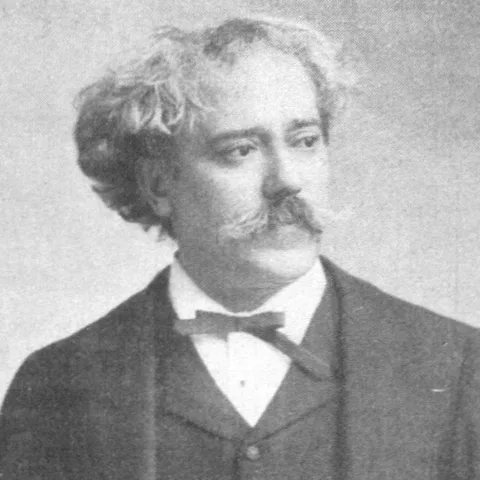
サラサーテ
1844–1908
#218シャーロック・ホームズも聴きに行ったSherlock Holmes went to his concert
コナン・ドイルの推理小説『赤毛組合』(1891)では、名探偵シャーロック・ホームズが「今日の午後はサラサーテがセント・ジェームズ・ホールで演奏する」と言って、ワトソンを誘って演奏会に出かけます。サラサーテは、物語に登場するほどの有名人だったのです。
In Arthur Conan Doyle's detective story The Red-Headed League (1891), Sherlock Holmes notes that Sarasate is playing at St James's Hall that afternoon and takes Watson along to the concert. Sarasate was famous enough to appear in one of the world's best-loved stories.
サラサーテ
1844–1908
#219レコードに入った「なぞの声」A mysterious voice on the record
1904年にサラサーテが録音した『ツィゴイネルワイゼン』には、演奏の途中で人の声のようなものが入っていると言われ、サラサーテ本人の声だという説もあります。この話をもとに、日本では内田百閒が小説『サラサーテの盤』を書き、鈴木清順監督の映画『ツィゴイネルワイゼン』(1980)も生まれました。
Sarasate's 1904 recording of Zigeunerweisen is said to include what sounds like a human voice in the middle of the music, and some say it is Sarasate himself. In Japan, this inspired Hyakken Uchida's short story Sarasate's Record and Seijun Suzuki's 1980 film Zigeunerweisen.
サラサーテ
1844–1908
#220父が弾けなかった所を5歳でPlaying what his father couldn't
サラサーテがバイオリンを始めたきっかけには、こんな話があります。父がある難しいフレーズの練習に苦労しているのを見ていた幼いサラサーテが、バイオリンを手に取ると、そのフレーズを完ぺきに弾いてしまったというのです。神童らしい言い伝えです。
There is a story about how Sarasate started playing. As a small boy, he watched his father struggling to practice a difficult passage. Then he picked up the violin and played it perfectly. It is just the kind of legend told about a child prodigy.
サラサーテ
1844–1908
#221画家ホイッスラーが描いた肖像Painted by Whistler
アメリカ出身の画家ホイッスラーは、1884年にサラサーテの全身像を描きました。題名は『黒の配置:パブロ・デ・サラサーテ』。黒い服でバイオリンを持って立つ、すらりとした姿が描かれています。演奏だけでなく、その姿も芸術家たちの心をひきつけました。
In 1884 the American-born painter James McNeill Whistler painted a full-length portrait of Sarasate titled Arrangement in Black: Pablo de Sarasate. It shows him standing elegantly in black, holding his violin. Not just his playing, but his presence, inspired artists.
サラサーテ
1844–1908
#222辛口批評家もお手上げEven a sharp critic was amazed
イギリスの劇作家で、音楽評論家としても厳しいことで有名だったバーナード・ショーは、サラサーテの演奏について、批評など遠く置き去りにしてしまうほどだ、という意味のことを書いて絶賛しました。どんなにうるさい人もうならせる腕前だったのです。
George Bernard Shaw, the British playwright who was also famous as a sharp music critic, praised Sarasate by writing that he left criticism gasping miles behind him. His playing could win over even the toughest critic.
サラサーテ
1844–1908
#223「サラサーテ」という名のストラディヴァリウスA Stradivarius named Sarasate
サラサーテは名器ストラディヴァリウスを2台持っていました。1724年製の1台はパリに遺され、いまは「サラサーテ」の名で呼ばれてパリの音楽博物館にあります。もう1台の1713年製「ボワシエ」は、マドリードの王立音楽院が持っています。
Sarasate owned two Stradivarius violins. He left the 1724 instrument to Paris, where it is now known as the Sarasate Stradivarius and kept at the Musée de la Musique. The other, the 1713 Boissier, belongs to the Royal Conservatory in Madrid.
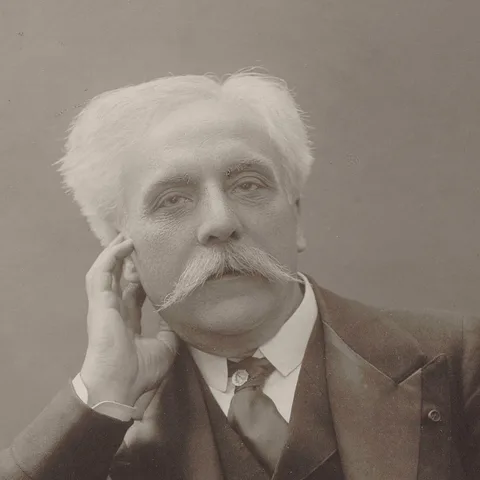
フォーレ
1845–1924
#224「怒りの日」がないレクイエムA Requiem without the Day of Wrath
ふつうのレクイエムには、最後の審判のおそろしさを歌う「怒りの日」という激しい部分があります。ところがフォーレは、この部分をほとんど入れず、代わりに天国へ導く「楽園にて」を最後に置きました。そのため、やさしく包みこむようなレクイエムになったのです。
Most Requiems include the Dies irae, or Day of Wrath, a fierce section about the terrors of the Last Judgment. Fauré left almost all of it out and ended instead with In Paradisum, which leads the soul to heaven. That is why his Requiem feels so gentle and comforting.
フォーレ
1845–1924
#225おだやかな人のあだ名は「ロベスピエール」A gentle man nicknamed Robespierre
おだやかな人がらで知られたフォーレですが、パリ音楽院の院長になると、古い教え方や決まりを次々に改めました。そのきびしい改革ぶりから、フランス革命の指導者の名をとって「ロベスピエール」とあだ名されたと言われています。
Fauré was known as a gentle person, but as director of the Paris Conservatoire he swept away many old methods and rules. Because of his tough reforms, he is said to have been nicknamed Robespierre, after a leader of the French Revolution.
フォーレ
1845–1924
#226ラヴェル落選事件がきっかけThe Ravel scandal that changed everything
1905年、すでに才能を認められていたラヴェルが、若手作曲家のための「ローマ大賞」の予選で落とされ、大問題になりました。この騒ぎで音楽院の院長が辞め、そのあとを継いだのがラヴェルの先生フォーレでした。弟子の事件が、師匠を院長にしたのです。
In 1905, Ravel, already a respected composer, was knocked out in the early round of the Prix de Rome, causing a scandal. The director of the Conservatoire resigned, and the man who replaced him was Ravel's own teacher, Fauré. A pupil's misfortune helped put his teacher in charge.
フォーレ
1845–1924
#227耳の病気をかくして作曲Composing while hiding his hearing loss
晩年のフォーレは耳が悪くなり、とくに高い音と低い音がゆがんで聞こえるようになりました。音楽院の院長という立場もあり、彼はこの病気をできるだけ人に知られないようにしていたと言われます。それでも最後まで、透きとおった美しい作品を書き続けました。
In his later years Fauré lost much of his hearing, and high and low notes in particular sounded distorted. As director of the Conservatoire, he is said to have tried hard to keep his condition secret. Even so, he kept writing music of crystal-clear beauty to the end.
フォーレ
1845–1924
#228『ドリー』組曲のモデルは、のちのドビュッシーの義理の娘The real Dolly became Debussy's stepdaughter
ピアノ連弾の組曲『ドリー』は、フォーレが親しかったバルダック家の幼い娘エレーヌ(愛称ドリー)のために書いた曲です。のちにドリーの母エンマは作曲家ドビュッシーと結婚したため、ドリーはドビュッシーの義理の娘になりました。
Fauré wrote his piano duet suite Dolly for little Hélène Bardac, nicknamed Dolly, the daughter of friends. Later, Dolly's mother Emma married the composer Claude Debussy, so the real Dolly became Debussy's stepdaughter.
フォーレ
1845–1924
#229『パヴァーヌ』には合唱付きの版もあるThe Pavane can be sung, too
フルートのメロディーが美しい『パヴァーヌ』は、オーケストラだけで演奏されることが多い曲です。でもじつは、合唱を加えて歌う版もあります。歌詞は詩人ロベール・ド・モンテスキウが書いたもので、恋人たちのかけひきを軽やかに歌っています。
The Pavane, with its lovely flute melody, is usually played by orchestra alone. But there is also a version with chorus. The words, by the poet Robert de Montesquiou, playfully describe the games that lovers play.
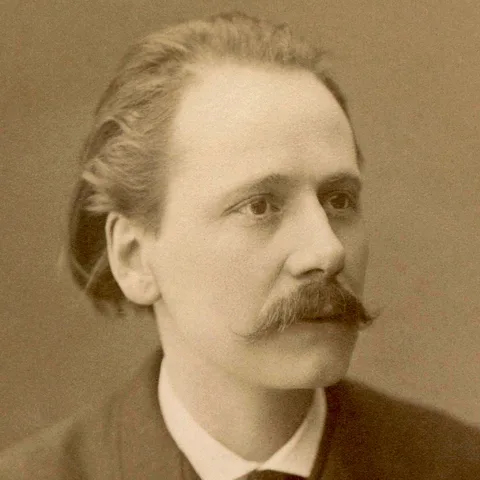
マスネ
1842–1912
#230リストが恋のキューピッド?Was Liszt a matchmaker?
ローマ留学中、マスネはリストにたのまれて、リストを支援する裕福な家のむすめニノンにピアノを教えました。二人は恋に落ち、マスネがフランスへ戻ったあとの1866年、ついに結婚しました。
While studying in Rome, Massenet was asked by Liszt to teach piano to Ninon, the daughter of one of Liszt's wealthy supporters. The two fell in love, and in 1866, after Massenet had returned to France, they married.
マスネ
1842–1912
#231毎朝4時に起きる作曲家A composer who rose at 4 a.m.
マスネは朝4時ごろに起きて、お昼まで作曲するのを一生の習慣にしていました。仕事がとても速く、書き直しも少なかったと言われます。夜ふかしの芸術家というイメージとは正反対ですね。
All his life, Massenet got up at around 4 a.m. and composed until midday. He was known as a fast worker who seldom revised his music. That is the very opposite of the night-owl artist we often imagine.
マスネ
1842–1912
#232ライバルに送った電報A telegram to a rival
1878年、フランス学士院の会員選挙で、マスネは先輩のサン=サーンスに勝ちました。マスネが「学士院は大きな不正をしました」と電報を送ると、サン=サーンスは「まったく同感です」と返したそうです。サン=サーンスも3年後に会員になりましたが、二人の仲はひんやりしたままでした。
In 1878 Massenet beat the older Camille Saint-Saëns in an election to the Institut de France. Massenet sent him a telegram saying the Institute had committed a great injustice. Saint-Saëns replied, 'I quite agree.' Saint-Saëns was elected three years later, but the two stayed rather cool toward each other.
マスネ
1842–1912
#233学生時代のアルバイトは打楽器His student job: percussion
音楽院の学生のころ、マスネは劇場のオーケストラで打楽器を演奏してお金をかせいでいました。のちのオペラ王は、オーケストラのいちばんうしろの席から、劇場の音楽のしくみを学んでいたのです。
As a Conservatoire student, Massenet earned money by playing percussion in theatre orchestras. The future king of opera was learning how theatre music works from the very back row of the orchestra.
マスネ
1842–1912
#234ひとりの歌手のために書いたオペラOperas written for one singer
マスネはアメリカ出身のソプラノ歌手シビル・サンダーソンの声にほれこみ、彼女のために『エスクラルモンド』(1889年)と『タイス』(1894年)を書き、『マノン』も彼女向けに手直ししました。パリではいろいろなうわさが立ちましたが、二人の関係は友情の範囲だったとされています。
Massenet was enchanted by the voice of the American soprano Sibyl Sanderson. He wrote Esclarmonde (1889) and Thaïs (1894) for her and even revised Manon to suit her. Parisians gossiped, but their relationship is believed to have stayed platonic.
マスネ
1842–1912
#235友だちの遺作を完成させたHe finished a friend's last opera
『コッペリア』の作曲者ドリーブは1891年に急に亡くなり、オペラ『カシャ』を未完成のまま残しました。それを完成させ、オーケストラの楽譜も書いたのがマスネです。『カシャ』は1893年に初演されました。
When Léo Delibes, the composer of Coppélia, died suddenly in 1891, he left his opera Kassya unfinished. Massenet completed it and wrote the orchestration himself. Kassya was finally staged in 1893.
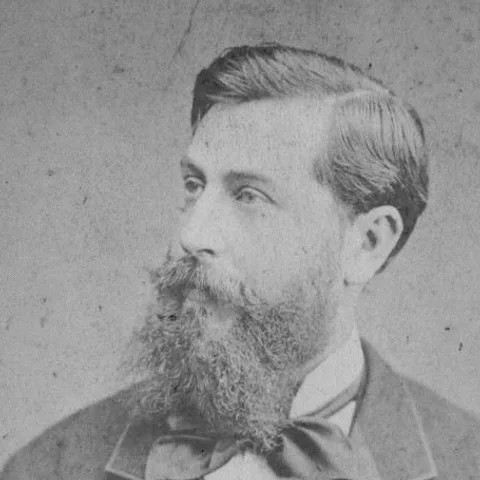
ドリーブ
1836–1891
#236チャイコフスキーが脱帽!Tchaikovsky takes his hat off
チャイコフスキーは『シルヴィア』を聴いて大感激し、「この音楽を先に知っていたら、もちろん『白鳥の湖』は書かなかっただろう」と書きました。音楽が主役になった初めてのバレエだ、とまでほめています。
Tchaikovsky was thrilled when he heard Sylvia. He wrote that if he had known this music earlier, he would of course not have written Swan Lake. He even praised it as the first ballet in which the music was the main attraction.
ドリーブ
1836–1891
#237少年時代に歴史的な初演に出演A boy singer at a famous premiere
聖歌隊で歌っていた少年ドリーブは、1849年、パリ・オペラ座で行われたマイアベーアの大オペラ『預言者』の初演に出演しました。のちに彼は、まさにそのオペラ座のために名作バレエを書くことになります。
As a choirboy, young Delibes sang in the 1849 premiere of Meyerbeer's grand opera Le prophète at the Paris Opéra. Years later, he would write his great ballets for that very same theatre.
ドリーブ
1836–1891
#238恋人役の青年を女性が踊ったThe young hero was danced by a woman
『コッペリア』の初演では、主人公の恋人の青年フランツを、男性ではなく女性ダンサーのウジェニー・フィオクルが男装して踊りました。当時のパリでは男性ダンサーの人気が低かったためで、パリ・オペラ座ではこの形が長く続いたと言われています。
At the premiere of Coppélia, the young hero Frantz was danced not by a man but by a woman, Eugénie Fiocre, dressed as a young man. Male dancers were not very popular in Paris at the time, and the Paris Opéra is said to have kept this custom for many years.
ドリーブ
1836–1891
#239原作はちょっとこわいお話The original story is a bit scary
『コッペリア』のもとになったのは、ドイツの作家E.T.A.ホフマンの物語『砂男』です。原作は不気味でこわい話ですが、バレエでは明るく楽しい恋のコメディに作りかえられています。
Coppélia is based on The Sandman, a story by the German writer E.T.A. Hoffmann. The original is a dark and creepy tale, but the ballet turns it into a bright, cheerful romantic comedy.
ドリーブ
1836–1891
#240飛行機のCMで世界的に有名にMade famous by an airline ad
『ラクメ』の「花の二重唱」は、イギリスの航空会社ブリティッシュ・エアウェイズのテレビCMで使われ、オペラを知らない人にも広く知られるようになりました。今も映画やCMでよく耳にする曲です。
The 'Flower Duet' from Lakmé was used in TV commercials for British Airways, which made it famous even among people who never go to the opera. It is still often heard in films and adverts.
ドリーブ
1836–1891
#241最後のオペラは友だちが完成A friend finished his last opera
ドリーブは1891年に急に亡くなり、オペラ『カシャ』は未完成のまま残されました。それを完成させてオーケストラの楽譜を書いたのは、同じ時代の人気作曲家マスネです。『カシャ』は1893年に初演されました。
Delibes died suddenly in 1891, leaving his opera Kassya unfinished. It was completed and orchestrated by Massenet, another popular composer of the day, and premiered in 1893.

スーザ
1854–1932
#242サーカスに入りかけた少年The boy who nearly joined the circus
13歳のスーザは、サーカスの楽団に入ろうとしていたと言われています。それを知ったお父さんが、海兵隊バンドの見習いに入れて止めたというのです。のちにそのバンドの隊長になるのですから、人生はわかりません。
At thirteen, Sousa is said to have been about to join a circus band. When his father found out, he signed him up as an apprentice in the Marine Band instead. Sousa later became that band's leader. Life is full of surprises!
スーザ
1854–1932
#243スーザフォンの生みの親The father of the sousaphone
大きな金管楽器「スーザフォン」は、1890年代にスーザの希望をもとに、フィラデルフィアのJ.W.ペッパーが最初の型を作りました。はじめはベルが上を向いていて、行進用というより、コンサートで低い音を豊かに響かせるための楽器でした。のちにスーザはコーン社が作ったものを気に入っていました。
The sousaphone was developed in the 1890s from Sousa's ideas, and J. W. Pepper of Philadelphia made the earliest version. Its bell pointed upward, and it was first meant to give a rich bass sound in Sousa's concert band rather than for marching. Sousa later preferred a version made by the Conn company.
スーザ
1854–1932
#244レコードは「缶づめの音楽」Records were 'canned music'
スーザは録音された音楽を「缶づめの音楽」と呼び、1906年にはアメリカ議会で「この話す機械(蓄音機)が音楽の芸術的な発展をだめにする」と証言しました。ところが1925年に新しい電気録音を聴いてからは、考えを変えたそうです。
Sousa called recorded music 'canned music'. In 1906 he told a Congressional hearing that talking machines would ruin the artistic development of music in America. After hearing a demonstration of the new electrical recording in 1925, however, he changed his mind.
スーザ
1854–1932
#245クレー射撃の名人A champion trapshooter
スーザはクレー射撃(トラップ射撃)の名手で、トラップ射撃の殿堂に名前がきざまれています。全国的な射撃団体の立ち上げにもかかわり、記録に残るだけで3万5千枚以上の的をうったそうです。
Sousa was a top trapshooter and is honoured in the Trapshooting Hall of Fame. He helped organize an early national trapshooting association, and records show he shot at more than 35,000 targets.
スーザ
1854–1932
#246給料は月1ドルだけJust one dollar a month
第一次世界大戦中、62歳で海軍予備役に入ったスーザは、海軍からもらう給料のうち月1ドルだけを受け取り、残りはすべて水兵や海兵隊員を助ける基金に寄付しました。愛国心あふれるマーチ王らしい行動です。
When Sousa joined the Naval Reserve at 62 during the First World War, he kept only one dollar a month of his Navy pay. He gave the rest to a fund that helped sailors and marines, a fitting gesture for America's patriotic March King.
スーザ
1854–1932
#247小説家スーザSousa the novelist
スーザは作曲だけでなく小説も書きました。1902年の『第5の弦』は、悪魔と取り引きをしたバイオリン弾きの物語です。ほかにもいくつかの小説や長い物語を出版していて、文章の才能もあったのです。
Sousa wrote fiction as well as music. His 1902 novella The Fifth String tells of a violinist who makes a deal with the Devil. He published several other novels and long stories too, showing a real talent for writing.
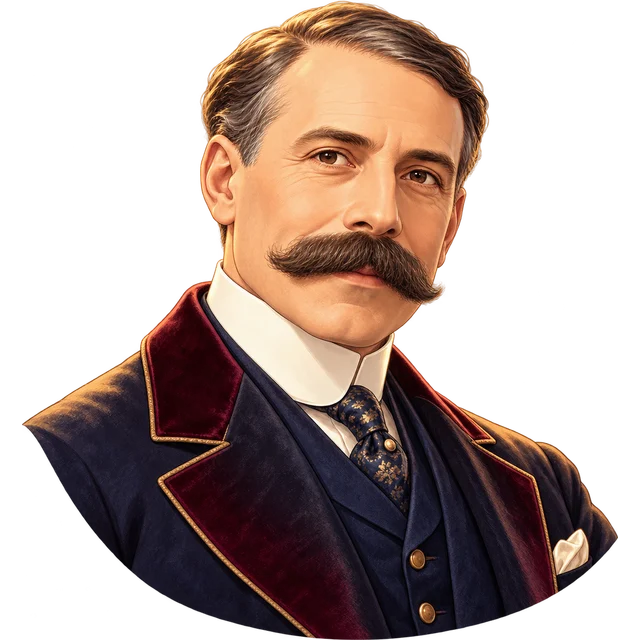
エルガー
1857–1934
#248実験器具を考案した作曲家A composer who designed lab equipment
エルガーは化学が大好きで、家に実験のための部屋を作るほどでした。1908年ごろには、硫化水素を作る実験器具を考案し、会社が製造を引き受けました。特許をとったとよく書かれますが、その記録ははっきりしていません。作曲家と発明家、二つの顔をもっていたのです。
Elgar loved chemistry so much that he set up a room for experiments at home. Around 1908 he designed an apparatus for making hydrogen sulphide, and a firm agreed to manufacture it. It is often said that he patented it, but the record is unclear. He was both a composer and an inventor.
エルガー
1857–1934
#249ブルドッグが川に落ちた音楽The bulldog that fell into the river
『エニグマ変奏曲』の第11変奏は、友人のオルガン奏者シンクレアを描いた曲です。ところがエルガー自身の説明によると、出だしはシンクレアの愛犬のブルドッグ「ダン」が川に落ちて、泳いで岸にはい上がり、ほえる場面から思いついたものなのです。
Variation 11 of the Enigma Variations portrays Elgar's friend, the organist George Sinclair. But according to Elgar himself, its opening was inspired by Sinclair's bulldog, Dan, falling into the river, paddling to the bank and barking.
エルガー
1857–1934
#250いまも解けない暗号の手紙A coded letter still unsolved
1897年、エルガーは若い友人ドーラ・ペニーに、ふしぎな記号だけで書かれた手紙を送りました。「ドラベッラ暗号」と呼ばれるこの手紙は、100年以上たった今も、だれにも確実には解読されていません。
In 1897 Elgar sent his young friend Dora Penny a note written entirely in strange symbols. Known as the Dorabella Cipher, it has still not been convincingly solved, more than a hundred years later.
エルガー
1857–1934
#251サッカーの記事に曲をつけたMusic for a football report
エルガーはサッカーチーム、ウルヴァーハンプトン・ワンダラーズのファンでした。新聞の試合記事にあった「彼はゴールめがけてボールをけりこんだ」という一文に、メロディーをつけたことがあると伝えられています。
Elgar was a fan of the football club Wolverhampton Wanderers. He is said to have set to music a line from a newspaper match report: 'He banged the leather for goal.'
エルガー
1857–1934
#252娘の名前は夫婦の合体A name made from his wife's names
エルガー夫妻のひとり娘は「カリス(Carice)」と名づけられました。お母さんの二つの名前、キャロライン(Caroline)とアリス(Alice)を組み合わせた名前です。妻を大切にしたエルガーらしいですね。
The Elgars named their only daughter Carice, combining her mother's two names, Caroline and Alice. It shows how much Elgar treasured his wife.
エルガー
1857–1934
#25320ポンド札の顔だったHis face was on the £20 note
1999年から、イギリスの20ポンド紙幣にはエルガーの肖像が印刷されていました。背景にはふるさとのウスター大聖堂が描かれていました。この紙幣は2010年6月30日で通常のお金としては使えなくなりましたが、イングランド銀行では今も交換できます。
From 1999, Elgar's portrait appeared on the Bank of England's £20 note, with Worcester Cathedral in the background. The note stopped being legal tender on 30 June 2010, but it can still be exchanged at the Bank of England.
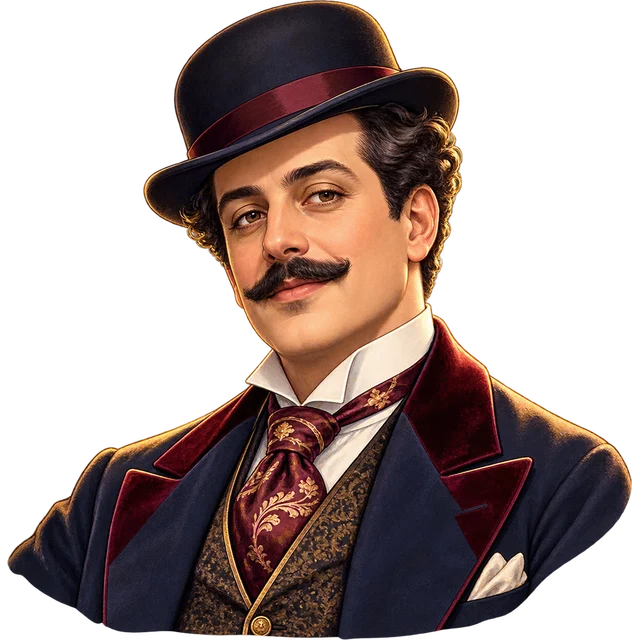
プッチーニ
1858–1924
#254日本の歌を教えたのは公使夫人Japanese songs from a diplomat's wife
『蝶々夫人』を書くにあたり、プッチーニは日本の音楽を熱心に調べました。イタリアにいた日本の公使の夫人・大山久子から日本の歌を聞いたりしたと言われています。オペラには「さくらさくら」「宮さん宮さん」「お江戸日本橋」「君が代」などのメロディーが登場します。
While writing Madama Butterfly, Puccini studied Japanese music closely. He is said to have heard Japanese songs from Hisako Ōyama, the wife of Japan's envoy to Italy. Melodies such as 'Sakura Sakura', 'Miya-san Miya-san', 'Oedo Nihonbashi' and 'Kimigayo' appear in the opera.
プッチーニ
1858–1924
#255初演は大ブーイングA premiere full of boos
1904年、スカラ座での『蝶々夫人』の初演は、客席からやじや笑い声が飛ぶ大失敗でした。プッチーニはすぐに楽譜を書き直し、長すぎた第2幕を2つに分けるなどして、約3か月後のブレシアでの公演で大成功をおさめました。
The 1904 premiere of Madama Butterfly at La Scala was a fiasco, with jeers and laughter from the audience. Puccini quickly revised the score, splitting the long second act into two parts, and about three months later the opera was a great success in Brescia.
プッチーニ
1858–1924
#256スピード好きの作曲家A composer who loved speed
プッチーニは新しい物が好きで、自動車やモーターボートが大好きでした。1903年には車の事故で足を骨折し、長いあいだ療養することになりました。湖のほとりの家では、カモ猟も楽しんでいました。
Puccini loved new gadgets, especially cars and motorboats. In 1903 he broke his leg in a car crash and needed a long time to recover. At his lakeside home he also enjoyed duck hunting.
プッチーニ
1858–1924
#257演奏が止まった初演The premiere that stopped mid-opera
1926年の『トゥーランドット』の初演で、指揮者トスカニーニはプッチーニが書き終えたところで演奏を止め、客席に向かって「ここで作曲者は亡くなりました」という意味の言葉を語ったと伝えられています。言葉の中身は、伝える人によって少しちがいます。
At the 1926 premiere of Turandot, Toscanini is said to have stopped the performance at the point where Puccini's own music ended and told the audience, in words to the effect of, 'Here the composer died.' Accounts of his exact words vary.
プッチーニ
1858–1924
#258ルームメイトもオペラ作曲家His roommate also became an opera star
ミラノ音楽院の学生時代、プッチーニは、のちにオペラ『カヴァレリア・ルスティカーナ』で有名になるマスカーニと部屋をシェアしていました。二人ともお金がなく、苦しい暮らしだったと言われています。
As a student in Milan, Puccini shared rooms with Pietro Mascagni, who would later become famous for Cavalleria rusticana. Both were short of money, and life is said to have been hard.
プッチーニ
1858–1924
#259金メダルを呼んだ「トゥーランドット」Turandot and an Olympic gold
2006年のトリノ・オリンピックで、フィギュアスケートの荒川静香選手は『トゥーランドット』の音楽を使ったフリー演技で金メダルを獲得しました。これで「誰も寝てはならぬ」のメロディーは日本でも一気に有名になりました。
At the 2006 Turin Winter Olympics, Japanese figure skater Shizuka Arakawa won gold with a free skate set to music from Turandot. The melody of 'Nessun dorma' instantly became famous across Japan.
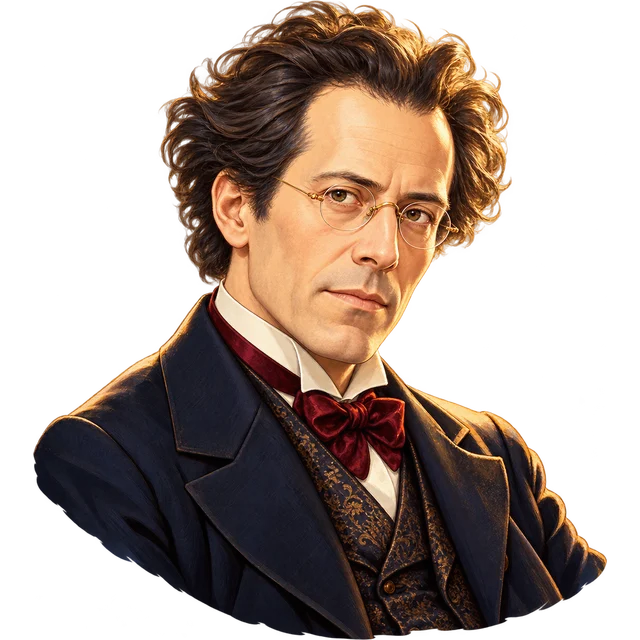
マーラー
1860–1911
#260「グーチョキパー」が短調で登場A nursery tune in a minor key
交響曲第1番の第3楽章では、日本の手遊び歌「グーチョキパーでなにつくろう」と同じメロディー(もとはフランスの歌「フレール・ジャック」)が、暗い短調になってゆっくり流れます。お葬式の行進のような、ふしぎな雰囲気の音楽です。
In the third movement of the First Symphony, the tune of 'Frère Jacques', known in Japan as the hand-game song 'Gu Choki Pa', appears slowly in a dark minor key. It sounds like a strange, gloomy funeral march.
マーラー
1860–1911
#261「千人の交響曲」は宣伝文句'Symphony of a Thousand' was a sales slogan
交響曲第8番の「千人の交響曲」というニックネームは、マーラー本人ではなく、初演を企画した興行主がつけたものです。ただし実際に、1910年の初演では1000人をこえる歌手と演奏家がステージに上がりました。
The nickname 'Symphony of a Thousand' for the Eighth was invented not by Mahler but by the promoter who organized its premiere. Still, more than a thousand singers and players really did take part in the 1910 first performance.
マーラー
1860–1911
#262「第9番」のジンクスThe curse of the Ninth
ベートーヴェンやブルックナーは交響曲第9番を最後に亡くなりました。マーラーはこれを気にして、9番目の交響曲に番号をつけず『大地の歌』と名づけた、という話が伝わっています。でも次に第9番を書き、第10番は未完成のまま亡くなりました。
Beethoven and Bruckner both died after writing a Ninth Symphony. The story goes that Mahler, worried by this, gave his ninth symphonic work a title, The Song of the Earth, instead of a number. He then wrote a Ninth anyway, and died leaving the Tenth unfinished.
マーラー
1860–1911
#263ハンマーでドーン!Bang goes the hammer!
交響曲第6番の最終楽章では、大きな木のハンマーを打ちおろす音が使われます。楽譜では最初は3回でしたが、マーラーはのちに3回目を消しました。その理由については、今もいろいろな説があります。
The finale of the Sixth Symphony calls for a huge wooden hammer to be brought down with a thunderous blow. At first the score had three hammer strokes, but Mahler later removed the third. People still argue about why.
マーラー
1860–1911
#264フロイトに相談したA walk with Freud
1910年、悩みをかかえたマーラーは、オランダのライデンで心理学者フロイトに会い、町を歩きながら4時間ほど話し合ったと伝えられています。大作曲家と心の研究の大家の、めずらしい出会いでした。
In 1910, troubled in his personal life, Mahler met Sigmund Freud in Leiden in the Netherlands. They are said to have talked for about four hours while walking around the town, a rare meeting of a great composer and a pioneer of the mind.
マーラー
1860–1911
#265中国の詩から生まれた交響曲A symphony from Chinese poems
『大地の歌』の歌詞は、李白など中国・唐の時代の詩人の詩を、ドイツ語に自由に訳した詩集から選ばれています。東洋の詩の世界を、西洋の大オーケストラで表現した作品です。
The words of The Song of the Earth come from free German versions of poems by Tang-dynasty Chinese poets such as Li Bai. It brings the world of Eastern poetry to life with a large Western orchestra.
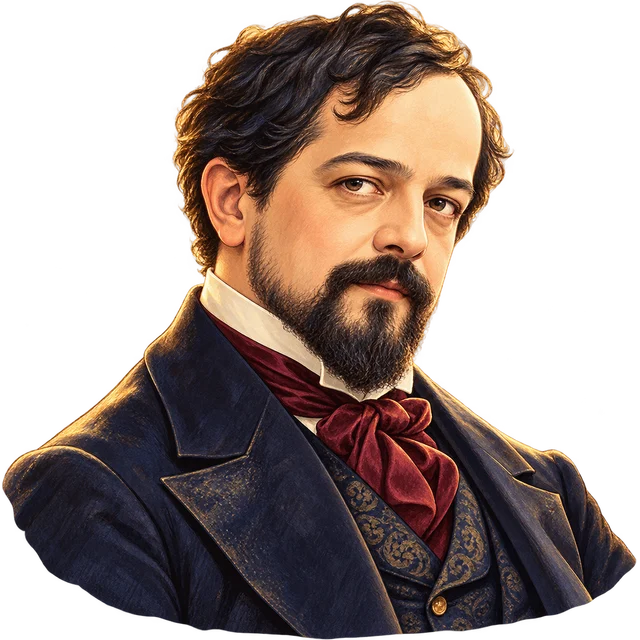
ドビュッシー
1862–1918
#266表紙は北斎の大波Hokusai's Great Wave on the cover
ドビュッシーは日本の美術が大好きでした。1905年に出版された管弦楽曲『海』の楽譜の表紙には、葛飾北斎の「神奈川沖浪裏」の大波が使われています。日本の浮世絵とフランスの音楽が出会った一枚です。
Debussy loved Japanese art. The cover of the first edition of La mer, published in 1905, used the great wave from Katsushika Hokusai's famous print, The Great Wave off Kanagawa. It is a meeting of Japanese woodblock art and French music.
ドビュッシー
1862–1918
#267ガムランとの衝撃の出会いA life-changing gamelan concert
1889年のパリ万国博覧会で、ドビュッシーはジャワのガムラン音楽を聴いて強く心を動かされました。金属の打楽器がきらめくように重なる響きは、のちの彼のピアノ曲などにも影響をあたえたと考えられています。
At the 1889 Paris World Exhibition, Debussy was deeply moved by Javanese gamelan music. Its shimmering layers of metal percussion are thought to have influenced his later music, including his piano pieces.
ドビュッシー
1862–1918
#268曲名は最後に書いたThe titles come at the end
ピアノのための『前奏曲集』では、ドビュッシーは曲名を楽譜の最初ではなく、各曲の最後にカッコ付きで書きました。名曲「亜麻色の髪の乙女」もその一つ。題名にとらわれず、まず音を聴いてほしかったのだと考えられています。
In his Preludes for piano, Debussy wrote each title not at the top of the music but at the end, in brackets. 'The Girl with the Flaxen Hair' is one of them. He probably wanted listeners to hear the music first, without being led by a title.
ドビュッシー
1862–1918
#269ペンネームは「八分音符さん」A critic named 'Mr Eighth-Note'
ドビュッシーは音楽評論も書き、そこに「ムッシュー・クロッシュ」という架空の人物を登場させました。「クロッシュ」はフランス語で八分音符のこと。皮肉たっぷりの、するどい評論を書きました。
Debussy also wrote music criticism, using an imaginary character called Monsieur Croche. 'Croche' is the French word for an eighth note. His reviews were witty and sharp-tongued.
ドビュッシー
1862–1918
#270チャイコフスキーの支援者の家で働いたWorking for Tchaikovsky's patron
18歳のころ、ドビュッシーはチャイコフスキーを支援していたメック夫人に雇われ、夏のあいだ家族のピアノの先生や伴奏者として、スイス、イタリア、ロシアなどを旅しました。
At around eighteen, Debussy was hired by Nadezhda von Meck, Tchaikovsky's patron, as a piano teacher and accompanist for her family. With them he spent summers travelling to Switzerland, Italy and Russia.
ドビュッシー
1862–1918
#271むすめへのおわびの言葉An apology to his daughter
『子供の領分』の楽譜には「かわいいシュシュへ。このあとに続くものについて、父からのやさしいおわびをこめて」という献辞が書かれています。ユーモアたっぷりのお父さんでした。
Children's Corner is dedicated 'to my dear little Chouchou, with her father's tender apologies for what follows'. Debussy was a father with a great sense of humour.

サティ
1866–1925
#272同じスーツを7着Seven identical suits
1895年、サティはまったく同じ色・形のスーツを7着も買い、それを毎日のように着つづけて「ビロードの紳士」と呼ばれました。これなら毎朝なにを着るか迷わずにすみますね。
In 1895 Satie bought seven identical suits and wore them day after day, earning the nickname 'the Velvet Gentleman'. He never had to worry about what to wear in the morning!
サティ
1866–1925
#273840回くり返す曲?A piece played 840 times?
『ヴェクサシオン』という短いピアノ曲の楽譜には、840回くり返すことを示すような書きこみがあります。1963年、作曲家ジョン・ケージらが実際に840回演奏したところ、18時間以上かかりました。
The score of Vexations, a short piano piece, contains a note suggesting it should be played 840 times. In 1963 the composer John Cage and a team of pianists actually did it. The performance took more than eighteen hours.
サティ
1866–1925
#274会員ひとりだけの教会A church with only one member
1893年から1895年ごろ、サティは自分で教会を作り、自分がそのただ一人の会員でした。神父のような服を着て、教会の名前で手紙や文章を発表していました。会員ひとりの教会なんて、まさにサティらしいユーモアです。
From about 1893 to 1895, Satie ran his own church, and he was its only member. He dressed like a priest and published letters and writings in the church's name. A church with just one member is pure Satie humour.
サティ
1866–1925
#275白い食べ物しか食べない?Only white food?
サティは冗談の文章の中で「わたしは白い食べ物しか食べない。卵、砂糖、くだいた骨…」などと書き、食事は4分で終えるとまで書いています。もちろん本当の話ではなく、読む人を笑わせるためのユーモアです。
In one of his joke writings, Satie claimed he ate only white food, such as eggs, sugar and grated bones, and finished dinner in four minutes. Of course it was not true; it was humour meant to make readers laugh.
サティ
1866–1925
#276題名がとにかくヘンTruly strange titles
サティの曲には『梨の形をした3つの小品』(実は全7楽章)、『ぶよぶよした前奏曲(犬のための)』、『官僚的なソナチネ』など、ふしぎな題名がたくさんあります。まじめな音楽界を、ユーモアでからかっていたのです。
Satie's works have wonderfully odd titles, such as Three Pieces in the Shape of a Pear (which actually contains seven movements), Flabby Preludes (for a Dog) and Bureaucratic Sonatina. He was poking fun at the serious music world.
サティ
1866–1925
#277開かずの部屋のひみつThe secret of the locked room
サティはアルクイユの部屋に27年間だれも入れなかったと言われています。亡くなったあと友人たちが部屋に入ると、ほこりとがらくたの中から、なくなったと思われていた大事な作品の楽譜がいくつも見つかりました。
According to a well-known story, Satie let no one into his room in Arcueil for 27 years. When his friends finally went in after his death, they found the scores of several important works, long thought lost, buried among dust and clutter.
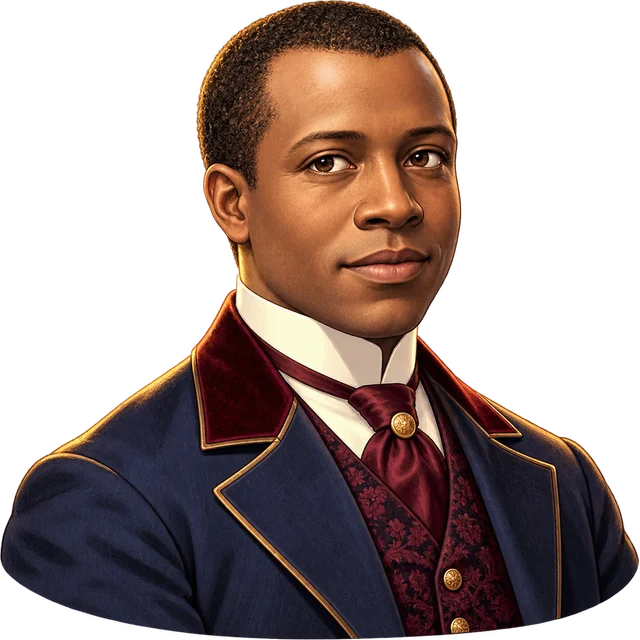
ジョプリン
c.1868–1917
#278無料で教えてくれた先生The teacher who taught him for free
ドイツ生まれの音楽の先生ジュリアス・ワイスは、少年ジョプリンにお金を取らずに音楽を教えました。ジョプリンは11歳ごろから数年間学んだとされ、ヨーロッパのクラシック音楽やオペラのすばらしさも教わったと言われています。
The German-born music teacher Julius Weiss taught young Joplin free of charge. Joplin is believed to have studied with him for several years from about age eleven, and Weiss is said to have opened the boy's eyes to European classical music and opera.
ジョプリン
c.1868–1917
#279「速くひくな!」の注意書き'Don't play it fast!'
当時のラグタイムは、酒場などで速くはでにひかれることがよくありました。ジョプリンはそれに反対し、自分の楽譜に「ラグタイムを速くひくのは決して正しくない」と書きこみました。書かれたとおり、ていねいにひいてほしかったのです。
In those days ragtime was often played fast and flashy in bars and dance halls. Joplin disagreed, and printed on his sheet music the warning that it is never right to play ragtime fast. He wanted his music played carefully, exactly as written.
ジョプリン
c.1868–1917
#280映画の音楽は時代ちがいThe film's music was from the wrong era
映画『スティング』は1930年代が舞台ですが、使われたジョプリンのラグは1900年代初めの曲で、本当はもっと前の時代の音楽です。それでもマーヴィン・ハムリッシュの編曲はアカデミー賞を受賞し、『ジ・エンターテイナー』は世界中で大ヒットしました。
The Sting is set in the 1930s, but Joplin's rags date from the early 1900s, so the music is really from an earlier era. Even so, Marvin Hamlisch's arrangements won an Academy Award, and The Entertainer became a hit around the world.
ジョプリン
c.1868–1917
#28157年間、墓石のないお墓57 years without a headstone
ジョプリンはニューヨークの墓地に、墓石のない簡素なお墓でほうむられました。それから57年後の1974年、彼の音楽が再び注目されたことをきっかけに、ようやく墓石が立てられました。
Joplin was buried in a simple, unmarked grave in a New York cemetery. Only in 1974, 57 years later, after his music had become popular again, was a headstone finally placed there.
ジョプリン
c.1868–1917
#282約60年後に花開いたオペラAn opera that bloomed sixty years later
ジョプリンが生きているあいだ、オペラ『トゥリーモニシャ』は、舞台装置もないけいこ場での試演などにとどまりました。1972年にアトランタで本格的に舞台上演され、1975年にはヒューストン・グランド・オペラの上演で高く評価されました。
In Joplin's lifetime, Treemonisha only received bare run-throughs without proper staging. It was finally staged in Atlanta in 1972, and a 1975 production by Houston Grand Opera won wide acclaim.
ジョプリン
c.1868–1917
#2831枚のレコードから大復活One record sparked a revival
1970年、ピアニストで音楽学者のジョシュア・リフキンがジョプリンのラグを録音したレコードを出すと、クラシックのレコード会社としては異例の大ヒットになり、そのレーベル初のミリオンセラーになりました。これが『スティング』より前の、ジョプリン再評価の始まりでした。
In 1970 the pianist and scholar Joshua Rifkin released an album of Joplin's rags. It became a surprise hit and the first million-selling record for its classical label. This started the Joplin revival even before The Sting.
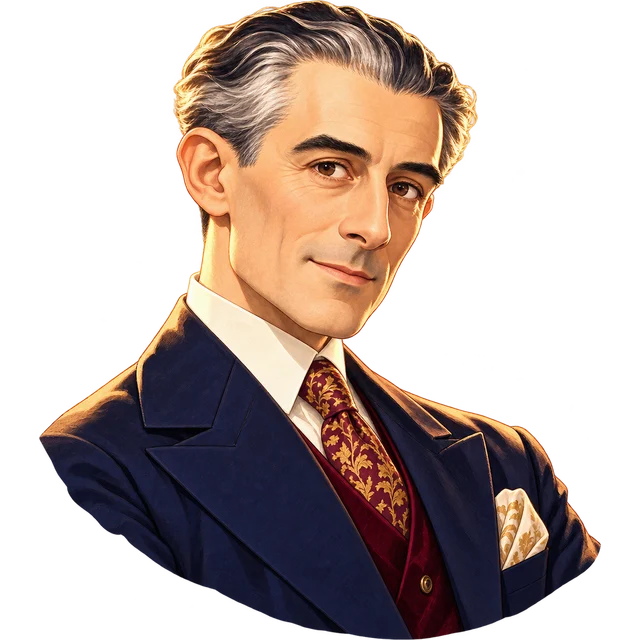
ラヴェル
1875–1937
#284ローマ大賞に5回挑戦Five tries, no Grand Prix
ラヴェルはローマ大賞に5回挑戦しましたが、大賞はとれませんでした。1905年、すでに有名だった彼が予選で落とされると「審査がおかしい」と大さわぎになり、パリ音楽院の院長が辞めて、ラヴェルの先生フォーレが新しい院長になりました。
Ravel tried for the Prix de Rome five times but never won the top prize. In 1905, when the already famous composer was eliminated in the first round, there was a public outcry. The director of the Conservatoire resigned, and Ravel's own teacher, Fauré, took over.
ラヴェル
1875–1937
#285トラックに名前をつけたHe gave his truck a name
第一次世界大戦中、ラヴェルは軍のトラックの運転手として、激戦地ヴェルダンの近くでも働きました。彼は自分が運転するトラックに「アデライード」という名前をつけていたと伝えられています。
During the First World War, Ravel served as a military truck driver, including near the battlefields of Verdun. He is said to have named the truck he drove 'Adélaïde'.
ラヴェル
1875–1937
#286国の勲章をことわったHe turned down France's highest honour
1920年、フランス政府はラヴェルに国の最高の勲章、レジオン・ドヌール勲章をおくろうとしましたが、ラヴェルはこれをことわりました。理由ははっきり語られておらず、いろいろな説があります。
In 1920 the French government tried to award Ravel the Legion of Honour, but he refused it. He never clearly explained why, and there are various theories.
ラヴェル
1875–1937
#287左手のピアニストのための協奏曲A concerto for the left hand
戦争で右腕を失ったピアニスト、パウル・ウィトゲンシュタインのために、ラヴェルは左手だけでひくピアノ協奏曲を書きました。パウルの弟は、有名な哲学者ルートヴィヒ・ウィトゲンシュタインです。
Ravel wrote a piano concerto for the left hand alone for Paul Wittgenstein, a pianist who had lost his right arm in the war. Paul's younger brother was the famous philosopher Ludwig Wittgenstein.
ラヴェル
1875–1937
#288からくりおもちゃと猫が大好きA lover of clockwork toys and cats
ラヴェルは小さなからくり人形や機械じかけのおもちゃを集めるのが大好きで、パリ郊外モンフォール=ラモーリーの家に飾っていました。シャム猫もかわいがっていました。精密な機械への愛は、時計のように正確な彼の音楽にも通じています。
Ravel loved collecting little mechanical toys and clockwork figures, which he displayed in his house at Montfort-l'Amaury outside Paris. He also adored his Siamese cats. His love of precise machines matches the clockwork precision of his music.
ラヴェル
1875–1937
#289ガーシュウィンへの名回答?A famous reply to Gershwin?
ジャズの作曲家ガーシュウィンに弟子入りをたのまれたラヴェルが、「一流のガーシュウィンが、なぜ二流のラヴェルになる必要があるのですか」と答えたという有名な話があります。ただし、本当にこう言ったかははっきりしません。
There is a famous story that when George Gershwin asked to study with him, Ravel replied, 'Why become a second-rate Ravel when you are already a first-rate Gershwin?' Whether he really said this is uncertain.

ラフマニノフ
1873–1943
#29017日間でオペラ完成An opera in seventeen days
モスクワ音楽院の卒業作品として書いたオペラ『アレコ』は、なんと17日間で完成させたと言われています。この作品で彼は大金メダルを受け、19歳で一人前の作曲家として認められました。
Rachmaninoff is said to have written his graduation piece, the opera Aleko, in only seventeen days. It won him the Great Gold Medal, and at nineteen he was recognised as a fully fledged composer.
ラフマニノフ
1873–1943
#291大ヒット曲の出演料は50ルーブルA hit that paid fifty roubles
『前奏曲 嬰ハ短調』は世界中で大ヒットしましたが、この曲を初演したモスクワ電気博覧会の演奏会で、彼が受け取った出演料は50ルーブルでした。また、当時のロシアは国際的な著作権の約束(ベルヌ条約)に入っておらず、外国で楽譜が売れても彼にはほとんどお金が入らなかったと言われています。
His Prelude in C-sharp minor became a worldwide hit, yet his fee for the Moscow Electrical Exhibition concert where he first played it was just fifty roubles. And because Russia had not joined the international copyright agreement, the Berne Convention, he is said to have earned almost nothing from sales of the music abroad.
ラフマニノフ
1873–1943
#292指揮者がよっぱらっていた?Was the conductor drunk?
1897年、交響曲第1番の初演は大失敗でした。指揮したのは作曲家のグラズノフで、「グラズノフは酔っていた」という証言もありますが、本当かどうかははっきりしません。この失敗のあと、ラフマニノフは数年間ほとんど作曲できなくなりました。
The 1897 premiere of the First Symphony was a fiasco. It was conducted by the composer Alexander Glazunov, and some witnesses suggested he was drunk, though this has never been proven. After the failure, Rachmaninoff composed very little for several years.
ラフマニノフ
1873–1943
#293名曲をささげた相手は医師A masterpiece dedicated to a doctor
落ちこんでいたラフマニノフを救ったのは、医師ニコライ・ダーリでした。1900年の数か月間、ダーリの治療を受けて自信を取りもどし、完成したピアノ協奏曲第2番を感謝をこめてダーリにささげました。
The man who rescued Rachmaninoff from depression was Dr Nikolai Dahl. After several months of treatment with Dahl in 1900, he regained his confidence, and he gratefully dedicated his finished Piano Concerto No. 2 to the doctor.
ラフマニノフ
1873–1943
#294別荘の名前は夫婦の頭文字A villa named after the couple
スイスの別荘「セナール(Senar)」の名前は、セルゲイ(Sergei)とナターリヤ(Natalia)の最初の2文字ずつに、ラフマニノフ家の頭文字「R」を組み合わせたものです。
The name of his Swiss villa, Senar, combines the first two letters of Sergei and Natalia with the R of Rachmaninoff.
ラフマニノフ
1873–1943
#295さかさまにした名旋律A famous tune turned upside down
『パガニーニの主題による狂詩曲』の有名な第18変奏は、パガニーニのメロディーを上下さかさまにして(反転させて)、ゆっくりにしたものです。まったく別の、甘く美しい曲に生まれ変わっています。
The famous 18th variation of the Rhapsody on a Theme of Paganini is Paganini's tune turned upside down and slowed down. It is reborn as a completely different, sweet and beautiful melody.
ホルスト
1874–1934
#296「惑星」に冥王星がないのはなぜ?Why is there no Pluto in The Planets?
ホルストが「惑星」を書いたころ、冥王星はまだ見つかっていませんでした(発見は1930年)。2000年に作曲家コリン・マシューズが「冥王星」を書き足しましたが、その冥王星は2006年に天文学の「惑星」からはずされてしまいました。
When Holst wrote the suite, Pluto had not yet been discovered; it was found in 1930. In 2000 the composer Colin Matthews added a movement called 'Pluto', but in 2006 astronomers decided Pluto was no longer a planet.
ホルスト
1874–1934
#297ヒントは天文学ではなく星占い!Inspired by astrology, not astronomy!
「惑星」は宇宙の科学ではなく、星占い(占星術)がヒントです。だから「戦争をもたらす者(火星)」「快楽をもたらす者(木星)」のように星の性格が副題になっていて、地球をのぞく7つの惑星が描かれています。
The Planets is based on astrology, not science. That is why each movement has a subtitle describing a planet's 'character', such as 'Mars, the Bringer of War' or 'Jupiter, the Bringer of Jollity'. The seven movements portray seven planets other than Earth.
ホルスト
1874–1934
#298先生専用の「防音室」があったA soundproof room of his own
1913年、聖ポール女学校に新しい音楽棟ができ、そこにはホルストが作曲するための防音の部屋がありました。そのお礼のように生徒たちのために書いたのが、弦楽合奏の「セントポール組曲」です。
In 1913 St Paul's Girls' School opened a new music wing, which included a soundproof room where Holst could compose in peace. To celebrate, he wrote the St Paul's Suite for the school's string players.
ホルスト
1874–1934
#299戦争で名前を変えた!The war changed his name
第一次世界大戦中、ドイツ風の「フォン」がつく名前は敵国風だと心配されました。ギリシャでの仕事のため、ホルストは1918年に正式な手続きで「フォン」を名前から外し、「グスターヴ・ホルスト」になりました。
During the First World War, a name with the German-sounding 'von' was seen as a problem. Before his work in Greece in 1918, Holst officially removed 'von' from his name and became simply Gustav Holst.
ホルスト
1874–1934
#300有名人なのにサインはおことわりA star who refused autographs
ホルストはとても内気で、名声がきらいでした。勲章や名誉を断り、インタビューやサインもいやがったそうです。ところが1931年、映画の群衆シーンのエキストラに選ばれたときは、おもしろがって引き受けたと伝えられています。
Holst was very shy and disliked being famous. He refused honours, interviews and autographs. Yet in 1931 he was amused to be picked as an extra in a crowd scene for a film.
ホルスト
1874–1934
#301日本で大ヒットした「木星」Jupiter became a hit song in Japan
2003年、歌手の平原綾香さんが「木星」の中間部のメロディーに日本語の歌詞をつけた「Jupiter」を歌い、大ヒットしました。ホルストのメロディーは、100年近くたって日本のポップスとしてよみがえったのです。
In 2003 the Japanese singer Ayaka Hirahara released 'Jupiter', a song with Japanese lyrics set to the central tune of Holst's movement. It became a huge hit, bringing his melody to a new audience almost a hundred years later.
フチーク
1872–1916
#302最初の題名は「半音階大行進曲」!Its first title was 'Grand Chromatic March'!
「剣闘士の入場」は、はじめ「半音階大行進曲」という題名でした。半音ずつ上がり下がりするメロディーを使っているからです。のちに、古代ローマの歴史が好きだったフチークが、剣闘士の題名に変えました。
'Entrance of the Gladiators' was first called 'Grande Marche Chromatique', because it uses chromatic scales that move up and down in half steps. Fučík, who loved ancient Roman history, later renamed it after the gladiators.
フチーク
1872–1916
#303サーカスの曲にしたのはカナダの作曲家A Canadian turned it into circus music
1901年、アメリカの楽譜出版社カール・フィッシャーが、カナダの音楽家ローランドーによるアメリカの吹奏楽向けの編曲を、「雷と炎(Thunder and Blazes)」という題で出版しました。これがアメリカのサーカスで大人気になり、「ピエロの曲」のイメージが定着したのです。
In 1901 the American publisher Carl Fischer brought out an arrangement for American bands by the Canadian musician Louis-Philippe Laurendeau, titled 'Thunder and Blazes'. This version became a favourite in American circuses, and the tune has been linked with clowns ever since.
フチーク
1872–1916
#304ファゴットが「ぶつぶつ」言うポルカA polka for a grumbling bassoon
ファゴット奏者だったフチークは、1907年に「老いたる熊(老いた不平屋)」というファゴットのための難しいポルカを書きました。低い音でおじいさんがぶつぶつ言っているような、ユーモアたっぷりの名人芸の曲です。
As a bassoonist himself, Fučík wrote 'The Old Grumbler' (1907), a tricky virtuoso polka for bassoon. Its low, chuckling phrases sound like a grumpy old man muttering to himself.
フチーク
1872–1916
#305「ボヘミアのスーザ」と呼ばれたNicknamed 'the Bohemian Sousa'
作品のほとんどが軍楽隊(吹奏楽)のための曲だったので、アメリカの「マーチ王」スーザにたとえて「ボヘミアのスーザ」と呼ばれました。テレジーン時代の楽隊の演奏会には1万人以上が集まったこともあったと伝えられています。
Because most of his works were for military band, he was compared to America's 'March King', John Philip Sousa, and called 'the Bohemian Sousa'. Concerts by his band in the Terezín years are said to have drawn audiences of over 10,000.
アルベニス
1860–1909
#3064歳のデビューで客席からおもちゃが!Toys flew onto the stage at his debut!
4歳のアルベニスは姉と連弾でバルセロナの劇場に出演しました。鍵盤に届くよう、いすにはまくらが重ねられたそうです。小さな天才に大喜びした客席からは、舞台におもちゃが投げこまれたと伝えられています。
At four, Albéniz played piano duets with his sister in a Barcelona theatre, sitting on cushions so he could reach the keys. The delighted audience is said to have thrown toys onto the stage for the little star.
アルベニス
1860–1909
#30712歳で船に密航…は作り話?A 12-year-old stowaway? Probably not
「12歳で家出して南米行きの船に密航し、アメリカ大陸を演奏して回った」という冒険談が有名ですが、研究では、実際は税関の役人で旅の多い父と一緒に演奏旅行をしていたと考えられています。リストに習ったという話も確かな証拠はありません。
A famous story says he ran away at twelve, stowed away on a ship to South America and toured the Americas alone. Researchers now think he actually travelled with his father, a customs official who often moved for work. The claim that he studied with Liszt is also unproven.
アルベニス
1860–1909
#308「アストゥリアス」の名前は死後につけられた'Asturias' got its name after he died
ギターの名曲「アストゥリアス(伝説)」は、もとはピアノ曲集「スペインの歌」の第1曲「前奏曲」でした。「アストゥリアス」という題は彼の死後につけられたものです。ロックバンドのドアーズも、この曲を自分たちの歌に取り入れています。
The guitar favourite 'Asturias (Leyenda)' began as the Prelude, the first piece of his piano set Chants d'Espagne. The title 'Asturias' was added only after his death. Even the rock band The Doors borrowed it for one of their songs.
アルベニス
1860–1909
#309イギリスの銀行家がオペラの台本作家An English banker wrote his operas
ロンドンでアルベニスを支えたのは、銀行家で詩人のフランシス・マネー=クーツでした。彼が台本を書いたアーサー王のオペラ「マーリン」は、長いあいだ失われたと思われていましたが、のちに楽譜が復元されて上演されました。
In London, Albéniz was supported by Francis Money-Coutts, a banker and poet who wrote librettos for him. Their Arthurian opera Merlin was long thought lost, but it was later reconstructed and performed.
アルベニス
1860–1909
#310息子はFCバルセロナの選手!His son played for FC Barcelona!
アルベニスの息子アルフォンソは、サッカーのFCバルセロナでプレーし、のちに外交官になりました。娘のラウラは挿絵画家・画家として活躍しました。音楽家一家ではなく、いろいろな才能の家族だったのです。
His son Alfonso played football for FC Barcelona and later became a diplomat, while his daughter Laura became an illustrator and painter. It was a family of many different talents.
アルベニス
1860–1909
#311勲章は亡くなる数週間前An honour just in time
重い腎臓の病気に苦しんでいたアルベニスに、フランス政府は最高の勲章であるレジオン・ドヌール勲章を贈りました。それは彼が亡くなるわずか数週間前のことでした。死後、遺体は故郷カタルーニャのバルセロナにほうむられました。
While he was seriously ill with kidney disease, the French government awarded him the Legion of Honour, its highest honour. It came only a few weeks before his death. His body was then taken home to Barcelona for burial.
タレガ
1852–1909
#312ケータイの着信音はタレガの曲!That phone ringtone was by Tárrega!
世界中で鳴っていたノキアの携帯電話の着信音「ノキア・チューン」は、タレガのギター曲「グラン・ワルツ」の一部が元になっています。100年近く前のギター曲が、何億人ものポケットで鳴っていたのです。
The famous Nokia ringtone, heard around the world, is taken from a short passage in Tárrega's guitar piece Gran Vals. A tune written for the guitar a century earlier ended up ringing in hundreds of millions of pockets.
タレガ
1852–1909
#313目のけがが音楽家への道を開いたAn accident that led to music
幼いタレガは、子守りから逃げて用水路に落ち、目をいためました。父は「目が見えなくなっても音楽なら生きていける」と考え、一家で引っこして息子に音楽を学ばせました。最初の先生二人も、目の不自由な音楽家でした。
As a little boy, Tárrega fell into an irrigation channel while running from his nanny and hurt his eyes. His father believed music could give him a living even if he lost his sight, so the family moved to let him study. His first two teachers were blind musicians.
タレガ
1852–1909
#3143回も家出した少年He ran away from home three times
少年時代のタレガは、なんと3回も家出をしたと伝えられています。そのうち2回はバレンシアへ向かいました。音楽への思いが強く、じっとしていられない子どもだったのかもしれません。
As a boy, Tárrega is said to have run away from home three times, twice heading for the city of Valencia. Perhaps his longing for music made it hard for him to sit still.
タレガ
1852–1909
#315名工が自分のギターをゆずったA master luthier parted with his own guitar
1869年、17歳ごろのタレガは、セビリアにある名工アントニオ・デ・トーレスの工房をたずねました。演奏を聴いて感心したトーレスは、自分用に作った上等なギターをゆずったと伝えられています。その豊かな音が、タレガの演奏や作曲に大きな影響をあたえました。
In 1869, when Tárrega was about seventeen, he visited the Seville workshop of Antonio de Torres, the luthier who created the shape of the modern guitar. Torres was so impressed by his playing that he is said to have sold him a fine guitar he had made for himself. Its rich sound greatly influenced Tárrega's playing and composing.
タレガ
1852–1909
#316「涙」はロンドンでの悲しい顔からLágrima came from a sad face in London
小品「涙(ラグリマ)」は、ロンドンでの演奏会のあと、タレガがさびしそうな顔をしているのを人々に指摘されたことがきっかけで生まれたと言われています。外国でのホームシックな気持ちが曲になったのかもしれません。
The short piece Lágrima ('Teardrop') is said to have been inspired by people in London remarking how sad Tárrega looked after a concert. Perhaps the homesickness he felt abroad turned into music.
タレガ
1852–1909
#31750歳ごろ、爪を切った!He cut his nails at around fifty
ギター奏者は爪で弦をはじくことが多いのですが、タレガは1902年ごろ、右手の爪を切って指の肉で弾くようになりました。やわらかく温かい音が生まれ、それが彼の流派の音として受けつがれていきました。
Many guitarists pluck the strings with their nails, but around 1902 Tárrega cut his nails and began playing with the flesh of his fingertips. This produced a soft, warm tone that became the sound of his school of playing.
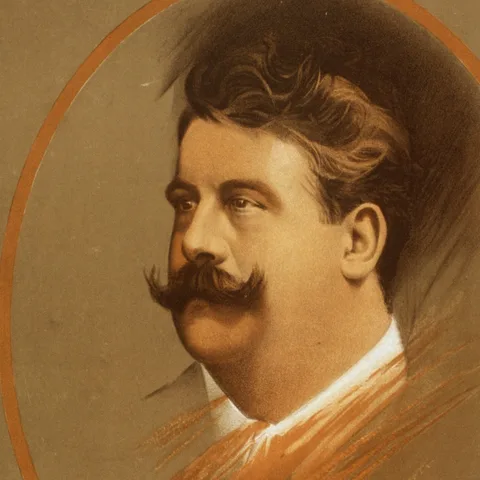
レオンカヴァッロ
1857–1919
#318エジプトの反乱から逃げ出した!He fled a revolt in Egypt!
若いころ、レオンカヴァッロはエジプトのカイロで有力者のおかかえ音楽家をしていました。ところが1882年に反乱が起こり、急いでフランスへ逃げることになりました。パリでは、カフェで歌手の伴奏をしたり音楽を教えたりして暮らしました。
As a young man, Leoncavallo worked in Cairo as the private musician of a powerful official. When a revolt broke out in 1882, he had to escape to France. In Paris he made a living by accompanying singers in cafés and teaching music.
レオンカヴァッロ
1857–1919
#319物語は父の裁判から?A plot from his father's courtroom?
レオンカヴァッロ本人は、「道化師」の物語は判事だった父が担当した、南イタリアの町モンタルト・ウッフーゴでの実際の事件がもとだと語っています。ただし、ほかの劇からヒントを得たのではないかという声もありました。
Leoncavallo said that the story of Pagliacci came from a real case in the southern Italian town of Montalto Uffugo, which his father had judged as a magistrate. Others, however, suggested that he had borrowed ideas from an earlier play.
レオンカヴァッロ
1857–1919
#320台本も書けた「二刀流」Composer and poet in one
多くの作曲家は台本作家に物語を書いてもらいますが、レオンカヴァッロは大学で詩人カルドゥッチに文学を学んだ文学青年でした。「道化師」はもちろん、プッチーニの「マノン・レスコー」の台本づくりも手伝っています。
Most opera composers needed a librettist, but Leoncavallo had studied literature with the poet Carducci. He wrote his own words for Pagliacci, and he even helped with the libretto of Puccini's Manon Lescaut.
レオンカヴァッロ
1857–1919
#321「ボエーム」対決でプッチーニに負けたThe battle of the two Bohèmes
レオンカヴァッロとプッチーニは、同じ小説をもとにオペラ「ラ・ボエーム」を書くことになり、仲がこじれたと言われています。1896年のプッチーニ版が先に大ヒットし、1897年のレオンカヴァッロ版はかすんでしまいました。
Leoncavallo and Puccini both decided to write an opera called La bohème on the same novel, and their friendship is said to have suffered. Puccini's version came first in 1896 and was a hit, so Leoncavallo's 1897 version was overshadowed.
レオンカヴァッロ
1857–1919
#322レコードのために書いた歌A song written for a record
歌曲「マッティナータ」は、レコード会社グラモフォンのために、名テノールのカルーソーの声を思いうかべて書かれました。1904年4月8日の録音では、レオンカヴァッロ本人がピアノ伴奏をつとめています。
His song 'Mattinata' was written for the Gramophone Company with Enrico Caruso's voice in mind. When Caruso recorded it on 8 April 1904, Leoncavallo himself played the piano.
レオンカヴァッロ
1857–1919
#323100万枚売れたレコードの元祖?One of the first million-sellers?
カルーソーが歌った「道化師」の「衣装をつけろ」のレコードは、世界で初めて100万枚売れたレコードの一つと言われることがあります。ただし、何度か録音された別のバージョンを合計した数字だろうとも考えられています。
Caruso's recording of 'Vesti la giubba' is sometimes called one of the first records ever to sell a million copies. However, that figure probably adds together several different versions he recorded.
ポンキエッリ
1834–1886
#324カバとワニが踊った「時の踊り」Hippos and alligators danced to it!
ディズニー映画「ファンタジア」(1940年)では、「時の踊り」に合わせて、バレリーナの衣装を着たダチョウやカバ、ゾウ、ワニがゆかいに踊ります。もとは時間の流れ(朝・昼・夕・夜)を表すバレエ音楽です。
In Disney's Fantasia (1940), ostriches, hippos, elephants and alligators in ballet costumes dance comically to the 'Dance of the Hours'. Originally, the ballet shows the passing hours of the day, from dawn to night.
ポンキエッリ
1834–1886
#325サマーキャンプの替え歌で大ヒットA summer-camp song hit
1963年、アメリカのコメディアン、アラン・シャーマンが「時の踊り」のメロディーに、サマーキャンプから家に手紙を書く子どもの歌詞をつけた「ハロー・マダー、ハロー・ファダー」を歌い、大ヒットしました。
In 1963 the American comedian Allan Sherman set the tune of the 'Dance of the Hours' to funny lyrics about a boy writing home from summer camp. The song, 'Hello Muddah, Hello Fadduh', became a big hit.
ポンキエッリ
1834–1886
#326台本作家はアナグラムの偽名A librettist hiding behind an anagram
「ラ・ジョコンダ」の台本を書いたアッリーゴ・ボーイトは、「トビア・ゴッリオ」という名前で発表しました。これは自分の名前「アッリーゴ・ボーイト」の文字を並べかえたアナグラムです。ボーイトはのちにヴェルディの「オテロ」の台本も書きました。
Arrigo Boito, who wrote the libretto of La Gioconda, published it under the name 'Tobia Gorrio', an anagram of his own name. Boito later wrote the libretto for Verdi's Otello.
ポンキエッリ
1834–1886
#327ユーフォニアムの協奏曲の元祖?The first euphonium concerto?
吹奏楽の楽長だったポンキエッリは、1872年に、イタリアの低音金管楽器「フリコルノ・バッソ」のための協奏曲を書きました。今では主にユーフォニアムで演奏され、最初のユーフォニアム協奏曲とも言われています。
As a bandmaster, Ponchielli wrote a concerto in 1872 for the flicorno basso, an Italian low brass instrument. Today it is usually played on the euphonium, and it is sometimes called the first euphonium concerto.
ポンキエッリ
1834–1886
#328村の名前になった作曲家A village named after him
ポンキエッリが生まれた村パデルノ・ファゾラーロは、のちに彼をたたえて「パデルノ・ポンキエッリ」という名前に変わりました。作曲家の名前が地名になった、めずらしい例です。
His birthplace, Paderno Fasolaro, was later renamed Paderno Ponchielli in his honour. It is a rare case of a composer's name becoming part of a place name.
ポンキエッリ
1834–1886
#329初めての本格オペラは16年後に大成功A hit 16 years late
1856年に書いた初めての本格的なオペラ「いいなづけ」は大きな成功になりませんでした。ところが書き直した版が1872年にミラノで大ヒット。16年かかって、ようやく努力が実を結んだのです。
His first major opera, I promessi sposi (1856), did not succeed at first. But a revised version became a big hit in Milan in 1872. It took sixteen years for his hard work to pay off.
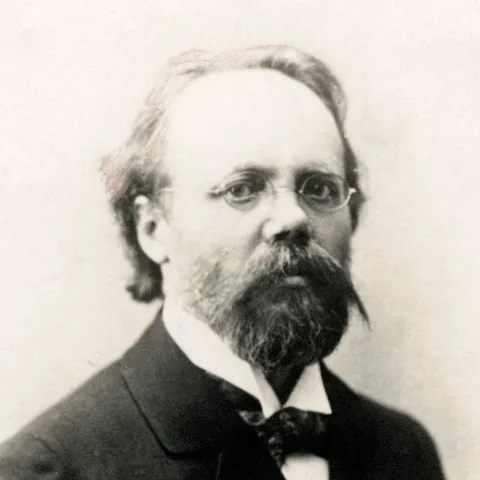
フンパーディンク
1854–1921
#330人気歌手が名前をまるごと拝借!A pop star borrowed his name!
1965年、イギリスの歌手アーノルド・ドーシーは、なんとこの作曲家の名前「エンゲルベルト・フンパーディンク」を芸名にしました。そのため英語圏では、今もこの名前を聞くと歌手のほうを思いうかべる人が多いのです。
In 1965 the British singer Arnold Dorsey took the composer's name, Engelbert Humperdinck, as his stage name. As a result, many English speakers today think first of the pop singer when they hear it.
フンパーディンク
1854–1921
#331始まりは家族の人形劇It began with a family puppet show
「ヘンゼルとグレーテル」は、はじめから大オペラとして計画されたわけではありません。姉アーデルハイトが娘たちの人形劇のために頼んだ4つの歌が出発点でした。台本も姉が書き、家族の手作りからオペラが生まれたのです。
Hansel and Gretel was not planned as a grand opera. It started as four songs that his sister Adelheid wanted for a puppet show her daughters were performing. She also wrote the libretto, so the opera grew out of a family project.
フンパーディンク
1854–1921
#332初演の指揮はあの大作曲家A famous composer on the podium
1893年の初演を指揮したのは、当時ワイマールで指揮者をしていた若きリヒャルト・シュトラウスでした。のちに「ツァラトゥストラはかく語りき」などで有名になる作曲家が、この童話オペラを世に送り出したのです。
The 1893 premiere was conducted by the young Richard Strauss, then a conductor in Weimar. The composer who would later write Also sprach Zarathustra helped launch this fairy-tale opera.
フンパーディンク
1854–1921
#333ワーグナーの最後の大作を手伝ったHe helped with Wagner's last masterpiece
フンパーディンクはバイロイトでワーグナーの楽劇「パルジファル」の準備を手伝い、のちには息子ジークフリートに作曲も教えました。場面転換の音楽が足りなかったとき、彼が数小節を書き足したという話も伝えられています。
At Bayreuth, Humperdinck helped Wagner prepare Parsifal, and he later taught composition to Wagner's son Siegfried. It is also said that when the music for a scene change proved too short, Humperdinck wrote a few extra bars to fill the gap.
フンパーディンク
1854–1921
#334ラジオ中継の歴史に残るオペラAn opera in radio history
「ヘンゼルとグレーテル」は、1923年にロンドンのコヴェント・ガーデン歌劇場から、1931年のクリスマスにはニューヨークのメトロポリタン歌劇場から、それぞれ初期のオペラ全曲ラジオ中継として放送されたことで知られています。
Hansel and Gretel is known for its place in radio history: it was broadcast complete from London's Covent Garden in 1923, and from New York's Metropolitan Opera on Christmas Day 1931, among the very first complete opera broadcasts from those houses.
フンパーディンク
1854–1921
#335教え子は「三文オペラ」の作曲家His student wrote The Threepenny Opera
ベルリンでフンパーディンクに作曲を学んだクルト・ヴァイルは、のちに「三文オペラ」を書き、その中の歌「マック・ザ・ナイフ」はジャズの名曲になりました。おだやかな童話オペラの先生から、まったく新しい音楽が生まれたのです。
Kurt Weill, who studied composition with Humperdinck in Berlin, went on to write The Threepenny Opera. Its song 'Mack the Knife' became a jazz standard. A gentle fairy-tale composer taught one of the great musical rebels of the 20th century.
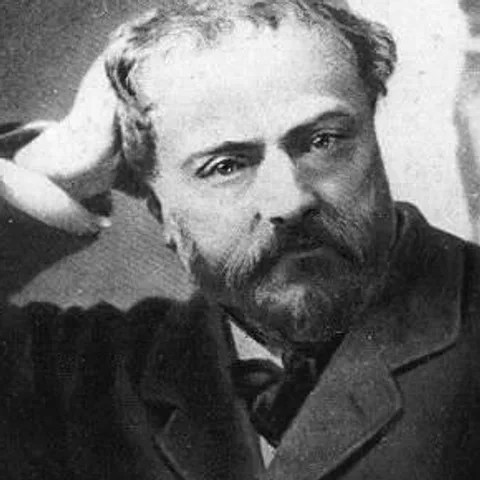
シャブリエ
1841–1894
#336名画「フォリー=ベルジェールのバー」の持ち主He owned a world-famous Manet painting
シャブリエは印象派の絵をいち早く集めたコレクターでした。親友マネの名画「フォリー=ベルジェールのバー」も彼が持っていたのです。この絵は彼の死後の1896年に売られ、今はロンドンの美術館にあります。
Chabrier was an early collector of Impressionist paintings. He even owned his friend Manet's masterpiece A Bar at the Folies-Bergère. It was sold after his death, in 1896, and now hangs in a London gallery.
シャブリエ
1841–1894
#337オペラを聴いて泣き、役所を辞めたHe cried at an opera — and quit his job
1880年3月、ミュンヘンでワーグナーの「トリスタンとイゾルデ」を初めて聴いたシャブリエは、感動のあまり涙を流したと伝えられています。そしてその年のうちに19年勤めた役所を辞め、39歳で作曲家一本の道を選びました。
In March 1880 Chabrier heard Wagner's Tristan und Isolde for the first time in Munich and is said to have wept. That same year he left the ministry where he had worked for nineteen years and, at 39, became a full-time composer.
シャブリエ
1841–1894
#338力強すぎてピアノの弦が切れたHe played so hard the strings snapped
シャブリエのピアノ演奏はとてもエネルギッシュでした。画家ルノワールの妻は、彼が弾いたときにピアノの弦が何本も切れたことを思い出として語っています。でも作曲家ダンディは、彼は不器用そうに見えて実は繊細さの名人だったと書いています。
Chabrier played the piano with enormous energy. The painter Renoir's wife remembered one occasion when his playing broke several piano strings. Yet the composer Vincent d'Indy wrote that, despite his clumsy manner, he was a master of delicacy.
シャブリエ
1841–1894
#3393回目の公演で劇場が火事に!The theatre burned down after three shows!
1887年、喜歌劇「いやいやながらの王様」がパリのオペラ=コミック座で上演されましたが、3回目の公演のあと劇場が火事で焼けてしまいました。その前の「グヴェンドリーヌ」も、劇場主の倒産でたった2回で打ち切りになっています。
In 1887 his comic opera Le roi malgré lui opened at the Opéra-Comique in Paris, but the theatre burned down after the third performance. Earlier, Gwendoline had closed after only two performances because the theatre manager went bankrupt.
シャブリエ
1841–1894
#340「スペイン」がワルツに変身España became a waltz
「スペイン」の大ヒットを受けて、「スケートをする人々」で有名なワルトトイフェルは、そのメロディーを使ったワルツ「エスパーニャ」を1886年に作りました。陽気なスペインのリズムが、優雅なワルツに生まれ変わったのです。
After the huge success of España, Émile Waldteufel, famous for The Skaters' Waltz, turned its melodies into a waltz called España in 1886. The lively Spanish rhythms were reborn as an elegant dance.
シャブリエ
1841–1894
#341「トリスタン」をからかう曲も書いたHe even poked fun at Tristan
あれほど感動したワーグナーなのに、シャブリエは「トリスタンとイゾルデ」のメロディーを使って、にぎやかなダンス曲(カドリーユ)を書いています。のちにプーランクはこの曲を聴いて大笑いしたそうです。尊敬と笑いを両立させるのがシャブリエ流でした。
Although Wagner had moved him so deeply, Chabrier also wrote a comic quadrille, a lively dance, using themes from Tristan und Isolde. Poulenc later found it hilarious. Respect and laughter went hand in hand for Chabrier.
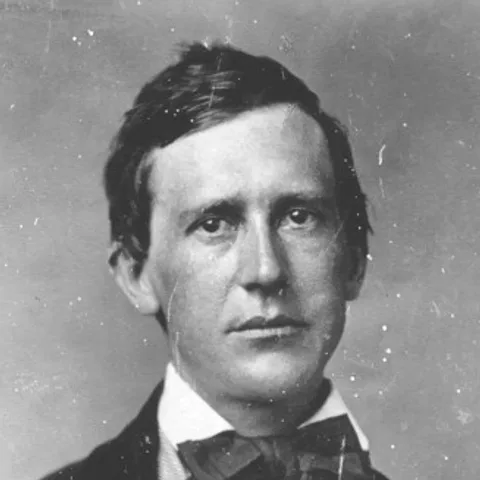
フォスター
1826–1864
#342独立記念日の50周年に生まれたBorn on America's 50th birthday
フォスターが生まれた1826年7月4日は、アメリカ独立宣言からちょうど50年目の記念日でした。しかもこの同じ日に、独立宣言にかかわった元大統領ジェファーソンとジョン・アダムズが亡くなっています。
Foster was born on 4 July 1826, exactly fifty years after the Declaration of Independence. On that very same day, two former presidents who had helped create the Declaration, Thomas Jefferson and John Adams, both died.
フォスター
1826–1864
#343名曲なのに作曲者名は別人!A hit song under someone else's name!
「故郷の人々(スワニー河)」は、はじめ人気ミンストレル劇団のリーダー、E・P・クリスティの作品として出版されました。フォスターがお金を受け取って、名前を出すことを認めたのです。のちに本当の作者として知られるようになりました。
'Old Folks at Home (Swanee River)' was first published as the work of E. P. Christy, the leader of a popular minstrel troupe. Foster had accepted payment to let Christy's name appear on it. Only later did Foster become known as the real composer.
フォスター
1826–1864
#344南部の歌なのに、南部に住んだことがないSongs of the South by a Northerner
フォスターの歌には南部が多く登場しますが、本人は南部に住んだことがなく、訪れたのは1852年の一度だけでした。「スワニー河」の名前も、2音節の川の名前を探して地図から選んだという話が兄によって伝えられています。
Many of Foster's songs are about the American South, yet he never lived there and visited only once, in 1852. His brother later told a story that Stephen picked the name 'Swanee' from a map because he needed a river name with two syllables.
フォスター
1826–1864
#345ゴールドラッシュのテーマソングThe theme song of the Gold Rush
1848年の「おおスザンナ」は大ヒットし、1849年にカリフォルニアの金を目指して西へ向かった人々のあいだで盛んに歌われました。しかし当時は作曲家の権利を守るしくみが弱く、たくさん売れてもフォスターの収入はわずかだったと言われています。
'Oh! Susanna' (1848) was a smash hit and was sung everywhere by the 'forty-niners' heading west for California gold. But copyright protection was weak at the time, and Foster is said to have earned very little from it despite its success.
フォスター
1826–1864
#346財布に残された紙切れThe note in his wallet
1864年にフォスターが亡くなったとき、財布の中にはわずかな小銭と、「親しい友よ、やさしい心の人々よ(Dear friends and gentle hearts)」と書かれた紙切れが入っていました。新しい歌の歌詞のメモだったとも考えられています。
When Foster died in 1864, his wallet held only a few coins and a scrap of paper with the words 'Dear friends and gentle hearts'. It may have been an idea for the lyrics of a new song.
フォスター
1826–1864
#347時代に合わせて書きかえられた州歌State songs with updated words
「ケンタッキーのわが家」と「故郷の人々」は州歌になっていますが、もとの歌詞には、いまでは差別的で人を傷つけるとされる言葉が使われていました。そのため、それぞれ1986年、2008年に、だれもが歌える言葉に書きかえられています。
'My Old Kentucky Home' and 'Old Folks at Home' are state songs, but their original lyrics used racial terms now considered offensive. The lyrics were officially changed, in 1986 and 2008 respectively, so that everyone could sing them.
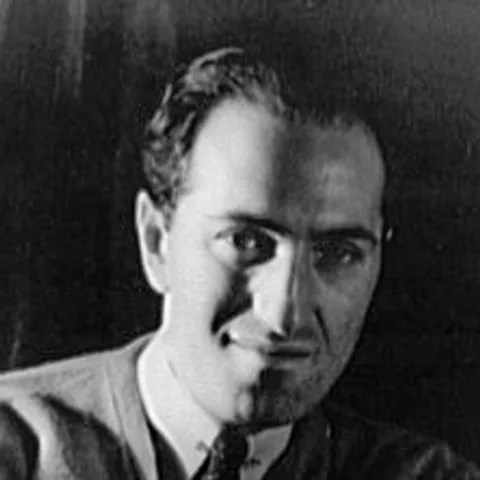
ガーシュウィン
1898–1937
#348締め切りを新聞で知った!?He learned his deadline from the newspaper?
1924年のある日、兄アイラが新聞を読んでいると、「ガーシュウィンがホワイトマンの演奏会のためにジャズの協奏曲を書いている」という記事が。ジョージ本人はその約束をしっかり覚えていなかったとも言われ、そこから数週間で「ラプソディ・イン・ブルー」を書き上げたと伝えられています。
One day in 1924, Ira was reading a newspaper when he saw an announcement that George was writing a jazz concerto for Paul Whiteman's concert. George, it is said, had not taken the plan seriously, and he then wrote Rhapsody in Blue in just a few weeks.
ガーシュウィン
1898–1937
#349あの冒頭はリハーサルで生まれた?Was the famous opening born in rehearsal?
「ラプソディ・イン・ブルー」は、クラリネットが低い音から高い音へ「ふぃ〜ん」とすべり上がって始まります。このすべるような吹き方は、リハーサル中にクラリネット奏者ロス・ゴーマンがおどけて吹いたのを、ガーシュウィンが気に入って採用したと言われています。
Rhapsody in Blue opens with a clarinet sliding up from a low note to a high one. It is often said that the clarinettist Ross Gorman played the slide as a joke during rehearsal, and Gershwin liked it so much that he kept it.
ガーシュウィン
1898–1937
#350本物のタクシーのクラクションが楽器にReal taxi horns in the orchestra
「パリのアメリカ人」では、パリの街のにぎやかさを出すために、本物の自動車のクラクションが楽器として使われます。ガーシュウィンはパリで、タクシーのクラクションを買って持ち帰ったと伝えられています。
In An American in Paris, real car horns are used as instruments to capture the noise of Paris traffic. Gershwin is said to have bought Paris taxi horns and taken them home with him.
ガーシュウィン
1898–1937
#351「わたしに教えてほしいくらいだ」'You should give me lessons!'
ガーシュウィンはフランスのラヴェルや名教師ブーランジェに弟子入りを頼みましたが、「あなたの個性がこわれてしまう」と断られました。ガーシュウィンの収入を聞いたラヴェルが「わたしこそ教えてほしい」と言ったという有名な話もありますが、ストラヴィンスキーの言葉とする説もあり、真偽ははっきりしません。
Gershwin asked Ravel and the great teacher Nadia Boulanger for lessons, but they refused, fearing strict training would spoil his own style. A famous story says that when Ravel heard how much Gershwin earned, he joked, 'You should give me lessons!' Some versions credit Stravinsky instead, so the truth is unclear.
ガーシュウィン
1898–1937
#352ピュリッツァー賞に作曲者の名前がない!A Pulitzer Prize without the composer
1931年に開幕した「オブ・ジー・アイ・シング」は、翌1932年、ミュージカルとして初めてピュリッツァー賞(演劇部門)を受けましたが、賞をもらったのは台本作家と作詞の兄アイラで、作曲のジョージは入りませんでした。ジョージがピュリッツァーの名誉を受けたのは、死後61年の1998年の特別表彰でした。
Of Thee I Sing opened in 1931, and in 1932 it became the first musical to win the Pulitzer Prize for Drama. But the prize went to the writers and to Ira for the lyrics, not to George for the music. George was honoured only in 1998, with a special Pulitzer citation, 61 years after his death.
ガーシュウィン
1898–1937
#353日本のドラマでもおなじみFamous from a Japanese TV drama
「ラプソディ・イン・ブルー」は、音楽大学を舞台にした2006年のテレビドラマ「のだめカンタービレ」のエンディング曲として使われ、日本でも一気に身近な曲になりました。アメリカでは航空会社ユナイテッド航空のテーマ曲としても長く親しまれています。
In Japan, Rhapsody in Blue became widely familiar as the ending music of the 2006 TV drama Nodame Cantabile, set in a music college. In America it has long been known as the theme music of United Airlines.

コレッリ
1653–1713
#354ヘンデルからバイオリンを取り上げられた!?Handel grabbed the violin from him?
1707年ごろ、若いヘンデルがローマに来て、コレッリが彼の曲を演奏しました。ヘンデルは弾き方が気に入らず、コレッリの手からバイオリンを取って弾いてみせたと、ヘンデルの最初の伝記に書かれています。コレッリは「これはフランス風の音楽で、わたしにはよくわかりません」とおだやかに答えたそうです。
Around 1707, the young Handel came to Rome, and Corelli led a performance of his music. According to Handel's first biography, Handel did not like the way it was played and took the violin out of Corelli's hands to show him. Corelli is said to have replied gently that this music was in the French style, which he did not understand.
コレッリ
1653–1713
#355神殿パンテオンにねむる音楽家A musician buried in the Pantheon
コレッリのお墓は、ローマの有名な古代の建物パンテオンの中にあります。ここには画家ラファエロもほうむられています。ローマの人々がコレッリをどれほど大切に思っていたかがわかります。亡くなったあとも、命日にはしばらくのあいだ記念の演奏が行われたと伝えられています。
Corelli's tomb is inside the Pantheon, one of Rome's most famous ancient buildings, where the painter Raphael is also buried. It shows how much the people of Rome loved him. It is said that for some years after his death, music was performed in his memory on the anniversary of his death.
コレッリ
1653–1713
#356作曲家なのに、絵のコレクターA composer who collected paintings
コレッリは絵が大好きで、たくさんの絵画を集めていました。亡くなるときには、そのコレクションと財産を、長年の応援者オットボーニ枢機卿にゆずると遺言しました。枢機卿は絵だけを受け取り、お金はコレッリの家族にゆずったと伝えられています。
Corelli loved art and built up a large collection of paintings. In his will he left his collection and his money to his long-time patron, Cardinal Ottoboni. The cardinal is said to have kept only the paintings and passed the money on to Corelli's family.
コレッリ
1653–1713
#357クリスマスの夜のための協奏曲A concerto for Christmas night
作品6の第8番の楽譜には「クリスマスの夜のために作られた」と書かれています。最後には「パストラーレ」という、羊飼いたちがイエスの誕生をお祝いする場面を思わせる、ゆったりした楽章が置かれています。クリスマスの時期になると、今も世界中で演奏されます。
The score of Op. 6 No. 8 says that it was 'made for Christmas night'. It ends with a gentle Pastorale, a movement that suggests shepherds celebrating the birth of Jesus. Every Christmas season it is still performed all over the world.
コレッリ
1653–1713
#358「ラ・フォリア」は大ヒット変奏曲'La Folia' — a smash-hit set of variations
作品5の最後の曲は、スペインやポルトガルで広まった古い音楽の型「フォリア」をもとにした変奏曲です。同じ低音の上で、バイオリンがどんどん形を変えていきます。この曲はとても人気になり、のちの多くの作曲家もフォリアを使った曲を書きました。
The last piece of Op. 5 is a set of variations on 'La Folia', an old musical pattern that spread from the Iberian Peninsula. Over the same repeating bass, the violin keeps changing the music in new ways. It became so popular that many later composers also wrote their own Folia pieces.
コレッリ
1653–1713
#359詩の学会での名前は「アルコメロ」His academy name was 'Arcomelo'
コレッリは、ローマの文化人が集まる「アルカディア・アカデミー」の会員でした。会員はギリシャ風のあだ名をもらうきまりで、コレッリの名前は「アルコメロ・エリマンテオ」。「アルコ」は弓、「メロ」は歌を思わせる、バイオリンの名人にぴったりの名前です。
Corelli was a member of the Arcadian Academy, a society of artists and writers in Rome. Each member received a Greek-style name, and Corelli's was 'Arcomelo Erimanteo'. 'Arco' suggests a bow and 'melo' suggests song — a perfect name for a violinist.

テレマン
1681–1767
#360お母さんに楽器を取り上げられた少年The boy whose mother took away his instruments
テレマンの母親は、音楽家はまともな仕事ではないと考え、息子の楽器を取り上げてしまいました。テレマンはかくれて作曲を続けたと、自分で書いた自伝で語っています。法律を学ぶために大学へ行ったのも、母親の願いにそうためでした。
Telemann's mother did not think music was a proper career, so she took away her son's instruments. In his autobiography, Telemann says he kept on composing in secret. He went to university to study law partly to satisfy her wishes.
テレマン
1681–1767
#361バッハは「3番手」だった!?Bach was only the 'third choice'?
1722年、ライプツィヒのトーマス教会の音楽監督の候補でいちばんにえらばれたのはテレマンでした。テレマンが断り、次の候補グラウプナーも今の仕事をやめられなかったため、最後にえらばれたのがバッハでした。市の会議では「最高の人が取れないなら、中くらいの人で間に合わせるしかない」という発言も記録されています。ただしこれは、学校で教える仕事もふくめた人選びの話し合いの中での言葉でした。
In 1722, Leipzig's first choice for cantor of St Thomas's was Telemann. When he declined, and the next candidate, Graupner, could not leave his post, the job went to Bach. One councillor is recorded as saying that since the best man could not be had, they would have to accept a mediocre one. But this was said in a debate about the whole job, including school teaching, not only about music.
テレマン
1681–1767
#362趣味はガーデニング!ヘンデルから花のプレゼントHis hobby was gardening — with flowers from Handel
テレマンは晩年、庭で花を育てるのが大好きでした。めずらしい植物を集めていたことは友人ヘンデルも知っていて、ヘンデルはイギリスからめずらしい植物を送ったことが手紙からわかっています。音楽の巨匠どうしの、ほほえましい友情です。
In later life Telemann loved growing flowers. His friend Handel knew about his passion for rare plants, and letters show that Handel sent him rare plants from England. It was a charming friendship between two great masters.
テレマン
1681–1767
#363楽譜を自分で出版した「起業家」A composer who ran his own publishing business
テレマンは楽譜を自分で版にして、予約を集めて売りました。「ターフェルムジーク」(1733年)の予約者の名簿には、ヨーロッパ各地の人々の名前があり、その中にはヘンデルの名前もあります。作曲家が自分で売り上げを管理するのは、当時としてはとても新しいことでした。
Telemann engraved and published his own music, selling it by subscription. The list of subscribers for his Tafelmusik (1733) includes people from all over Europe — among them Handel. For a composer to manage his own sales like this was very new at the time.
テレマン
1681–1767
#364妻の借金に苦しんだTroubled by his wife's debts
テレマンは2度結婚しました。最初の妻とは若くして死に別れ、2番目の妻マリア・カタリーナとのあいだには9人の子どもが生まれました。ところがこの妻は賭けごとで大きな借金を作り、のちに家を出ていきました。テレマンは友人たちの助けも受けて、借金を返したと伝えられています。
Telemann married twice. His first wife died young. With his second wife, Maria Catharina, he had nine children. But she ran up huge gambling debts and later left him. It is said that Telemann paid off the debts with help from his friends.
テレマン
1681–1767
#36580代でも新しい音楽を追いかけたStill chasing new styles in his eighties
テレマンはとても長生きで、バッハ(1750年没)やヘンデル(1759年没)よりもあとまで生きました。年をとっても新しい流行の音楽を研究し、80代になっても作曲を続けました。古い時代のバロックから、モーツァルトたちの新しい時代へのかけ橋になった人とも言えます。
Telemann lived a very long life, outliving both Bach (died 1750) and Handel (died 1759). Even in old age he studied the latest musical fashions and kept composing into his eighties. He can be seen as a bridge between the Baroque and the new age of composers like Mozart.
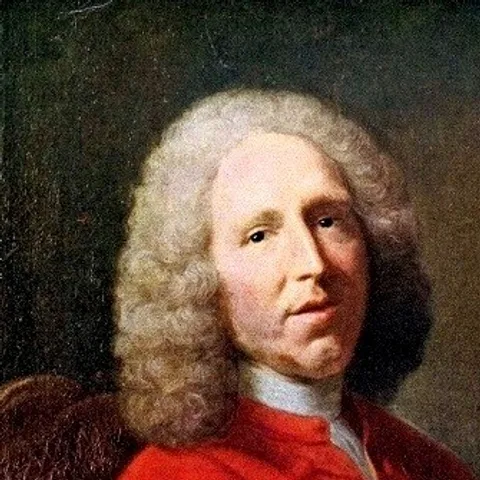
ラモー
1683–1764
#366わざとヘタに弾いて仕事をやめた!?He played badly on purpose to quit his job?
クレルモンの大聖堂でオルガン奏者をしていたころ、ラモーはパリへ行くために契約をやめたいと考えました。ところが許してもらえなかったため、礼拝でわざとひどい不協和音を鳴らし、ついに辞めさせてもらったという言い伝えがあります。本当かどうかは、はっきりしていません。
While working as organist at the cathedral in Clermont, Rameau wanted to leave his contract and go to Paris. There is a story that, when he was not allowed to go, he played horribly clashing chords during services until they finally let him leave. Whether it really happened is not certain.
ラモー
1683–1764
#367最期の言葉は「音がはずれている」?His last words: 'You're out of tune'?
死の床にあったラモーのもとに神父が来て、祈りの歌をとなえました。するとラモーは「神父さま、なぜわたしに歌など歌うのですか。音がはずれていますよ」と文句を言ったという話が伝わっています。最後まで音にきびしい人だったことを示す、有名なエピソードです。
When Rameau lay dying, a priest came and chanted prayers for him. According to a famous story, Rameau complained, 'Why on earth are you singing to me, Father? You are out of tune!' Whether or not it is true, the tale shows how strict he was about sound to the very end.
ラモー
1683–1764
#36850歳まで「理論の先生」だったKnown as a theory teacher until fifty
今では大作曲家のラモーですが、50歳ごろまでは、おもに音楽理論の本と、いくつかのチェンバロ曲集で知られる人でした。1733年、50歳で初演した初めてのオペラ「イポリートとアリシ」は聴く人の意見を真っ二つに分け、彼は一気に、フランスでいちばん注目され、いちばん議論される作曲家になりました。
Today Rameau is seen as a great composer, but until about fifty he was known mainly for his books on music theory and a few collections of harpsichord pieces. His first opera, Hippolyte et Aricie, premiered in 1733 when he was fifty. It sharply divided listeners and quickly made him France's most talked-about — and most argued-about — composer.
ラモー
1683–1764
#369おいの名前が有名な本の題名にHis nephew became the title of a famous book
フランスの思想家ディドロは、ラモーのおいジャン=フランソワをモデルにした対話の本「ラモーの甥」を書きました。この本の中では、おじの大作曲家ラモーも、きびしくて人づきあいの悪い人物として話題にされています。この本はのちに、ドイツの文豪ゲーテがドイツ語に訳しました。
The French philosopher Diderot wrote a dialogue called Rameau's Nephew, based on Rameau's real nephew, Jean-François. In the book, the great composer uncle is also discussed as a hard and unfriendly man. The book was later translated into German by the great writer Goethe.
ラモー
1683–1764
#370にわとりを音楽にした「めんどり」'The Hen' — a chicken in music
チェンバロ曲「めんどり」は、にわとりが「コッコッコッコッコケー」と鳴くようすを、くり返す音で生き生きとまねた曲です。楽譜には鳴き声を表す「ココ・ココ・ココデ」という言葉まで書きこまれています。むずかしい理論家のラモーの、ユーモアたっぷりの一面がわかります。
The harpsichord piece 'La Poule' ('The Hen') cleverly imitates a clucking hen with repeated notes. The score even includes the words 'co-co-co-co-co-dai' to show the hen's cry. It reveals the humorous side of the serious theorist Rameau.
ラモー
1683–1764
#37142歳で19歳のお嫁さんMarried at 42 to a 19-year-old singer
1726年、42歳のラモーは19歳の歌手マリー=ルイーズ・マンゴと結婚しました。年はずいぶん離れていましたが、2人のあいだには4人の子どもが生まれ、妻はラモーの作品の上演でも歌いました。気むずかしいと言われたラモーですが、家庭は落ちついていたようです。
In 1726, the 42-year-old Rameau married Marie-Louise Mangot, a 19-year-old singer. Despite the big age gap, they had four children, and his wife sang in performances of his music. Rameau was said to be difficult, but his family life seems to have been steady.
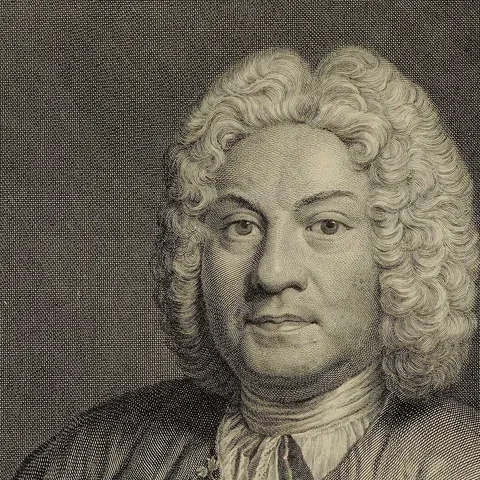
クープラン
1668–1733
#372練習には鏡を置きなさい!Practise with a mirror!
クープランは教則本「クラヴサン奏法」の中で、弾くときに顔をしかめたり、変な表情をしたりしないよう注意しています。そのために、譜面台に鏡を置いて自分の顔を見ながら練習するとよい、とすすめています。演奏は見た目の美しさも大切、というフランスの宮廷らしい考え方です。
In The Art of Playing the Harpsichord, Couperin warns players not to pull faces or grimace while playing. He suggests placing a mirror on the music stand so you can watch your face as you practise. It reflects the elegant French court idea that a performance should also look beautiful.
クープラン
1668–1733
#373「神秘的なバリケード」の意味はなぞWhat are the 'Mysterious Barricades'?
チェンバロ曲「神秘的なバリケード」は、ゆれるような和音がつづく美しい曲です。ところが、何が「バリケード」なのかクープランは説明しておらず、今も研究者や演奏家がいろいろな説を出しています。答えのないなぞが、この曲の人気をいっそう高めています。
'Les Barricades mystérieuses' is a beautiful piece full of gently overlapping chords. But Couperin never explained what the 'barricades' are, and scholars and performers still offer many different theories. This unsolved mystery only adds to the piece's popularity.
クープラン
1668–1733
#374「わたしの書いたとおりに弾いて!」'Play it exactly as I wrote it!'
当時は、演奏する人が楽譜の音のかざりを変えたり、自分で足したりすることがよくありました。けれどもクープランは装飾音をこまかく楽譜に書きこみ、曲集の序文で「わたしが記したとおりに弾いてほしい」とはっきり求めました。作曲家がここまで演奏に注文をつけるのは、めずらしいことでした。
In those days, performers often changed the ornaments in the score or added their own. Couperin, however, wrote his ornaments into the score in detail, and in the preface to one of his books he clearly asked players to perform his pieces exactly as he had marked them. It was unusual for a composer to be so precise.
クープラン
1668–1733
#375バッハも文通していた?Did Bach write letters to him?
バッハの家族のための曲集「アンナ・マクダレーナ・バッハのための音楽帳」には、クープランのチェンバロ曲「牧歌(レ・ベルジュリー)」が書き写されています。バッハがクープランの曲を知っていたことがわかります。2人が手紙をやりとりしたという話も伝わっていますが、その手紙は残っておらず、本当かどうかは確かめられません。
Couperin's harpsichord piece 'Les Bergeries' was copied into a music book for Bach's family, the Notebook for Anna Magdalena Bach. This shows that Bach knew Couperin's music. There is also a story that the two exchanged letters, but no letters survive, so it cannot be confirmed.
クープラン
1668–1733
#376後輩たちが次々にアレンジLater composers kept arranging him
クープランの音楽は、のちの大作曲家たちにも愛されました。ドイツのブラームスはクープランのチェンバロ曲の楽譜の編集にかかわり、リヒャルト・シュトラウスは彼の曲をオーケストラ用に編曲しました。そしてラヴェルは「クープランの墓」で、フランス・バロックへの敬意をあらわしています。
Couperin's music was loved by many later masters. Brahms helped edit an edition of his harpsichord pieces, and Richard Strauss arranged some of them for orchestra. Ravel, in Le Tombeau de Couperin, expressed his respect for the French Baroque.
クープラン
1668–1733
#377娘が宮廷のチェンバロ奏者にHis daughter became the court harpsichordist
クープランの娘マルグリット=アントワネットは、すぐれたチェンバロ奏者でした。体が弱った父にかわって、1730年に宮廷のチェンバロ奏者の仕事を受けつぎます。王の宮廷でこの役目を女性がつとめるのは、とてもめずらしいことでした。
Couperin's daughter Marguerite-Antoinette was an excellent harpsichordist. In 1730 she took over her ailing father's post as harpsichordist at the royal court. It was very unusual for a woman to hold this position at court.
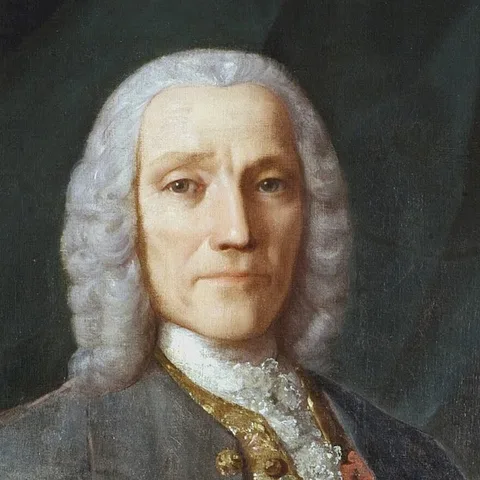
スカルラッティ
1685–1757
#378ヘンデルと鍵盤バトル!A keyboard battle with Handel!
ヘンデルの最初の伝記によると、ローマのオットボーニ枢機卿の館で、スカルラッティとヘンデルが腕くらべをしました。チェンバロでは引き分けでしたが、オルガンではヘンデルの勝ち。スカルラッティ自身も負けをみとめたと伝えられています。同じ伝記によると、2人はその後もおたがいを尊敬し合ったそうです。
According to Handel's first biography, Scarlatti and Handel held a contest at Cardinal Ottoboni's palace in Rome. On the harpsichord it was a draw, but on the organ Handel won, and Scarlatti himself is said to have admitted it. The same biography says the two went on admiring each other.
スカルラッティ
1685–1757
#379「猫のフーガ」は猫が作った!?Did a cat compose the 'Cat's Fugue'?
ソナタ K.30 は「猫のフーガ」というあだ名で知られています。メロディが、猫が鍵盤の上を歩いたような、ふしぎな飛び方をするからです。スカルラッティの飼い猫が鍵盤を歩いた音から思いついたという話がありますが、このあだ名がついたのは19世紀になってからで、作り話と考えられています。
Sonata K. 30 is nicknamed the 'Cat's Fugue' because its theme jumps around strangely, as if a cat had walked across the keys. There is a story that Scarlatti got the idea from his own cat stepping on the keyboard, but the nickname only appeared in the 19th century, so the tale is thought to be made up.
スカルラッティ
1685–1757
#380賭けごとの借金を王妃が肩代わり?Did the queen pay his gambling debts?
スカルラッティは賭けごとが好きで、たびたび大きな借金をしたと伝えられています。そのたびに、彼を大切にしていた王妃マリア・バルバラが助けたと言われます。イギリスの音楽史家バーニーは、歌手ファリネッリから聞いた話として、彼のギャンブル好きを書きのこしています。
Scarlatti is said to have loved gambling and often ran up large debts. It is said that Queen Maria Barbara, who valued him greatly, helped him out each time. The English music historian Charles Burney wrote about his fondness for gambling as something he had heard from the singer Farinelli.
スカルラッティ
1685–1757
#381序文に「楽しく生きよ!」'Live happily!' in the preface
1738年ごろに出版した「チェンバロ練習曲集」の序文で、スカルラッティは読者に、むずかしい学問ではなく芸術とのたくみな遊びを期待してほしい、と語りかけました。そして最後を「楽しく生きよ!」という言葉でしめくくっています。明るい人柄が伝わってきます。
In the preface to his Essercizi of around 1738, Scarlatti told readers not to expect deep learning, but rather a clever play with art. He ended with the words 'Live happily!'. His cheerful personality shines through.
スカルラッティ
1685–1757
#382ポルトガル王から騎士の称号Knighted by the King of Portugal
1738年、スカルラッティはポルトガル王ジョアン5世からサンティアゴ騎士団の騎士にされました。「チェンバロ練習曲集」はこのお礼として王にささげられています。かつての教え子の父である王に、深く信頼されていたことがわかります。
In 1738 King John V of Portugal made Scarlatti a knight of the Order of Santiago. His Essercizi were dedicated to the king as a sign of thanks. It shows how much he was trusted by the king, the father of his former pupil.
スカルラッティ
1685–1757
#383うでを交差させるアクロバット奏法Acrobatic hand-crossing
スカルラッティのソナタには、左手が右手を飛びこえて高い音を弾く「手の交差」がたくさん出てきます。見ている人もはらはらする、はなやかな弾き方です。速い同じ音の連打や大きな跳躍もあり、鍵盤の技術を大きく広げました。
Scarlatti's sonatas are full of hand-crossing, where the left hand leaps over the right to play high notes. It is thrilling to watch. With fast repeated notes and huge leaps as well, his music greatly expanded keyboard technique.
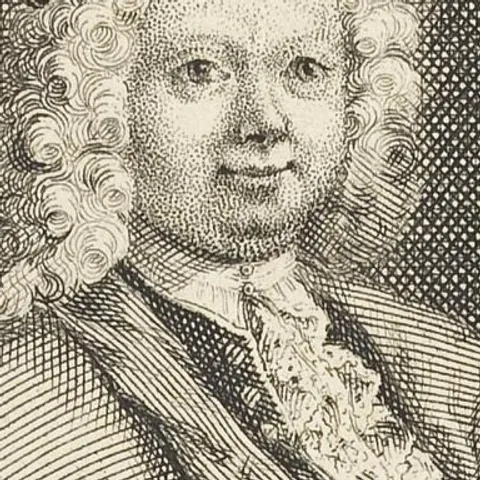
マルチェッロ
1673–1747
#384弟の作品だと思われていたLong credited to his brother
マルチェッロのオーボエ協奏曲は、長いあいだ弟ベネデットの作品だと思われていました。20世紀には、弟の名前で出版された楽譜も出回りました。今では兄アレッサンドロの作品だとわかっていますが、CDなどで今も名前がまちがえられていることがあります。
Marcello's oboe concerto was long thought to be by his brother Benedetto, and in the 20th century it was even published under Benedetto's name. Today we know it is by Alessandro, but recordings sometimes still get the name wrong.
マルチェッロ
1673–1747
#385ペンネームは「エテリオ・スティンファリコ」His pen name was 'Eterio Stinfalico'
マルチェッロはローマの文化人の会「アルカディア・アカデミー」の会員でした。会員はギリシャ神話風の名前をもらうきまりで、彼の名前は「エテリオ・スティンファリコ」。曲を発表するとき、本名ではなくこの名前を使うことがよくありました。
Marcello was a member of the Arcadian Academy, a society of artists and writers based in Rome. Members received names in the style of Greek legend, and his was 'Eterio Stinfalico'. He often used this name instead of his real one when he published music.
マルチェッロ
1673–1747
#386バッハが「写して勉強」した曲A piece Bach copied to learn from
ワイマールで働いていた若いバッハは、イタリアの新しい協奏曲を熱心に研究し、チェンバロやオルガン用にたくさん編曲しました。マルチェッロのオーボエ協奏曲もその1つで、BWV 974 として残っています。バッハの研究のおかげで、この曲は後の時代にも伝わりました。
While working in Weimar, the young Bach eagerly studied the new Italian concertos and arranged many of them for harpsichord or organ. Marcello's oboe concerto was one of them, and it survives as BWV 974. Bach's study helped keep the piece alive for later generations.
マルチェッロ
1673–1747
#387映画で一躍有名にMade famous by a film
1970年のイタリア映画「ベニスの愛」(原題:アノニモ・ヴェネツィアーノ)では、主人公がヴェネツィアの劇場のオーボエ奏者という設定で、マルチェッロのオーボエ協奏曲の第2楽章が使われました。この映画をきっかけに、曲の人気が広がりました。
In the 1970 Italian film Anonimo veneziano (The Anonymous Venetian), the hero is an oboist at a Venice theatre, and the slow movement of Marcello's oboe concerto is used. The film helped spread the piece's popularity.
マルチェッロ
1673–1747
#388義理の妹との遺産争いAn inheritance dispute with his sister-in-law
弟ベネデットは1728年、歌手のロザンナ・スカルフィとひそかに結婚しました。貴族と身分のちがう人との結婚は、国から正式にはみとめられないものでした。弟の死後、遺産をめぐってロザンナとアレッサンドロのあいだで争いが起こり、1742年には裁判になりました。貴族社会のきびしい身分のきまりがわかる話です。
In 1728 Benedetto secretly married the singer Rosanna Scalfi. A marriage between a nobleman and a commoner was not officially recognised by the state. After his death, a dispute over the inheritance arose between Rosanna and Alessandro, and in 1742 it went to court. The story shows how strict the class rules of noble society were.
シャルパンティエ
1643–1704
#389ユーロビジョンのファンファーレは300歳以上The Eurovision fanfare is over 300 years old
ヨーロッパで、国をこえてテレビ番組を中継するときや、歌のコンテスト「ユーロビジョン・ソング・コンテスト」で流れるファンファーレ。あれはシャルパンティエの「テ・デウム」の前奏曲です。1950年代からテーマ曲として使われ、作曲家の名前よりも先に曲が有名になりました。
The fanfare heard at the start of programmes broadcast across Europe, and at the Eurovision Song Contest, is the prelude to Charpentier's Te Deum. It has been used as the theme since the 1950s, and the tune became famous long before most people knew the composer's name.
シャルパンティエ
1643–1704
#390ニ長調は「楽しく、とても勇ましい」D major: 'joyful and very warlike'
シャルパンティエは作曲の教科書「作曲のきまり」の中で、調(音楽のカラー)ごとの感じを書きのこしました。ニ長調は「楽しく、とても勇ましい」。トランペットと太鼓がはなやかに鳴る「テ・デウム」は、まさにこのニ長調で書かれています。
In his textbook Rules of Composition, Charpentier described the feeling of each key — the 'colour' of the music. D major, he wrote, is 'joyful and very warlike'. His Te Deum, with its bright trumpets and drums, is written in exactly that key.
シャルパンティエ
1643–1704
#391画家になるためにローマへ行った?Did he go to Rome to study painting?
シャルパンティエは、もともと絵を学ぶためにローマへ行き、そこで音楽にめざめたという言い伝えがあります。けれども、それを示す記録はなく、彼の楽譜にも絵は1枚も残っていません。あくまで「そういう話がある」というだけです。
There is a story that Charpentier first went to Rome to study painting and discovered music there. But there are no documents to support it, and not a single drawing appears in his manuscripts. It remains only a legend.
シャルパンティエ
1643–1704
#392自分で整理した28冊の楽譜Twenty-eight volumes of his own manuscripts
シャルパンティエは自分の楽譜を手元で大切に保管し、28冊にまとめていました。500曲以上が入ったこの楽譜の束は、死後の1727年に家族から王立図書館へ売られ、今もフランス国立図書館に残っています。このおかげで、彼の音楽は失われずにすみました。
Charpentier kept his own manuscripts carefully and bound them into 28 volumes containing more than 500 works. In 1727 his heirs sold them to the Royal Library, and they are still kept in the National Library of France. Thanks to this, his music was not lost.
シャルパンティエ
1643–1704
#393リュリの「独りじめ」に泣かされたHeld back by Lully's monopoly
当時のフランスでは、リュリが王から許可をもらい、オペラの上演や使える音楽家の人数まで独りじめしていました。モリエールの劇団は、リュリのきまりより多くの音楽家を使ったことで問題になり、シャルパンティエの劇場の仕事も1685年ごろには終わってしまいました。
In France at that time, Lully held a royal privilege that let him control opera and even limit how many musicians others could use. Molière's company got into trouble for using more musicians than Lully's rules allowed, and Charpentier's theatre work had come to an end by about 1685.
シャルパンティエ
1643–1704
#394小惑星にも名前がAn asteroid bears his name
1997年に見つかった小惑星には「シャルパンティエ」という名前がつけられています。生きていたころはリュリのかげにかくれがちでしたが、300年後には宇宙にまで名前がのこることになりました。
An asteroid discovered in 1997 was named Charpentier after him. In his lifetime he was often overshadowed by Lully, but three hundred years later his name is even out in space.
ムレ
1682–1738
#395300年前の曲がテレビのテーマ曲にA 300-year-old TV theme
1971年に始まったアメリカの公共放送の番組「マスターピース・シアター」(今の「マスターピース」)は、ムレの「ロンド」をテーマ曲にしました。トランペットがかがやくこの曲は番組とともに有名になり、アメリカでは結婚式でもよく使われるようになったと言われています。
The American public television programme Masterpiece Theatre, now called Masterpiece, began in 1971 with Mouret's Rondeau as its theme. The shining trumpet tune became famous along with the show, and it is said to have become a popular choice for weddings in America too.
ムレ
1682–1738
#396ふるさとはローマ教皇の領地His hometown belonged to the Pope
ムレが生まれたアヴィニョンは、今はフランスの町ですが、当時はローマ教皇の領地でした。中世には教皇がここに住んでいた時代もあり、町には大きな教皇の宮殿が残っています。フランスの宮廷音楽家なのに、生まれは「教皇の国」だったのです。
Avignon, where Mouret was born, is a French city today, but back then it belonged to the Pope. In the Middle Ages the popes even lived there, and a huge papal palace still stands in the city. So this French court musician was actually born in the 'Pope's land'.
ムレ
1682–1738
#397ひと晩じゅう続く宴の音楽係Music director for all-night parties
メーヌ公爵夫人がソーの城で開いた「大夜会」は、夜通し劇や音楽、花火などが続く、ぜいたくな宴でした。ムレはその音楽にかかわり、1714〜15年の季節に開かれた16回の夜会でも、ほかの作曲家たちとともに音楽を受けもちました。きらびやかな宴にぴったりの、明るく優雅な音楽が彼の持ち味です。
The 'Great Nights' that the Duchess of Maine held at Sceaux were lavish entertainments with plays, music and spectacles going on through the night. Mouret worked on the music, and he was one of several composers who supplied music for the sixteen nights held in 1714–15. His bright, elegant style was perfect for such glittering parties.
ムレ
1682–1738
#398デビュー作は「スキャンダル」で大評判A debut that caused a scandal
1714年にパリのオペラ座で上演された「タリアの祭り」は、「スキャンダルによる成功」とも言われるほど話題になりました。すぐに、この作品への批判をネタにした続編「タリアの祭りへの批評」まで作られ、それも上演されています。
Les fêtes de Thalie, staged at the Paris Opéra in 1714, caused such a stir that it was called a 'success by scandal'. Soon a follow-up called La critique des fêtes de Thalie, which made fun of the criticism, was written and staged as well.
ムレ
1682–1738
#399「ラモーへのしっと」の言い伝えと、悲しい最期A tale of jealousy and a sad end
1730年代、ラモーのオペラが大人気になると、ムレの仕事は少なくなっていきました。ラモーをねたみ、心を病んでいったと伝えられています。最後はシャラントンの病院で亡くなり、お墓がどこにあるのかもわかっていません。
In the 1730s, as Rameau's operas became hugely popular, Mouret's work began to dry up. It is said that he grew jealous of Rameau and became mentally ill. He died in the asylum at Charenton, and nobody knows where his grave is.
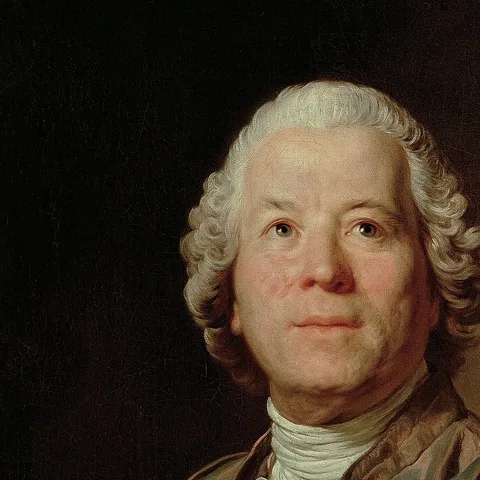
グルック
1714–1787
#400水入りグラスで演奏会!A concert on drinking glasses!
1746年、ロンドンにいたグルックは、水を入れて音の高さを合わせた26個のグラスで演奏会を開きました。水の量で音の高さが変わるしくみです。どうやって鳴らしたのか、くわしいことはわかっていません。これは「グラス・ハープ」の仲間で、のちにフランクリンが考えた回転式の「グラスハーモニカ」とは別の楽器です。
In 1746, while in London, Gluck gave a concert on 26 drinking glasses tuned with water. The amount of water set the pitch of each glass. We do not know exactly how he played them. It was a kind of glass harp, a different instrument from the rotating glass armonica that Benjamin Franklin invented later.
グルック
1714–1787
#401ヘンデルの毒舌「うちの料理人のほうが…」Handel's joke: 'My cook knows more…'
ロンドンでグルックの音楽を聴いたヘンデルは、「グルックが知っている対位法(いくつものメロディを重ねる技術)は、うちの料理人ほどのものだ」と言ったと伝えられています。ただしヘンデルの料理人は歌手でもあったので、ただの悪口ではなかったとも言われます。
After hearing Gluck's music in London, Handel is reported to have said that Gluck knew no more about counterpoint — the art of combining melodies — than his cook. However, Handel's cook was also a singer, so the remark may not have been a pure insult.
グルック
1714–1787
#402ローマ教皇から「騎士」の称号Made a knight by the Pope
1756年、グルックはローマ教皇から「黄金拍車勲章」をさずかり、それ以来「騎士グルック」と名乗りました。のちにドイツの作家E・T・A・ホフマンは、「騎士グルック」という題の小説を書いています。名前に称号がついた、めずらしい作曲家です。
In 1756 the Pope awarded Gluck the Order of the Golden Spur, and from then on he called himself 'Ritter' (Knight) von Gluck. Later, the German writer E. T. A. Hoffmann even wrote a story called 'Ritter Gluck'. He is one of the few composers known by a title of knighthood.
グルック
1714–1787
#403パリを二分した「グルック派 対 ピッチンニ派」Gluckists versus Piccinnists
1770年代のパリでは、グルックのオペラを支持する人々と、イタリアのピッチンニを支持する人々が新聞や本で激しく言い争いました。どちらが本物のオペラかをめぐる大論争です。ただし、ピッチンニ本人はグルックを尊敬していたと言われています。
In 1770s Paris, fans of Gluck's operas and fans of the Italian composer Piccinni fought fiercely in newspapers and pamphlets over which style was true opera. Yet Piccinni himself is said to have respected Gluck.
グルック
1714–1787
#404禁じられたお酒が命取りに?Did a forbidden drink kill him?
晩年のグルックは何度か脳卒中で倒れ、医者からお酒を止められていました。ある日の食事のあと、お客さんが断ったリキュールをグルックが自分で飲んでしまい、その後すぐに発作を起こして亡くなったという話が伝わっています。どこまで本当かはわかりません。
In his last years Gluck suffered several strokes, and his doctor had forbidden alcohol. There is a story that one day after lunch, when a guest refused a glass of liqueur, Gluck drank it himself and soon had a fatal stroke. How much of this is true is not known.
グルック
1714–1787
#405「精霊の踊り」はフルートのあこがれの曲The flute player's dream piece
「オルフェオとエウリディーチェ」の「精霊の踊り」は、天国の野原を、亡くなった人々のたましいがおだやかに踊る場面の音楽です。フルートのしっとりしたソロが美しく、オペラから離れて、フルートの発表会やコンサートでもよく演奏されます。
The 'Dance of the Blessed Spirits' from Orfeo ed Euridice is music for the scene where peaceful souls dance in the fields of paradise. Its gentle flute solo is so beautiful that it is often played on its own at flute recitals and concerts.
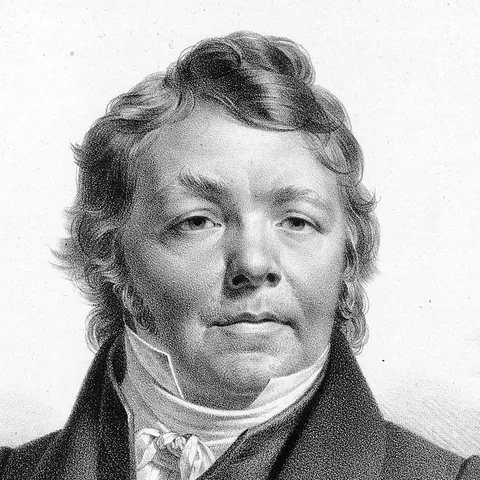
フンメル
1778–1837
#406モーツァルトの家に住みこみ、レッスン料はゼロHe lived with Mozart — lessons for free
フンメルは8歳ごろから約2年間、ウィーンのモーツァルトの家に住みこみ、ただでレッスンを受けました。フンメルは、モーツァルトから直接教えを受けた「直弟子」だったのです。
From about the age of eight, Hummel lived in Mozart's home in Vienna for around two years and received lessons for free. He was a pupil taught directly by Mozart himself.
フンメル
1778–1837
#407ベートーヴェンとはライバルで友だちRival and friend of Beethoven
フンメルとベートーヴェンは、ウィーンでおたがいを意識し合うライバルで、友だちでもありました。関係がぎくしゃくした時期もありましたが、1827年、フンメルは病気のベートーヴェンを何度か見舞い、2人は最後に心を通わせました。
Hummel and Beethoven were rivals in Vienna who kept a close eye on each other, but they were also friends. At times their relationship was strained, but in 1827 Hummel visited the sick Beethoven several times, and the two were reconciled at the end.
フンメル
1778–1837
#408「ベートーヴェンの髪」はじつは別人!'Beethoven's hair' was someone else's!
1827年、フンメルがベートーヴェンを見舞ったとき、15歳の弟子フェルディナント・ヒラーも一緒でした。ヒラーが切り取ったと伝えられる髪の毛「ヒラー・ロック」は、長いあいだベートーヴェンの髪と信じられ、健康を調べる研究にも使われました。ところが2023年に発表されたDNAの研究で、じつは女性の髪だったことがわかったのです。
When Hummel visited Beethoven in 1827, his fifteen-year-old pupil Ferdinand Hiller came too. A lock of hair said to have been cut by Hiller, the 'Hiller Lock', was long believed to be Beethoven's and was used in studies of his health. But a DNA study published in 2023 showed that it actually came from a woman.
フンメル
1778–1837
#409新しいトランペットのための協奏曲A concerto for a brand-new trumpet
「トランペット協奏曲」は、ウィーンのトランペット奏者ヴァイディンガーのために書かれました。彼が考えたキー(穴とふた)つきのトランペットは、それまで出せなかった音も出せる新しい楽器でした。今のトランペット奏者は、この曲をバルブ(ピストン)つきの現代のトランペットで演奏しています。
The Trumpet Concerto was written for the Viennese trumpeter Anton Weidinger. He had developed a keyed trumpet, a new instrument that could play notes the old trumpet could not. Today's trumpeters play the concerto on the modern valved trumpet.
フンメル
1778–1837
#410作曲家の「著作権」のために戦ったHe fought for composers' copyright
当時は、作曲家の楽譜が勝手に印刷されて売られることがよくありました。フンメルはこれに強く反対し、作曲家の権利を守る法律を作るよう、ドイツの国々にはたらきかけました。音楽の著作権の考えを広めた、先がけの一人です。
In those days, composers' music was often printed and sold without permission. Hummel strongly opposed this and urged the German states to pass laws protecting composers' rights. He was one of the pioneers of musical copyright.
フンメル
1778–1837
#411ショパンのお手本だったA model for Chopin
フンメルのピアノ曲や協奏曲の、きらきらと流れるような書き方は、若いショパンに大きな影響をあたえました。ショパンのピアノ協奏曲を聴くと、フンメルの音楽を思わせるところがあると言われます。シューマンも若いころ、フンメルの音楽を熱心に練習しました。
The sparkling, flowing style of Hummel's piano pieces and concertos had a strong influence on the young Chopin. Listeners often notice echoes of Hummel in Chopin's piano concertos. Schumann, too, practised Hummel's music eagerly in his youth.
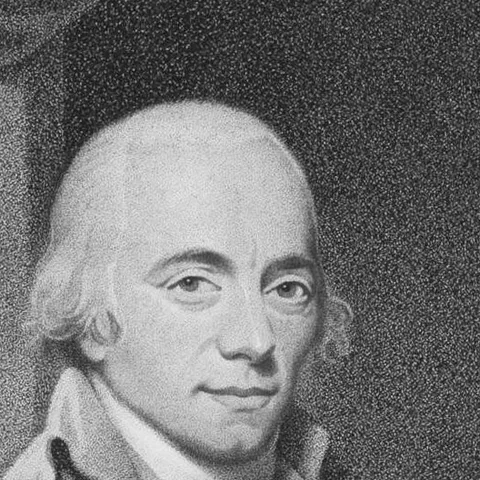
クレメンティ
1752–1832
#412クリスマスイブのピアノ対決!A Christmas Eve piano duel!
1781年12月24日、ウィーンの宮廷で、皇帝ヨーゼフ2世の前でクレメンティとモーツァルトが腕くらべをしました。2人はそれぞれ即興で弾いたり、同じ楽譜を初見で弾いたりしました。勝負は引き分けだったと言われています。
On 24 December 1781, Clementi and Mozart competed at the imperial court in Vienna before Emperor Joseph II. They each improvised and sight-read music. The contest is said to have ended in a draw.
クレメンティ
1752–1832
#413モーツァルトの毒舌「ただの機械」Mozart called him 'a mere mechanic'
対決のあと、モーツァルトは1782年1月の父への手紙で「クレメンティはよく弾くが、味わいも感情もまったくない。ただの機械だ」と書きました。一方クレメンティは、弟子ベルガーの話によると、のちに「あれほど心のこもった優美な演奏は聴いたことがなかった」とモーツァルトの演奏をふり返っています。
After the contest, Mozart wrote to his father in January 1782 that Clementi played well but had 'not a farthing's worth of taste or feeling — in short, he is a mere mechanicus'. Clementi, on the other hand, later recalled, according to his pupil Ludwig Berger, that he had never heard anyone play with such spirit and grace.
クレメンティ
1752–1832
#414「魔笛」序曲のメロディはクレメンティ?A Clementi theme in The Magic Flute?
対決のときクレメンティが弾いたソナタ 変ロ長調のメロディは、10年後のモーツァルトのオペラ「魔笛」の序曲のメロディとそっくりです。クレメンティはのちにこのソナタを出版するとき、「モーツァルトの前で弾いた曲」というメモをわざわざつけました。
The theme of the Sonata in B flat that Clementi played at the contest is strikingly similar to a theme in the overture to Mozart's opera The Magic Flute, written ten years later. When Clementi later published the sonata, he made a point of adding a note saying he had played it before Mozart.
クレメンティ
1752–1832
#4157年間「買われた」少年The boy who was 'bought' for seven years
イギリスのベックフォードは、14歳ごろのクレメンティを、7年間の約束でローマの父親から引き取りました。ベックフォード自身が、のちに「父親から7年間、彼を買った」と書いています。少年は屋敷で毎日何時間も練習し、のちのピアノの大家の土台をきずきました。
The Englishman Peter Beckford took the fourteen-year-old Clementi from his father in Rome under a seven-year agreement. Beckford himself later wrote that he had 'bought' the boy from his father for seven years. At the estate, Clementi practised for hours every day, laying the foundation for his career as a great pianist.
クレメンティ
1752–1832
#416ドビュッシーにからかわれた練習曲Teased by Debussy
クレメンティの練習曲集「グラドゥス・アド・パルナッスム」は、長いあいだピアノの練習に使われてきました。ドビュッシーは「子供の領分」の第1曲に「グラドゥス・アド・パルナッスム博士」という題をつけ、こうした指の練習曲をユーモアたっぷりに思わせる曲にしました。退屈な練習にあきてしまう子どものようすを描いた曲だと、よく言われます。
Clementi's Gradus ad Parnassum was used by piano students for generations. Debussy named the first piece of his Children's Corner 'Doctor Gradus ad Parnassum', a humorous nod to such finger exercises. It is often said to show a child getting bored with dull practice.
クレメンティ
1752–1832
#417ウェストミンスター寺院にねむるBuried in Westminster Abbey
1832年にイヴシャムで亡くなったクレメンティは、ロンドンのウェストミンスター寺院の回廊にほうむられました。イギリスの王や偉人がねむる場所です。イタリア生まれの音楽家が、イギリスでどれだけ尊敬されていたかがわかります。
When Clementi died in Evesham in 1832, he was buried in the cloisters of Westminster Abbey in London, the resting place of English kings and great figures. It shows how deeply this Italian-born musician was respected in Britain.
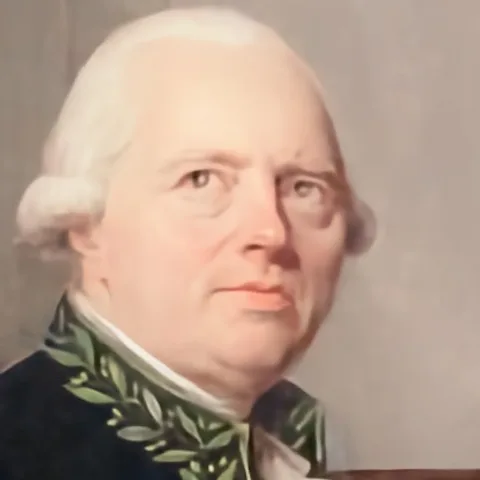
ゴセック
1734–1829
#418ベートーヴェンより長生き!He outlived Beethoven!
ゴセックはバッハがまだ生きていた1734年に生まれ、ベートーヴェン(1827年没)やシューベルト(1828年没)よりもあとの1829年に亡くなりました。95年の人生で、バロックから古典派、そしてロマン派の始まりまで、音楽の歴史をまるごと見とどけたのです。
Gossec was born in 1734, when Bach was still alive, and died in 1829 — after Beethoven (died 1827) and Schubert (died 1828). In his 95 years, he witnessed the whole journey of music from the Baroque through the Classical era to the dawn of Romanticism.
ゴセック
1734–1829
#4191000人をこえる大演奏!Over a thousand performers!
フランス革命の祭典のためにゴセックが書いた「テ・デウム」は、1200人の歌手と300人の管楽器奏者で演奏されたと言われています(人数は資料によってちがいます)。広い野外で大勢の人に聴かせるため、とにかく大きな音が必要だったのです。ゴセックは吹奏楽の歴史でも大切な人物です。
The Te Deum that Gossec wrote for a Revolutionary festival is said to have been performed by 1,200 singers and 300 wind players, though sources give different numbers. To be heard by huge crowds in the open air, the music simply had to be loud. Gossec is an important figure in the history of the wind band.
ゴセック
1734–1829
#420モーツァルトの感想は「とても乾いた人」Mozart called him 'a very dry man'
1778年4月、パリにいたモーツァルトは父への手紙で、ゴセックのことを「とてもよい友人で、とても乾いた人」と書きました。「乾いた」がどんな意味だったのかは、はっきりわかりません。「まじめな」とも「退屈な」とも読めるのです。2人の音楽家の、ちょっとおもしろい出会いです。
In April 1778, writing from Paris, Mozart described Gossec in a letter to his father as 'a very good friend and a very dry man'. Nobody knows exactly what 'dry' meant here — it could mean serious, or it could mean dull. It was an amusing meeting of two musicians.
ゴセック
1734–1829
#421ナポレオンのさそいを断った?Did he say no to Napoleon?
1803年、ゴセックはナポレオンに会い、自分のもとで働かないかとさそわれたものの、これを断ったという話が伝わっています。すでに70歳近い大ベテランで、音楽院での教育を大切にしていたのかもしれません。
There is a story that in 1803 Gossec met Napoleon, who invited him to work in his service, and that Gossec turned the offer down. He was already nearly seventy and may have preferred to focus on his teaching at the Conservatoire.
ゴセック
1734–1829
#422アニメにも登場した「ガヴォット」A gavotte heard in cartoons
ゴセックの「ガヴォット」は、アメリカのワーナー・ブラザースのいくつものアニメで使われました。日本では、バイオリンを習う子どもが使う教本(スズキ・メソードなど)に入っていて、発表会でおなじみの曲です。
Gossec's 'Gavotte' was used in several American Warner Bros. cartoons. In Japan it appears in violin method books used by children, such as the Suzuki Method, and is a familiar piece at recitals.
ゴセック
1734–1829
#423革命の歌「ラ・マルセイエーズ」を編曲He arranged 'La Marseillaise'
フランス国歌「ラ・マルセイエーズ」は、1792年に生まれた革命の歌です。ゴセックは同じ1792年の作品「自由へのささげもの」の中にこの歌を取り入れ、合唱とオーケストラで演奏できるようにしました。この歌を広めるのに役立った一人です。
'La Marseillaise', now the French national anthem, was born as a revolutionary song in 1792. That same year, Gossec included it in his work L'Offrande à la Liberté ('The Offering to Liberty'), arranging it for chorus and orchestra. He helped make the song widely known.
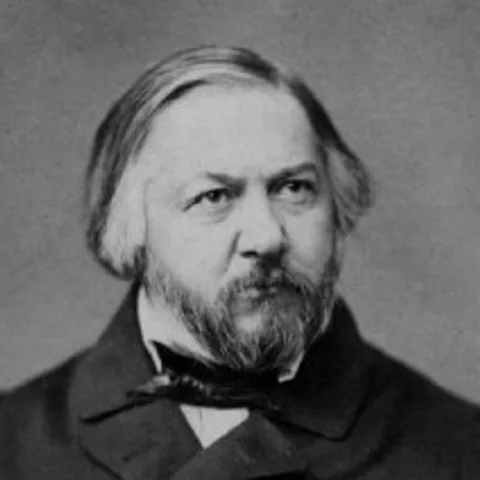
グリンカ
1804–1857
#424国歌になった「愛国歌」His 'Patriotic Song' became the national anthem
グリンカのピアノ曲をもとにした「愛国歌」は、ソビエト連邦がなくなるころの1990年から2000年まで、ロシアの国歌として使われました。ただし、正式な歌詞は最後まで決まらず、メロディだけの国歌でした。
The 'Patriotic Song', based on a piano piece by Glinka, was used as the national anthem of Russia from 1990 to 2000, around the end of the Soviet Union. However, no official words were ever adopted, so it was an anthem without lyrics.
グリンカ
1804–1857
#425暑い部屋で毛皮にくるまれて育ったRaised in a hot room, wrapped in furs
グリンカは赤ちゃんのころ、母親から離されて祖母に育てられました。回想録によると、祖母は孫がかぜをひかないよう、とても暑くした部屋で毛皮にくるんで育てたそうです。グリンカはおとなになっても体が弱く、健康をとても気にする人でした。
As a baby, Glinka was taken from his mother and raised by his grandmother. According to his memoirs, she kept him wrapped in furs in a very hot room so that he would not catch cold. Even as an adult, Glinka had weak health and worried a great deal about it.
グリンカ
1804–1857
#426チャイコフスキー「どんぐりの中のかしの木」Tchaikovsky's 'oak in the acorn'
チャイコフスキーは日記の中で、ロシアの交響的な音楽はすべて「カマリンスカヤ」の中にある、ちょうど、かしの木がどんぐりの中にあるように、と書きました。小さな1曲から、ロシアの大きな音楽の木が育っていったというわけです。
In his diary, Tchaikovsky wrote that the whole Russian symphonic school is contained in Kamarinskaya, just as the whole oak tree is contained in the acorn. From one small piece, the great tree of Russian music grew.
グリンカ
1804–1857
#427ピアノの先生は「ノクターン」の名人His piano teacher pioneered the nocturne
グリンカがサンクトペテルブルクでレッスンを受けたジョン・フィールドは、アイルランド出身のピアニストで、ピアノの「ノクターン(夜想曲)」という曲の形を育てた人として知られています。のちにショパンがこの形を受けつぎました。グリンカがフィールドに習ったのは、わずか数回だったと言われています。
John Field, who gave Glinka lessons in St Petersburg, was an Irish pianist generally credited with developing the piano nocturne, a kind of piece that Chopin later made famous. Glinka is said to have had only a few lessons with him.
グリンカ
1804–1857
#428スペインに夢中になった作曲家A Russian in love with Spain
1845年から約2年間、グリンカはスペインを旅し、ギターの音楽や踊りに夢中になりました。その成果が「ホタ・アラゴネーサ(アラゴンのホタによる華麗な奇想曲)」などのスペイン序曲です。ロシアの作曲家がスペイン風の曲を書く伝統は、ここから始まりました。
From 1845 Glinka spent about two years travelling in Spain, where he fell in love with its guitar music and dances. The results were his Spanish overtures, including the Capriccio brillante on the Jota aragonesa. This started a tradition of Russian composers writing Spanish-style music.
グリンカ
1804–1857
#429妹がなきがらを祖国へHis sister brought him home
1857年、グリンカは旅先のベルリンで亡くなり、いったんベルリンにほうむられました。けれども兄を深く敬っていた妹リュドミラ・シェスタコワが、なきがらをサンクトペテルブルクへ運び、改めてほうむりました。彼女はその後も、兄の楽譜を守り、若い作曲家たちを応援しました。
When Glinka died in Berlin in 1857, he was first buried there. But his devoted sister, Lyudmila Shestakova, had his body taken to St Petersburg and reburied. She went on to protect his scores and to support young Russian composers.
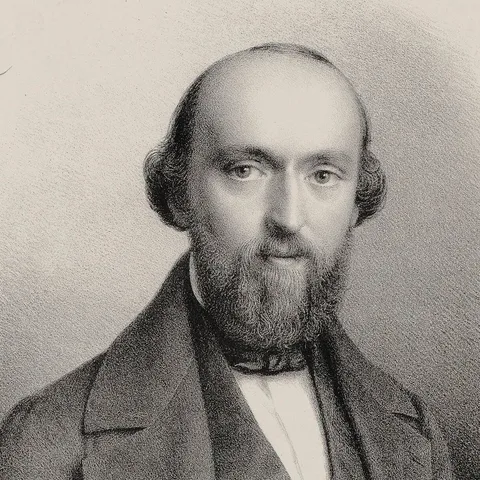
ブルグミュラー
1806–1874
#430日本でだけ超有名!?Super-famous — mainly in Japan?
ブルグミュラーの名前は、本国ドイツやフランスでは一般の人にはあまり知られていません。ところが日本では、ピアノ教室で「バイエル」などのあとに「25の練習曲」を弾くのが定番で、大手の音楽教室でも教材として使われています。そのため、日本のピアノを習う子どもたちにとっては、とてもおなじみの名前なのです。
Burgmüller's name is not well known to the general public in Germany or France. In Japan, however, the 25 Studies are a standard step in piano lessons, and they are used as teaching material even by major music schools. So for many young Japanese pianists, his name is especially familiar.
ブルグミュラー
1806–1874
#43125曲ぜんぶに題名があるAll 25 pieces have titles
ふつうの練習曲は「第1番」「第2番」と番号だけのことが多いのですが、「25の練習曲」は「すなおな心」「アラベスク」「タランテラ」「バラード」「天使の合唱」「つばめ」「貴婦人の乗馬」など、1曲ずつに題名があります。題名から気持ちを想像して弾けるので、子どもにも楽しいのです。
Most studies just have numbers, but each of the 25 Studies has a title, such as 'La Candeur', 'Arabesque', 'Tarentelle', 'Ballade', 'L'Harmonie des anges', 'L'Hirondelle' ('The Swallow') and 'La Chevaleresque'. Because children can imagine a mood from the title as they play, practising becomes fun.
ブルグミュラー
1806–1874
#432「ジゼル」のあの踊りの音楽もHe wrote music for Giselle, too
有名なバレエ「ジゼル」の音楽はアダンが作曲しましたが、第1幕の「村娘のパ・ド・ドゥ」の音楽はブルグミュラーが書いたものです。ブルグミュラー自身の曲「レーゲンスブルクの思い出」をもとにした音楽です。1841年の初演のときに加えられ、今も上演で使われることが多い場面です。
The music of the famous ballet Giselle is by Adolphe Adam, but the 'Peasant Pas de Deux' in Act 1 was written by Burgmüller. The music was adapted from his own piece 'Souvenirs de Ratisbonne' ('Memories of Regensburg'). It was added for the 1841 premiere and is still often used in performances.
ブルグミュラー
1806–1874
#433メンデルスゾーンが弟のために葬送行進曲をMendelssohn wrote a funeral march for his brother
弟ノルベルト・ブルグミュラーは才能ある作曲家で、メンデルスゾーンやシューマンにも高く評価されていました。1836年に26歳で亡くなると、メンデルスゾーンは彼の葬儀のために「葬送行進曲」を作曲しています。兄フリードリヒにとって、大きな悲しみの年でした。
His younger brother Norbert Burgmüller was a gifted composer, highly praised by Mendelssohn and Schumann. When Norbert died in 1836 at only 26, Mendelssohn composed a funeral march for his funeral. For his older brother Friedrich, it was a year of great sorrow.
ブルグミュラー
1806–1874
#434「25」のあとにも続きがあるThere is more after the 25
ブルグミュラーの練習曲は「25の練習曲」だけではありません。少しむずかしい「12の練習曲 作品105」、さらに上を目指す「18の練習曲 作品109」があります。作品109にも「真珠」「つむぎ歌」など、すてきな題名がついています。
Burgmüller's studies do not end with the 25. There are also the slightly harder 12 Studies Op. 105 and the more advanced 18 Studies Op. 109. Op. 109 also has charming titles, such as 'Les Perles' ('Pearls') and 'La Fileuse' ('The Spinner').
ブルグミュラー
1806–1874
#435台本は「ジゼル」と同じゴーティエSame librettist as Giselle
1843年にパリ・オペラ座で初演されたブルグミュラーのバレエ「ラ・ペリ」は、「ジゼル」の台本作者の一人でもある作家テオフィル・ゴーティエが台本を書き、「ジゼル」を踊った人気バレリーナ、カルロッタ・グリジが主役をつとめました。練習曲の作者は、バレエの世界でも活やくしていたのです。
Burgmüller's ballet La Péri, premiered at the Paris Opéra in 1843, had a story by Théophile Gautier, one of the writers of Giselle, and starred Carlotta Grisi, the ballerina who had danced Giselle. The composer of children's studies was also a figure in the world of ballet.
バダジェフスカ
1823–1861
#436ごみ収集車のメロディに!The tune of the garbage truck!
台湾では、ごみ収集車が「乙女の祈り」を流しながら町を回る地域が多く、人々はこの曲が聞こえると、ごみを出しに家から出てきます。日本でも、昭和の時代にごみ収集車でこの曲を流していた町がありました。世界でいちばん身近なクラシックの1曲かもしれません。
In many parts of Taiwan, garbage trucks play 'A Maiden's Prayer' as they drive around town, and when people hear it, they come out with their rubbish. In Japan, too, some towns once used the tune for their garbage trucks in the Showa era. It may be one of the most familiar classical pieces in daily life.
バダジェフスカ
1823–1861
#437生まれた年は長いなぞだった!Her birth year was a long mystery!
バダジェフスカの生まれた年は長いあいだ、1829年説、1834年説、1838年説などがあり、生まれた町もはっきりしませんでした。ところが、ワルシャワのプラガ地区の教会で洗礼の記録が見つかり、1823年9月17日生まれだとわかってきました。世界中で知られる曲の作者なのに、こんな基本的なことが長いなぞだったのです。
For a long time there were several theories about Bądarzewska's birth year — 1829, 1834 and 1838 among them — and her birthplace was uncertain too. Then her baptism record was found at a church in Warsaw's Praga district, showing that she was born on 17 September 1823. Although her piece is known around the world, even such basic facts about her were a mystery for many years.
バダジェフスカ
1823–1861
#438専門家からは酷評の嵐A storm of harsh reviews
イギリスの音楽辞典の編者ショールズや、アメリカのピアニストで作家のレッサーは、「乙女の祈り」をとてもきびしく批評しました。レッサーは「やぼったく、未熟さが生んだもの」とまで書いています。それでも楽譜は売れ続け、1924年にはオーストラリアのある楽譜店だけで年に1万部売れたという記録もあります。
The English music writer Percy Scholes and the American pianist and author Arthur Loesser criticised 'A Maiden's Prayer' very harshly. Loesser even called it a 'dowdy product of ineptitude'. Yet the sheet music kept selling. One record says that in 1924 a single firm in Melbourne, Australia, sold 10,000 copies a year.
バダジェフスカ
1823–1861
#439オペラでパロディ、カントリーでスイングParodied in opera, swung in country music
1930年、ドイツの作曲家ワイルと劇作家ブレヒトのオペラ「マハゴニー市の興亡」で、「乙女の祈り」が皮肉たっぷりに使われました。一方アメリカでは、カントリー音楽のボブ・ウィルズが1935年にスイング風に編曲して録音しています。ジャンルをこえて愛された曲なのです。
In 1930, the composer Kurt Weill and the playwright Bertolt Brecht used 'A Maiden's Prayer' ironically in their opera Rise and Fall of the City of Mahagonny. In America, meanwhile, the Western swing musician Bob Wills arranged and recorded it in 1935. It is a piece loved across many genres.
バダジェフスカ
1823–1861
#440金星にクレーター「バダジェフスカ」A crater on Venus named after her
1991年、金星のクレーターの1つに「バダジェフスカ」という名前がつけられました。金星のクレーターには、歴史上の有名な女性の名前がつけられるきまりがあります。たった1曲で世界に名を残した作曲家は、宇宙にも名前を残したのです。
In 1991 a crater on Venus was named Bądarzewska. Craters on Venus are named after famous women from history. The composer who made her name with a single piece now has her name in space as well.
バダジェフスカ
1823–1861
#441本国では忘れられ、日本で愛されたForgotten at home, loved in Japan
ポーランドでは長いあいだ、バダジェフスカの名前はあまり知られていませんでした。一方日本では「乙女の祈り」がオルゴールやピアノ曲で広く親しまれ、2016年のアニメ「クラシカロイド」にも彼女が登場しました。日本で彼女を知ったポーランドの人たちによって、本国でも再発見が進んでいると言われます。
For a long time Bądarzewska's name was not well known in Poland. In Japan, however, 'A Maiden's Prayer' became widely loved through music boxes and piano lessons, and she even appeared as a character in the 2016 anime Classicaloid. It is said that Polish people who learned about her in Japan have helped her to be rediscovered at home.
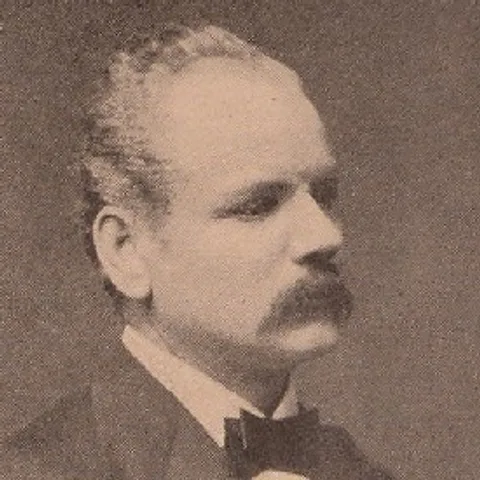
ランゲ
1830–1889
#442先生の名前はバッハ!でも別人His teacher was called Bach — but not that Bach
ランゲの先生の一人、アウグスト・ヴィルヘルム・バッハは、ベルリンで活やくしたオルガン奏者です。名前は同じでも、あの大作曲家ヨハン・ゼバスティアン・バッハの一族ではありません。このA・W・バッハは、メンデルスゾーンにもオルガンを教えたことで知られています。
One of Lange's teachers, August Wilhelm Bach, was an organist in Berlin. Despite his name, he was not related to the family of the great Johann Sebastian Bach. This A. W. Bach is also known for having taught the organ to Mendelssohn.
ランゲ
1830–1889
#443作品番号は493番までOpus numbers up to 493
ランゲはとても多作で、ピアノ曲を中心におよそ500曲を書きました。作品番号は493番の「ばらの月」にまで達しています。家庭で弾きやすい曲は楽譜がよく売れたので、出版社からの注文も多かったと考えられます。
Lange was extremely prolific, writing around 500 works, mostly for piano. His opus numbers reach as high as Op. 493, 'Les Mois de roses' ('The Months of Roses'). Pieces that were easy to play at home sold well, so publishers probably kept asking him for more.
ランゲ
1830–1889
#444題名は花だらけTitles full of flowers
ランゲの曲の題名を見ると、「花の歌」「エーデルワイス」「荒野のバラ」「ばらの月」など、花にちなんだものがたくさんあります。「荒野のバラ(ハイデンレースライン)」は、シューベルトの有名な歌曲「野ばら」と同じ題名です。ランゲが花のイメージを題名によく使ったことがわかります。
Many of Lange's titles are about flowers: the 'Flower Song', 'Edelweiss', 'Heidenröslein' and 'Les Mois de roses'. 'Heidenröslein' ('Little Heath Rose') has the same title as Schubert's famous song. These titles show how often Lange used flower images for his music.
ランゲ
1830–1889
#445「きれいだけど、目立たない」と言われた'Pretty, but nothing striking'
1886年にイギリスで出た音楽家の辞典は、ランゲの曲について「多くはとても感じがよく、きれいだが、とくに目立つ特ちょうはない」と書いています。それでも「花の歌」は100年以上たった今も弾かれ続けています。当時の評価とは別に、長く弾きつがれてきた曲なのです。
An English dictionary of musicians from 1886 said that many of Lange's pieces were 'very pleasing and pretty in character, but they are not marked by any very striking features'. Yet more than a hundred years later, the 'Flower Song' is still being played. Whatever the critics of the time thought, players have kept enjoying it.
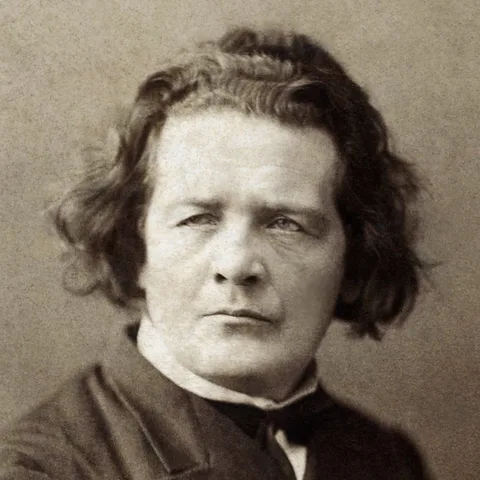
ルビンシテイン
1829–1894
#446あだ名は「ヴァン2世」!?Nicknamed 'Van II'?
ルビンシテインは、もじゃもじゃの髪とけわしい顔つきが、ベートーヴェンにとてもよく似ていると言われました。そこでリストは、ベートーヴェンの名前の「ヴァン」にちなんで、彼を「ヴァン2世」というあだ名で呼んだそうです。
With his wild hair and stern face, Rubinstein was said to look remarkably like Beethoven. Liszt even gave him the nickname 'Van II', after the 'van' in Ludwig van Beethoven's name.
ルビンシテイン
1829–1894
#447239日で215回の演奏会!215 concerts in 239 days!
1872〜73年のアメリカ公演では、ほぼ毎日のように演奏し、239日で215回もの演奏会を開きました。お金はたくさん入りましたが、本人は、芸術が工場の流れ作業のようになってしまったとうんざりし、二度とアメリカには行かなかったと言われています。
On his American tour of 1872–73 he played almost every day, giving 215 concerts in 239 days. It earned him a lot of money, but he grew sick of turning art into factory work, and it is said he never went back to America.
ルビンシテイン
1829–1894
#44810歳の演奏会に、ショパンとリストが来たChopin and Liszt came to hear a 10-year-old
1840年ごろ、パリで開いた少年ルビンシテインの演奏会には、なんとショパンとリストが聴きに来ていました。ショパンは彼を自分の部屋に招いて弾いてみせ、リストは「ドイツで作曲を学ぶといい」と先生にすすめたと伝えられています。
Around 1840, when the young Rubinstein gave a concert in Paris, both Chopin and Liszt were in the audience. Chopin invited him to his studio and played for him, and Liszt advised his teacher to take him to Germany to study composition.
ルビンシテイン
1829–1894
#4497日分のピアノの歴史を1人で演奏The whole history of the piano, in seven concerts
1885〜86年の「歴史的演奏会」は、昔の作曲家から同じ時代のショパンやリストまで、ピアノ音楽の歴史を7回の演奏会でたどる企画でした。1回の演奏会で弾く曲がとても多く、すべてを暗譜で弾いたと言われ、ルビンシテインのおどろくべき記憶力と体力を伝える伝説になっています。
His 'Historical Concerts' of 1885–86 traced the history of piano music in seven recitals, from early keyboard composers up to Chopin and Liszt. Each programme was enormous, and he is said to have played everything from memory, a legend of his amazing memory and stamina.
ルビンシテイン
1829–1894
#450生まれた村に学校をプレゼントA school for his home village
ルビンシテインは、演奏会でかせいだお金を生まれ故郷の村に寄付しました。そのお金は村に学校を開くのに役立ちました。ほかにも、自分の演奏会の売り上げをたびたび慈善のために使ったことで知られています。
Rubinstein gave the money from some of his concerts to the village where he was born, and it helped open a public school there. He was also known for often giving concert earnings to charity.
ルビンシテイン
1829–1894
#451コンクールも作った!He started a famous competition too!
1890年、ルビンシテインは若いピアニストと作曲家のためのコンクールを自分のお金で始めました。第1回の作曲部門では、のちに大作曲家・大ピアニストとなるブゾーニが賞を取っています。音楽院、コンクールと、彼は若者を育てるしくみを次々に作りました。
In 1890 Rubinstein used his own money to start a competition for young pianists and composers. At the very first one, the composition prize went to Ferruccio Busoni, who later became a famous composer and pianist. From conservatories to competitions, he kept building ways to help young musicians.
エルメンライヒ
1816–1905
#452作曲家なのに、50年間ずっと役者!A composer who was an actor for fifty years!
「紡ぎ歌」の作曲者として知られるエルメンライヒですが、本業は役者でした。17歳で劇場の合唱団に入ってから、1883年に舞台生活50年を祝うまで、ずっと舞台の人。作曲は、いわば「副業」だったのです。
Ellmenreich is known as the composer of the Spinning Song, but acting was his real job. From joining a theatre chorus at seventeen to celebrating fifty years on stage in 1883, he was a man of the theatre. Composing was more like a side job.
エルメンライヒ
1816–1905
#453お母さんは「魔笛」初演の劇場の歌手His mother sang at the theatre where The Magic Flute was first performed
母フリーデリケは、モーツァルトの「魔笛」の台本を書いたシカネーダーにまねかれ、ウィーンの「アウフ・デア・ヴィーデン劇場」で歌った歌手・女優でした。この劇場は、1791年に「魔笛」が初めて上演された場所です。彼女はオペラの台本の翻訳もたくさんしています。エルメンライヒ家は、芝居と音楽の一家だったのです。
His mother, Friederike, was a singer and actress who was engaged by Emanuel Schikaneder, the man who wrote the words for Mozart's Magic Flute, at the Theater auf der Wieden in Vienna. This was the theatre where The Magic Flute was first performed in 1791. She also translated many opera texts. The Ellmenreichs were a true family of theatre and music.
エルメンライヒ
1816–1905
#454「紡ぎ歌」は第4番?第5番?The Spinning Song: No. 4 or No. 5?
「紡ぎ歌」は曲集「音楽の風俗画」作品14の中の1曲です。今は「第4番」とよばれることが多いのですが、楽譜や資料によっては「第5番」と書かれていることもあります。これほど有名な曲なのに、番号が2通りあるのはちょっとしたなぞです。
The Spinning Song belongs to the set Musical Genre Pictures, Op. 14. Today it is usually called No. 4, but some scores and books call it No. 5. For such a famous piece, it is a funny little mystery that it has two different numbers.
エルメンライヒ
1816–1905
#455劇の題名がおもしろすぎるA play with a very funny title
エルメンライヒは劇やオペラの台本も書きました。1853年の喜劇の題名は「ヤマウズラ、またはわたしは自分の妻と結婚する」(フランスの作品をもとにしたもの)。ほかにも、喜劇オペラ「グレトナ・グリーンのかじ屋」や「不幸な恋人」など、楽しそうな題名の作品を残しています。
Ellmenreich also wrote plays and opera texts. His comedy of 1853, based on a French work, is called The Partridge, or I Marry My Wife. His other works, with fun titles, include the comic opera The Blacksmith of Gretna Green and An Unfortunate Lover.
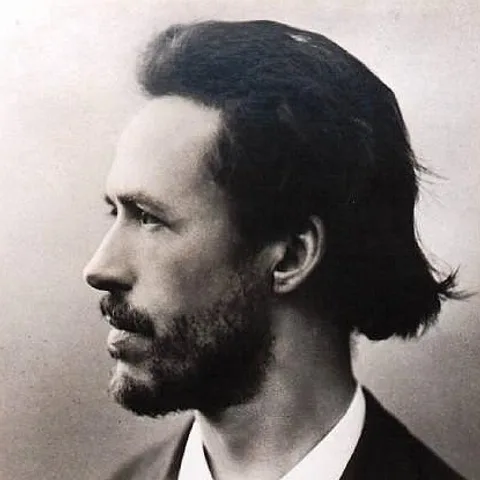
ゴダール
1849–1895
#456パリの作曲家なのに、初演はベルギーA Paris composer, but the premiere was in Belgium
パリ生まれ・パリ育ちのゴダールですが、代表作のオペラ「ジョスラン」が初めて上演されたのは、パリではなくベルギーのブリュッセルにあるモネ劇場でした。1888年2月25日のことです。
Godard was born and raised in Paris, yet his most famous opera, Jocelyn, was first performed not in Paris but at the Théâtre de la Monnaie in Brussels, Belgium, on 25 February 1888.
ゴダール
1849–1895
#457英語の題は「天使が君を守る」In English: 'Angels Guard Thee'
「ジョスランの子守歌」は、英語の歌詞をつけて「エンジェルズ・ガード・ジー(天使が君を守る)」という題でも歌われ、英語の国々でも広く親しまれました。歌だけでなく、ヴァイオリンやチェロの名曲としてもよく演奏されます。
The Berceuse from Jocelyn was also sung with English words under the title 'Angels Guard Thee', and it became well loved in English-speaking countries. It is also a favourite piece for violin or cello.
ゴダール
1849–1895
#458最後のオペラは友人が完成させたHis last opera was finished by someone else
ゴダールはオペラ「ラ・ヴィヴァンディエール」を書き上げましたが、病気のため、オーケストラの部分を最後まで仕上げることができませんでした。残りは作曲家ポール・ヴィダルが仕上げ、ゴダールが亡くなった1895年にパリのオペラ=コミック座で上演されました。のちにイギリスでも上演されています。
Godard finished writing his opera La Vivandière, but because of his illness he could not complete the orchestration. The composer Paul Vidal finished it, and it was staged at the Opéra-Comique in Paris in 1895, the year Godard died. It was later performed in England too.
ゴダール
1849–1895
#459パリ市のコンクールで「引き分け」優勝A shared first prize from the City of Paris
1878年、パリ市が開いた作曲コンクールで、ゴダールの「劇的交響曲」と名づけた作品「タッソー」が賞を取りました。ただし、この年の賞はもう1人の作曲家と分け合う形の同時受賞でした。それでもこの作品は、ゴダールの作品の中でとくに高く評価されています。
In 1878 Godard's 'dramatic symphony' Le Tasse won the City of Paris composition prize, though he shared it with another composer that year. Even so, it is still counted among his most admired works.
ゴダール
1849–1895
#460子守歌のもとは長い長い詩The lullaby comes from a very long poem
オペラ「ジョスラン」のもとになったのは、フランスの詩人ラマルティーヌが1836年に発表した長い物語詩「ジョスラン」です。若い神学生ジョスランの、かなわない恋と信仰の物語。あのやさしい子守歌は、その物語の中で歌われます。
The opera Jocelyn is based on Jocelyn, a long story-poem published in 1836 by the French poet Lamartine. It tells of a young man training for the priesthood, torn between love and faith. The gentle lullaby is sung within that story.
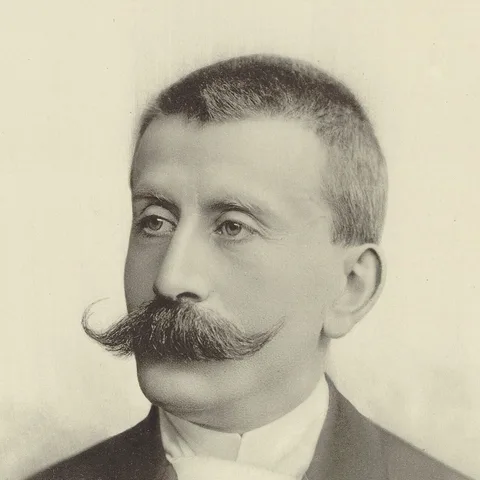
モシュコフスキ
1854–1925
#461ステージに15台のピアノ!Fifteen grand pianos on one stage!
1921年12月21日、貧しくなったモシュコフスキを助けるため、ニューヨークのカーネギー・ホールで、15台のグランドピアノを並べた演奏会が開かれました。グレインジャーやバックハウスなど名ピアニストが集まり、1万3275ドルが集まりました。お金の一部はすぐパリへ送られ、残りで年金が用意されましたが、その支払いが始まったばかりのころに彼は亡くなりました。
On 21 December 1921, a concert was held at Carnegie Hall in New York to help the now-poor Moszkowski, with fifteen grand pianos on stage. Famous pianists such as Percy Grainger and Wilhelm Backhaus took part, and it raised 13,275 dollars. Part of the money was sent to Paris at once, and the rest bought him an annuity, but sadly he died just as the payments were starting.
モシュコフスキ
1854–1925
#462ショパンの次にピアノをわかっている人Next to Chopin, the best writer for the piano
ポーランドの大ピアニストで、のちに首相にもなったパデレフスキは、「ショパンの次に、ピアノのための書き方をいちばんよくわかっているのはモシュコフスキだ」と語ったと伝えられています。それほど、ピアノが気持ちよく鳴る曲を書く名人でした。
Paderewski, the great Polish pianist who later became prime minister, is reported to have said that after Chopin, Moszkowski best understood how to write for the piano. He was a master at writing music that makes the piano sound wonderful.
モシュコフスキ
1854–1925
#463妻は詩人のもとへ去った?Did his wife leave him for a poet?
モシュコフスキの妻アンリエットは、有名な女性作曲家セシル・シャミナードの妹でした。2人は1890年ごろに別れて暮らすようになり、1892年に離婚しました。妻はドイツの詩人ルートヴィヒ・フルダのもとへ去ったと伝えられていますが、くわしい事情ははっきりしていません。
Moszkowski's wife, Henriette, was the younger sister of the famous composer Cécile Chaminade. The couple separated around 1890 and divorced in 1892. She is said to have left him for the German poet Ludwig Fulda, but the details are not clear.
モシュコフスキ
1854–1925
#464ピアノ会社の大金をことわったHe turned down big money from piano makers
大人気のモシュコフスキには、アメリカのピアノ会社から「うちのピアノで演奏旅行をしてほしい」と高額の申し出が来ました。しかし彼は、その大金をことわったと伝えられています。宣伝のために弾くのは好まなかったのかもしれません。
At the height of his fame, American piano companies offered Moszkowski huge fees to tour and promote their instruments. He is said to have refused them all.
モシュコフスキ
1854–1925
#465「彼に教えることは何もない」'There is nothing I can teach him'
パリでは、のちに20世紀を代表するピアニストとなるヨーゼフ・ホフマンが教えを受けに来ました。モシュコフスキはホフマンについて、「彼に教えられることは何もない」と言ったと伝えられています。先生がお手上げになるほどの天才だったのです。
In Paris, Josef Hofmann, who became one of the greatest pianists of the 20th century, came to study with him. Moszkowski reportedly said there was nothing anyone could teach him. The pupil was too brilliant even for the master.
モシュコフスキ
1854–1925
#466名作映画にも登場Heard in a classic film
「スペイン舞曲集」の第5番「ボレロ」は、イギリスの名監督デヴィッド・リーンの映画「逢びき」(1945年)の中で使われています。のちに友人の作曲家シャルヴェンカがオーケストラ版にも編曲し、さまざまな形で親しまれています。
The Bolero, No. 5 of the Spanish Dances, appears in David Lean's classic British film Brief Encounter (1945). The set was also arranged for orchestra by his friend Philipp Scharwenka, so it is enjoyed in many forms.
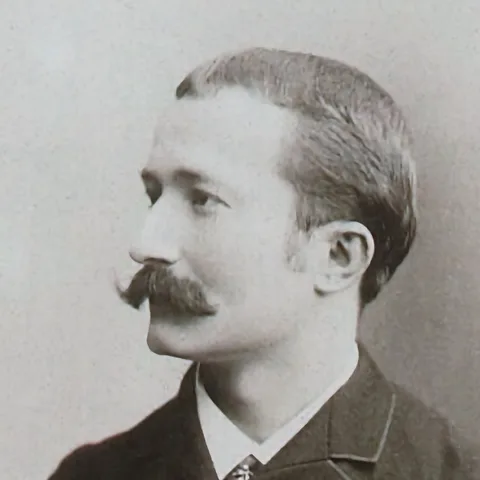
ガンヌ
1862–1923
#46730年後、首相のあだ名と同じ題に!?Thirty years later, a prime minister's nickname?
「勝利の父」が生まれたのは1888年。ところが第一次世界大戦でフランスを勝利に導いたクレマンソー首相が、のちに「勝利の父」とよばれるようになりました。ガンヌは1918年、この曲をクレマンソーにささげています。曲のほうが30年も先輩だったのです。
'Le Père la Victoire' was written in 1888. Much later, Prime Minister Georges Clemenceau, who led France to victory in the First World War, came to be nicknamed 'Father Victory'. In 1918 Ganne dedicated the song to him. The tune was thirty years older than the nickname!
ガンヌ
1862–1923
#468名行進曲はバレエ生まれA famous march born in a ballet
「勝利の父」のメロディーは、もともとガンヌがパリの劇場フォリー・ベルジェールのバレエのために書いた行進曲から生まれたと伝えられています。そこに歌詞がつけられ、人気歌手パウリュスが歌って大ヒットしました。
The tune of 'Le Père la Victoire' is said to have come from a march Ganne wrote for a ballet at the Folies-Bergère theatre in Paris. Words were added later, and the star singer Paulus made it a huge hit.
ガンヌ
1862–1923
#469オペラ座の舞踏会の「最後の」指揮者The last conductor of the Opéra balls
パリ・オペラ座では、昔から豪華な舞踏会が開かれ、専門の指揮者がダンス音楽を演奏していました。ガンヌは1898年からその指揮者をつとめ、この伝統の役目をになった最後の指揮者になりました。
The Paris Opéra had long held grand balls, with a special conductor leading the dance music. Ganne took on this role in 1898 and became the last conductor to hold that traditional post.
ガンヌ
1862–1923
#470「第2のラ・マルセイエーズ」'A second Marseillaise'
1892年の「ロレーヌ行進曲」は、フランス東部ロレーヌ地方の人々にとって「第2のラ・マルセイエーズ(フランス国歌)」と言われるほど愛されました。「勝利の父」とならんで、ガンヌの2つの「国歌」とよばれることもあります。
The 'Marche lorraine' of 1892 was so loved by the people of Lorraine in eastern France that it was called 'a second Marseillaise', after the French national anthem. Together with 'Le Père la Victoire', it is sometimes called one of Ganne's two 'national anthems'.
ガンヌ
1862–1923
#471小さな体に大きなひげA tiny man with a big moustache
詩人フェルナン・グレーグの思い出によると、ガンヌは「とても小さな男」で、警官のような立派な口ひげをはやし、生徒たちにいたずらをするような陽気な人だったそうです。舞踏会の音楽を作る人らしい、明るい人柄だったのでしょう。
According to the memories of the poet Fernand Gregh, Ganne was a very small man with a policeman's grand moustache, and a cheerful person who liked to play jokes on his students. A fitting personality for a composer of party music!
ガンヌ
1862–1923
#472モナコの切手になったOn a stamp from Monaco
長年モンテカルロで演奏会を開いたガンヌは、モナコでも大切にされました。1923年にはカジノに「ガンヌの間」ができ、1979年にはモナコで、彼のオペラ「笛吹きハンス」をえがいた切手が発行されています。
Ganne led concerts in Monte Carlo for many years and was much loved in Monaco. In 1923 a hall at the casino was named after him, and in 1979 Monaco issued a stamp showing his opera Hans, the Flute Player.
タイケ
1864–1922
#473「ストーブにくべてしまえ」!?'Put it in the stove!'?
タイケが新しい行進曲を楽長に見せると、「行進曲はもう十分ある。ストーブにくべてしまえ」と言われた、という話が伝えられています。このことがきっかけで、タイケは軍をやめたとも言われています。その曲こそ、のちの世界的名曲「旧友」でした。
There is a story that when Teike showed his new march to his bandmaster, he was told, 'We have enough marches already. Put it in the stove!' It is also said that this was why Teike left the army. That very piece became the world-famous 'Old Comrades'.
タイケ
1864–1922
#474代金はお金とガチョウ1羽Paid with money and a goose
ドイツの資料によると、「旧友」で最初にもらった代金は20マルクと、なんとガチョウ1羽だったそうです。その後も権利を売ったお金はわずかで、世界中で演奏される名曲を書いたのに、タイケはお金持ちにはなれませんでした。
According to German sources, Teike's first payment for 'Old Comrades' was 20 marks and a goose! He earned only small sums from it afterwards, so even though he had written a march played around the world, he never became rich.
タイケ
1864–1922
#475作曲家の本業はおまわりさんA composer whose day job was police officer
軍をやめたタイケは、まずウルムの町の警察で働き、のちにポツダムで警察官になりました。昼は町を守るおまわりさん、そのあいまに行進曲を書くという生活です。病気で警察をやめてからは、役所で働きました。
After leaving the army, Teike worked for the town police in Ulm and later became a police officer in Potsdam. He kept the streets safe by day and wrote marches in his spare time. When illness forced him to leave the police, he went on to work in a government office.
タイケ
1864–1922
#476「旧友」という題のわけWhy 'Old Comrades'?
この行進曲が「旧友(昔の仲間)」とよばれるようになったのは、タイケが軍をやめて、いっしょに演奏した仲間たちと別れることになったからだ、という説があります。ただし、はっきりした記録が残っているわけではありません。
One explanation is that the march came to be called 'Old Comrades' because Teike was leaving the army and saying goodbye to the friends he had played with. However, there is no clear record to prove it.
タイケ
1864–1922
#477名曲の作者が、貧しい人の墓にA famous composer in a pauper's grave
1922年に亡くなったタイケは、お金のない人のための墓に葬られました。のちに彼の功績が見直され、ポツダムや、彼が晩年を過ごした町(今のポーランドのゴジュフ・ヴィエルコポルスキ)には、彼をたたえる記念の板がつけられています。
When Teike died in 1922, he was buried in a pauper's grave. Later his achievement was recognised, and memorial plaques honouring him have been put up in Potsdam and in the town where he spent his last years, now Gorzów Wielkopolski in Poland.
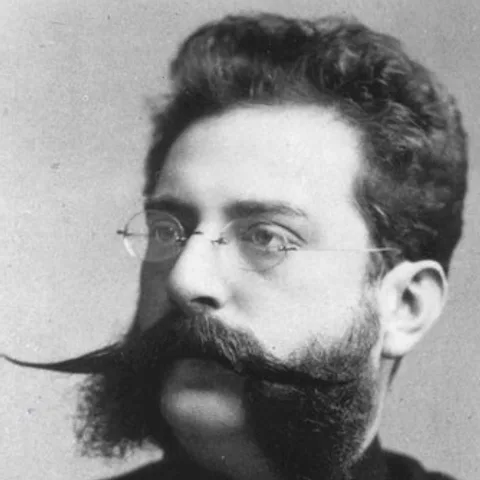
J.F.ワーグナー
1856–1908
#478「双頭の鷲」って何?What is the 'double eagle'?
題名の「双頭の鷲」は、頭が2つある鷲のこと。オーストリア=ハンガリー帝国の紋章にえがかれていて、帝国のシンボルでした。つまり「双頭の鷲の旗の下に」は、「帝国の旗のもとに集まって」という意味がこめられた題名なのです。
The 'double eagle' is an eagle with two heads. It appeared on the coat of arms of Austria-Hungary and was the symbol of the empire. So 'Under the Double Eagle' really means 'under the flag of the empire'.
J.F.ワーグナー
1856–1908
#479アメリカのマーチ王スーザもお気に入りA favourite of America's March King
アメリカの「マーチ王」スーザが率いる楽団は、「双頭の鷲の旗の下に」をお気に入りのレパートリーにして、何度も録音しました。こうしてこの曲はアメリカでも広く知られるようになりました。
The band of John Philip Sousa, America's 'March King', made 'Under the Double Eagle' one of its favourite pieces and recorded it several times. That helped make the march well known in America too.
J.F.ワーグナー
1856–1908
#480楽譜が30万部売れた行進曲A march that sold 300,000 copies
ワーグナーの「ギガール行進曲」作品150は、20世紀のはじめまでに楽譜が30万部以上売れたと記録されています。「ギガール」とはウィーンの言葉で、おしゃれに気をつかう若い男のこと。楽しい題名の曲もたくさん書いたのです。
Wagner's 'Gigerl March', Op. 150, sold over 300,000 copies of sheet music by the early 20th century. 'Gigerl' is Viennese slang for a fashionable young dandy. He wrote many marches with fun titles like this.
J.F.ワーグナー
1856–1908
#481マーチ王なのに年金なしA March King with no pension
当時のオーストリア軍の軍楽隊長には年金がなく、ワーグナーは軍の生活に不満をかかえていました。自分の楽団を作って独立しようとしましたが、お金がたりず大きな借金をしてしまいます。名声とは裏腹に、晩年は苦しい生活でした。
At that time Austrian army bandmasters received no pension, and Wagner was unhappy with military life. He tried to go independent with his own band, but it lost money and left him deep in debt. Despite his fame, his last years were hard.
J.F.ワーグナー
1856–1908
#482ベートーヴェンと同じ墓地の名誉墓A grave of honour near the great masters
ワーグナーは、ウィーン中央墓地の「名誉墓」に葬られています。この墓地は、ベートーヴェンやシューベルト、ブラームス、ヨハン・シュトラウス2世なども眠ることで有名です。マーチ王もウィーンの音楽の名士として大切にされているのです。
Wagner was buried in a grave of honour in the Vienna Central Cemetery, the famous resting place of Beethoven, Schubert, Brahms and Johann Strauss II. The March King is honoured as one of Vienna's great musicians.
J.F.ワーグナー
1856–1908
#4832007年まで現役の連隊行進曲A regimental march until 2007
「双頭の鷲の旗の下に」は、オーストリア軍の砲兵第2連隊の公式の行進曲として使われてきました。その連隊がなくなる2007年まで、100年以上も「現役」の曲だったのです。
'Under the Double Eagle' was the official march of the Austrian Army's Artillery Regiment No. 2. It stayed in service for over a hundred years, until the regiment was disbanded in 2007.
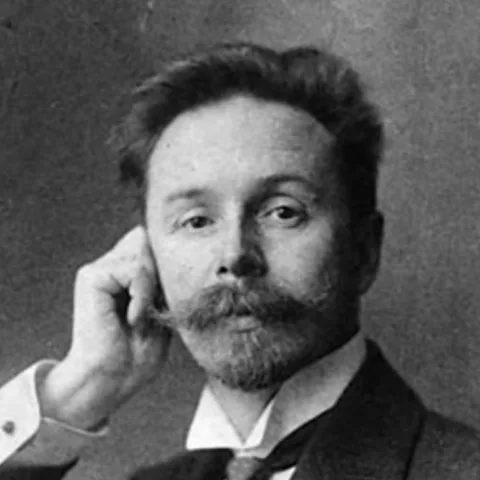
スクリャービン
1872–1915
#484楽譜に「光のピアノ」!?A 'keyboard of lights' in the score?
オーケストラ曲「プロメテウス」の楽譜には、音ではなく色の光を出す「光のピアノ(クラヴィエ・ア・リュミエール)」のパートが書かれています。音楽に合わせて会場の色が変わる、今でいう光の演出を、100年以上前に考えていたのです。
The score of Prometheus includes a part for a 'clavier à lumières', a keyboard that projects coloured light instead of sound. More than a hundred years ago, he imagined a concert where the colours in the hall change with the music, like a modern light show.
スクリャービン
1872–1915
#485本当に音に色が見えていた?Did he really see colours in sounds?
スクリャービンは、調(音楽の中心になる音)ごとに色を決めた、独自の「色の表」を作りました。そのため「音に色が見える体質だった」と言われることがありますが、本当にそうだったのかは、研究者のあいだでも疑問視されています。
Scriabin made his own chart linking each musical key to a colour. Because of this, people often say he could literally see colours when he heard sounds, but many scholars doubt whether that was really true.
スクリャービン
1872–1915
#486ヒマラヤで世界を変える演奏会A concert in the Himalayas to change the world
晩年のスクリャービンは、音楽・光・香り・ダンスなどを合わせた大作「神秘劇」を、ヒマラヤのふもとで1週間かけて上演し、世界を生まれ変わらせようと本気で考えていました。作品は未完成に終わり、残されたスケッチの一部はのちに別の人が仕上げています。
In his last years, Scriabin seriously planned a huge work called Mysterium, combining music, light, scents and dance, to be performed for a week in the Himalayan foothills and to transform the world. It was never finished, though parts of his sketches were later completed by others.
スクリャービン
1872–1915
#487右手をこわして、左手の名曲が生まれたA hurt right hand led to a left-hand masterpiece
若いころ、リストやバラキレフの超難曲を練習しすぎて右手を痛めたスクリャービンは、左手だけで弾く「前奏曲と夜想曲」作品9を書きました。左手1本とは思えない豊かな響きで、今も演奏される名曲です。
As a young man, Scriabin hurt his right hand by over-practising very difficult pieces by Liszt and Balakirev. He then wrote his Prelude and Nocturne for the Left Hand, Op. 9. It sounds so rich that it is hard to believe only one hand is playing.
スクリャービン
1872–1915
#488くちびるのできものが命取りにA tiny sore on his lip proved fatal
1915年、スクリャービンの上くちびるにできた小さなできものが悪化し、血液の感染症になってしまいました。抗生物質がまだない時代で、彼はわずか43歳で亡くなりました。最後の演奏会は、その少し前の4月2日(ロシアの古い暦。今の暦では4月15日)でした。
In 1915 a small sore on Scriabin's upper lip became infected, and the infection spread to his blood. There were no antibiotics yet, and he died aged only 43. He had given his last concert just a few weeks earlier, on 2 April by the old Russian calendar (15 April by today's calendar).
スクリャービン
1872–1915
#489ライバル・ラフマニノフの友情His rival Rachmaninoff's tribute
音楽院の同級生で、よくライバルとくらべられたラフマニノフは、スクリャービンの葬儀で棺をかつぎました。その後、スクリャービンの作品だけを弾く演奏会を開いてロシアを回り、亡き友の音楽を広めました。
Rachmaninoff, his classmate who was often compared to him as a rival, was a pallbearer at Scriabin's funeral. Afterwards he toured Russia giving concerts of nothing but Scriabin's music, spreading his late friend's work.
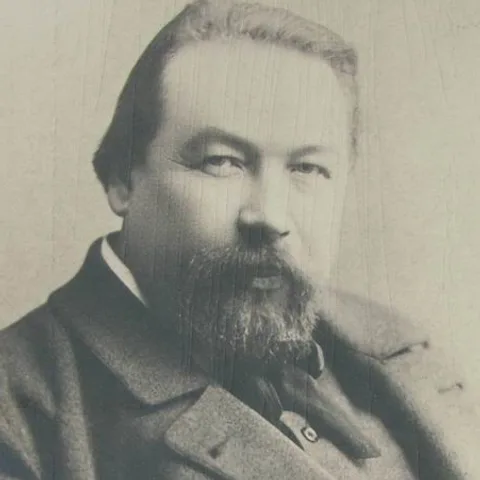
イッポリトフ=イワノフ
1859–1935
#490名前の前半は「区別のため」A name added to avoid confusion
本名はミハイル・イワノフ。ところが、同じ「ミハイル・イワノフ」という名前の音楽家がほかにいました。まちがえられないよう、彼は「イッポリトフ」をくっつけて「イッポリトフ=イワノフ」と名のったのです。「イッポリトフ」がどこから来たのかは、母の旧姓とする説と、姉の結婚後の名字とする説があります。
His real name was Mikhail Ivanov. But there was another musician called Mikhail Ivanov! To avoid confusion, he added 'Ippolitov' and called himself Ippolitov-Ivanov. Some say 'Ippolitov' was his mother's maiden name; others say it was his sister's married name.
イッポリトフ=イワノフ
1859–1935
#491チャイコフスキーの名曲の初演を指揮He premiered a Tchaikovsky masterpiece
チャイコフスキーは「ロメオとジュリエット」を何度も書き直しました。その最終版を初めて演奏したのは、1886年5月1日、コーカサスの町ティフリスで指揮をしたイッポリトフ=イワノフでした。首都ではなく、遠いコーカサスで初演されたのです。
Tchaikovsky revised Romeo and Juliet several times. The final version was first performed on 1 May 1886 in Tiflis in the Caucasus, conducted by Ippolitov-Ivanov. A great Russian masterpiece got its premiere far from the capital!
イッポリトフ=イワノフ
1859–1935
#492ムソルグスキーのオペラを完成させたHe finished an opera by Mussorgsky
「展覧会の絵」で知られるムソルグスキーは、ゴーゴリの喜劇をもとにしたオペラ「結婚」を書きかけのまま残しました。イッポリトフ=イワノフはその続きを作曲し、オペラとして完成させています。
Mussorgsky, famous for Pictures at an Exhibition, left his opera The Marriage, based on a comedy by Gogol, unfinished. Ippolitov-Ivanov composed the rest and completed it as a full opera.
イッポリトフ=イワノフ
1859–1935
#493「サルダール」って何?What is a 'sardar'?
「酋長の行列」の原題にある「サルダール」は、ペルシャなどで使われた言葉で、指揮官や長(おさ)をさす呼び名です。日本では「酋長」と訳されていますが、えらい人が家来を連れて堂々と進んでくる様子をえがいた曲なのです。
'Sardar' is a title used in Persia and nearby regions for a commander or chief. In Japan the piece is translated as 'Procession of the Chief', and the music pictures an important leader marching grandly with his followers.
イッポリトフ=イワノフ
1859–1935
#494ジョージアの聖歌を楽譜にWriting down Georgia's ancient chants
ジョージアには、昔から口で歌いつがれてきた独特の教会の聖歌や民謡があります。イッポリトフ=イワノフはそれらを楽譜に書き取る仕事に参加し、ジョージアの民謡を集めて出版するのに大きな役割を果たしました。トビリシには今も彼の名前のついた通りがあります。
Georgia has unique church chants and folk songs passed down by ear for centuries. Ippolitov-Ivanov helped write them down in musical notation and played a major part in collecting and publishing Georgian folk songs. A street in Tbilisi still bears his name.
イッポリトフ=イワノフ
1859–1935
#49560代でボリショイ劇場の指揮者にConducting at the Bolshoi in his sixties
音楽院の院長を長くつとめたあと、1925年からはモスクワのボリショイ劇場で指揮をしました。そのとき彼はすでに60代の半ば。年をとっても、音楽の現場で活躍しつづけたのです。
After many years as conservatory director, he began conducting at Moscow's Bolshoi Theatre in 1925, when he was already in his mid-sixties. He stayed active in music right into old age.
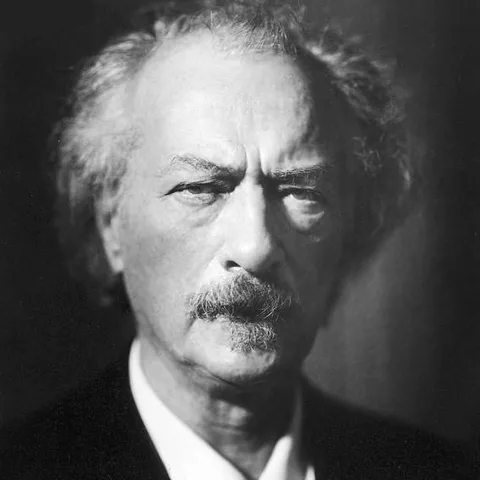
パデレフスキ
1860–1941
#496ピアニストが首相に!From piano stool to prime minister!
世界中で拍手をあびた大ピアニストが、1919年、独立したばかりのポーランドの首相になりました。外務大臣もかねて、第一次世界大戦を終わらせるヴェルサイユ条約にもサインしています。音楽家が国のリーダーになったのは、歴史の中でもとてもめずらしいことです。
In 1919 a world-famous concert pianist became prime minister of newly independent Poland. As foreign minister too, he signed the Treaty of Versailles, which ended the First World War. A musician leading a country is something very rare in history.
パデレフスキ
1860–1941
#497フーヴァー大統領との恩返し物語?A kindness repaid by a future president?
有名な話があります。学生時代のフーヴァー(のちのアメリカ大統領)がパデレフスキの演奏会を企画して赤字になったとき、パデレフスキはやさしく許してくれた。のちに第一次大戦後のポーランドで、フーヴァーが食料支援で恩返しをした……というものです。ただし、この話の細かい部分は確かめられていません。
A famous story says that when the student Herbert Hoover, later US president, organised a Paderewski concert that lost money, Paderewski kindly let him off. Years later, after the First World War, Hoover repaid the kindness by sending food aid to Poland. However, the details of this story have never been confirmed.
パデレフスキ
1860–1941
#498心臓だけはアメリカにHis heart stayed in America
パデレフスキの遺体は1992年にワルシャワへうつされましたが、彼の心臓は、アメリカ・ペンシルベニア州の教会「チェンストホヴァの聖母国立聖堂」に、ブロンズの像の中に納められています。祖国とアメリカ、両方に眠っているのです。
Paderewski's body was moved to Warsaw in 1992, but his heart is kept inside a bronze sculpture at the National Shrine of Our Lady of Czestochowa in Pennsylvania, USA. In a way, he rests both in his homeland and in America.
パデレフスキ
1860–1941
#499メトで上演された、ただ1つのポーランドのオペラThe only Polish opera ever staged at the Met
パデレフスキが書いたオペラ「マンルー」は1901年に初演されました。ニューヨークのメトロポリタン歌劇場は長い歴史の中で数えきれないオペラを上演してきましたが、ポーランド人作曲家のオペラで上演されたのは、この「マンルー」ただ1つだと言われています。
Paderewski's opera Manru was first performed in 1901. The Metropolitan Opera in New York has staged countless operas in its long history, but Manru is said to be the only opera by a Polish composer it has ever performed.
パデレフスキ
1860–1941
#500カリフォルニアにぶどう畑A vineyard in California
パデレフスキは1913年にアメリカ・カリフォルニア州のパソ・ロブレスをおとずれ、まもなく近くに大きな農場を買いました。のちにジンファンデルなどのワイン用のぶどうを植えています。スイスにも邸宅を持ち、世界を旅する大スターらしい暮らしぶりでした。
Paderewski first visited Paso Robles in California in 1913 and soon bought a large ranch nearby. He later planted wine grapes such as Zinfandel there. He also owned a mansion in Switzerland, living like the globe-trotting superstar he was.
パデレフスキ
1860–1941
#501「うまいけど、パデレフスキじゃないね」'He plays well, but he's no Paderewski'
パデレフスキの人気はものすごく、彼の名前は「最高のピアニスト」の代名詞になりました。ライバルのピアニスト、ローゼンタールは、パデレフスキ本人について「うまいとは思うけど、パデレフスキほどじゃないね」と皮肉ったという有名なジョークが残っています。
Paderewski was so popular that his name became another word for 'the greatest pianist'. A famous joke has the rival pianist Moriz Rosenthal saying of Paderewski himself: 'Yes, he plays well, I suppose, but he's no Paderewski.'
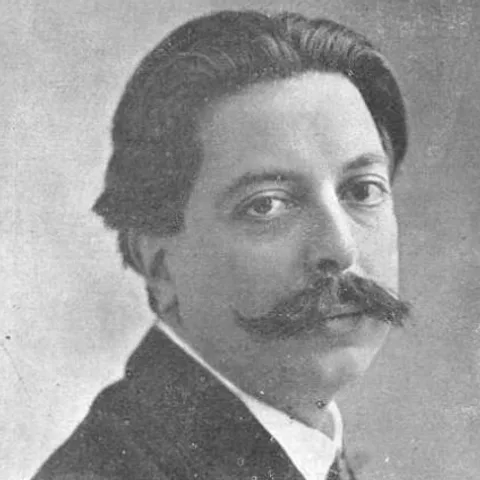
グラナドス
1867–1916
#502大統領の招待が運命を変えたA president's invitation changed his fate
ニューヨークでのオペラ初演のあと、グラナドスはウィルソン大統領にまねかれてホワイトハウスで演奏しました。その予定のために、もともと乗るはずだった船を見送り、別の船で帰ることになります。その帰り道で、悲劇が起こったのです。
After his opera's premiere in New York, Granados was invited to play for President Wilson at the White House. Because of this, he let his original ship go and took a later one home. It was on that journey that tragedy struck.
グラナドス
1867–1916
#503妻を救おうとした?Did he try to save his wife?
サセックス号が攻撃されたとき、グラナドスは海に投げ出された妻アンパロを助けようとして、自分も波にのまれたと伝えられています。ただし、目撃した人の話は少しずつちがっていて、本当に何が起きたのかは、はっきりとはわかっていません。
It is said that when the Sussex was attacked, Granados tried to rescue his wife, Amparo, from the sea, and was himself lost in the waves. But eyewitness accounts differ, and nobody knows for certain exactly what happened.
グラナドス
1867–1916
#504メトで初めてのスペイン語オペラThe Met's first opera in Spanish
1916年1月28日にニューヨークのメトロポリタン歌劇場で初演されたオペラ「ゴイェスカス」は、この有名な歌劇場で初めてスペイン語で歌われたオペラでした。グラナドス本人も初演に立ち会い、大きな拍手を受けました。
Goyescas, premiered at the Metropolitan Opera in New York on 28 January 1916, was the first opera ever sung in Spanish at that famous house. Granados himself was there and received a warm ovation.
グラナドス
1867–1916
#505本人の演奏が、今も聴けるYou can still hear him play
グラナドスは、ピアノの演奏をそのまま穴の開いた紙のロールに記録する「ピアノロール」に、自分の演奏を残しました。100年以上前に亡くなった作曲家ですが、そのロールを再生すると、今でも本人の弾き方を聴くことができるのです。
Granados recorded his playing on piano rolls, paper rolls with holes punched in them that capture a performance. Although he died over a hundred years ago, those rolls can still be played back, so we can hear how he himself played.
グラナドス
1867–1916
#506ゴヤの絵から生まれた音楽Music born from paintings
「ゴイェスカス」とは「ゴヤ風の物たち」という意味です。グラナドスは、ゴヤがえがいた、マドリードの町の粋な若者「マホ」や「マハ」たちの恋や生活にあこがれ、その世界をピアノで表しました。絵と音楽がつながった作品なのです。
Goyescas means 'things in the style of Goya'. Granados admired the stylish young majos and majas of Madrid shown in Goya's paintings, and he captured their loves and lives on the piano. It is a work where painting and music meet.
グラナドス
1867–1916
#507名ピアニストを育てた学校A school that produced a legend
グラナドスがバルセロナに作った音楽学校は、彼の死後も弟子たちが受けつぎました。そこで学んだひとりが、20世紀を代表するスペインのピアニスト、アリシア・デ・ラローチャです。グラナドスの音楽は、こうして次の世代に伝えられました。
The music academy Granados founded in Barcelona was carried on by his pupils after his death. One of the students there was Alicia de Larrocha, who became one of the great Spanish pianists of the 20th century. In this way, his music passed to the next generation.
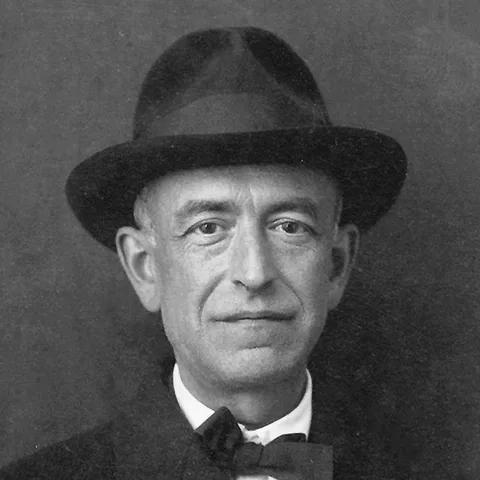
ファリャ
1876–1946
#508ピカソが衣装をデザイン!Costumes by Picasso!
ファリャのバレエ「三角帽子」は、ロシア・バレエ団のディアギレフが上演し、なんとピカソが舞台の背景と衣装をデザインしました。音楽ファリャ、美術ピカソという、スペインの2大天才のコラボレーションだったのです。
Falla's ballet The Three-Cornered Hat was produced by Sergei Diaghilev's Ballets Russes, with sets and costumes designed by none other than Pablo Picasso. Music by Falla, art by Picasso: a collaboration between two Spanish geniuses!
ファリャ
1876–1946
#509お札の顔になったHis face was on a banknote
1970年に発行されたスペインの100ペセタ紙幣には、ファリャの肖像がえがかれていました。マドリードには、彼の名前のついた地下鉄の駅もあります。スペインの人々にとって、国の誇りといえる作曲家なのです。
Spain's 100-peseta banknote of 1970 carried Falla's portrait, and there is a Madrid Metro station named after him. To the Spanish people, he is a national treasure.
ファリャ
1876–1946
#510詩人ロルカと開いた歌のコンクールA singing contest with the poet Lorca
1922年、ファリャはグラナダで、若い詩人ガルシア・ロルカらといっしょに「カンテ・ホンド・コンクール」を開きました。消えかけていたアンダルシアの古い歌を守り、受けつぐための試みでした。2人は年がはなれていましたが、親しい友人でした。
In 1922, in Granada, Falla organised a cante jondo competition together with the young poet Federico García Lorca and others. It was an effort to protect and pass on the old Andalusian songs that were starting to disappear. Despite their age difference, the two were close friends.
ファリャ
1876–1946
#511とてもきれい好きで、病気がこわかった?A very tidy man who feared illness?
ファリャは一生結婚せず、とても信心深く、つつましい暮らしをしました。また、ひどくきれい好きで、病気になることをいつも心配していたと言われています。その性格は、細部まで完璧にみがかれた彼の作品にも表れているのかもしれません。
Falla never married, and he lived a modest, deeply religious life. He is also said to have been extremely tidy and constantly worried about getting ill. Perhaps that perfectionism also shows in his carefully polished music.
ファリャ
1876–1946
#512「火祭りの踊り」はピアノの名アンコール曲にThe Fire Dance became a famous piano encore
「火祭りの踊り」は、悪い霊を追いはらうために火のまわりで踊る場面の音楽です。のちにピアノ独奏版が作られ、名ピアニストのアルトゥール・ルービンシュタインがアンコールでよく弾いたことで、ピアノの人気曲としても広まったと言われています。
The 'Ritual Fire Dance' is music for a scene where a dancer circles a fire to drive away an evil spirit. A solo piano version was later made, and it is said that the great pianist Arthur Rubinstein made it famous by often playing it as an encore.
ファリャ
1876–1946
#51320年かけても終わらなかった大作A masterpiece left unfinished after twenty years
ファリャは晩年の約20年間、伝説の大陸アトランティスをテーマにした大作「アトランティーダ」に取り組みましたが、完成しないまま亡くなりました。弟子の作曲家エルネスト・アルフテルが残された楽譜をもとに仕上げ、ファリャの死後に上演されました。
For about the last twenty years of his life, Falla worked on Atlántida, a huge work about the legendary lost continent of Atlantis, but he died before finishing it. His pupil, the composer Ernesto Halffter, completed it from his sketches, and it was performed after Falla's death.
レハール
1870–1948
#514ドヴォルザークの「作曲しなさい」Dvořák told him to compose
プラハ音楽院でヴァイオリンを学んでいたレハールの作品を見て、「新世界より」の作曲家ドヴォルザークは、ヴァイオリンをやめて作曲に打ちこむようすすめたと伝えられています。作曲はほとんど独学でしたが、その助言どおり、世界的な作曲家になりました。
It is said that when Dvořák, the composer of the New World Symphony, saw the music of Lehár, then a violin student in Prague, he advised him to give up the violin and focus on composing. Lehár was largely self-taught in composition, but he followed the advice and became world-famous.
レハール
1870–1948
#515「メリー・ウィドウ帽子」が大流行The 'Merry Widow hat' craze
「メリー・ウィドウ」がロンドンやニューヨークでも大ヒットすると、主人公がかぶった、つばの広い大きな帽子をまねた「メリー・ウィドウ・ハット」が女性のあいだで大流行しました。オペレッタがファッションまで動かしたのです。
When The Merry Widow became a huge hit in London and New York, the 'Merry Widow hat', a big wide-brimmed hat like the one worn on stage, became a fashion craze among women. An operetta was setting fashion trends!
レハール
1870–1948
#516ショスタコーヴィチの交響曲に「メリー・ウィドウ」?The Merry Widow in a Shostakovich symphony?
ショスタコーヴィチの交響曲第7番「レニングラード」で、しだいに大きくなる「戦争の主題」は、「メリー・ウィドウ」の歌「マキシムへ行こう」によく似ていると言われています。バルトークは「管弦楽のための協奏曲」の中で、この主題をからかうようにまねしました。
The 'war theme' that grows louder and louder in Shostakovich's Seventh Symphony, 'Leningrad', is often said to resemble 'Da geh' ich zu Maxim' from The Merry Widow. Bartók later poked fun at this theme in his Concerto for Orchestra.
レハール
1870–1948
#517人気テノールとの名コンビA dream team with a star tenor
レハールは、人気テノール歌手リヒャルト・タウバーのために、1925年から1934年までに6つのオペレッタを書きました。どの作品にも、タウバーがたっぷり歌い上げる名曲が入っていて、2人のコンビはヨーロッパ中で大人気になりました。
Between 1925 and 1934, Lehár wrote six operettas for the star tenor Richard Tauber. Each one included a big song for Tauber to show off his voice, and the pair became hugely popular across Europe.
レハール
1870–1948
#518ワルツ「金と銀」は舞踏会のために'Gold and Silver' was written for a ball
1902年のワルツ「金と銀」は、ウィーンの社交界の名士メッテルニヒ侯爵夫人が開いた「金と銀の舞踏会」のために書かれたと伝えられています。今ではレハールのワルツの中でもとくに有名な曲で、バレエでも使われています。
The 1902 waltz 'Gold and Silver' is said to have been written for a 'Gold and Silver Ball' given by Princess Pauline von Metternich, a leader of Viennese society. It is now one of his best-loved waltzes and has been used in ballet too.
レハール
1870–1948
#519自分で出版社を作った作曲家A composer who started his own publisher
作品が世界中で上演されるようになると、その権利を守ることが大切になりました。そこでレハールは1935年、自分の作品をあつかう出版社を自分で作りました。作曲だけでなく、ビジネスの感覚もすぐれていたのです。
As his works were performed all over the world, protecting the rights to them became important. So in 1935 Lehár founded his own publishing house to handle his music. He had a good head for business as well as for melody.
トセリ
1883–1926
#520王様の元妻と結婚!?He married a king's ex-wife!
トセリが結婚したルイーザは、もとはザクセン王国の皇太子妃。夫と離婚したあと、その元夫はザクセン王になっていました。つまりトセリは「王様の元奥さん」と結婚したのです。若いピアニストと元皇太子妃の結婚は、ヨーロッパ中の新聞をにぎわせました。
Louise, whom Toselli married, had been Crown Princess of Saxony. After their divorce, her former husband became King of Saxony. So Toselli married a king's ex-wife! The marriage of a young pianist and a former crown princess filled newspapers across Europe.
トセリ
1883–1926
#521結婚生活を本にして出版He wrote a book about his marriage
2人が離婚したあと、トセリは「殿下の夫 ― ルイーザとの4年間の結婚生活」という回想録をフランス語で出版しました。イタリア語版も出ています。王家にかかわる結婚の内側を書いた本として、大きな注目を集めました。
After the divorce, Toselli published a memoir in French, Husband of a Highness: Four Years of Marriage with Louise of Tuscany. An Italian edition appeared too. As an inside story of a royal marriage, it attracted a great deal of attention.
トセリ
1883–1926
#522曲より恋の話で有名だった?More famous for love than for music?
当時、トセリの名前が広く知られたのは、音楽よりも元皇太子妃との駆け落ち同然の結婚のせいだった、と言われることがあります。それでも今では、彼の名前を世界に伝えているのは、あの甘い「セレナータ」のメロディーです。
It is sometimes said that in his own day Toselli was famous more for his runaway marriage to a former crown princess than for his music. Yet today, what keeps his name alive around the world is the sweet melody of his 'Serenata'.
トセリ
1883–1926
#523息子「ブビー」はヴァイオリニストにHis son 'Buby' became a violinist
トセリとルイーザのあいだには、1908年に息子カルロ・エマヌエーレが生まれました。「ブビー」というあだ名でよばれた息子は、父と同じく音楽の道に進み、ヴァイオリニストになりました。
In 1908 Toselli and Louise had a son, Carlo Emanuele. Nicknamed 'Buby', he followed his father into music and became a violinist.
トセリ
1883–1926
#524王妃もほめた若き才能A young talent praised by a queen
まだ若かったトセリの才能は、イタリアの王妃マルゲリータにもほめられました。とくに、彼が作曲中だったオペラ「信仰の勝利」を気に入ったと伝えられています。人気作家ダヌンツィオにもあたたかくむかえられました。
While still young, Toselli was praised by Queen Margherita of Italy, who especially liked the opera he was working on, The Triumph of Faith. The famous writer Gabriele D'Annunzio also welcomed him warmly.
アルフォード
1881–1945
#525ペンネームの正体は家族の名前A pen name made from family names
「ケネス・J・アルフォード」という名前は、長男の名前「ケネス」、自分のミドルネーム「ジョゼフ」、そして母の旧姓「アルフォード」を組み合わせたものです。家族の名前で作った、愛情のこもったペンネームだったのです。
The name 'Kenneth J. Alford' combined his eldest son's name, Kenneth, his own middle name, Joseph, and his mother's maiden name, Alford. It was a pen name built from the names of his family.
アルフォード
1881–1945
#526ゴルフ場の口笛から生まれたBorn from a whistle on a golf course
彼の妻が1958年に書き残したところによると、ゴルフ場で、ある人が「フォア!(危ない!)」とさけぶかわりに、短いメロディーを口笛で吹きました。それにリケッツが続きのメロディーを口笛で返したのが、「ボギー大佐」の始まりだったそうです。口笛の主が本当に大佐だったのかはわかっていません。
According to a note his widow wrote in 1958, a golfer on a course whistled a couple of notes instead of shouting 'Fore!', and Ricketts whistled back the next few notes. That was the beginning of 'Colonel Bogey'. Whether the whistler was really a colonel is not known.
アルフォード
1881–1945
#527映画で世界中に広まった口笛A film whistled it around the world
1957年の映画「戦場にかける橋」では、捕虜になったイギリス兵たちが、ぼろぼろの姿でも胸をはって「ボギー大佐」を口笛で吹きながら行進します。映画はアカデミー賞7部門を受賞する大ヒットとなり、この口笛のメロディーは世界中で知られるようになりました。
In the 1957 film The Bridge on the River Kwai, British prisoners of war march proudly, in rags, whistling 'Colonel Bogey'. The film was a huge hit that won seven Academy Awards, and the whistled tune became known around the world.
アルフォード
1881–1945
#528日本では「サル・ゴリラ・チンパンジー」!?In Japan: 'Monkey, Gorilla, Chimpanzee'!
日本では、映画で使われたこのメロディーに「サル、ゴリラ、チンパンジー」という楽しい替え歌がつけられ、子どもたちのあいだで歌いつがれてきました。もとが軍の行進曲だと知っている人は、意外と少ないかもしれません。
In Japan, children have long sung this tune from the film with funny new words: 'Saru, gorira, chinpanjii' (monkey, gorilla, chimpanzee). Not many people know it started life as a military march!
アルフォード
1881–1945
#529「アラビアのロレンス」にも登場Also heard in Lawrence of Arabia
アルフォードの行進曲は、ほかの映画でも使われています。1917年の行進曲「砲声」は、1962年の名作映画「アラビアのロレンス」に登場します。どちらの映画も、監督はイギリスのデヴィッド・リーンです。
Alford's marches appear in other films too. His 1917 march 'The Voice of the Guns' is heard in the 1962 classic Lawrence of Arabia. Both that film and The Bridge on the River Kwai were directed by David Lean.
アルフォード
1881–1945
#530軍楽隊にサクソフォンを広めたHe championed the saxophone in military bands
アルフォードは、当時まだ新しかったサクソフォンを軍楽隊でさかんに使い、その地位を確かなものにするのに役立ちました。また、スコットランドのバグパイプと楽団がいっしょに演奏する編曲も、早い時期から手がけています。
Alford made great use of the saxophone, still a fairly new instrument then, and helped secure its place in military bands. He was also one of the first to write arrangements for Scottish bagpipes playing together with a band.
バグリー
1857–1922
#531捨てられかけた名曲?A classic almost thrown away?
のちに家族が伝えた話によると、バグリーは「国民の象徴」の楽譜に腹を立てて、ストーブに投げこんでしまいましたが、仲間がそれを救い出したそうです。また別の話では、バグリー自身が汽車の荷物車で楽譜を配り、仲間と練習したとも言われます。どちらも後になって伝えられた話で、くわしいことは確かめられていません。
According to a later family story, Bagley once threw the score of 'National Emblem' into a stove in frustration, but other musicians rescued it. Another account says that Bagley himself handed out the music and rehearsed it with the band in a railway baggage car. Both stories were told years later, and their details cannot be checked.
バグリー
1857–1922
#532名曲の権利がたった25ドルA famous march sold for 25 dollars
「国民の象徴」はバグリーのいちばん有名な曲になりましたが、彼はその著作権を、たった25ドルで売ってしまったと言われています。その後この曲は何度も出版され、録音され、世界中で演奏されることになりました。
'National Emblem' became Bagley's most famous piece, yet he is said to have sold its copyright for only 25 dollars. The march went on to be published again and again, recorded, and played around the world.
バグリー
1857–1922
#533スーザが選んだ「最高の5曲」One of Sousa's 'top five'
アメリカの「マーチ王」スーザが、行進しながら演奏するのに最も効果的な行進曲を5つ挙げたと伝わるリストには、「国民の象徴」も入っています。ほかの4曲は、なんと全部スーザ自身の作品。自分の曲以外で選ばれたのは、この曲だけだったのです。
'National Emblem' appears on a list, credited to America's 'March King' John Philip Sousa, of the five most effective street marches. The other four were all his own marches! It was the only one by another composer.
バグリー
1857–1922
#534国歌がかくれている行進曲A national anthem hidden inside
「国民の象徴」のはじめの部分では、ユーフォニアムやトロンボーンなどの低い楽器が、アメリカ国歌「星条旗」の最初の12の音を吹きます。ただし国歌は3拍子なのに、この曲では行進曲らしい2拍子に変えられているので、気づかない人も多いのです。
In the first section of 'National Emblem', low instruments such as the euphonium and trombone play the first twelve notes of 'The Star-Spangled Banner'. But the anthem is in triple time, and here it is changed into march-style duple time, so many listeners never notice.
バグリー
1857–1922
#5359歳でお笑い芸人デビューA comedian at the age of nine
バグリーの音楽人生は、なんと9歳から。ハンドベルを鳴らす芸人の一座に入り、歌とお笑いを担当してアメリカの大都市を回りました。子どものころから舞台の上で育った、たたき上げの音楽家だったのです。
Bagley's life in music began at just nine years old, when he joined a touring troupe of bell ringers as a singer and comedian, visiting big American cities. He was a musician who grew up on the stage from childhood.
バグリー
1857–1922
#536ロックンロール版がヒットチャートにA rock 'n' roll version hit the charts
1960年、「国民の象徴」をロックンロール風に編曲したレコードが「ナショナル・シティ」という題で発売され、アメリカのヒットチャートで53位に入りました。20世紀はじめの行進曲が、思わぬ形でもう一度人気者になったのです。
In 1960 a rock 'n' roll arrangement of 'National Emblem' was released under the title 'National City', and it reached number 53 on the American Billboard chart. The old march found fans in a very unexpected way!