天国と地獄
Can-can
オッフェンバック・1858
運動会でおなじみ!神さまたちが地獄で大さわぎ。
喜歌劇『天国と地獄』より「地獄のギャロップ」(カンカン)のページへRomantic · 1819–1880
「オペレッタの父」The Father of Operetta
 ケルン(ドイツ)
 パリ(フランス)3 曲を収録
運動会の「天国と地獄」で、日本中が知っている作曲家。His can-can tune is a sports-day classic all over Japan.
 オッフェンバックの名曲を聴く
オッフェンバック・1858
運動会でおなじみ!神さまたちが地獄で大さわぎ。
喜歌劇『天国と地獄』より「地獄のギャロップ」(カンカン)のページへオッフェンバック・1860
しっとりした歌から、あのカンカンへ!最後に大爆発する序曲。
喜歌劇『天国と地獄』序曲のページへオッフェンバック・1881(初演)
ヴェネツィアの夜、ゴンドラがゆれる。夢のように美しい二重唱。
歌劇『ホフマン物語』より「舟歌」のページへ
ホー!オッフェンバックは、もともと「チェロの名人」として有名だったんだ。
 生涯 Life Story
オッフェンバックは1819年、ドイツのケルンで、ユダヤ教の礼拝で歌う先唱者の家に生まれました。生まれたときの名前はヤーコプです。小さいころからチェロの腕前はばつぐんで、14歳のとき父に連れられてパリへ行き、外国人は入りにくかったパリ音楽院に特別に入学を許されました。ただし学校は1年ほどでやめ、劇場のオーケストラでチェロを弾きはじめます。Offenbach was born in Cologne, Germany, in 1819. His father was a cantor who sang in Jewish services, and the boy's name at birth was Jakob. He was a brilliant cellist from an early age, and at fourteen his father took him to Paris, where he was specially allowed into the Paris Conservatoire, which rarely accepted foreigners. He left after about a year, however, and began playing the cello in a theater orchestra.
若いオッフェンバックは、パリのサロンで活躍するチェロの名人として知られるようになります。しかし本当の夢は、劇場のための音楽を書くことでした。1855年、パリ万国博覧会の年に、自分の劇場「ブフ・パリジャン」を開きます。笑いと風刺にあふれた短い音楽劇が大当たりし、これが「オペレッタ」と呼ばれるジャンルの原点の1つになりました。The young Offenbach became famous as a virtuoso cellist in the salons of Paris. But his real dream was to write music for the stage. In 1855, the year of the Paris World's Fair, he opened his own theater, the Bouffes-Parisiens. His short musical plays, full of laughter and satire, were a huge hit, and they became one of the starting points of the genre we now call operetta.
1858年の『地獄のオルフェ』(日本では『天国と地獄』)は、ギリシャ神話の神々をユーモラスに描いて大ヒットします。そのフィナーレの「地獄のギャロップ」は、のちにカンカン踊りの音楽として世界中に知られました。『美しきエレーヌ』『パリの生活』なども次々に成功し、オッフェンバックは第二帝政時代のパリを代表する人気者になります。1860年にはフランス国籍も得ました。Orpheus in the Underworld of 1858, known in Japan as 'Heaven and Hell', poked fun at the gods of Greek myth and was a smash hit. Its finale, the Infernal Galop, later became famous around the world as the music for the can-can. Beautiful Helen, Parisian Life and other works were also successful, and Offenbach became the darling of Paris during the Second Empire. In 1860 he became a French citizen.
1870年に戦争で第二帝政が終わると人気はかげり、劇場の経営もうまくいかなくなります。1876年にはアメリカへ演奏旅行に出かけました。晩年は、生涯の夢だった本格的なオペラ『ホフマン物語』に打ちこみますが、上演の準備が整う前の1880年、61歳で亡くなります。仲間の作曲家ギローが、オーケストラの楽譜がまだできていない部分などを仕上げて上演用の版を作り、翌1881年の初演は大成功をおさめました。When the Second Empire fell during the war of 1870, his popularity faded, and his theater business ran into trouble. In 1876 he went on a concert tour of the United States. In his last years he poured himself into his lifelong dream, a serious opera called The Tales of Hoffmann, but he died in 1880 at 61 before it was ready for the stage. His fellow composer Ernest Guiraud orchestrated the unfinished parts and prepared a version for performance, and the 1881 premiere was a great success.
Offenbach was born in Germany in 1819. He played the cello very well. He moved to Paris at 14. He wrote many funny operettas. One fast tune is famous at Japanese sports days. People dance the can-can to it.オッフェンバックは1819年にドイツで生まれました。チェロをとても上手に弾きました。14歳でパリへ移りました。楽しいオペレッタをたくさん書きました。速い曲の1つは、日本の運動会で有名です。その曲に合わせてカンカンを踊ります。
 これだけは!鉄板情報 Must-Know Facts
 あっと驚くネタ Surprising Stories
 タップすると答えが開きます
運動会でおなじみのカンカンのメロディは、もちろんオッフェンバックの作曲です。ただ、『天国と地獄』序曲として演奏される長い序曲は、1860年、ウィーンでの上演のために、作曲家カール・ビンダーがオペレッタのメロディをつなぎ合わせて作ったものなのです。
The famous can-can melody heard at Japanese sports days is Offenbach's own. But the long 'Heaven and Hell' overture often played in concerts was put together in 1860 by the composer Carl Binder, who joined melodies from the operetta for a production in Vienna.
『地獄のオルフェ』は、有名な評論家ジュール・ジャナンに「神聖な神話をけがすものだ」と激しく批判されました。オッフェンバックが新聞で言い返すと、この言い争いが話題になり、かえって客が劇場におしよせたのです。
The famous critic Jules Janin attacked Orpheus in the Underworld as an insult to sacred myth. Offenbach answered back in the newspaper, and the argument became the talk of Paris. As a result, even more people rushed to see the show.
『ホフマン物語』の「舟歌」のメロディは、もともと1864年にウィーンで上演されたオッフェンバックのドイツ語のオペラ『ラインの妖精』で使われたものでした。あまり成功しなかった作品から、名曲が新しい場所でよみがえったのです。
The melody of the Barcarolle in The Tales of Hoffmann first appeared in Die Rheinnixen, a German-language opera by Offenbach staged in Vienna in 1864. A tune from a not-very-successful work found new life and became world-famous.
オッフェンバックという名字は、父の故郷であるドイツの町「オッフェンバッハ・アム・マイン」に由来します。父はもともと別の名字でしたが、この町の名前を名乗るようになりました。ジャックという名前も、パリで使いはじめたものです。
The family name Offenbach comes from Offenbach am Main, the German town where his father came from. His father originally had a different surname but began calling himself after the town. The name Jacques was also one Offenbach started using in Paris.
ロッシーニはオッフェンバックを「シャンゼリゼのモーツァルト」と呼んだと伝えられています。パリの大通りシャンゼリゼの近くに劇場があったことと、軽やかで美しいメロディをたたえた言葉です。
Rossini is said to have called Offenbach 'the Mozart of the Champs-Élysées'. The nickname referred to his theater near that famous Paris avenue, and praised his light and lovely melodies.
1876年、アメリカ独立100周年の年に、オッフェンバックはニューヨークやフィラデルフィアで演奏会を開きました。帰国後には、旅で見たアメリカの様子をユーモアたっぷりに書いた本を出版しています。
In 1876, the hundredth anniversary of American independence, Offenbach gave concerts in New York and Philadelphia. After returning home, he published a book full of humor about what he had seen in America.
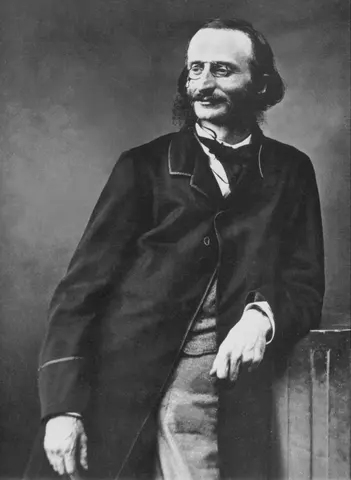
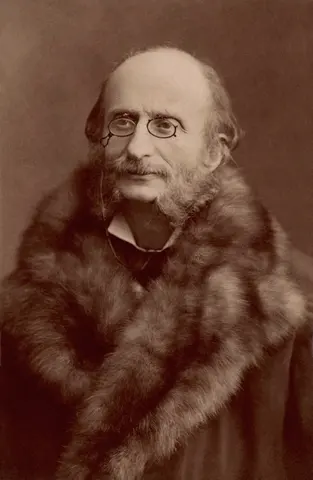
 肖像画・写真・自筆譜 Gallery (Public Domain)
Wikimedia Commons でパブリックドメイン(または CC0)と確認した画像です。クリックで拡大。
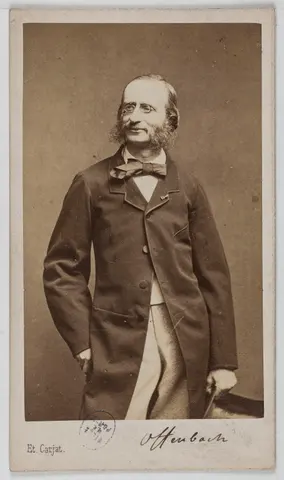
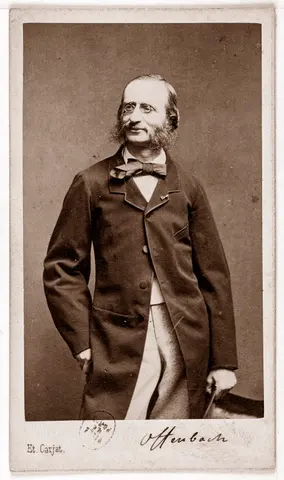
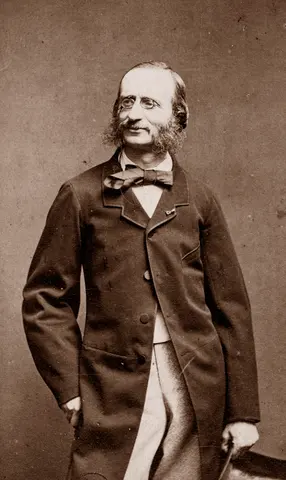
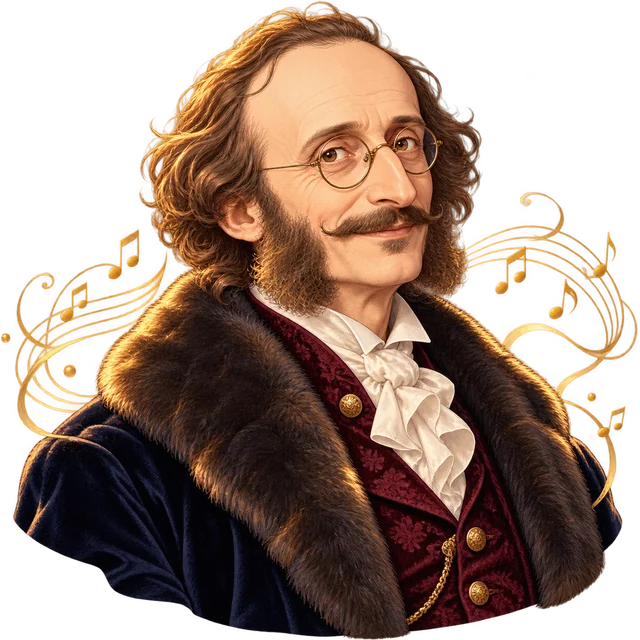
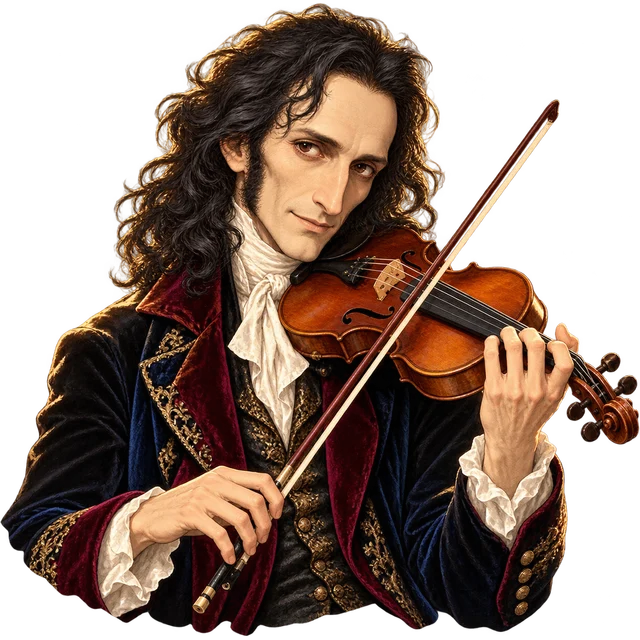
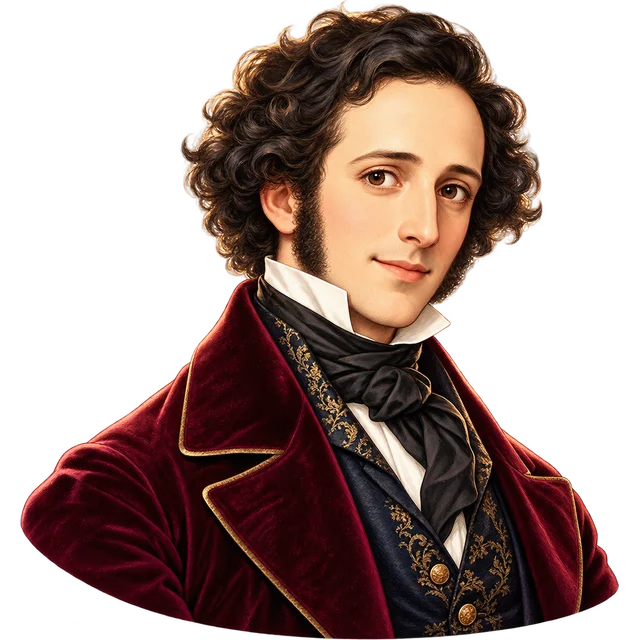
ページ上のイラストは、本物の肖像画をもとにこのサイトのために描いたものです。
 年表 Timeline
 オッフェンバックで覚える英単語 Words
 クイズに挑戦 Quiz
MORE COMPOSERS
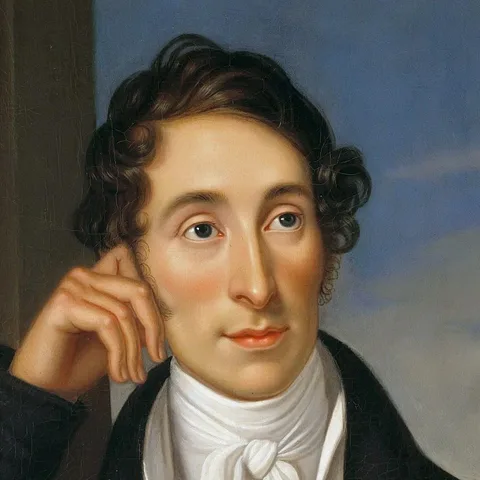

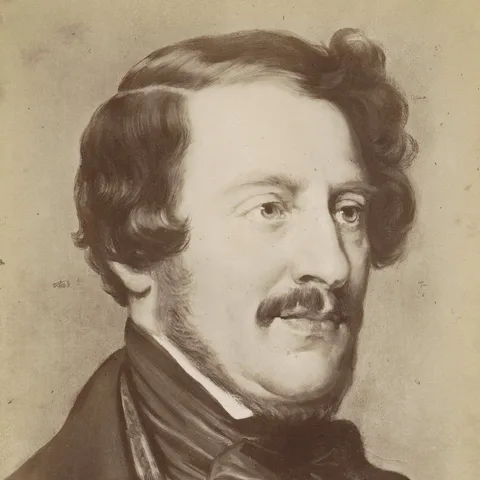
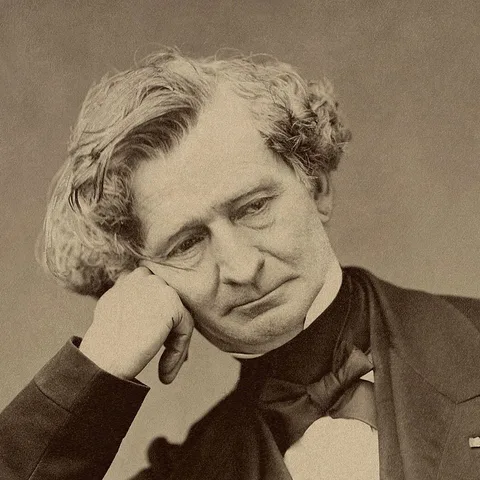

 MP3