アルジェのイタリア女
The Italian Girl in Algiers
ロッシーニ・1813
ささやきから大爆発へ!21歳のロッシーニが書いた痛快序曲。
歌劇「アルジェのイタリア女」序曲のページへRomantic · 1792–1868
「ペーザロの白鳥」The Swan of Pesaro
 ペーザロ(イタリア)
 パッシー(パリ、フランス)5 曲を収録
37歳でオペラをやめ、おいしい物と音楽を楽しんだ人気作曲家。Opera's superstar, who quit at 37 and lived for music and good food.
 ロッシーニの名曲を聴く
ロッシーニ・1813
ささやきから大爆発へ!21歳のロッシーニが書いた痛快序曲。
歌劇「アルジェのイタリア女」序曲のページへロッシーニ・1816
ワクワクが止まらない!人気の喜劇オペラのにぎやかな幕開け。
歌劇「セビリアの理髪師」序曲のページへロッシーニ・1817
小太鼓のロールで幕開け!犯人はなんと鳥だった?
歌劇「どろぼうかささぎ」序曲のページへロッシーニ・1823
古代バビロンの女王の物語。4本のホルンが歌う壮大な序曲。
歌劇「セミラーミデ」序曲のページへロッシーニ・1829
夜明け・嵐・牧場・大行進!4つの場面がつまった序曲。
歌劇「ウィリアム・テル」序曲のページへ
ホー!ロッシーニは2月29日生まれ。本当の誕生日は4年に1回しか来なかったんだ。
 生涯 Life Story
ロッシーニは1792年2月29日、イタリアの港町ペーザロに生まれました。父はホルンやトランペットを吹く音楽家、母は歌手という音楽一家です。子どものころから歌や楽器を習い、ボローニャの音楽学校で作曲を学びました。18歳のとき、ヴェネツィアで初めてのオペラが上演され、プロの作曲家としての道を歩きはじめます。Rossini was born on February 29, 1792, in Pesaro, a port town in Italy. His father played the horn and trumpet, and his mother was a singer, so the house was full of music. He learned singing and instruments as a boy and studied composition at the music school in Bologna. At eighteen, his first opera was staged in Venice, and his career as a professional composer began.
20代のロッシーニは、まさにオペラ界のスーパースターでした。1813年の『タンクレーディ』と『アルジェのイタリア女』で人気が爆発し、1816年には代表作『セビリアの理髪師』を発表します。明るく速いメロディと、同じフレーズをくり返しながらだんだん音を大きくしていく「ロッシーニ・クレッシェンド」で、ヨーロッパ中の観客を夢中にさせました。In his twenties, Rossini was the superstar of the opera world. Tancredi and The Italian Girl in Algiers made him famous in 1813, and in 1816 he produced his masterpiece, The Barber of Seville. His bright, fast tunes and the famous 'Rossini crescendo', a phrase repeated again and again as the music grows louder and louder, thrilled audiences all over Europe.
1822年、ロッシーニは人気ソプラノ歌手イザベラ・コルブランと結婚しました。同じ年にウィーンでベートーヴェンに会ったという有名な話がありますが、ロッシーニ財団の研究では、会えたのはベートーヴェンの弟だけだったと考えられています。1824年からはパリで活躍し、1829年に大作『ウィリアム・テル』を発表します。ところがこれを最後に、37歳でオペラの作曲をぴたりとやめてしまいました。理由ははっきりわかっていません。In 1822 Rossini married the star soprano Isabella Colbran. A famous story says he met Beethoven in Vienna that year, but research by the Rossini Foundation suggests that he met only Beethoven's brother. From 1824 he worked in Paris, where he wrote his grand opera William Tell in 1829. Then, at only 37, he stopped writing operas for good. Poor health and changing public tastes may have played a part, but nobody knows the exact reason.
その後のロッシーニは、40年近くも長生きしました。病気に苦しんだ時期もありましたが、宗教曲『スターバト・マーテル』や、自分で「老いの過ち」と名づけたピアノ曲や歌をのんびり書きつづけます。パリの家では土曜の夜に音楽会を開き、料理とおしゃべりを楽しみました。1868年に76歳で亡くなり、残した財産は故郷ペーザロの音楽学校を作るために使われました。Rossini lived for almost forty more years. He suffered from illness for a time, but he kept composing at a relaxed pace: the Stabat Mater, and many piano pieces and songs that he jokingly called 'Sins of Old Age'. At his home in Paris he held famous Saturday evening parties full of music, food and conversation. He died in 1868 at the age of 76, and his fortune was used to found a music school in his hometown of Pesaro.
Rossini was born in Italy in 1792. His birthday was February 29. He wrote many operas, including funny ones. The Barber of Seville is very famous. He stopped writing operas at 37. Then he enjoyed good food for many years.ロッシーニは1792年にイタリアで生まれました。誕生日は2月29日でした。喜劇をふくむ、たくさんのオペラを書きました。『セビリアの理髪師』はとても有名です。37歳でオペラを書くのをやめました。そのあと何年も、おいしい物を楽しみました。
 これだけは!鉄板情報 Must-Know Facts
 あっと驚くネタ Surprising Stories
 タップすると答えが開きます
ロッシーニは2月29日生まれです。この日は4年に1度しか来ないうえ、1800年は暦の決まりで「うるう年」になりませんでした。そのため76歳になった1868年の2月29日は、本物の誕生日としてはわずか18回目だったのです。
Rossini was born on February 29, a date that comes only once every four years. On top of that, 1800 was not a leap year under the calendar rules. So when February 29, 1868, came around and he turned 76, it was only his eighteenth real birthday.
1816年ローマでの初演は、ブーイングと笑い声で大荒れでした。同じ物語のオペラで人気だったパイジエッロのファンが騒いだとも言われ、舞台にネコが出てきたという話まで伝わっています。ところが2日目からは大成功し、今では世界で最も上演されるオペラの1つです。
The 1816 premiere in Rome was a disaster, full of booing and laughter. Some say fans of Paisiello, who had written a popular opera on the same story, caused trouble, and there is even a story that a cat wandered onto the stage. From the second night, however, it was a hit, and today it is one of the most performed operas in the world.
『セビリアの理髪師』の明るい序曲は、じつはこのオペラのために書かれたものではありません。ロッシーニは同じ序曲を、それ以前のオペラ『パルミラのアウレリアーノ』や『イングランドの女王エリザベッタ』ですでに使っていました。忙しい人気作曲家ならではの早わざです。
The cheerful overture to The Barber of Seville was not actually written for that opera. Rossini had already used the same overture for his earlier operas Aureliano in Palmira and Elisabetta, Queen of England. It was a typical shortcut for a busy, popular composer.
1822年、ロッシーニはウィーンでベートーヴェンを訪ね、『セビリアの理髪師』をほめられた――ロッシーニの後年の思い出話をもとに、長くそう語られてきました。ところがロッシーニ財団の研究によると、このとき会えたのはベートーヴェンの弟で、本人には会えなかったと考えられています。
For a long time, people said that in 1822 Rossini visited Beethoven in Vienna and was praised for The Barber of Seville. The story came from Rossini's own later memories. But research by the Rossini Foundation suggests that he met only Beethoven's brother and never met Beethoven himself.
ロッシーニにはこんな言い伝えがあります。ベッドの中で作曲していて楽譜を床に落としたとき、拾いに出るのが面倒で、新しく書き直してしまったというのです。作曲がとても速かったことから生まれた話で、本当かどうかはわかっていません。
There is a famous legend about Rossini. One day, while composing in bed, he dropped a page of music on the floor. Instead of getting up to fetch it, he simply wrote a new one. The story grew from how fast he composed, and nobody knows if it is true.
ロッシーニは亡くなったあと、パリのペール・ラシェーズ墓地にほうむられました。ところが1887年、遺体はイタリアへ運ばれ、ミケランジェロやガリレオも眠るフィレンツェのサンタ・クローチェ教会に移されました。イタリアが自国の英雄として迎えたのです。
After his death, Rossini was buried in Père Lachaise Cemetery in Paris. But in 1887 his remains were taken to Italy and placed in the Church of Santa Croce in Florence, where Michelangelo and Galileo also rest. Italy welcomed him home as a national hero.
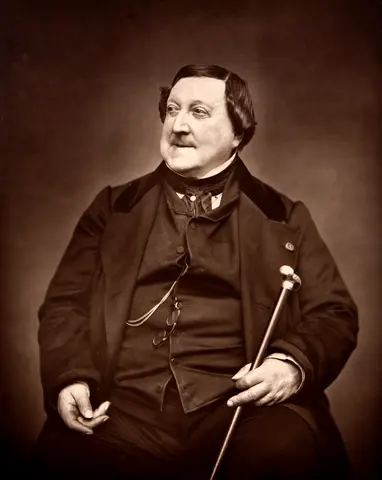
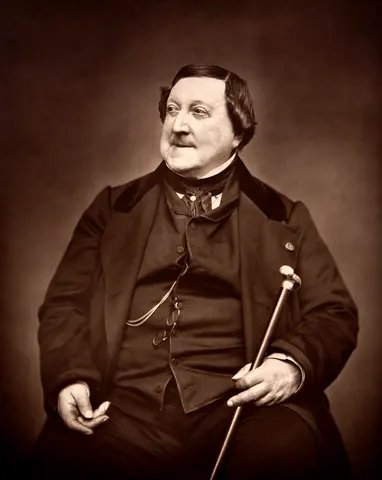
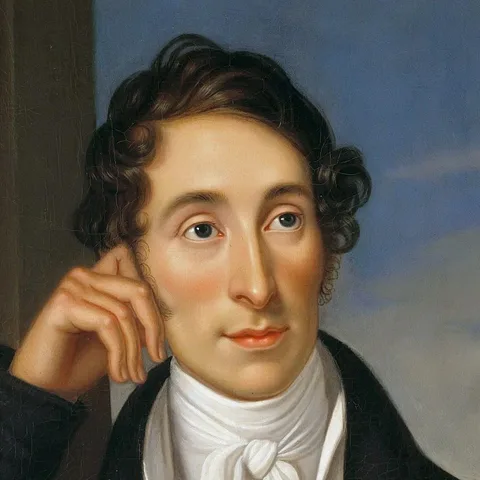
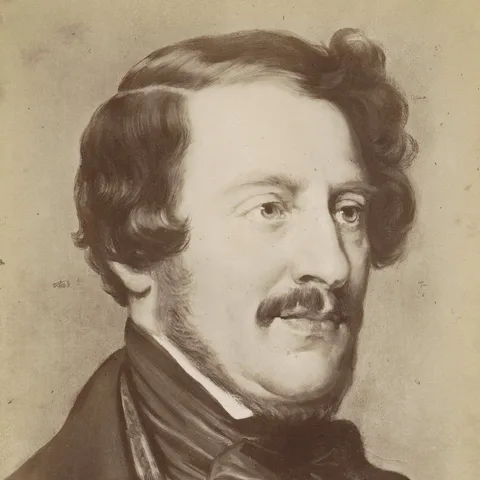
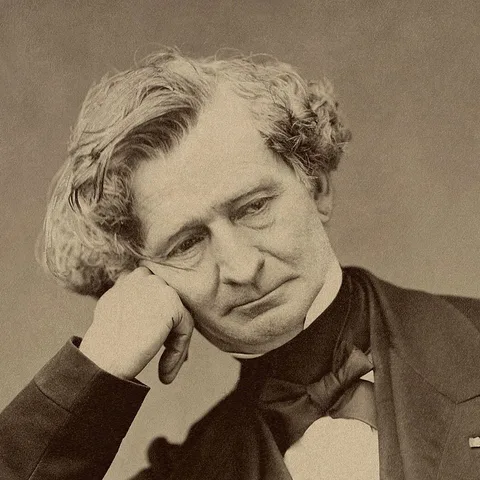
 肖像画・写真・自筆譜 Gallery (Public Domain)
Wikimedia Commons でパブリックドメイン(または CC0)と確認した画像です。クリックで拡大。
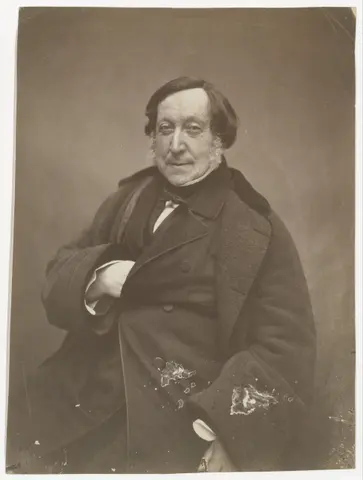
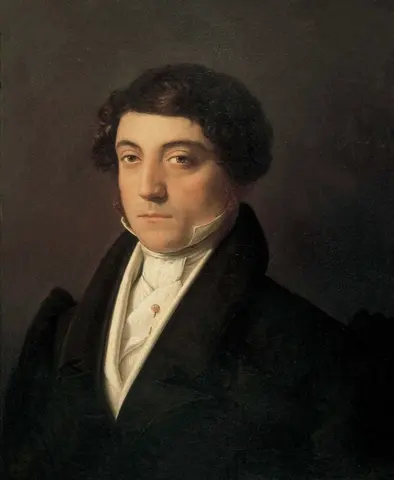
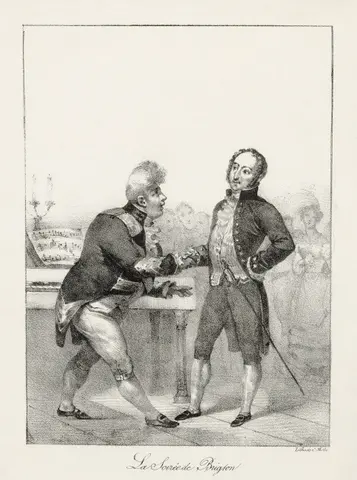
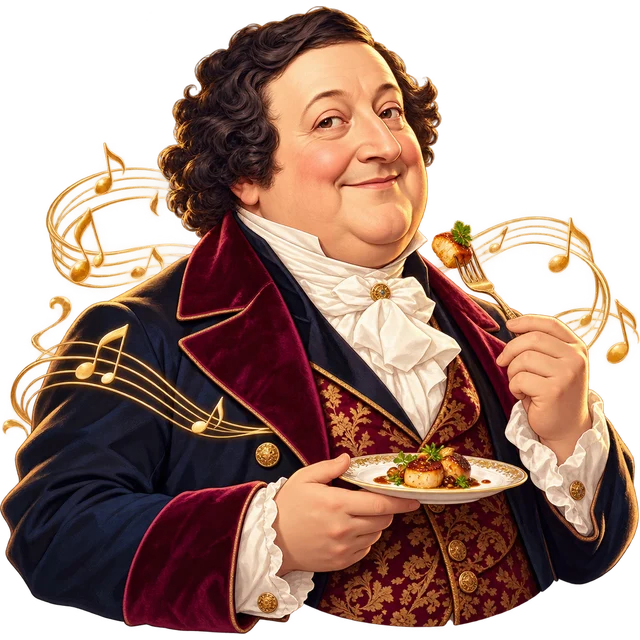
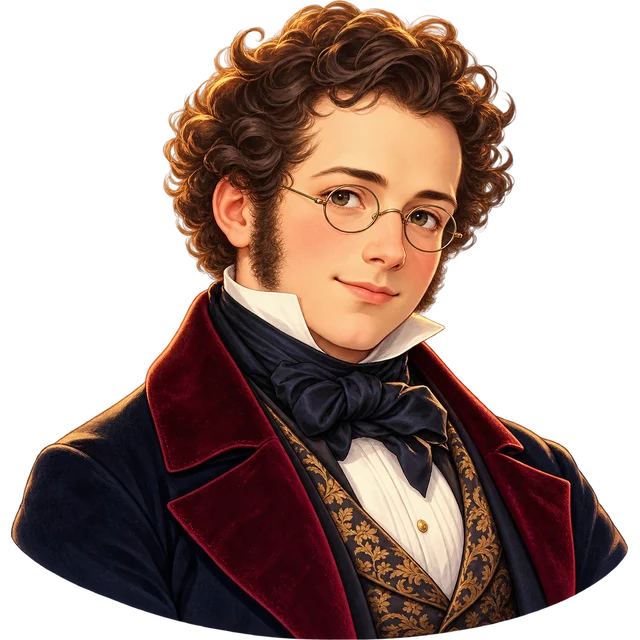
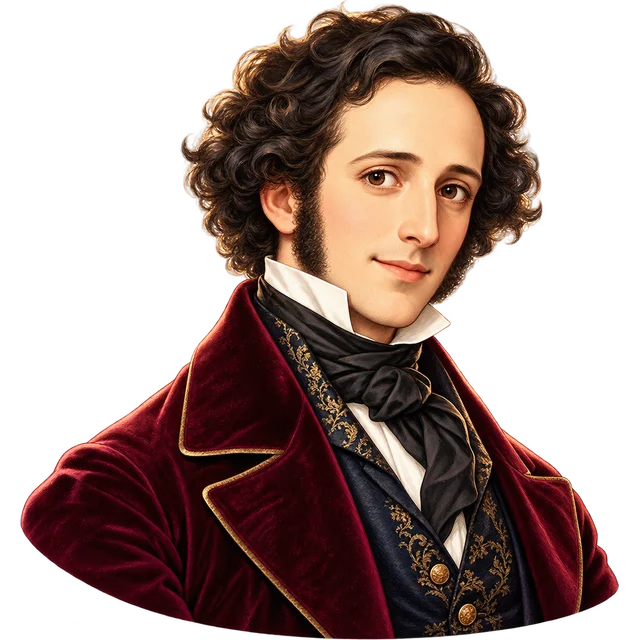
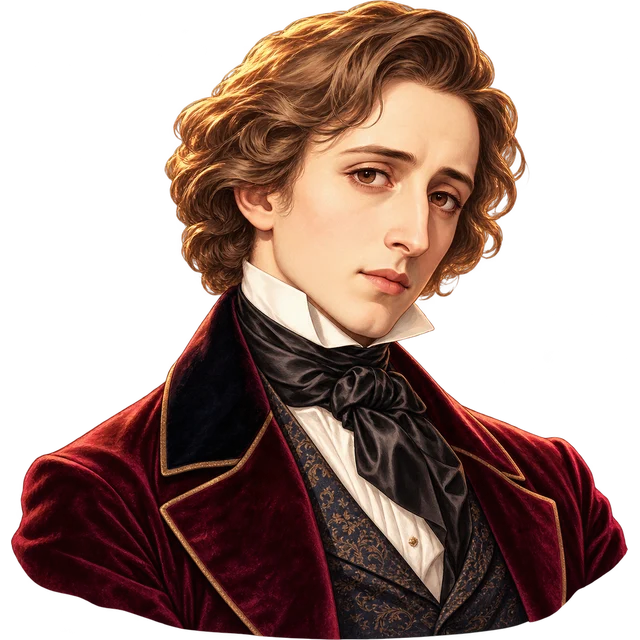
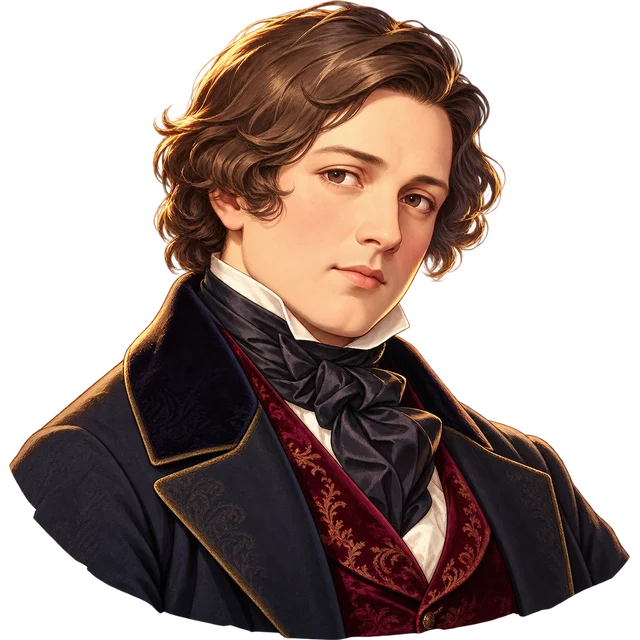
ページ上のイラストは、本物の肖像画をもとにこのサイトのために描いたものです。
 年表 Timeline
 ロッシーニで覚える英単語 Words
 クイズに挑戦 Quiz
MORE COMPOSERS

 MP3