謝肉祭
Carnaval
シューマン・1834–1835
仮面の人々がつぎつぎ登場!4つの音にかくされた暗号の舞踏会。
謝肉祭のページへRomantic · 1810–1856
「ロマン派の旗手」The standard-bearer of Romanticism
 ツヴィッカウ(ドイツ)
 エンデニヒ(ボン近郊、ドイツ)9 曲を収録
本と音楽と、妻クララを愛しぬいた文学青年。A bookish dreamer who loved music, words and his wife Clara.
 シューマンの名曲を聴く
シューマン・1834–1835
仮面の人々がつぎつぎ登場!4つの音にかくされた暗号の舞踏会。
謝肉祭のページへシューマン・1837
心がぐんと舞い上がる!情熱のかたまりのような、ヘ短調の大ジャンプ。
「幻想小曲集」より 第2曲「飛翔」のページへシューマン・1838
子ども時代を思い出す、世界中で愛される夢見る小品。
「子供の情景」より トロイメライのページへシューマン・1838
遠い国のお話をして!子どもの心でのぞく、やさしいピアノの小さな扉。
「子供の情景」より 第1曲「見知らぬ国と人々について」のページへシューマン・1838–1839
唐草もようのように、くるくるとからまる、軽やかでやさしい調べ。
アラベスク ハ長調のページへシューマン・1840 (pub. 1844)
恋が芽ばえた5月の歌。なのに、ふしぎと「答え」のないまま終わる。
歌曲集「詩人の恋」より 第1曲「美しい5月に」のページへシューマン・1841
トランペットが目覚めを呼びかける、春の喜びにあふれた交響曲。
交響曲第1番 変ロ長調「春」のページへシューマン・1842
ピアノと弦楽器4人がひとつに!室内楽の新しい扉を開いた輝く名作。
ピアノ五重奏曲 変ホ長調のページへシューマン・1848
パカラッ、パカラッ!元気いっぱいの小さな騎手が駆けぬける!
「子供のためのアルバム」より 第8曲「勇敢な騎手」のページへ
ホー!シューマンは結婚した1840年に、歌曲を100曲以上も書いたんだ。
 生涯 Life Story
シューマンは1810年、ドイツのツヴィッカウで、本屋と出版業を営む家に生まれました。子どものころから本と音楽が大好きで、詩を書いたり、ピアノで即興演奏をしたりして育ちます。母の希望でライプツィヒ大学の法学部に入りますが、勉強には身が入りません。やがてピアノの名教師フリードリヒ・ヴィークに弟子入りし、音楽の道を選びました。Schumann was born in 1810 in Zwickau, Germany, where his father ran a bookshop and publishing business. From childhood he loved books and music, writing poems and improvising at the piano. To please his mother he entered the law school of Leipzig University, but he could not put his heart into his studies. Before long he became a pupil of the famous piano teacher Friedrich Wieck and chose a life in music.
ピアニストを目指したシューマンでしたが、右手の指が思うように動かなくなり、夢をあきらめることになります。原因は指をきたえる器具を使ったためとも、病気のためとも言われ、はっきりしません。そこで作曲と評論に力を注ぎ、1834年に音楽雑誌『新音楽時報』を作りました。『謝肉祭』『子供の情景』など、文学的な想像力にあふれたピアノ曲がこのころ生まれています。Schumann hoped to become a concert pianist, but a problem with his right hand forced him to give up that dream. Some say it was caused by a device he used to strengthen his fingers, others blame an illness; nobody knows for sure. Instead he threw himself into composing and writing, and in 1834 he founded a music magazine, the Neue Zeitschrift für Musik. Piano works full of literary imagination, such as Carnaval and Scenes from Childhood, date from this time.
シューマンは、先生の娘で天才ピアニストのクララと恋に落ちます。しかし父ヴィークは結婚に大反対し、二人は裁判で争うことになりました。ようやく結婚できた1840年、シューマンは歌曲づくりに夢中になり、この年だけで100曲以上を書きあげました。この年は「歌の年」と呼ばれています。その後も交響曲やピアノ協奏曲などを書き、二人は8人の子どもに恵まれました。Schumann fell in love with Clara, his teacher's daughter and a brilliant pianist. Her father fiercely opposed the marriage, and the couple had to go to court. In 1840, the year they were finally married, Schumann poured himself into songwriting and wrote more than a hundred songs. That year is now called his 'year of song'. He went on to write symphonies and a piano concerto, and the couple had eight children.
1850年、シューマンはデュッセルドルフの音楽監督になりますが、心の病が重くなっていきます。1853年には若いブラームスの才能を見ぬき、評論で世に紹介しました。しかし翌1854年、病気はさらに悪化し、自ら望んでボン近くの療養所に入ります。そして1856年、46歳で亡くなりました。その後クララは、夫の作品を演奏会で弾きつづけ、世に広めていきました。In 1850 Schumann became music director in Düsseldorf, but his mental illness was getting worse. In 1853 he recognized the genius of the young Johannes Brahms and introduced him to the world in an article. The next year his illness became much more serious, and at his own request he entered a private sanatorium near Bonn. He died there in 1856 at the age of 46. Afterward, Clara kept playing his music in concerts and spread it around the world.
Schumann was born in Germany in 1810. He loved books and music. His right hand had a problem, so he could not become a concert pianist. He married Clara, a great pianist. In one year, he wrote over 100 songs. His piece Träumerei is very famous.シューマンは1810年にドイツで生まれました。本と音楽が大好きでした。右手が思うように動かなくなり、演奏会のピアニストにはなれませんでした。すばらしいピアニストのクララと結婚しました。1年で100曲以上の歌を書きました。彼の「トロイメライ」はとても有名です。
 これだけは!鉄板情報 Must-Know Facts
 あっと驚くネタ Surprising Stories
 タップすると答えが開きます
シューマンは自分の中の二つの面を、情熱的な「フロレスタン」と、夢見がちな「オイゼビウス」という架空の人物で表しました。評論にもこの名前でサインし、ピアノ曲『謝肉祭』には二人の名前がついた曲も入っています。
Schumann expressed two sides of his personality through two imaginary characters: fiery Florestan and dreamy Eusebius. He even signed his reviews with these names, and his piano work Carnaval includes pieces named after both of them.
シューマンは文字を音名に置きかえる遊びが大好きでした。初めて出版した『アベッグ変奏曲』はA・B♭(シのフラット)・E・G・Gの音から作られ、『謝肉祭』には、当時の婚約者の故郷の町アッシュ(ASCH)の文字が音でかくされています。
Schumann loved turning letters into musical notes. His first published work, the Abegg Variations, is built on the notes A, B-flat, E, G, G. Carnaval hides the letters of Asch, the hometown of his fiancée at the time, in its notes.
クララの父ヴィークがどうしても結婚を許さなかったため、二人は裁判所に訴え、ついに結婚の許可を得ました。結婚式は1840年9月12日。クララが21歳の誕生日をむかえる、ちょうど前の日のことでした。
Because Clara's father refused to allow the marriage, the couple took the case to court and finally won permission. Their wedding was on September 12, 1840, the day before Clara's twenty-first birthday.
「トロイメライ」が入った『子供の情景』は、子どもが弾くための練習曲ではありません。シューマン自身、大人が子ども時代をふり返る曲だと説明しています。子ども向けには、別に『子供のためのアルバム』という曲集を書いています。
Scenes from Childhood, which includes Träumerei, is not a set of pieces for children to practice. Schumann himself explained that it shows a grown-up looking back on childhood. For young players he wrote a different collection, the Album for the Young.
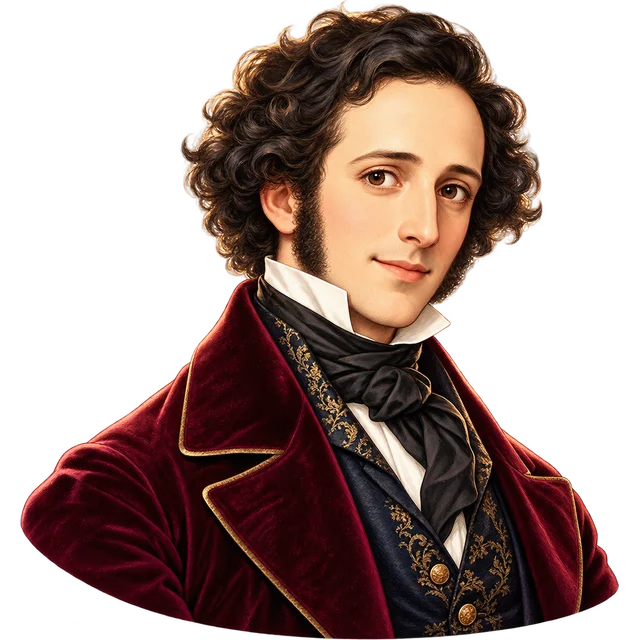
1841年、シューマンの『交響曲第1番「春」』は、ライプツィヒでメンデルスゾーンの指揮によって初演されました。二人は互いを尊敬し合う友人で、シューマンはメンデルスゾーンを「19世紀のモーツァルト」とたたえています。
In 1841 Schumann's Symphony No. 1, the 'Spring' Symphony, was first performed in Leipzig with Mendelssohn conducting. The two men admired each other, and Schumann praised Mendelssohn as 'the Mozart of the 19th century'.
1853年にシューマン家を訪ねた20歳のブラームスは、夫妻にあたたかく迎えられました。シューマンが療養所に入ると、ブラームスはクララと子どもたちを支えます。ブラームスとクララの友情は、その後40年以上も続きました。
When twenty-year-old Brahms visited the Schumanns in 1853, the couple welcomed him warmly. After Robert entered the sanatorium, Brahms helped support Clara and the children. The friendship between Brahms and Clara lasted for more than forty years.
FAMOUS WORDS
“Hats off, gentlemen, a genius!”諸君、脱帽したまえ。天才だ!
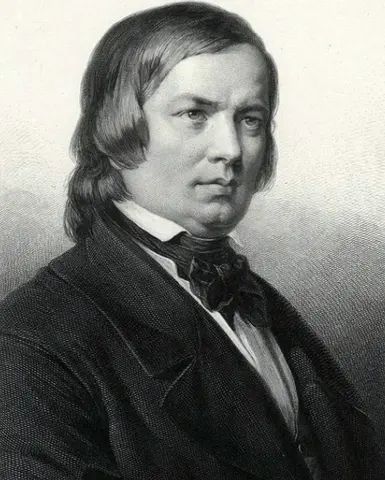
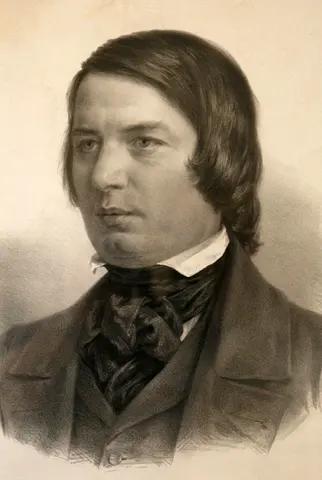
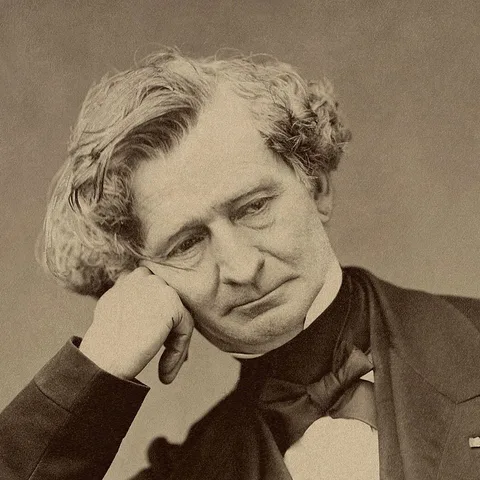
— Robert Schumann(1831年、ショパンの『「ドン・ジョヴァンニ」の主題による変奏曲』の評論(『一般音楽新聞』)) 肖像画・写真・自筆譜 Gallery (Public Domain)
Wikimedia Commons でパブリックドメイン(または CC0)と確認した画像です。クリックで拡大。
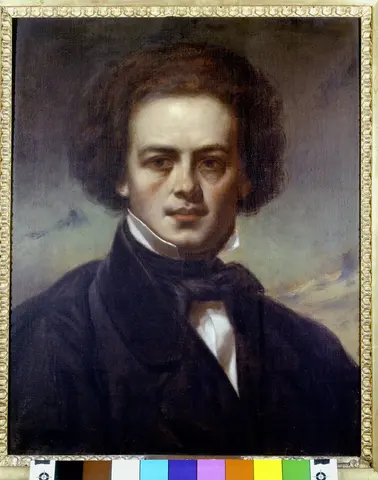
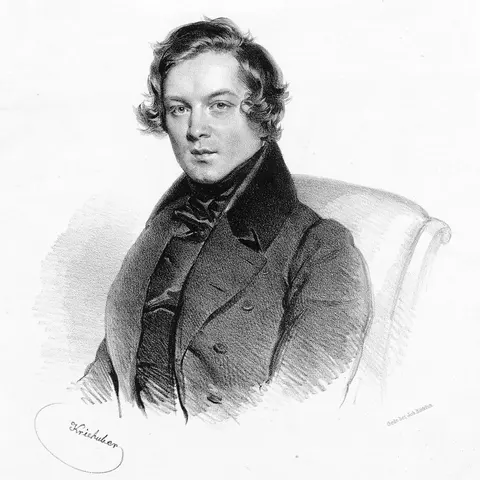
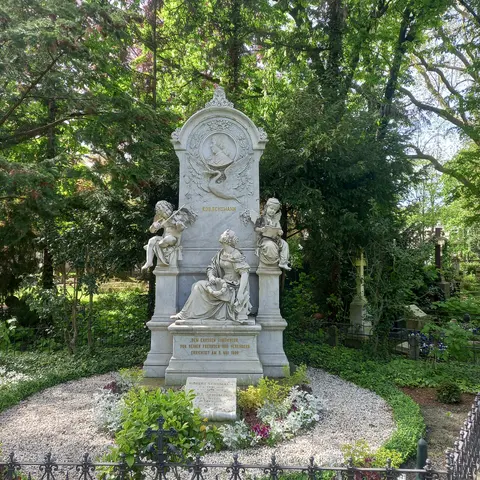
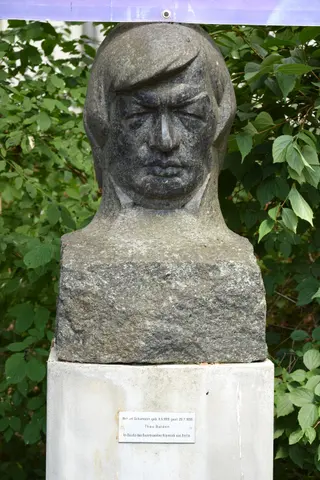
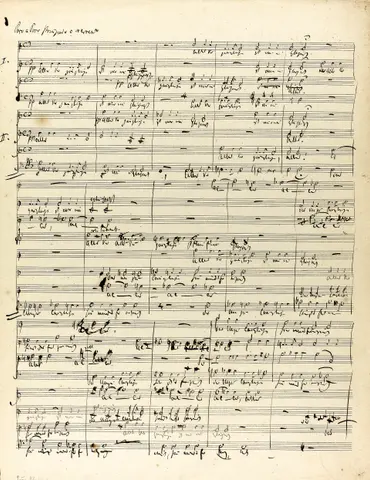
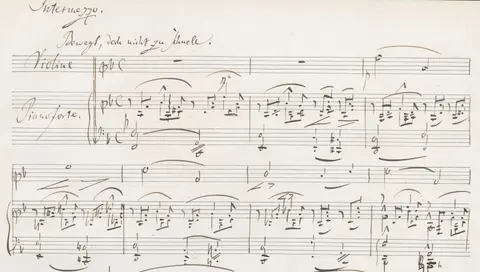
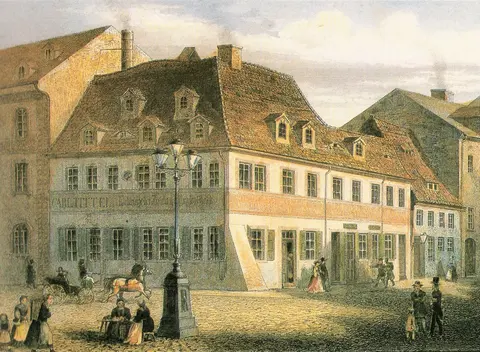
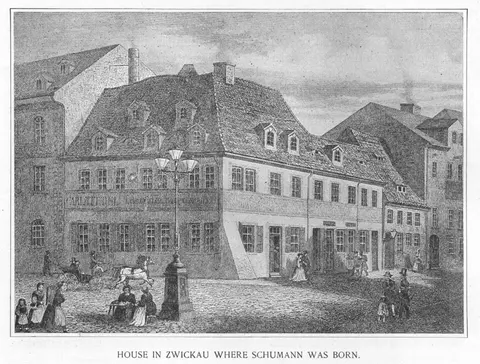
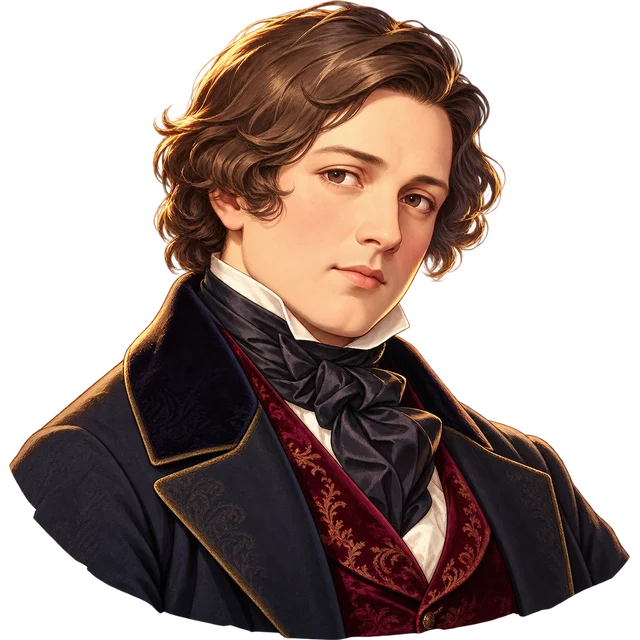
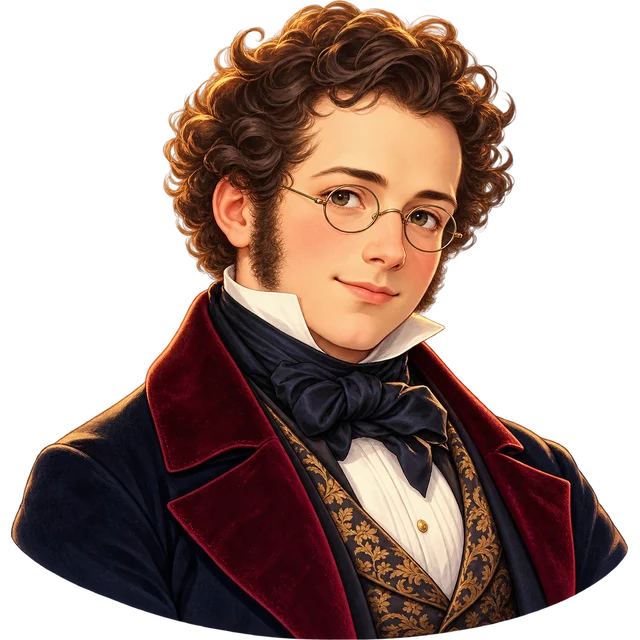
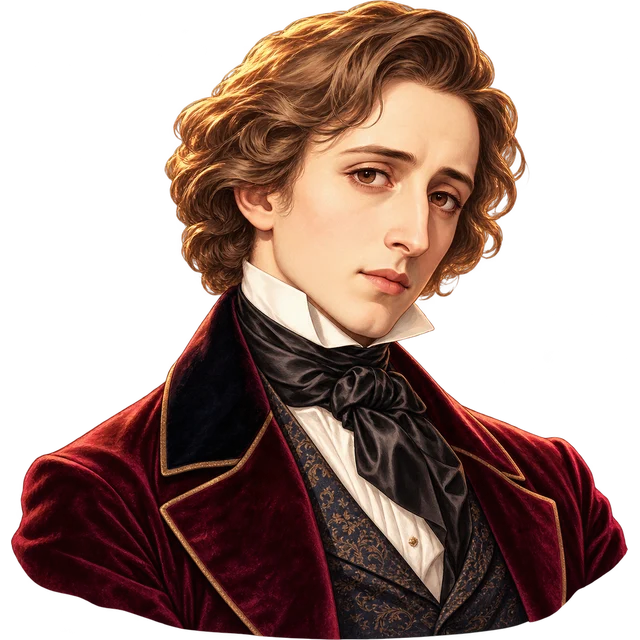
ページ上のイラストは、本物の肖像画をもとにこのサイトのために描いたものです。
 年表 Timeline
 シューマンで覚える英単語 Words
 クイズに挑戦 Quiz
MORE COMPOSERS


 MP3