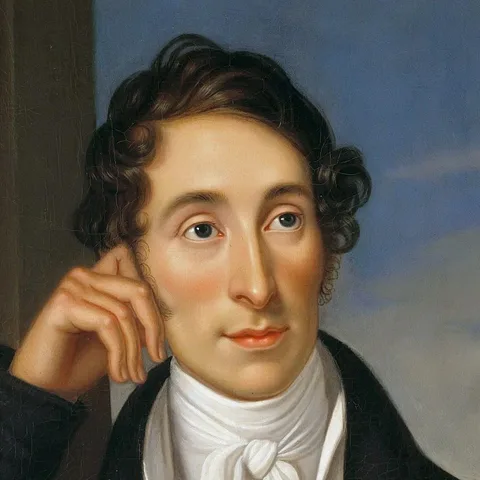
クラリネット協奏曲1番
Clarinet Concerto No. 1
ウェーバー・1811
王さまが小協奏曲に大感激!名手のために生まれたクラリネット協奏曲。
クラリネット協奏曲第1番 ヘ短調のページへRomantic · 1786–1826
「ドイツ・ロマン派オペラの父」The father of German Romantic opera
 オイティン(ドイツ)
 ロンドン(イギリス)2 曲を収録
森と狩人と魔法の弾丸。ドイツのオペラを大きく変えた人。Forests, hunters, and magic bullets: he changed German opera forever.
 ウェーバーの名曲を聴く
ウェーバー・1811
王さまが小協奏曲に大感激!名手のために生まれたクラリネット協奏曲。
クラリネット協奏曲第1番 ヘ短調のページへウェーバー・1817–1821
森のホルンと悪魔の気配!ドイツ・ロマン派オペラの夜明けを告げる序曲。
歌劇「魔弾の射手」序曲のページへ
ホー!ウェーバーのいとこは、なんとモーツァルトの奥さんなんだ。
 生涯 Life Story
ウェーバーは1786年、北ドイツの町オイティンで生まれました。父は旅回りの劇団を率いていて、一家はハンブルク、ザルツブルク、ウィーンなど町から町へと移り住みます。生まれつき股関節が悪く、4歳ごろまで歩けなかったと言われます。父は息子をモーツァルトのような神童にしたいと考え、ザルツブルクではハイドンの弟ミヒャエル・ハイドンに無料で作曲を習わせました。Weber was born in 1786 in Eutin, a town in northern Germany. His father ran a traveling theater company, so the family moved from city to city, including Hamburg, Salzburg, and Vienna. He was born with a hip problem and is said not to have walked until he was about four. His father hoped to make him a child prodigy like Mozart. In Salzburg, the boy studied composition for free with Michael Haydn, Joseph Haydn's younger brother.
ウィーンでアベ・フォーグラーに学んだあと、ウェーバーは17歳ごろでブレスラウ(今のポーランドのヴロツワフ)の歌劇場の指揮者になります。その後シュトゥットガルトでは公爵の秘書として働きましたが、借金のトラブルで1810年に逮捕され、国外追放となりました。それでも気持ちを立て直し、旅をしながらピアニスト・作曲家として腕をみがいていきます。After studying with Abbé Vogler in Vienna, Weber became conductor of the opera house in Breslau (now Wrocław in Poland) at only about seventeen. Later, in Stuttgart, he worked as secretary to a duke, but he got into trouble over debts. In 1810 he was arrested and banished from the land. Still, he pulled himself together and kept improving as a pianist and composer while traveling.
1813年にプラハの歌劇場の監督、1817年にはドレスデンの宮廷楽長となり、同じ年に歌手カロリーネ・ブラントと結婚します。そして1821年、ベルリンで初演されたオペラ「魔弾の射手」が大成功。ドイツの森や民話、魔法の世界を描いたこの作品は、イタリア語ではなくドイツ語の本格的なオペラとして、人々を熱狂させました。In 1813 he became director of the opera in Prague, and in 1817 he became music director of the court opera in Dresden. That same year he married the singer Caroline Brandt. Then in 1821, his opera Der Freischütz was a huge success in Berlin. With its German forests, folk tales, and dark magic, it thrilled audiences as a great opera in German rather than Italian.
晩年のウェーバーは結核に苦しみながら、ロンドンの劇場に頼まれた英語のオペラ「オベロン」を作曲し、1826年4月に自ら指揮して初演しました。しかしその約2か月後、ロンドンで39歳で亡くなります。1844年、遺骨はワーグナーらの尽力でドレスデンへ戻されました。彼のオペラは、のちのワーグナーたちに大きな影響を与えています。In his last years, Weber suffered from tuberculosis while writing Oberon, an English-language opera for a London theater. He conducted its premiere himself in April 1826. But about two months later, he died in London at the age of 39. In 1844, thanks partly to Richard Wagner, his remains were brought back to Dresden. His operas had a great influence on later composers such as Wagner.
Weber was born in Germany in 1786. His family traveled a lot with a theater group. He became a conductor when he was only seventeen. His opera Der Freischütz was a big hit. It is about a hunter and magic bullets. He died in London at 39.ウェーバーは1786年にドイツで生まれました。家族は劇団といっしょにたくさん旅をしました。彼はわずか17歳で指揮者になりました。オペラ「魔弾の射手」は大ヒットしました。狩人と魔法の弾丸のお話です。彼は39歳のとき、ロンドンで亡くなりました。
 これだけは!鉄板情報 Must-Know Facts
 あっと驚くネタ Surprising Stories
 タップすると答えが開きます
ウェーバーの父の異母兄弟の娘コンスタンツェは、モーツァルトと結婚しました。つまりモーツァルトは、ウェーバーのいとこのだんなさん。ウェーバーの父が息子を「第2のモーツァルト」にしたがったのも、こんな縁があったからかもしれません。
Constanze, the daughter of Weber's father's half-brother, married Mozart. So Mozart was the husband of Weber's cousin. Perhaps that is one reason Weber's father dreamed of making his son a second Mozart.
1806年ごろのブレスラウでのこと。夜おそく帰ったウェーバーがワインだと思って瓶の中身を飲むと、それは版画の仕事をしていた父が入れておいた薬品だった、という話が伝わっています。2か月ほど寝こみ、歌う声はもとに戻らなかったと言われます。ただし確かな記録は少なく、どこまで本当かはわかっていません。
A story says that around 1806 in Breslau, Weber came home late and drank from a bottle he thought held wine. But it was a chemical his father used for engraving. He is said to have been ill for about two months and to have lost his singing voice. However, there is little firm evidence, and no one knows how much of the story is true.
シュトゥットガルトで公爵の秘書をしていた若いころ、ウェーバーは借金をかかえ、さらにお金をめぐる疑いもかけられて、1810年に逮捕されてしまいます。結局、父とともにヴュルテンベルクの国から追放されました。この苦い経験のあと、彼は心を入れかえて音楽にうちこんだと言われます。
As a young man working as a duke's secretary in Stuttgart, Weber ran up debts and was also accused of money crimes. In 1810 he was arrested, and in the end he and his father were banished from Württemberg. It is said that after this bitter experience, he turned over a new leaf and threw himself into music.
「舞踏への勧誘」は、紳士が女性をダンスにさそい、ワルツをおどって別れるまでを描いたピアノ曲です。にぎやかなワルツが終わると、つい拍手したくなりますが、そのあとに静かな結びがあります。のちにベルリオーズがオーケストラ用に編曲し、バレエ「薔薇の精」にも使われました。
Invitation to the Dance is a piano piece that shows a gentleman inviting a lady to dance, their waltz, and their goodbye. When the lively waltz ends, people often want to clap, but there is still a quiet ending to come. Berlioz later arranged it for orchestra, and it was used for the ballet Le Spectre de la rose.
版画の仕事をしていた父の影響もあって、ウェーバーは少年時代に、石の板を使う新しい印刷技術「リトグラフ」を学びました。自作のピアノ変奏曲(作品2)も、この新しい技術で出版されています。作曲家なのに、印刷の技術にもくわしかったのです。
Partly because of his father's interest in engraving, Weber learned lithography, a new printing method using stone plates, as a boy. His Piano Variations, Op. 2, were published using this new method. He was a composer who also knew a lot about printing.
ロンドンで亡くなったウェーバーは、そのままロンドンの教会に葬られました。18年後の1844年、ウェーバーを尊敬していたワーグナーらの働きかけで、遺骨はドレスデンへ戻されます。ワーグナーはこのとき、お墓の前で追悼のことばを述べ、音楽もささげました。
When Weber died in London, he was buried in a London church. Eighteen years later, in 1844, his remains were brought back to Dresden, thanks partly to the efforts of Wagner, who admired him. At the grave, Wagner gave a speech in his memory and also offered music.
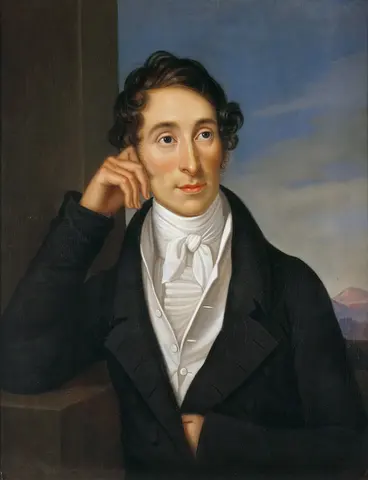
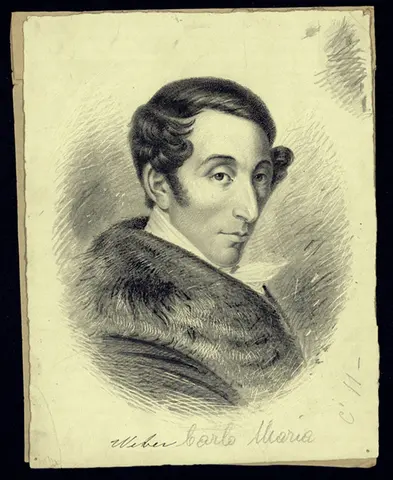
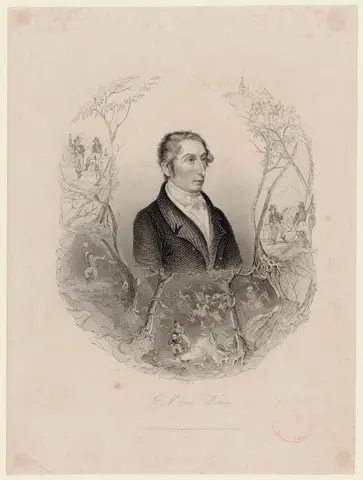
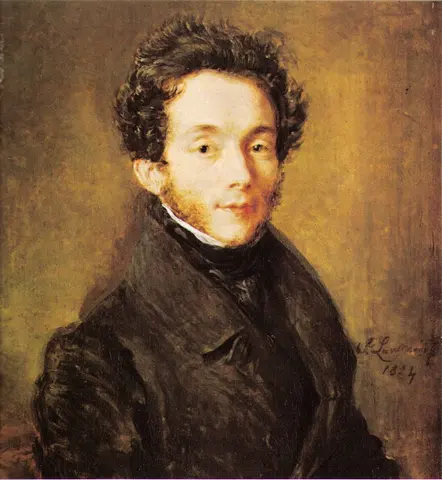
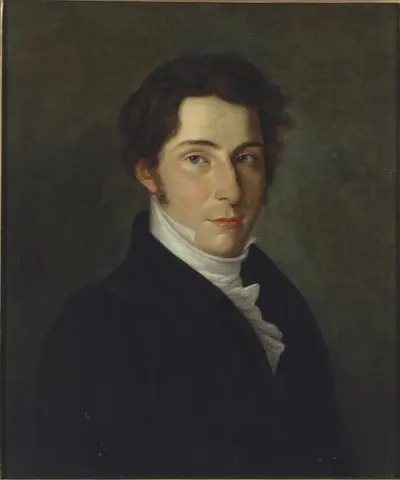
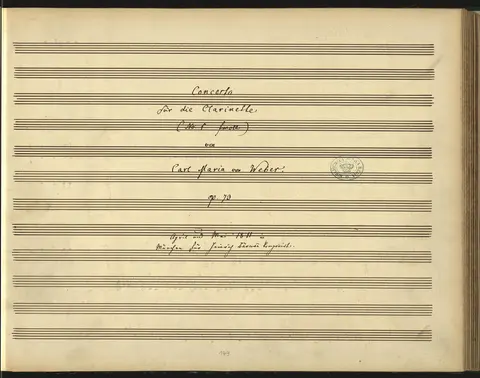
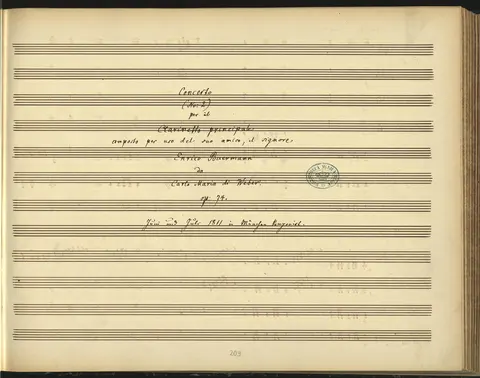
 肖像画・写真・自筆譜 Gallery (Public Domain)
Wikimedia Commons でパブリックドメイン(または CC0)と確認した画像です。クリックで拡大。
 年表 Timeline
 ウェーバーで覚える英単語 Words
 クイズに挑戦 Quiz
MORE COMPOSERS







 MP3