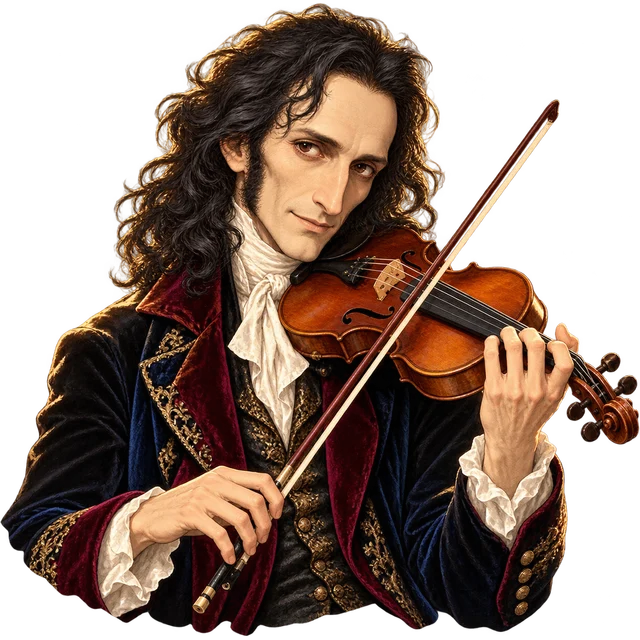
ヴァイオリン協奏曲1番
Violin Concerto No. 1
パガニーニ・c. 1817–1818
「悪魔のヴァイオリニスト」が、自分のために書いた超絶技巧の協奏曲。
ヴァイオリン協奏曲第1番 ニ長調のページへRomantic · 1782–1840
「悪魔のヴァイオリニスト」The Devil's Violinist
 ジェノヴァ(イタリア)
 ニース(現在のフランス)2 曲を収録
超絶技巧で「悪魔と契約した」とうわさされた、伝説のヴァイオリニスト。A legendary violinist so amazing that people said he had made a deal with the devil.
 パガニーニの名曲を聴く
パガニーニ・c. 1817–1818
「悪魔のヴァイオリニスト」が、自分のために書いた超絶技巧の協奏曲。
ヴァイオリン協奏曲第1番 ニ長調のページへパガニーニ・1818年以前(出版1820年)
ヴァイオリン1本で超絶技巧の嵐!作曲家たちも夢中に。
24の奇想曲 第24番 イ短調のページへ
ホー!パガニーニは、たった1本の弦だけで1曲ひいてみせたんだよ。
 生涯 Life Story
パガニーニは1782年、イタリアの港町ジェノヴァで生まれました。父は港で働きながら、マンドリンも弾く音楽好き。ニコロは5歳でマンドリンを、7歳ごろにはヴァイオリンを始め、父からきびしく練習させられました。地元の先生たちに学んだあと、パルマでも修業し、10代のうちに町の人々をおどろかせる腕前になります。Paganini was born in 1782 in the Italian port city of Genoa. His father worked at the port and also loved music and played the mandolin. Niccolò started the mandolin at five and the violin at about seven, and his father made him practice very hard. After studying with local teachers, he also trained in Parma, and as a teenager he was already amazing audiences.
1801年にルッカの祭りでの演奏が大評判になり、1805年、22歳でルッカ共和国の首席ヴァイオリン奏者になります。その後はナポレオンの妹エリーザが治める宮廷に仕えました。この時期にギターの曲もたくさん書いています。1809年の末に宮廷を離れると、フリーの演奏家としてイタリア各地をまわり、1813年のミラノ・スカラ座での演奏会で大成功。その名はイタリア中に知れわたりました。In 1801 he won great praise at a festival in Lucca, and in 1805, at twenty-two, he became first violinist of the Republic of Lucca. Later he served at the court of Elisa, Napoleon's sister, who ruled there. During this time he also wrote many pieces for guitar. At the end of 1809 he left the court and toured Italy as a freelance performer. A concert at La Scala in Milan in 1813 was a huge success, and his name spread across Italy.
1828年からはウィーンを皮切りに、ドイツ、パリ、ロンドンなどヨーロッパ中で演奏旅行をします。目にもとまらぬ指の動き、高い音、1本の弦だけでの演奏などに、観客は熱狂しました。やせた体と青白い顔もあって「悪魔に魂を売ったのでは」といううわさまで広まります。若いリストはパガニーニを聴いて強い刺激を受け、同じような超絶技巧をピアノで追い求めました。From 1828, starting in Vienna, he toured all over Europe, including Germany, Paris, and London. Audiences went wild over his lightning-fast fingers, his high notes, and his playing on just one string. Because he was thin and pale, rumors even spread that he had sold his soul to the devil. After hearing him, the young Franz Liszt was deeply inspired and set out to achieve the same kind of dazzling skill on the piano.
晩年のパガニーニは病気がちになり、1834年に演奏活動からほぼ引退しました。1840年、当時はサルデーニャ王国の町だったニースで57歳で亡くなります。亡くなる前に教会の最後の儀式(終油の秘跡)を受けなかったことなどから、カトリック式の埋葬がなかなか認められず、遺体は各地を移されたすえ、長い年月をへてようやくパルマに葬られました。彼の「24の奇想曲」は、今もヴァイオリニストのあこがれの目標です。In his later years Paganini was often ill, and in 1834 he mostly retired from performing. He died in 1840, at the age of 57, in Nice, which was then part of the Kingdom of Sardinia. Mainly because he died without receiving the last rites, the Church refused him a Catholic burial. His body was moved from place to place, and after many years it was finally buried in Parma. His 24 Caprices are still a great goal for violinists today.
Paganini was born in Genoa, Italy, in 1782. He played the violin very, very fast. He could play music on only one string! Some people said he was friends with the devil. He wrote 24 Caprices for the violin. His music inspired many composers.パガニーニは1782年にイタリアのジェノヴァで生まれました。ヴァイオリンをとてもとても速くひきました。たった1本の弦で曲をひけました!悪魔の友だちだと言う人もいました。ヴァイオリンのための「24の奇想曲」を書きました。彼の音楽は多くの作曲家に影響を与えました。
 これだけは!鉄板情報 Must-Know Facts
 あっと驚くネタ Surprising Stories
 タップすると答えが開きます
ルッカの宮廷にいたころ、パガニーニはナポレオンの誕生日のために、ヴァイオリンのいちばん低いG線1本だけで演奏する「ナポレオン・ソナタ」を作曲しました。4本ある弦のうち1本しか使わずに、高い音から低い音まで弾きこなしたのです。
While he was at the court in Lucca, Paganini wrote the Napoleon Sonata for Napoleon's birthday. It is played only on the violin's lowest string, the G string. Using just one of the four strings, he covered notes from low to high.
パガニーニの愛器は、名工グァルネリ・デル・ジェズが作ったヴァイオリンで、力強い音から「イル・カノーネ(大砲)」と呼ばれました。彼はこの楽器をジェノヴァ市に遺し、今も市庁舎で保管されています。パガニーニ国際コンクールの優勝者などが、特別に演奏することもあります。
Paganini's beloved violin was made by the great maker Guarneri del Gesù. Because of its powerful sound, it was nicknamed "Il Cannone," the Cannon. He left it to the city of Genoa, where it is still kept at the city hall. Winners of the Paganini Competition are sometimes allowed to play it.
10代のころ、パガニーニはリヴォルノで、商人リヴロンからグァルネリのヴァイオリンを借りて演奏しました。あまりのすばらしさに、リヴロンは楽器を返してもらうのをことわり、そのまま贈ったと言われます。ギャンブルで自分の楽器を手放していたから借りた、という話もありますが、真偽はわかりません。
As a teenager in Livorno, Paganini borrowed a Guarneri violin from a businessman named Livron for a concert. It is said that Livron was so impressed that he refused to take it back and gave it to him. Some stories say Paganini needed it because he had lost his own violin through gambling, but no one knows if that is true.
パガニーニは、その場のひらめきで演奏することが多く、アンコールで同じ曲をもう一度弾くことをいやがったと言われます。1818年、トリノで国王にアンコールを求められたときも「パガニーニはくり返さない」と答えたという話が伝わり、この言葉はイタリアのことわざのようになりました。
Paganini is said to have often improvised as he played and to have disliked repeating a piece as an encore. A story goes that in 1818 in Turin, when the king asked for an encore, he replied, "Paganini does not repeat." The phrase became a kind of Italian saying.
パガニーニは作曲家ベルリオーズに、ヴィオラが活躍する曲を頼みました。こうして生まれたのが「イタリアのハロルド」です。ところがヴィオラの見せ場が少なく、パガニーニは演奏しませんでした。それでも後にこの曲を聴いて感動し、1838年、ベルリオーズに2万フランという大金を贈っています。
Paganini asked Berlioz to write a piece featuring the viola, and the result was Harold in Italy. But the viola part was not showy enough, and Paganini never played it. Later, after hearing it, he was so moved that in 1838 he gave Berlioz the huge sum of 20,000 francs.
パガニーニは手が大きく、指がおどろくほど柔らかく動いたと伝えられています。そのため、関節がとても柔らかくなる体質(マルファン症候群やエーラス・ダンロス症候群)だったのでは、という説がありますが、はっきりした証拠はありません。
It is said that Paganini had large hands and amazingly flexible fingers. Some experts think he may have had a condition that makes joints very loose, such as Marfan syndrome or Ehlers-Danlos syndrome. But there is no clear proof.
 肖像画・写真・自筆譜 Gallery (Public Domain)
Wikimedia Commons でパブリックドメイン(または CC0)と確認した画像です。クリックで拡大。
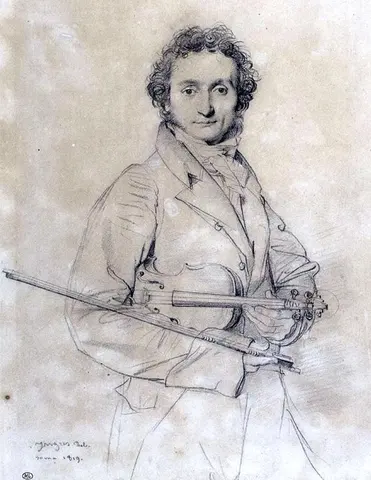
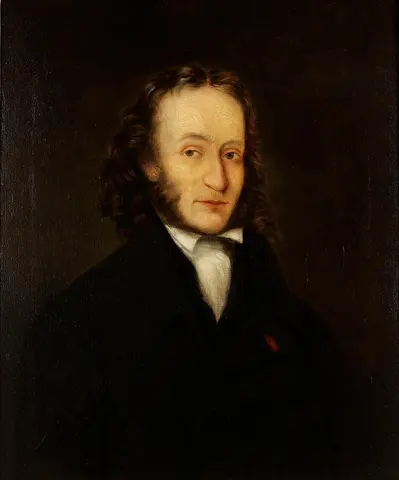
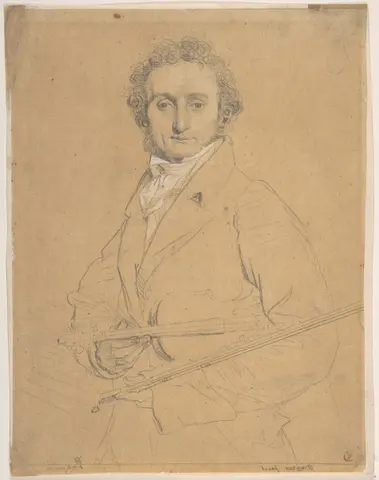
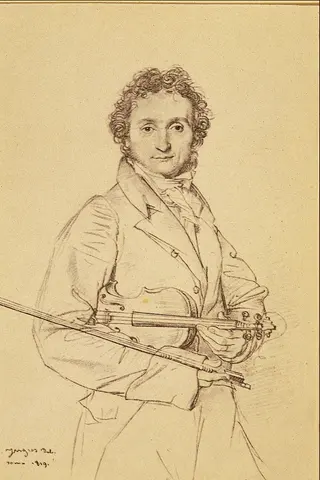
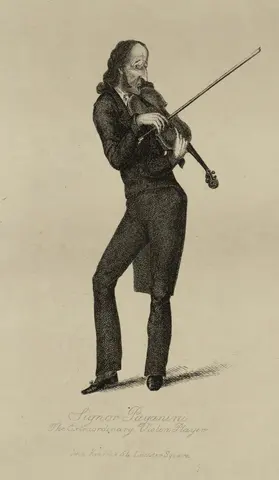
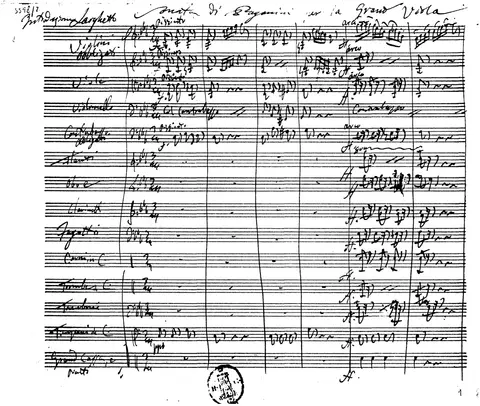
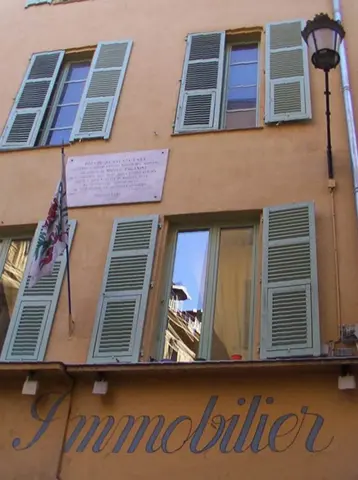
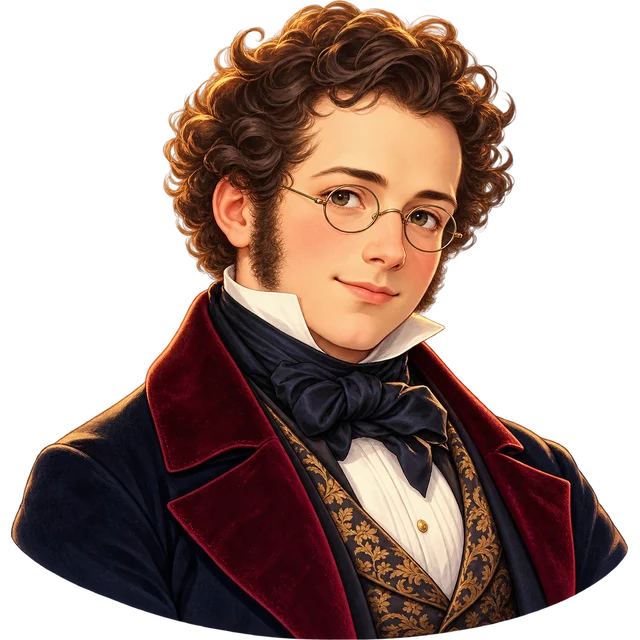
ページ上のイラストは、本物の肖像画をもとにこのサイトのために描いたものです。
 年表 Timeline
 パガニーニで覚える英単語 Words
 クイズに挑戦 Quiz
MORE COMPOSERS

 MP3