
テ・デウム
Te Deum
シャルパンティエ・c. 1688–1698
パンパカパーン!ヨーロッパのテレビの幕開けを飾ってきた、ごうかな前奏曲。
テ・デウム ニ長調のページへ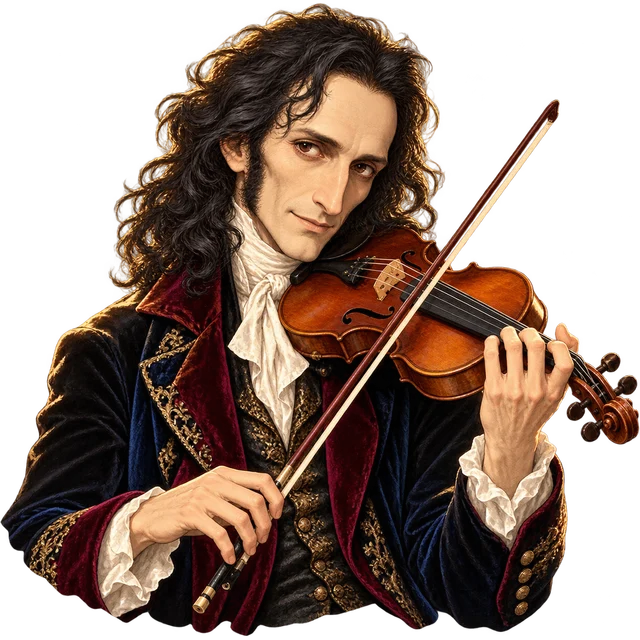
Concerto · Op. 6 (MS 21) · c. 1817–1818
ニコロ・パガニーニ(1782–1840)
「悪魔のヴァイオリニスト」が、自分のために書いた超絶技巧の協奏曲。A showpiece the "devil's violinist" wrote for himself.
WATCH ON YOUTUBE
この曲は、権利の切れた高音質の録音がまだ見つからないため、YouTube の公式チャンネルなどの名演でお楽しみください(ダウンロードはできません)。YouTube でほかの演奏もさがす ↗
 Paganini: Violin Concerto No. 1 in D Major, Op. 6: I. Allegro maestoso
Hilary Hahn - Topic(YouTube) YouTube で開く ↗
Niccolo Paganini Violin Concerto No 1, María Dueñas
María Dueñas Violin(YouTube) YouTube で開く ↗
PAGANINI - Violin Concerto No.1 in D Major, op.6 | Svetlin ROUSSEV #paganini #violinconcerto
Svetlin Roussev(YouTube) YouTube で開く ↗
Paganini Violin Concerto No. 1 Hilary Hahn (FULL)
Classical Music For You(YouTube) YouTube で開く ↗
Augustin Hadelich -- Paganini Concerto 1 with Detroit Symphony Orchestra, Jader Bignamini (2020)
Augustin Hadelich(YouTube) YouTube で開く ↗
Paganini Violin Concerto No.1 @ChloeChuaviolinist
Singapore Symphony(YouTube) YouTube で開く ↗
ホー!ソロのヴァイオリンだけ、弦を半音高く合わせるしかけがあるんだ。
 この曲のおはなし The Story
「悪魔に魂を売った」とまで言われた伝説のヴァイオリニスト、パガニーニが、1817年から1818年ごろに書いた協奏曲です。自分で弾くために作られ、目もくらむような速い音、高い音、重音(2つ以上の音を同時に弾くこと)など、ヴァイオリンの技がこれでもかと登場します。Paganini, the legendary violinist who was even said to have sold his soul to the devil, wrote this concerto around 1817–18. He wrote it to perform himself, and it is full of dazzling violin tricks: lightning-fast notes, very high notes and double stops, which means playing two or more notes at once.
パガニーニは、オーケストラの楽譜を変ホ長調で書き、ソロのヴァイオリンだけは弦を半音高く合わせて、ニ長調の指づかいで弾けるようにしました。こうすると、ソロの音がオーケストラの中でいっそう明るく輝いて聞こえます。いまでは全体をニ長調にして演奏されることが多くなっています。Paganini wrote the orchestra parts in E-flat major, but he had the soloist tune the violin a half step higher and play with D major fingerings. This makes the solo sound even brighter against the orchestra. Today, however, the whole concerto is usually played in D major.
パガニーニは、自分の技をまねされないよう、協奏曲の楽譜をほとんど出版せず、大事に守っていたと言われています。この曲が出版されたのは、彼が亡くなったあとの1851年でした。オペラのアリアのように歌うメロディは、同じ時代に大人気だったロッシーニのオペラを思わせます。Paganini is said to have kept his concertos secret so that no one could copy his tricks, and he published almost none of them. This concerto was not published until 1851, after his death. Its singing, aria-like melodies remind many listeners of the operas of Rossini, who was hugely popular at the same time.
Paganini was a very famous violin player. He wrote this concerto for himself. It has many fast and high notes. Some people said he got his skill from the devil! Of course, that was only a rumor.パガニーニはとても有名なヴァイオリン奏者でした。彼は自分のためにこの協奏曲を書きました。速い音や高い音がたくさん出てきます。彼は悪魔から技をもらったと言う人もいました!もちろん、それはただのうわさです。
 聴きどころ Listening Guide
 えっ!?ネタ Surprising Facts
 タップすると答えが開きます
パガニーニの演奏があまりにすごいので、「悪魔に魂を売ってあの技を手に入れた」といううわさが広まりました。やせた体に黒い服、青白い顔という見た目も、うわさを大きくしたと言われています。もちろん、これは根拠のない伝説です。
Paganini played so amazingly that a rumor spread that he had sold his soul to the devil for his skill. His thin body, black clothes and pale face are said to have made the rumor grow. Of course, it was only a legend with no truth behind it.
パガニーニは、ほかの人に曲をぬすまれないよう、オーケストラのパート譜をリハーサルのときだけ配り、終わるとすぐに回収したと伝えられています。ソロの楽譜も人に見せなかったため、彼の協奏曲の多くは、死後になってようやく楽譜が出版されました。
It is said that Paganini handed out the orchestra parts only at rehearsals and collected them right afterward, so no one could steal his music. He did not show anyone the solo part either, so the scores of most of his concertos were not published until after his death.
パガニーニとロッシーニは親しい友人で、ローマのカーニバルでいっしょに女性の仮装をして町を練り歩いた、という楽しい話も伝わっています。この協奏曲の、オペラのように歌うメロディにも、ロッシーニの影響が感じられると言われます。
Paganini and Rossini were good friends. There is even a fun story that they once dressed up as women and walked through the streets together during the carnival in Rome. People also say that Rossini's influence can be heard in this concerto's opera-like melodies.
パガニーニは演奏会で、弦が切れても残りの弦だけで弾き続けたり、いちばん低いG線1本だけで曲を弾いたりして、聴衆をおどろかせたと言われています。この協奏曲にも、そんなショーマンらしい見せ場がたっぷりつまっています。
Paganini is said to have amazed audiences by carrying on with the remaining strings when one broke, and by playing whole pieces on the lowest G string alone. This concerto is also packed with the kind of show-stopping moments you would expect from such a showman.
ENGLISH × MASTERPIECE
 手品師が袖に仕掛けを隠すことから。半音高い調弦も、彼の奥の手でした。
 この曲で覚える英単語 Words
 クイズに挑戦 Quiz
 著作権について Credits
MORE MASTERPIECES
シャルパンティエ・c. 1688–1698
パンパカパーン!ヨーロッパのテレビの幕開けを飾ってきた、ごうかな前奏曲。
テ・デウム ニ長調のページへ
パーセル・1695
ブリテンが「オーケストラ入門」のテーマに選んだ、かっこいいメロディー。
劇音楽「アブデラザール」より ロンドのページへ
バッハ・c. 1704 (?)
タラリ〜!一度聴いたら忘れない、オルガンの大迫力の幕開け。
トッカータとフーガ ニ短調のページへバッハ・c. 1703–1707 (?)
音楽の授業でおなじみ!4つの声が同じテーマで追いかけっこ。
小フーガ ト短調のページへバッハ・c. 1706–1713
足が弾く低いテーマが21回!重くて壮大な、オルガンの大建築。
パッサカリアとフーガ ハ短調のページへバッハ・c. 1707–1710 (?)
キラキラの駆け上がりで幕開け!若きバッハのはなやかな鍵盤ショー。
トッカータ ニ長調のページへ
ヴィヴァルディ・published 1711
2本のヴァイオリンが火花を散らす!バッハも編曲した熱い協奏曲。
協奏曲集『調和の霊感』第8番 イ短調(2つのヴァイオリンのための協奏曲)のページへヴィヴァルディ・c. 1715
オクターブがぴょんぴょん跳ねる!喜びがはじける合唱の名曲。
グローリア ニ長調のページへ
 MP3