
テ・デウム
Te Deum
シャルパンティエ・c. 1688–1698
パンパカパーン!ヨーロッパのテレビの幕開けを飾ってきた、ごうかな前奏曲。
テ・デウム ニ長調のページへ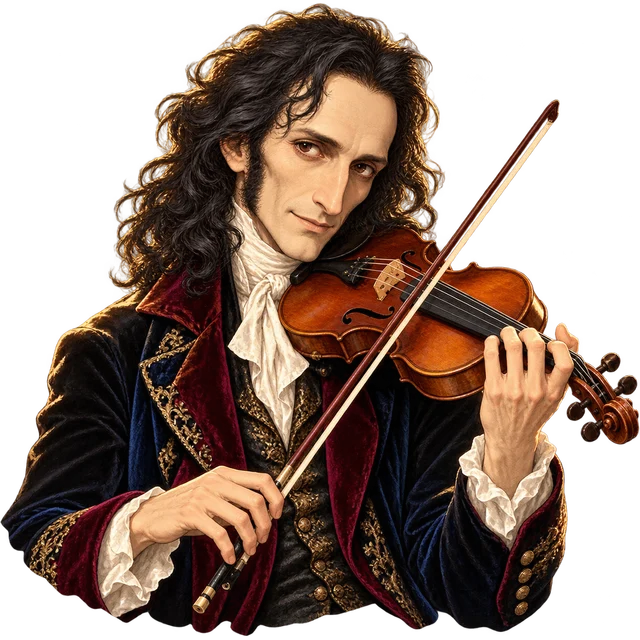
Chamber · Op. 1 No. 24 · 1818年以前(出版1820年)
ニコロ・パガニーニ(1782–1840)
ヴァイオリン1本で超絶技巧の嵐!作曲家たちも夢中に。One violin, endless fireworks, and a theme that inspired many composers.
PUBLIC DOMAIN RECORDING
PD / CC0 無料でダウンロードOK 別の演奏で聴く 1:Niccolò Paganini
ANOTHER RECORDING 1
CC BY-SA 4.0WATCH ON YOUTUBE
 Caprice No. 24
David Garrett - Topic(YouTube) YouTube で開く ↗
PAGANINI: 24 Caprices (complete) Antal Zalai, violin
Antal Zalai • Violin • prof. Brussels Conservatory(YouTube) YouTube で開く ↗
左の音源は権利が切れた録音なのでダウンロードできます。右の動画は YouTube の公式の埋め込みで見るもので、ダウンロードはできません(動画の権利は各チャンネルにあります)。
 もっと名演を観る YouTube で何百万回も再生された人気の演奏
Paganini Caprice No.24 - Daniel Lozakovich
Daniel Lozakovich(YouTube) YouTube で開く ↗
Niccolò Paganini - Caprice 24
Alexandros Xandros(YouTube) YouTube で開く ↗
Haruna Miyagawa plays Caprice No. 24 by Paganini | Siccas Media
SiccasGuitars(YouTube) YouTube で開く ↗
Paganini Caprice no.24 [HQ]
Ellingmint(YouTube) YouTube で開く ↗
ホー!このメロディー、ラフマニノフもブラームスも変奏曲にしたんだ。
 この曲のおはなし The Story
イタリアの天才ヴァイオリニスト、パガニーニが書いた「24の奇想曲」の最後の曲です。伴奏なしのヴァイオリン1本だけでひく曲で、短いテーマと、それを次々に変身させる11の変奏、そして華やかなしめくくりからできています。ヴァイオリン奏者にとっては、腕前をしめす大きな目標の曲です。This is the last of the 24 Caprices by the Italian violin genius Niccolò Paganini. It is for solo violin with no accompaniment. It has a short theme, eleven variations that keep changing it, and a brilliant ending. For violinists, it is a major goal that shows off their skill.
「24の奇想曲」は1820年に、パガニーニの「作品1」としてミラノで出版されました。楽譜には「芸術家たちへ」という言葉がそえられています。曲集全体では、ものすごく速い音や重音、左手で弦をはじく奏法など、当時のヴァイオリンの常識をこえる技がいろいろ使われています。The 24 Caprices were published in Milan in 1820 as Paganini's Op. 1, with the dedication 'To the artists'. Across the set, Paganini uses a wide range of amazing techniques that went far beyond what violinists of the time thought possible, such as lightning-fast notes, double stops, and plucking the strings with the left hand.
第24番のテーマは、ほかの作曲家たちを強く引きつけました。リストはピアノ用に編曲し、ブラームスは変奏曲を、ラフマニノフは「パガニーニの主題による狂詩曲」(1934年)を書きました。今でもこのテーマを使った新しい作品が生まれつづけています。まさに「みんなのテーマ」です。The theme of No. 24 has fascinated other composers. Liszt arranged it for piano, Brahms wrote a set of variations on it, and Rachmaninoff composed his Rhapsody on a Theme of Paganini in 1934. New works based on this theme are still being written today. It has truly become everyone's theme.
Paganini was a great violin player. He wrote this piece for one violin only. First you hear a short tune. Then the tune changes again and again. Many famous composers used this tune in their own music.パガニーニはすばらしいヴァイオリン奏者でした。彼はこの曲を、ヴァイオリン1本だけのために書きました。まず短いメロディーが聞こえます。それからメロディーが何度も何度も変わります。たくさんの有名な作曲家が、このメロディーを自分の曲に使いました。
 聴きどころ Listening Guide
 えっ!?ネタ Surprising Facts
 タップすると答えが開きます
パガニーニのあまりの超絶技巧と、やせた体に黒い服という見た目から、「悪魔に魂を売ったのでは」といううわさが広まりました。もちろん根拠のない話ですが、本人もそのイメージを人気に利用していたとも言われています。
Because of his unbelievable skill and his thin figure dressed in black, people whispered that Paganini had sold his soul to the devil. It was only a rumor, of course, but some say he was happy to use that image to make himself even more famous.
第24番のテーマを使った作品を書いたのは、リスト、ブラームス、ラフマニノフ、ポーランドのルトスワフスキ、そしてミュージカル作曲家のアンドルー・ロイド=ウェバーなど。時代やジャンルをこえて、たくさんの作曲家を刺激してきたテーマです。
Composers who wrote works on this theme include Liszt, Brahms, Rachmaninoff, Lutosławski, and even the musical theater composer Andrew Lloyd Webber. The theme has inspired musicians across many periods and styles.
パガニーニが生きている間に出版した作品は、ごく一部でした。協奏曲などの楽譜を手元に置いて演奏会でしかひかなかったのは、自分の技をまねされたくなかったからだとも言われています。「24の奇想曲」は、その数少ない出版作品の一つです。
Paganini published only a small part of his music in his lifetime. He kept scores such as his concertos to himself and played them only at his own concerts, perhaps so that others could not copy his tricks. The Caprices are among the few works he published.
第24番の変奏の中には、弓でひく音と、弦をおさえる左手の指ではじく音(左手ピッツィカート)を組み合わせるものがあります。ふつうは右手ではじくので、とてもめずらしい技です。1本のヴァイオリンが2人で演奏しているように聞こえます。
One variation in No. 24 mixes bowed notes with notes plucked by the left hand, the same hand that presses the strings. Usually violinists pluck with the right hand, so it is a rare trick. It sounds as if two players were sharing one violin.
ENGLISH × MASTERPIECE
 limelight は昔の劇場の照明。スポットライトを浴びている状態のことです。
 この曲で覚える英単語 Words
 クイズに挑戦 Quiz
 この録音について(著作権・出典) Credits
MORE MASTERPIECES
シャルパンティエ・c. 1688–1698
パンパカパーン!ヨーロッパのテレビの幕開けを飾ってきた、ごうかな前奏曲。
テ・デウム ニ長調のページへ
パーセル・1695
ブリテンが「オーケストラ入門」のテーマに選んだ、かっこいいメロディー。
劇音楽「アブデラザール」より ロンドのページへ
バッハ・c. 1704 (?)
タラリ〜!一度聴いたら忘れない、オルガンの大迫力の幕開け。
トッカータとフーガ ニ短調のページへバッハ・c. 1703–1707 (?)
音楽の授業でおなじみ!4つの声が同じテーマで追いかけっこ。
小フーガ ト短調のページへバッハ・c. 1706–1713
足が弾く低いテーマが21回!重くて壮大な、オルガンの大建築。
パッサカリアとフーガ ハ短調のページへバッハ・c. 1707–1710 (?)
キラキラの駆け上がりで幕開け!若きバッハのはなやかな鍵盤ショー。
トッカータ ニ長調のページへ
ヴィヴァルディ・published 1711
2本のヴァイオリンが火花を散らす!バッハも編曲した熱い協奏曲。
協奏曲集『調和の霊感』第8番 イ短調(2つのヴァイオリンのための協奏曲)のページへヴィヴァルディ・c. 1715
オクターブがぴょんぴょん跳ねる!喜びがはじける合唱の名曲。
グローリア ニ長調のページへ
 MP3