
テ・デウム
Te Deum
シャルパンティエ・c. 1688–1698
パンパカパーン!ヨーロッパのテレビの幕開けを飾ってきた、ごうかな前奏曲。
テ・デウム ニ長調のページへ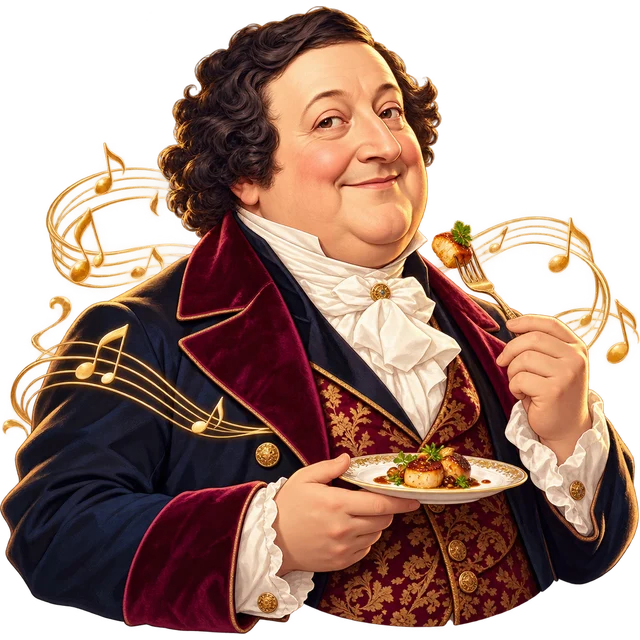
Orchestral · · 1823
ジョアキーノ・ロッシーニ(1792–1868)
古代バビロンの女王の物語。4本のホルンが歌う壮大な序曲。A queen of ancient Babylon, and four horns that sing.
WATCH ON YOUTUBE
この曲は、権利の切れた高音質の録音がまだ見つからないため、YouTube の公式チャンネルなどの名演でお楽しみください(ダウンロードはできません)。YouTube でほかの演奏もさがす ↗
 Rossini: "Semiramide" Overture / Rattle - Berliner Philharmoniker
Berliner Philharmoniker(YouTube) YouTube で開く ↗
Rossini: Semiramide: Overture
Boston Symphony Orchestra - Topic(YouTube) YouTube で開く ↗
Semiramide: Overture
Riccardo Muti - Topic(YouTube) YouTube で開く ↗
ホー!これが、ロッシーニがイタリアの劇場のために書いた最後のオペラなんだ。
 この曲のおはなし The Story
1823年2月、ヴェネツィアのフェニーチェ劇場で初演された、ロッシーニのオペラ「セミラーミデ」の序曲です。古代バビロンの女王セミラーミデをめぐる、壮大で悲劇的な物語。序曲は10分をこえる長さで、ロッシーニの序曲の中でもとくに規模が大きく、聴きごたえのある1曲です。This is the overture to Rossini's opera "Semiramide," first performed at La Fenice in Venice in February 1823. The opera tells a grand, tragic story about Semiramide, a queen of ancient Babylon. The overture lasts more than ten minutes, making it one of Rossini's largest and most impressive overtures.
台本はガエターノ・ロッシが、フランスの作家ヴォルテールの悲劇をもとに書きました。ロッシーニの序曲の中には、別のオペラと使い回されたものもありますが、この序曲はオペラの中のメロディをもとに作られています。ゆっくりした部分では、4本のホルンがおごそかな歌をかなでます。The libretto was written by Gaetano Rossi, based on a tragedy by the French writer Voltaire. Some of Rossini's overtures were reused for more than one opera, but this one is built from melodies in the opera itself. In its slow section, four horns play a solemn song.
「セミラーミデ」は、ロッシーニがイタリアの劇場のために書いた最後のオペラになりました。初演では、ロッシーニの妻で名歌手のイザベラ・コルブランが、タイトルロールの女王を歌っています。このオペラは19世紀を通してヨーロッパ中で人気を集め、序曲は今もコンサートの人気曲です。"Semiramide" was the last opera Rossini wrote for an Italian theater. At the premiere, the title role of the queen was sung by Isabella Colbran, a famous singer who was also Rossini's wife. The opera was popular across Europe throughout the 19th century, and the overture is still a concert favorite today.
This music opens an opera about a legendary queen of ancient Babylon. The overture is long and grand. Four horns play a slow, beautiful song. Later, the music gets very fast and exciting.この音楽は、古代バビロンの伝説の女王をえがいたオペラの始まりの曲です。序曲は長くて壮大です。4本のホルンが、ゆっくりした美しい歌をかなでます。そのあと、音楽はとても速く、わくわくするものになります。
 聴きどころ Listening Guide
 えっ!?ネタ Surprising Facts
 タップすると答えが開きます
ロッシーニは「セミラーミデ」のあとパリへ移り、1829年の「ウィリアム・テル」を最後に、37歳でオペラを書くのをやめてしまいました。それまでに約40作ものオペラを書いていました。その後も76歳まで長生きしましたが、なぜオペラをやめたのか、はっきりした理由はわかっていません。
After "Semiramide," Rossini moved to Paris. After "William Tell" in 1829, he stopped writing operas at the age of 37. By then he had written about forty operas. He lived on until 76, but no one knows for sure why he gave up opera.
序曲のゆっくりした部分で、4本のホルンがおごそかな賛美歌のようなメロディをかなでます。このメロディは、オペラ本編の中からとられたものです。ホルンがこんなに長く主役になる序曲はめずらしく、ホルン奏者にとっては腕の見せどころです。
In the slow section of the overture, four horns play a solemn, hymn-like melody taken from the opera itself. It is rare for horns to be the stars for so long in an overture, so it is a big moment for horn players.
オペラを書くのをやめたあとのロッシーニは、パリで美食を楽しむ生活を送りました。牛ヒレ肉にフォアグラとトリュフをのせた料理「トゥルヌド・ロッシーニ」は、彼の名前がついた料理として有名です。ただし、本人が考えた料理かどうかははっきりしません。
After he stopped writing operas, Rossini enjoyed a life of fine food in Paris. A dish of beef fillet topped with foie gras and truffles, "Tournedos Rossini," is famous for carrying his name. However, it is not clear whether he invented it himself.
ロッシーニは1792年2月29日、うるう年のうるう日に生まれました。2月29日は、ふつう4年に1度しかやってきません。しかも1800年はうるう年ではなかったので、1796年の次の2月29日は、なんと8年後の1804年でした。
Rossini was born on February 29, 1792, a leap day. February 29 usually comes only once every four years. And because 1800 was not a leap year, after 1796 the next February 29 did not come until 1804, eight years later!
ENGLISH × MASTERPIECE
 仕事や試合などを「ここで終わりにする」と決めるときの、くだけた言い方です。
 この曲で覚える英単語 Words
 クイズに挑戦 Quiz
 著作権について Credits
MORE MASTERPIECES
シャルパンティエ・c. 1688–1698
パンパカパーン!ヨーロッパのテレビの幕開けを飾ってきた、ごうかな前奏曲。
テ・デウム ニ長調のページへ
パーセル・1695
ブリテンが「オーケストラ入門」のテーマに選んだ、かっこいいメロディー。
劇音楽「アブデラザール」より ロンドのページへ
バッハ・c. 1704 (?)
タラリ〜!一度聴いたら忘れない、オルガンの大迫力の幕開け。
トッカータとフーガ ニ短調のページへバッハ・c. 1703–1707 (?)
音楽の授業でおなじみ!4つの声が同じテーマで追いかけっこ。
小フーガ ト短調のページへバッハ・c. 1706–1713
足が弾く低いテーマが21回!重くて壮大な、オルガンの大建築。
パッサカリアとフーガ ハ短調のページへバッハ・c. 1707–1710 (?)
キラキラの駆け上がりで幕開け!若きバッハのはなやかな鍵盤ショー。
トッカータ ニ長調のページへ
ヴィヴァルディ・published 1711
2本のヴァイオリンが火花を散らす!バッハも編曲した熱い協奏曲。
協奏曲集『調和の霊感』第8番 イ短調(2つのヴァイオリンのための協奏曲)のページへヴィヴァルディ・c. 1715
オクターブがぴょんぴょん跳ねる!喜びがはじける合唱の名曲。
グローリア ニ長調のページへ
 MP3