
パッヘルベルのジーグ
Pachelbel's Gigue
パッヘルベル・c. 1680–1706
あの「カノン」には、はずむ相棒がいた!知られざる後半戦。
カノンとジーグ ニ長調 より「ジーグ」のページへ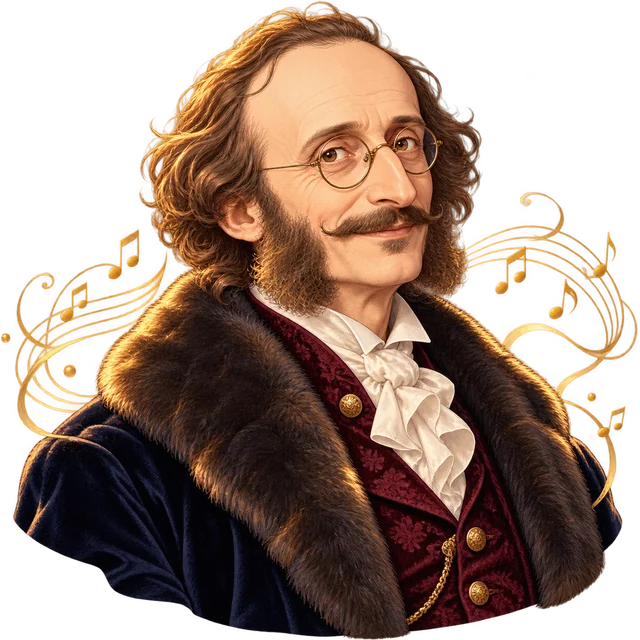
Orchestral · · 1860
ジャック・オッフェンバック(1819–1880)
しっとりした歌から、あのカンカンへ!最後に大爆発する序曲。From gentle songs to the famous cancan: an overture that explodes at the end!
WATCH ON YOUTUBE
この曲は、権利の切れた高音質の録音がまだ見つからないため、YouTube の公式チャンネルなどの名演でお楽しみください(ダウンロードはできません)。YouTube でほかの演奏もさがす ↗
 Overture to Orpheus in the Underworld
United States Navy Band(YouTube) YouTube で開く ↗
Orpheus in the Underworld: Overture
Philharmonia Orchestra - Topic(YouTube) YouTube で開く ↗
Offenbach: Orpheus in the Underworld (Orphée aux enfers): Overture
Berliner Philharmoniker - Topic(YouTube) YouTube で開く ↗
Offenbach - Orpheus in the Underworld Overture
zevnikov(YouTube) YouTube で開く ↗
Jacques Offenbach - Orpheus in the Underworld - Overture
Classical Music Only(YouTube) YouTube で開く ↗
Orpheus in the Underworld: Can Can
Charles Gerhardt - Topic(YouTube) YouTube で開く ↗

ホー!今の序曲をまとめたのは、オッフェンバック本人ではなくウィーンの音楽家なんだ。
 この曲のおはなし The Story
『天国と地獄』序曲は、オッフェンバックのオペレッタ『地獄のオルフェ』の音楽をもとにした、演奏会で大人気の序曲です。堂々とした始まりのあと、ソロの楽器がしっとりと歌う部分や軽やかな部分が続き、最後に運動会でおなじみの「カンカン」が飛び出して、大さわぎのうちに終わります。The overture to "Orpheus in the Underworld" is based on music from Offenbach's operetta of the same name, and it is a favorite at concerts. After a grand opening, solo instruments sing gently and lighter music follows. At the end, the famous cancan bursts out, and the piece finishes in wild excitement.
オペレッタはギリシャ神話のオルフェウスの物語をパロディにしたもので、1858年にパリで初演されました。じつは初演のときには、今のような長い序曲はなく、短い前奏があるだけでした。今演奏される序曲は、1860年にウィーンで上演されたとき、カール・ビンダーという音楽家が劇中のメロディーをつなぎ合わせて作ったものです。The operetta is a parody of the Greek myth of Orpheus, and it was first staged in Paris in 1858. At that time it did not have the long overture we know today, only a short introduction. The overture played now was made in 1860 for a production in Vienna. A musician named Carl Binder put it together from melodies in the show.
ビンダーの序曲は、劇中の聴きどころをぎゅっと詰めこんだ「予告編」のような作りで、この作品の中でもとくに人気の曲になりました。とくに最後の「地獄のギャロップ(カンカン)」は世界中で愛され、日本では運動会の定番曲です。オッフェンバックのメロディーの力と、編曲の名人芸が合わさった1曲です。Binder's overture is like a movie trailer, packed with the best tunes of the show, and it became one of the most popular pieces from the work. Its final "Infernal Galop," the cancan, is loved all over the world, and in Japan it is a standard at school sports days. The piece combines Offenbach's catchy tunes with Binder's skillful arranging.
This music opens a funny operetta. It begins with a strong, grand sound. Then solo instruments sing softly. At the end, you hear the fast, famous cancan! In Japan, children run to this music on sports day.この音楽は、楽しいオペレッタの始まりの曲です。力強く、堂々と始まります。そのあと、楽器がひとりずつやさしく歌います。最後に、あの速くて有名なカンカンが聞こえます!日本では、運動会で子どもたちがこの曲に合わせて走ります。
 聴きどころ Listening Guide
 えっ!?ネタ Surprising Facts
 タップすると答えが開きます
神話のオルフェウスは竪琴の名人ですが、オッフェンバック版のオルフェはバイオリンをひく音楽の先生です。しかも妻のユリディスは夫の音楽が大きらい。オルフェは自作のバイオリン協奏曲を聞かせて妻を困らせます。夫婦げんかから始まるパロディなのです。
In the myth, Orpheus is a master of the lyre. But in Offenbach's version, he is a music teacher who plays the violin, and his wife Eurydice hates his music. He annoys her by playing his own violin concerto. Offenbach's parody begins with a married couple's quarrel!
このオペレッタには「世論(せろん)」という名前の登場人物が出てきます。妻を取りもどしたくないオルフェに、「世間体が悪いから迎えに行け」とせまるのです。神話の感動話を、当時のパリの社会への皮肉に変えてしまうところがオッフェンバックらしさです。
One of the characters in this operetta is called "Public Opinion." She forces Orpheus, who does not want his wife back, to go and rescue her because people are watching. Turning a moving myth into a joke about Paris society is typical of Offenbach.
劇中では、18世紀の作曲家グルックのオペラ『オルフェオとエウリディーチェ』の有名なアリア「エウリディーチェを失って」のメロディーが、ちゃかすように引用されます。真面目な名作をネタにして笑わせるのも、パロディの楽しみ方です。
In the show, the famous aria "Che farò senza Euridice" from Gluck's 18th-century opera "Orfeo ed Euridice" is quoted in a teasing way. Making jokes with a serious masterpiece is part of the fun of parody.
カール・ビンダーは、ウィーンの劇場で指揮者や作曲家として活躍した人です。1860年のウィーン上演のためにこの序曲をまとめましたが、同じ年に亡くなりました。自分の編曲が160年以上も世界中で演奏されつづけることになったのです。
Carl Binder was a conductor and composer who worked in Vienna's theaters. He put this overture together for the 1860 Vienna production, but he died that same year. His arrangement has now been played around the world for more than 160 years.
ENGLISH × MASTERPIECE
 天と地を動かす→「なんとしてでも実現しようと全力をつくす」。
 この曲で覚える英単語 Words
 クイズに挑戦 Quiz
 著作権について Credits
MORE MASTERPIECES
パッヘルベル・c. 1680–1706
あの「カノン」には、はずむ相棒がいた!知られざる後半戦。
カノンとジーグ ニ長調 より「ジーグ」のページへシャルパンティエ・c. 1688–1698
パンパカパーン!ヨーロッパのテレビの幕開けを飾ってきた、ごうかな前奏曲。
テ・デウム ニ長調のページへ
パーセル・1695
ブリテンが「オーケストラ入門」のテーマに選んだ、かっこいいメロディー。
劇音楽「アブデラザール」より ロンドのページへクラーク・c. 1700
結婚式の大定番。でも作曲者は長いあいだ取りちがえられていた!
トランペット・ヴォランタリー(デンマーク王子の行進)のページへ
バッハ・c. 1707–1710 (?)
キラキラの駆け上がりで幕開け!若きバッハのはなやかな鍵盤ショー。
トッカータ ニ長調のページへ
ヴィヴァルディ・published 1711
2本のヴァイオリンが火花を散らす!バッハも編曲した熱い協奏曲。
協奏曲集『調和の霊感』第8番 イ短調(2つのヴァイオリンのための協奏曲)のページへヴィヴァルディ・c. 1715
オクターブがぴょんぴょん跳ねる!喜びがはじける合唱の名曲。
グローリア ニ長調のページへ
テレマン・c. 1710–1720 (?)
バルブのないラッパで高音をきらり!バロックのトランペットの晴れ舞台。
トランペット協奏曲 ニ長調のページへ
 MP3