ラグリマ
Lágrima
タレガ・c. 1891
ギターで奏でる小さな涙のしずく。明るさと切なさが入れかわる名曲。
ラグリマ(涙)のページへRomantic · 1852–1909
「近代ギターの父」The father of the modern classical guitar
 ビラレアル(スペイン)
 バルセロナ(スペイン)3 曲を収録
ギターを「酒場の楽器」から「演奏会の楽器」に変えた人。He turned the guitar into a true concert instrument.
 タレガの名曲を聴く
タレガ・c. 1891
ギターで奏でる小さな涙のしずく。明るさと切なさが入れかわる名曲。
ラグリマ(涙)のページへタレガ・1892
ギター1本でえがく、アラビアの夜のまぼろし。あやしく美しい名曲。
アラビア風奇想曲のページへタレガ・1899
ギター1本なのに2人で弾いているみたい?ふるえる音の魔法。
アルハンブラの思い出のページへ
ホー!むかしの携帯電話の着信音に、タレガのワルツが使われていたんだよ。
 生涯 Life Story
フランシスコ・タレガは1852年、スペイン東部のビラレアルに生まれました。幼いころ、子守りの人から逃げ出して用水路に落ち、目をいためてしまいます。父は、たとえ目が見えなくなっても生きていけるようにと、音楽を学ばせるために一家で近くの町カステリョンへ引っこしました。最初の二人の音楽の先生も、目の不自由な人でした。Francisco Tárrega was born in 1852 in Villarreal, in eastern Spain. As a small child he ran away from his nanny, fell into an irrigation channel and injured his eyes. His father moved the family to the nearby town of Castellón so that the boy could study music and earn a living even if he went blind. Both of his first music teachers were blind themselves.
1862年、有名なギター奏者アルカスがタレガ少年の演奏を聴き、本格的に学ばせるよう父にすすめました。タレガは少年時代に3回も家出をしたと伝えられています。1874年、商人の支援でマドリードの王立音楽院に入り、作曲家アリエタに「ピアノよりギターに打ちこみなさい」とすすめられました。こうしてタレガはギターの道を選びます。In 1862 the well-known guitarist Julián Arcas heard young Tárrega play and urged his father to give him proper training. He is said to have run away from home three times as a boy. In 1874, with the help of a merchant, he entered the Royal Conservatory in Madrid. There the composer Emilio Arrieta persuaded him to concentrate on the guitar rather than the piano, and Tárrega chose the path of the guitar.
当時のギターは、おもに歌の伴奏や酒場の楽器と思われていました。タレガは名工トーレスのギターの豊かな音にひかれ、ギターだけで深い音楽を表現する道を切り開きました。「アルハンブラの思い出」「アラビア風奇想曲」「涙(ラグリマ)」などの名曲を作り、ベートーヴェンやショパンの曲もギター用に約120曲編曲して、ギターの世界を大きく広げました。In those days the guitar was seen mainly as an instrument for accompanying songs or playing in taverns. Inspired by the rich sound of guitars made by the great luthier Antonio de Torres, Tárrega showed that the guitar alone could express deep and serious music. He wrote classics such as Recuerdos de la Alhambra, Capricho árabe and Lágrima, and he made around 120 transcriptions of music by Beethoven, Chopin and others, greatly expanding what guitarists could play.
タレガはバルセロナに住み、エミリオ・プジョルやミゲル・リョベートといった名ギタリストを育てました。1906年、右半身がまひする病気にかかり、演奏には戻りましたが、完全には治りませんでした。1909年12月、57歳でバルセロナで亡くなります。生前に出版された自作はわずか19曲でしたが、彼の曲と奏法は今も世界中のギター奏者の土台になっています。Tárrega settled in Barcelona, where he trained important guitarists such as Emilio Pujol and Miguel Llobet. In January 1906 he suffered paralysis on his right side. He returned to the stage but never fully recovered. He died in Barcelona in December 1909, aged 57. Only 19 of his own pieces were published in his lifetime, yet his music and his way of playing remain the foundation for classical guitarists everywhere.
Francisco Tárrega was born in Spain in 1852. He hurt his eyes when he was a little boy. But he loved music very much. He became a great guitar player. He wrote beautiful pieces for the guitar. Old Nokia phones played a short part of his music!フランシスコ・タレガは1852年にスペインで生まれました。小さいころ、目をけがしました。でも彼は音楽が大好きでした。彼はすばらしいギター奏者になりました。ギターのための美しい曲を書きました。むかしのノキアの携帯電話では、彼の音楽の一部が鳴りました!
 これだけは!鉄板情報 Must-Know Facts
 あっと驚くネタ Surprising Stories
 タップすると答えが開きます
世界中で鳴っていたノキアの携帯電話の着信音「ノキア・チューン」は、タレガのギター曲「グラン・ワルツ」の一部が元になっています。100年近く前のギター曲が、何億人ものポケットで鳴っていたのです。
The famous Nokia ringtone, heard around the world, is taken from a short passage in Tárrega's guitar piece Gran Vals. A tune written for the guitar a century earlier ended up ringing in hundreds of millions of pockets.
幼いタレガは、子守りから逃げて用水路に落ち、目をいためました。父は「目が見えなくなっても音楽なら生きていける」と考え、一家で引っこして息子に音楽を学ばせました。最初の先生二人も、目の不自由な音楽家でした。
As a little boy, Tárrega fell into an irrigation channel while running from his nanny and hurt his eyes. His father believed music could give him a living even if he lost his sight, so the family moved to let him study. His first two teachers were blind musicians.
少年時代のタレガは、なんと3回も家出をしたと伝えられています。そのうち2回はバレンシアへ向かいました。音楽への思いが強く、じっとしていられない子どもだったのかもしれません。
As a boy, Tárrega is said to have run away from home three times, twice heading for the city of Valencia. Perhaps his longing for music made it hard for him to sit still.
1869年、17歳ごろのタレガは、セビリアにある名工アントニオ・デ・トーレスの工房をたずねました。演奏を聴いて感心したトーレスは、自分用に作った上等なギターをゆずったと伝えられています。その豊かな音が、タレガの演奏や作曲に大きな影響をあたえました。
In 1869, when Tárrega was about seventeen, he visited the Seville workshop of Antonio de Torres, the luthier who created the shape of the modern guitar. Torres was so impressed by his playing that he is said to have sold him a fine guitar he had made for himself. Its rich sound greatly influenced Tárrega's playing and composing.
小品「涙(ラグリマ)」は、ロンドンでの演奏会のあと、タレガがさびしそうな顔をしているのを人々に指摘されたことがきっかけで生まれたと言われています。外国でのホームシックな気持ちが曲になったのかもしれません。
The short piece Lágrima ('Teardrop') is said to have been inspired by people in London remarking how sad Tárrega looked after a concert. Perhaps the homesickness he felt abroad turned into music.
ギター奏者は爪で弦をはじくことが多いのですが、タレガは1902年ごろ、右手の爪を切って指の肉で弾くようになりました。やわらかく温かい音が生まれ、それが彼の流派の音として受けつがれていきました。
Many guitarists pluck the strings with their nails, but around 1902 Tárrega cut his nails and began playing with the flesh of his fingertips. This produced a soft, warm tone that became the sound of his school of playing.
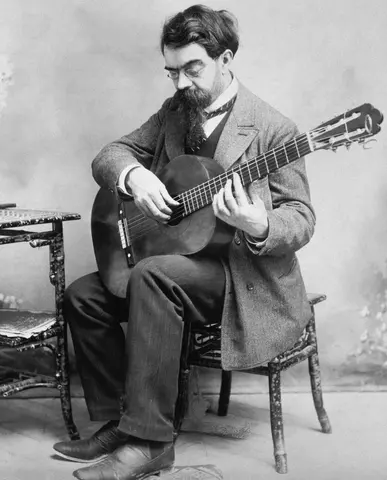
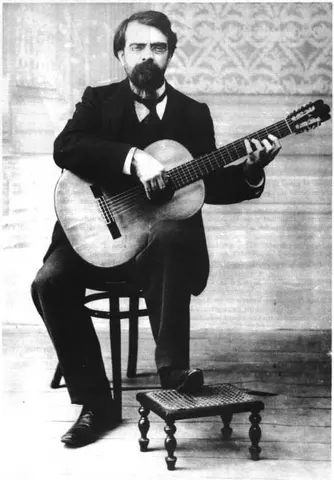
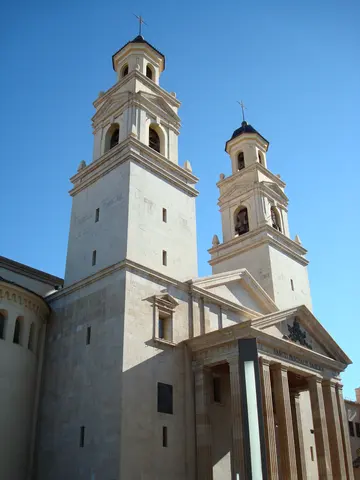
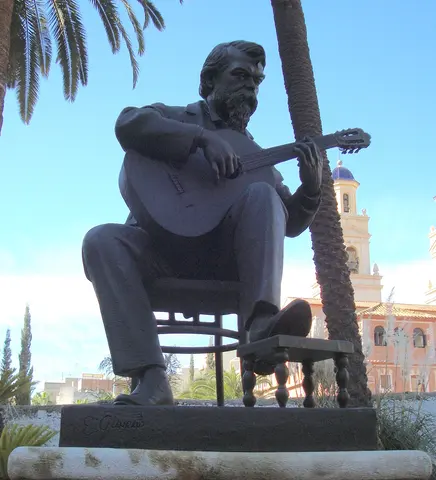
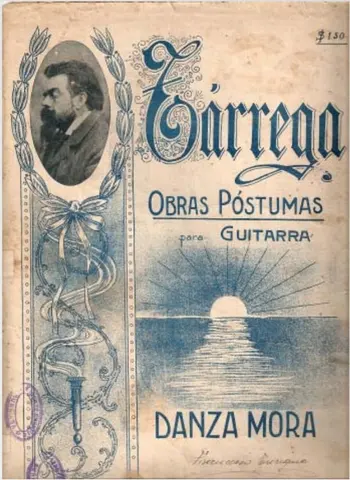
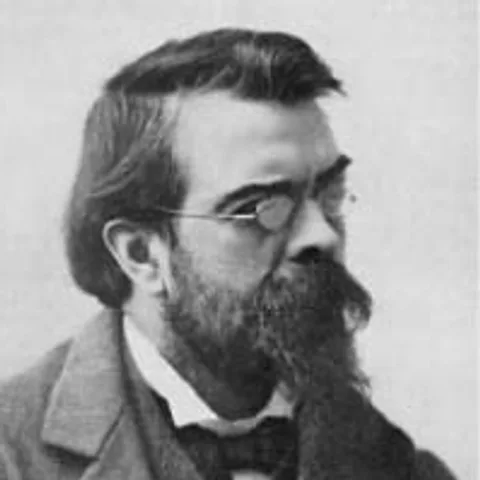
 肖像画・写真・自筆譜 Gallery (Public Domain)
Wikimedia Commons でパブリックドメイン(または CC0)と確認した画像です。クリックで拡大。
 年表 Timeline
 タレガで覚える英単語 Words
 クイズに挑戦 Quiz
MORE COMPOSERS



 MP3