ルスランとリュドミラ
Ruslan and Lyudmila
グリンカ・1837–1842
いきなり全速力!ロシア音楽の父が放つ、超特急の序曲。
歌劇「ルスランとリュドミラ」序曲のページへRomantic · 1804–1857
「ロシア音楽の父」The father of Russian music
 ノヴォスパスコエ(ロシア)
 ベルリン(ドイツ)1 曲を収録
ロシアの民謡とオペラを結びつけた、ロシア音楽の生みの親。He brought Russian folk song into opera and gave birth to Russian classical music.
 グリンカの名曲を聴く
グリンカ・1837–1842
いきなり全速力!ロシア音楽の父が放つ、超特急の序曲。
歌劇「ルスランとリュドミラ」序曲のページへ
ホー!グリンカの「愛国歌」は、1990年代にロシアの国歌として使われたんだよ。
 生涯 Life Story
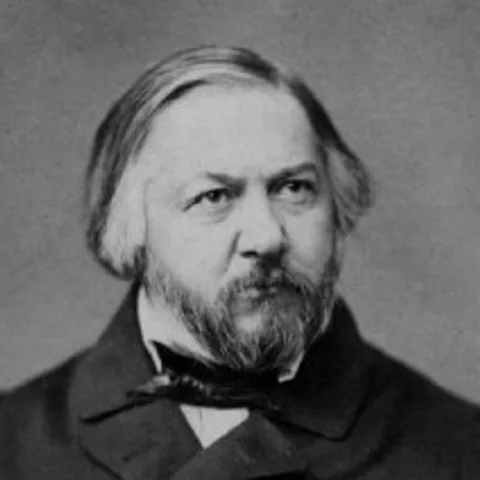
ミハイル・グリンカは1804年6月1日(今のこよみ)、ロシア西部スモレンスク地方の村ノヴォスパスコエで、地主の家に生まれました。小さいころは祖母に育てられ、寒さを心配した祖母は、とても暑い部屋で毛皮にくるんで育てたと、グリンカ自身が回想録に書いています。教会の鐘の音が大好きで、銅のたらいをたたいて鐘のまねをして遊んだそうです。Mikhail Glinka was born on 1 June 1804 (by the modern calendar) into a landowning family in the village of Novospasskoye, in the Smolensk region of western Russia. As a small child he was raised by his grandmother. In his memoirs Glinka wrote that, worried about the cold, she kept him in a very hot room wrapped in furs. He loved the sound of church bells and liked to imitate them by banging on copper basins.
サンクトペテルブルクの学校で学んだグリンカは、ピアノの名人ジョン・フィールドのレッスンも受けました。しばらく役所で働いたあと、1830年からイタリアに滞在し、ベッリーニやドニゼッティのオペラにふれます。その後ベルリンで作曲の理論を学び、「ロシアの人々の心にひびく、ロシアのオペラを作りたい」と強く思うようになりました。Glinka studied at a school in St Petersburg and also had a few lessons from the famous pianist John Field. After working for a while in a government ministry, he went to Italy in 1830, where he got to know the operas of Bellini and Donizetti. He then studied music theory in Berlin and became determined to write a truly Russian opera that would speak to the hearts of Russian people.
1836年、オペラ「皇帝に捧げた命」(のちに「イワン・スサーニン」とも呼ばれる)が初演され、大成功をおさめました。1842年には、詩人プーシキンの物語をもとにしたオペラ「ルスランとリュドミラ」を発表します。その序曲は、速くはなやかな名曲として今も大人気です。1845年からのスペイン旅行では、スペインの民謡をもとにした管弦楽曲も書きました。In 1836 his opera A Life for the Tsar, later also known as Ivan Susanin, was premiered with great success. In 1842 he presented Ruslan and Lyudmila, an opera based on a poem by Pushkin. Its fast and dazzling overture is still hugely popular. During his travels in Spain, which began in 1845, he also wrote orchestral pieces based on Spanish folk tunes.
1848年には、ロシア民謡を使った管弦楽曲「カマリンスカヤ」を書きました。晩年は体が弱く、各地を転々とし、1857年2月15日、旅先のベルリンで52歳で亡くなりました。なきがらは妹リュドミラの手でサンクトペテルブルクに移され、ほうむられています。グリンカの音楽は、チャイコフスキーやムソルグスキー、リムスキー=コルサコフたち、のちのロシアの作曲家の道しるべになりました。In 1848 he wrote Kamarinskaya, an orchestral piece based on Russian folk songs. In his last years his health was poor and he moved from place to place. He died in Berlin on 15 February 1857, aged 52. His sister Lyudmila had his body brought back to St Petersburg for burial. Glinka's music showed the way for later Russian composers such as Tchaikovsky, Mussorgsky and Rimsky-Korsakov.
Mikhail Glinka was born in Russia in 1804. As a boy, he loved the sound of church bells. He travelled to Italy and Germany. Then he wrote Russian operas. He used Russian folk songs in his music. People call him the father of Russian music.ミハイル・グリンカは1804年にロシアで生まれました。子どものころ、彼は教会の鐘の音が大好きでした。彼はイタリアとドイツへ旅しました。そして彼はロシアのオペラを書きました。彼は自分の音楽にロシアの民謡を使いました。人々は彼をロシア音楽の父と呼びます。
 これだけは!鉄板情報 Must-Know Facts
 あっと驚くネタ Surprising Stories
 タップすると答えが開きます
グリンカのピアノ曲をもとにした「愛国歌」は、ソビエト連邦がなくなるころの1990年から2000年まで、ロシアの国歌として使われました。ただし、正式な歌詞は最後まで決まらず、メロディだけの国歌でした。
The 'Patriotic Song', based on a piano piece by Glinka, was used as the national anthem of Russia from 1990 to 2000, around the end of the Soviet Union. However, no official words were ever adopted, so it was an anthem without lyrics.
グリンカは赤ちゃんのころ、母親から離されて祖母に育てられました。回想録によると、祖母は孫がかぜをひかないよう、とても暑くした部屋で毛皮にくるんで育てたそうです。グリンカはおとなになっても体が弱く、健康をとても気にする人でした。
As a baby, Glinka was taken from his mother and raised by his grandmother. According to his memoirs, she kept him wrapped in furs in a very hot room so that he would not catch cold. Even as an adult, Glinka had weak health and worried a great deal about it.
チャイコフスキーは日記の中で、ロシアの交響的な音楽はすべて「カマリンスカヤ」の中にある、ちょうど、かしの木がどんぐりの中にあるように、と書きました。小さな1曲から、ロシアの大きな音楽の木が育っていったというわけです。
In his diary, Tchaikovsky wrote that the whole Russian symphonic school is contained in Kamarinskaya, just as the whole oak tree is contained in the acorn. From one small piece, the great tree of Russian music grew.
グリンカがサンクトペテルブルクでレッスンを受けたジョン・フィールドは、アイルランド出身のピアニストで、ピアノの「ノクターン(夜想曲)」という曲の形を育てた人として知られています。のちにショパンがこの形を受けつぎました。グリンカがフィールドに習ったのは、わずか数回だったと言われています。
John Field, who gave Glinka lessons in St Petersburg, was an Irish pianist generally credited with developing the piano nocturne, a kind of piece that Chopin later made famous. Glinka is said to have had only a few lessons with him.
1845年から約2年間、グリンカはスペインを旅し、ギターの音楽や踊りに夢中になりました。その成果が「ホタ・アラゴネーサ(アラゴンのホタによる華麗な奇想曲)」などのスペイン序曲です。ロシアの作曲家がスペイン風の曲を書く伝統は、ここから始まりました。
From 1845 Glinka spent about two years travelling in Spain, where he fell in love with its guitar music and dances. The results were his Spanish overtures, including the Capriccio brillante on the Jota aragonesa. This started a tradition of Russian composers writing Spanish-style music.
1857年、グリンカは旅先のベルリンで亡くなり、いったんベルリンにほうむられました。けれども兄を深く敬っていた妹リュドミラ・シェスタコワが、なきがらをサンクトペテルブルクへ運び、改めてほうむりました。彼女はその後も、兄の楽譜を守り、若い作曲家たちを応援しました。
When Glinka died in Berlin in 1857, he was first buried there. But his devoted sister, Lyudmila Shestakova, had his body taken to St Petersburg and reburied. She went on to protect his scores and to support young Russian composers.
FAMOUS WORDS
“It is the people who create music; we composers only arrange it.”音楽をつくるのは民衆です。わたしたち作曲家は、それを編曲しているにすぎません。
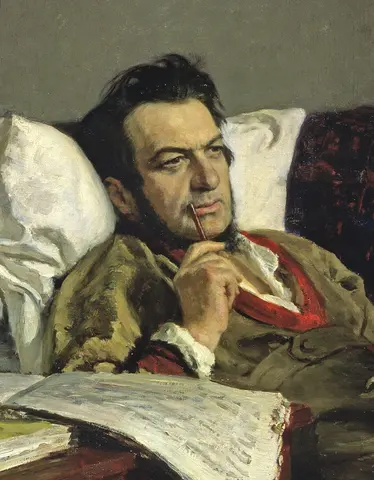
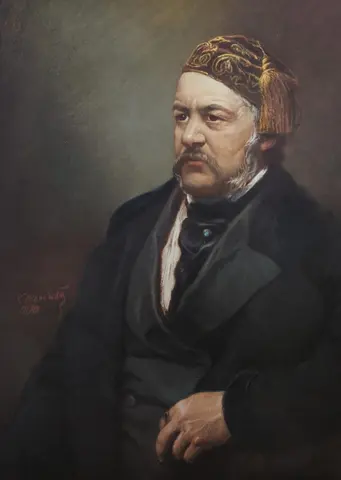
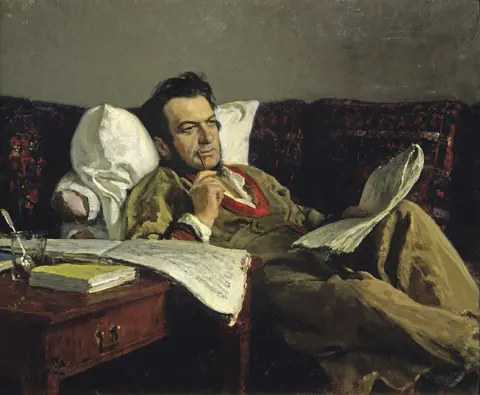
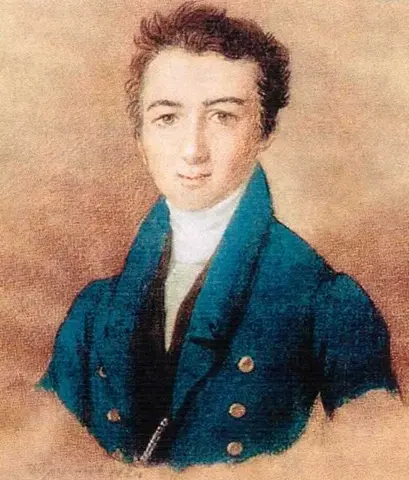
— Mikhail Glinka(作曲家・評論家セローフが書き残したグリンカの言葉) 肖像画・写真・自筆譜 Gallery (Public Domain)
Wikimedia Commons でパブリックドメイン(または CC0)と確認した画像です。クリックで拡大。
 年表 Timeline
 グリンカで覚える英単語 Words
 クイズに挑戦 Quiz
MORE COMPOSERS

 MP3