
パッヘルベルのジーグ
Pachelbel's Gigue
パッヘルベル・c. 1680–1706
あの「カノン」には、はずむ相棒がいた!知られざる後半戦。
カノンとジーグ ニ長調 より「ジーグ」のページへ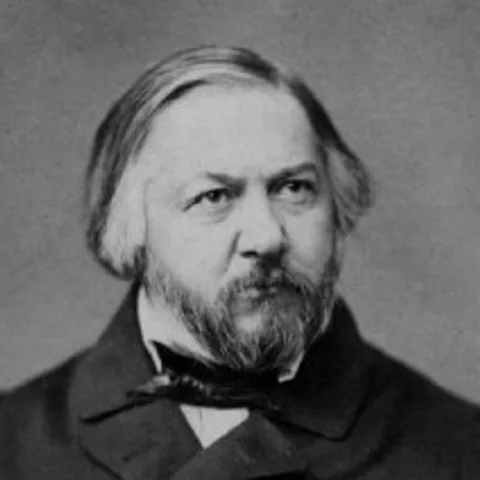
Orchestral · · 1837–1842
ミハイル・グリンカ(1804–1857)
いきなり全速力!ロシア音楽の父が放つ、超特急の序曲。Full speed from the first bar! A super-express overture.
WATCH ON YOUTUBE
この曲は、権利の切れた高音質の録音がまだ見つからないため、YouTube の公式チャンネルなどの名演でお楽しみください(ダウンロードはできません)。YouTube でほかの演奏もさがす ↗
 The Hallé - Glinka: Ruslan and Ludmila Overture
The Hallé(YouTube) YouTube で開く ↗
Glinka: Ruslan and Lyudmila: Overture
London Symphony Orchestra - Topic(YouTube) YouTube で開く ↗
Glinka: Ouvertüre zu »Ruslan und Ludmilla« ∙ hr-Sinfonieorchester ∙ Andrés Orozco-Estrada
hr-Sinfonieorchester – Frankfurt Radio Symphony(YouTube) YouTube で開く ↗
Russlan And Ludmilla (Overture) / Orchestra Of Mariinsky Theatre
sinfonicas(YouTube) YouTube で開く ↗

ホー!この序曲の終わりには、悪い魔法使いをあらわすふしぎな音階が出てくるよ。
 この曲のおはなし The Story
「ルスランとリュドミラ」序曲は、「ロシア音楽の父」と呼ばれるミハイル・グリンカのオペラの幕開けの曲です。オーケストラ全体の力強い和音のあと、弦楽器がものすごい速さで走り出し、最後まで息もつかせぬ勢いで駆けぬけます。オペラ全体よりもこの序曲のほうがずっと有名で、演奏会の1曲目としてよく取り上げられます。The overture to Ruslan and Lyudmila opens the opera by Mikhail Glinka, who is called the father of Russian music. After powerful chords from the whole orchestra, the strings start racing at amazing speed, and the music rushes on to the end without a moment's rest. The overture is far more famous than the opera itself, and it is often played as the opening piece of a concert.
オペラのもとになったのは、ロシアの国民的詩人プーシキンが1820年に発表した物語詩です。グリンカはプーシキン本人に台本を書いてもらうつもりでしたが、プーシキンは1837年に決闘で亡くなってしまいました。物語は、キーウ(キエフ)の大公の娘リュドミラが、結婚の宴の最中に悪い魔法使いチェルノモールにさらわれ、騎士ルスランが冒険の末に助け出すというものです。The opera is based on a story poem published in 1820 by Alexander Pushkin, Russia's national poet. Glinka hoped Pushkin himself would write the libretto, but Pushkin died in a duel in 1837. In the story, Lyudmila, daughter of the Grand Prince of Kyiv, is carried off by the evil sorcerer Chernomor in the middle of her wedding feast, and the knight Ruslan rescues her after a long adventure.
オペラは1842年にサンクトペテルブルクで初演されました。はじめはあまり評判がよくありませんでしたが、序曲はやがてロシアを代表する人気曲になります。序曲にはオペラの中の歌のメロディーも使われ、終わり近くには魔法使いチェルノモールをあらわす「全音音階」というふしぎな音階が低い金管楽器などにあらわれます。この新しい響きは、のちの作曲家たちにも受けつがれていきました。The opera was first performed in St. Petersburg in 1842. At first it was not very well received, but the overture later became one of Russia's most popular pieces. The overture uses melodies from songs in the opera, and near the end, a strange scale called the whole-tone scale, which stands for the sorcerer Chernomor, appears in the low brass and other instruments. This new sound was passed on to later composers.
This is the start of a Russian opera. It is very, very fast! In the story, a bad wizard takes a princess away. A brave knight saves her. Many orchestras play this music first at their concerts.これはロシアのオペラの始まりの曲です。とても、とても速いです!物語では、悪い魔法使いがお姫さまをさらいます。勇かんな騎士が彼女を助けます。多くのオーケストラが、演奏会の最初にこの曲を演奏します。
 聴きどころ Listening Guide
 えっ!?ネタ Surprising Facts
 タップすると答えが開きます
グリンカの最初のオペラ「皇帝にささげた命(イワン・スサーニン)」は、1836年11月27日(ロシアの旧暦)に初演されました。そして「ルスランとリュドミラ」の初演は、ちょうど6年後の1842年の同じ日。ロシア・オペラの歴史をつくった2つの作品は、同じ日付に生まれたのです。
Glinka's first opera, A Life for the Tsar (also called Ivan Susanin), was premiered on 27 November 1836 in the old Russian calendar. Ruslan and Lyudmila was premiered on the same date exactly six years later, in 1842. Two operas that shaped the history of Russian opera were born on the same day of the year.
序曲の終わり近くに、低い金管楽器などがズズズッと下がっていく、ふしぎな音階が出てきます。これは、となりの音どうしがすべて「全音」ずつはなれている「全音音階」。オペラでは魔法使いチェルノモールをあらわし、ロシアでは「チェルノモール音階」とも呼ばれます。のちにドビュッシーもこの音階を好んで使いました。
Near the end of the overture, a strange scale slides downward in the low brass and other instruments. It is the whole-tone scale, in which every note is a whole step away from the next. In the opera, it stands for the sorcerer Chernomor, and in Russia it is even called 'Chernomor's scale'. Later, Debussy also loved to use this scale.
グリンカは、原作者のプーシキン本人に台本を頼むつもりでした。ところがプーシキンは1837年、決闘で命を落としてしまいます。そのため台本は、シルコフをはじめ何人もの人が分担して書くことになりました。オペラの物語のつながりがやや分かりにくいと言われるのは、そのせいだとも考えられています。
Glinka planned to ask Pushkin, the author of the original poem, to write the libretto. But in 1837 Pushkin was killed in a duel. So the libretto had to be written by several people, including Valerian Shirkov. Some think this is why the opera's story is said to be a little hard to follow.
この序曲は「プレスト(とても速く)」で書かれていて、弦楽器にとってとてもむずかしい曲です。テンポは指揮者によってさまざまで、旧ソ連の名指揮者ムラヴィンスキーがレニングラード・フィルを率いた猛スピードの演奏は、伝説のように語られています。オーケストラの実力をはかる「ものさし」のような曲なのです。
This overture is marked Presto, meaning 'very fast', and it is very hard, especially for the string players. Conductors choose different tempos, and the lightning-fast performances by the Soviet conductor Yevgeny Mravinsky and the Leningrad Philharmonic have become legendary. The piece is like a measuring stick for an orchestra's skill.
ENGLISH × MASTERPIECE
 助走をつけてから走り出す「助走つきスタート」から。最初から絶好調という意味です。
 この曲で覚える英単語 Words
 クイズに挑戦 Quiz
 著作権について Credits
MORE MASTERPIECES
パッヘルベル・c. 1680–1706
あの「カノン」には、はずむ相棒がいた!知られざる後半戦。
カノンとジーグ ニ長調 より「ジーグ」のページへシャルパンティエ・c. 1688–1698
パンパカパーン!ヨーロッパのテレビの幕開けを飾ってきた、ごうかな前奏曲。
テ・デウム ニ長調のページへクラーク・c. 1700
結婚式の大定番。でも作曲者は長いあいだ取りちがえられていた!
トランペット・ヴォランタリー(デンマーク王子の行進)のページへ
バッハ・c. 1707–1710 (?)
キラキラの駆け上がりで幕開け!若きバッハのはなやかな鍵盤ショー。
トッカータ ニ長調のページへ
ヴィヴァルディ・published 1711
2本のヴァイオリンが火花を散らす!バッハも編曲した熱い協奏曲。
協奏曲集『調和の霊感』第8番 イ短調(2つのヴァイオリンのための協奏曲)のページへヴィヴァルディ・c. 1715
オクターブがぴょんぴょん跳ねる!喜びがはじける合唱の名曲。
グローリア ニ長調のページへ
テレマン・c. 1710–1720 (?)
バルブのないラッパで高音をきらり!バロックのトランペットの晴れ舞台。
トランペット協奏曲 ニ長調のページへ
ヘンデル・1717
テムズ川の船の上で国王のために!夏の夜の水上コンサート。
水上の音楽のページへ
 MP3