
ジムノペディ第1番
Gymnopédie No. 1
サティ・1888
ゆっくり、静かに、ただそこにある音楽。心やすらぐピアノの名曲。
ジムノペディ第1番のページへLate Romantic & Modern · 1866–1925
「音楽界の異端児」Music's great eccentric
 オンフルール(フランス)
 パリ(フランス)10 曲を収録
「ジムノペディ」の作曲者。ふしぎな題名とユーモアで、音楽の常識をひっくり返した人。The man behind the Gymnopédies, who turned musical rules upside down with odd titles and humour.
 サティの名曲を聴く
サティ・1888
ゆっくり、静かに、ただそこにある音楽。心やすらぐピアノの名曲。
ジムノペディ第1番のページへサティ・1888
3つの中のまん中っ子。いちばん知られていない、ひそやかなジムノペディ。
ジムノペディ第2番のページへサティ・1888
おごそかで、ひんやり。ドビュッシー版では「第1番」になった曲。
ジムノペディ第3番のページへサティ・1889
番号は5番、でも生まれは一番乗り!やさしく歌うグノシエンヌ。
グノシエンヌ第5番のページへサティ・1890頃
小節線がない!?ふしぎな指示がならぶ、なぞめいたピアノ曲。
グノシエンヌ第1番のページへサティ・1890頃
「頭を開いて」「音をうめて」!?なぞの指示がならぶ1曲。
グノシエンヌ第3番のページへサティ・1891
作曲から77年後に出版!波打つ伴奏にのる、夜のなぞめいた歌。
グノシエンヌ第4番のページへサティ・1893
「おどろいて」弾く!?「外に出ないで」と語りかける、ふしぎな曲。
グノシエンヌ第2番のページへサティ・1904
ロンドンの大通りの名前をもつ、ノリノリのラグタイム風マーチ。
ル・ピカデリーのページへサティ・1914(出版1923)
ゴルフ、テニス、タコ?21の超ミニ曲と絵で遊ぶ、ふしぎな画集。
スポーツと気晴らしのページへ
ホー!サティの『梨の形をした3つの小品』は、題名は3つなのに、じつは全7楽章なんだよ。
 生涯 Life Story
エリック・サティは1866年、フランス北部の港町オンフルールで生まれました。お母さんはスコットランド系のイギリス人です。6歳のときにお母さんを亡くし、しばらく祖父母に育てられました。1879年にパリ音楽院に入りますが、ピアノの先生から「音楽院でいちばんのなまけ者」と言われ、1882年には成績不振で退学になってしまいます。Erik Satie was born in 1866 in Honfleur, a port town in northern France. His mother was British, of Scottish descent. She died when he was six, and for a while he was raised by his grandparents. He entered the Paris Conservatoire in 1879, but his piano teacher called him 'the laziest student in the Conservatoire', and in 1882 he was dismissed for poor results.
若いサティは、パリのモンマルトルにあった芸術家の集まる店「黒猫(シャ・ノワール)」でピアノをひいて暮らしました。1888年に作曲した『ジムノペディ』は、ゆったりと静かな、それまでになかった音楽です。続く『グノシエンヌ』では、楽譜に小節線(拍の区切りの線)を書かないという大胆なことをしました。As a young man, Satie made a living playing piano at Le Chat Noir (The Black Cat), a cabaret in Montmartre where artists gathered. His Gymnopédies of 1888 were slow, calm pieces unlike anything heard before. In the Gnossiennes that followed, he boldly left out the bar lines that normally divide music into regular beats.
1893年には画家シュザンヌ・ヴァラドンと恋をしますが、5か月ほどで終わりました。これがサティの知られている唯一の恋と言われます。1898年からはパリ郊外アルクイユの小さな部屋に住み、だれも部屋に入れなかったと言われています。そして39歳で、再び学校(スコラ・カントルム)に入学し、作曲の基礎を学びなおします。今度はまじめな生徒でした。In 1893 he fell in love with the painter Suzanne Valadon, but the affair lasted only about five months. It is thought to be the only romance of his life. From 1898 he lived in a small room in Arcueil, outside Paris, where, it is said, he allowed no visitors. At 39 he went back to school, at the Schola Cantorum, to relearn the basics of composition. This time he was a much better student.
1917年のバレエ『パラード』は、コクトーが台本、ピカソが美術を担当し、大さわぎになりました。コクトーの強い希望で、音楽にはタイプライターやサイレンの音まで使われています。また、聞き流すための「家具の音楽」を考え出し、BGMや環境音楽の先がけとなりました。1925年、肝臓の病気のためパリの病院で亡くなります。その自由な考え方は、ジョン・ケージなど後の多くの音楽家に影響をあたえました。His 1917 ballet Parade, with a scenario by Jean Cocteau and designs by Picasso, caused an uproar. At Cocteau's insistence, the score included unusual effects such as a typewriter and sirens. He also invented 'furniture music', meant to be heard in the background rather than listened to closely, a forerunner of background and ambient music. He died of liver disease in a Paris hospital in 1925. His free-thinking ideas inspired many later musicians, including John Cage.
Erik Satie was a French composer. Some of his best-known music is quiet and simple. He gave his music very funny names. For several years, he wore the same kind of velvet suit. Many people today love his 'Gymnopédies.'エリック・サティはフランスの作曲家です。有名な曲には、静かでシンプルなものが多くあります。彼は自分の曲にとてもおかしな名前をつけました。何年ものあいだ、同じビロードのスーツばかり着ていました。今、多くの人が彼の『ジムノペディ』を愛しています。
 これだけは!鉄板情報 Must-Know Facts
 あっと驚くネタ Surprising Stories
 タップすると答えが開きます
1895年、サティはまったく同じ色・形のスーツを7着も買い、それを毎日のように着つづけて「ビロードの紳士」と呼ばれました。これなら毎朝なにを着るか迷わずにすみますね。
In 1895 Satie bought seven identical suits and wore them day after day, earning the nickname 'the Velvet Gentleman'. He never had to worry about what to wear in the morning!
『ヴェクサシオン』という短いピアノ曲の楽譜には、840回くり返すことを示すような書きこみがあります。1963年、作曲家ジョン・ケージらが実際に840回演奏したところ、18時間以上かかりました。
The score of Vexations, a short piano piece, contains a note suggesting it should be played 840 times. In 1963 the composer John Cage and a team of pianists actually did it. The performance took more than eighteen hours.
1893年から1895年ごろ、サティは自分で教会を作り、自分がそのただ一人の会員でした。神父のような服を着て、教会の名前で手紙や文章を発表していました。会員ひとりの教会なんて、まさにサティらしいユーモアです。
From about 1893 to 1895, Satie ran his own church, and he was its only member. He dressed like a priest and published letters and writings in the church's name. A church with just one member is pure Satie humour.
サティは冗談の文章の中で「わたしは白い食べ物しか食べない。卵、砂糖、くだいた骨…」などと書き、食事は4分で終えるとまで書いています。もちろん本当の話ではなく、読む人を笑わせるためのユーモアです。
In one of his joke writings, Satie claimed he ate only white food, such as eggs, sugar and grated bones, and finished dinner in four minutes. Of course it was not true; it was humour meant to make readers laugh.
サティの曲には『梨の形をした3つの小品』(実は全7楽章)、『ぶよぶよした前奏曲(犬のための)』、『官僚的なソナチネ』など、ふしぎな題名がたくさんあります。まじめな音楽界を、ユーモアでからかっていたのです。
Satie's works have wonderfully odd titles, such as Three Pieces in the Shape of a Pear (which actually contains seven movements), Flabby Preludes (for a Dog) and Bureaucratic Sonatina. He was poking fun at the serious music world.
サティはアルクイユの部屋に27年間だれも入れなかったと言われています。亡くなったあと友人たちが部屋に入ると、ほこりとがらくたの中から、なくなったと思われていた大事な作品の楽譜がいくつも見つかりました。
According to a well-known story, Satie let no one into his room in Arcueil for 27 years. When his friends finally went in after his death, they found the scores of several important works, long thought lost, buried among dust and clutter.
 肖像画・写真・自筆譜 Gallery (Public Domain)
Wikimedia Commons でパブリックドメイン(または CC0)と確認した画像です。クリックで拡大。
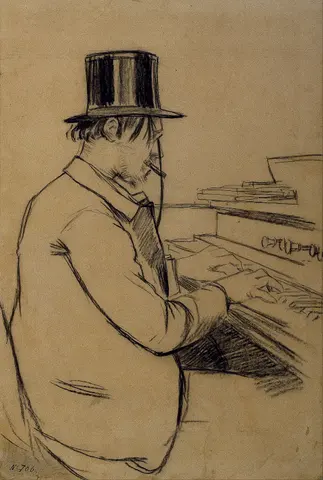
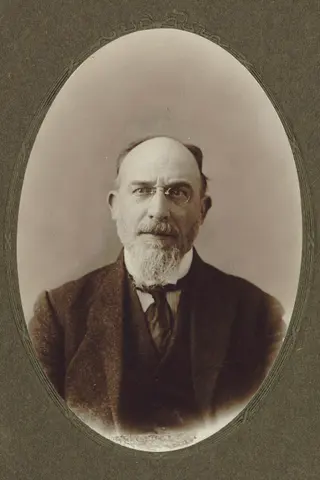
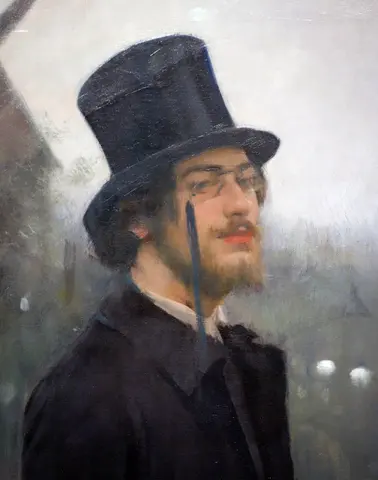
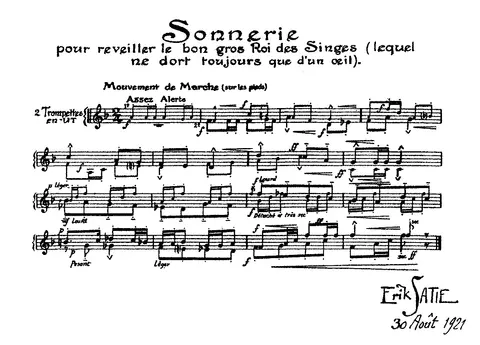
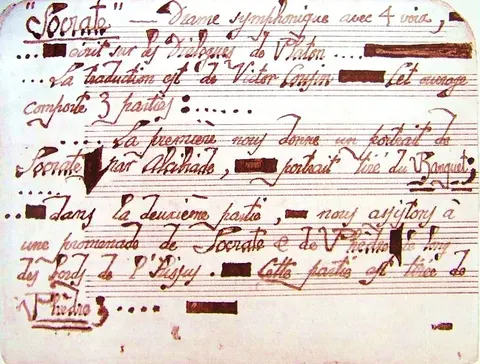
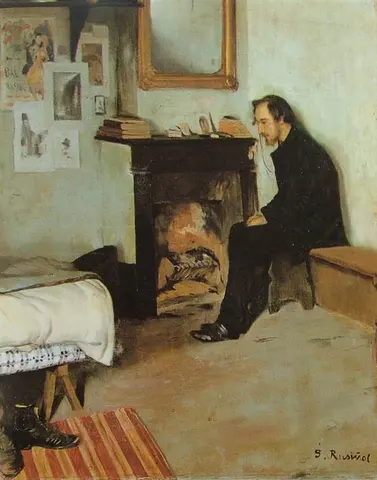
ページ上のイラストは、本物の肖像画をもとにこのサイトのために描いたものです。
 年表 Timeline
 サティで覚える英単語 Words
 クイズに挑戦 Quiz
MORE COMPOSERS







 MP3