小舟にて
En bateau
ドビュッシー・1888–1889
ゆらり、ゆらり。1台のピアノを2人で弾く、水の上のお散歩。
小組曲より「小舟にて」のページへLate Romantic & Modern · 1862–1918
「「印象派」と呼ばれた音の画家」The painter in sound they called an 'Impressionist'
 サン=ジェルマン=アン=レー(フランス)
 パリ(フランス)24 曲を収録
「月の光」の作曲者。音楽のルールをやぶり、光や水や風を音で描いた人。The composer of Clair de lune, who broke the rules to paint light, water and wind in sound.
 ドビュッシーの名曲を聴く
ドビュッシー・1888–1889
ゆらり、ゆらり。1台のピアノを2人で弾く、水の上のお散歩。
小組曲より「小舟にて」のページへドビュッシー・1890頃
作曲者は「つまらない」と言ったのに…世界中で愛される夢の曲。
夢(夢想)のページへドビュッシー・1890
若きドビュッシーの、くるくる回るおしゃれなサロン・ワルツ。
ロマンティックなワルツのページへドビュッシー・1891年以前(出版1891年)
くるくる流れる音のもよう。若きドビュッシーのきらめくピアノ曲。
2つのアラベスクより 第1番のページへドビュッシー・1890–1891
くすくす笑うようなトリル!第1番の「おてんばな妹」。
2つのアラベスクより 第2番のページへドビュッシー・1892–1893
生涯でたった1曲!4つの弦が光と影をえがく、ドビュッシーの青春作。
弦楽四重奏曲 ト短調のページへドビュッシー・1903
ピアノから東洋のガムランがひびく!ドビュッシーの音の旅。
版画より「塔」のページへドビュッシー・1903
ザーザーぶりの庭から、なつかしい童謡が聞こえてくる!
版画より「雨の庭」のページへドビュッシー・1890頃(出版1905)
夜空にそっと光る月。世界中で親しまれる「月」のピアノ曲。
ベルガマスク組曲より「月の光」のページへドビュッシー・1903–1905
夜明けの海、たわむれる波、風と海の対話。音でえがく海の一日。
「海」―管弦楽のための3つの交響的素描のページへドビュッシー・1901–1905
水面にゆれる光を、そのままピアノの音にとじこめた傑作。
映像第1集より「水の反映」のページへドビュッシー・1906–1908
はずむリズムでおどけて踊る!ジャズの先がけのような楽しい曲。
子供の領分より「ゴリウォーグのケークウォーク」のページへドビュッシー・1906–1908
指の練習はもうあきた!ピアノのおけいこをユーモアたっぷりに描く。
子供の領分より「グラドゥス・アド・パルナッスム博士」のページへドビュッシー・1906–1908
ぬいぐるみの象さん、おやすみなさい。のっしのっしの子守歌。
組曲「子どもの領分」より「ジンボーの子守歌」のページへドビュッシー・1906–1908
ひらひら、くるくる。窓の外で、雪がとまらずに踊っている。
組曲「子どもの領分」より「雪は踊っている」のページへドビュッシー・1909
しんしんと冷える雪の中、ぽつり、ぽつりと続く悲しい足あと。
前奏曲集第1巻より「雪の上の足跡」のページへドビュッシー・1909–1910
やわらかな光につつまれた少女の肖像。短くやさしい名曲。
前奏曲集第1巻より「亜麻色の髪の乙女」のページへドビュッシー・1909–1910
海の底から鐘が鳴る。伝説の大聖堂が、霧の中から浮かび上がる。
前奏曲集第1巻より「沈める寺」のページへドビュッシー・1910
ジャカジャン!ピアノがバンジョーと太鼓に変身する、おどけた1曲。
前奏曲集第1巻より「ミンストレル」のページへドビュッシー・1909–1910
帆か、ヴェールか?ゆらゆら正体不明の、ふしぎな音の風景。
前奏曲集第1巻より「帆」のページへドビュッシー・1910
いたずら妖精パックが、ピアノの上をぴょんぴょん飛び回る!
前奏曲集第1巻より「パックの踊り」のページへドビュッシー・1910
「おそいより、もっとおそい」!?とろけるように甘いワルツ。
レントより遅くのページへドビュッシー・1912–1913
パリの夜空にドーン!ピアノで打ち上げる、超絶技巧の花火大会。
前奏曲集第2巻より「花火」のページへドビュッシー・1913
フルート1本だけ!神話の森にひびく、牧神パンの最後の笛。
シランクス(無伴奏フルートのための)のページへ
ホー!ドビュッシーの管弦楽曲『海』の楽譜の表紙には、北斎の大波の絵が使われたんだ。
 生涯 Life Story
クロード・ドビュッシーは1862年、パリ近くの町サン=ジェルマン=アン=レーで生まれました。家は陶器のお店をしていましたが、うまくいかず、一家はパリへ移ります。ピアノの才能を見こまれ、10歳でパリ音楽院に入学しました。学生のころから、先生たちがおどろくような、決まりにとらわれない和音をひいていたと伝えられています。Claude Debussy was born in 1862 in Saint-Germain-en-Laye, a town near Paris. His parents ran a china shop, but it failed, and the family moved to Paris. His piano talent was spotted early, and he entered the Paris Conservatoire at ten. Even as a student, it is said, he shocked his teachers by playing chords that ignored the rules.
学生のころ、チャイコフスキーの支援者として知られるロシアのメック夫人に雇われ、夏のあいだピアニストとしてヨーロッパ各地を旅しました。1884年にはローマ大賞を受賞します。1889年のパリ万国博覧会では、インドネシアのジャワのガムラン音楽に出会い、西洋とはまったくちがう響きに大きな刺激を受けました。As a student he was hired by Nadezhda von Meck, the Russian patron of Tchaikovsky, and spent summers travelling around Europe as her family's pianist. In 1884 he won the Prix de Rome. At the 1889 Paris World Exhibition he heard Javanese gamelan music, and its sound, utterly unlike Western music, made a deep impression on him.
1894年の『牧神の午後への前奏曲』は、ゆらめくフルートで始まる新しい音楽で、「近代音楽の始まり」とも言われます。1902年にはオペラ『ペレアスとメリザンド』、1905年には、本人が「3つの交響的素描」と名づけた管弦楽曲『海』を発表しました。ピアノ曲「月の光」も世界中で愛されています。人々は彼の音楽を「印象派」と呼びましたが、本人はこの呼び名をきらっていました。His Prelude to the Afternoon of a Faun (1894), which opens with a drifting flute solo, is often called the start of modern music. The opera Pelléas et Mélisande followed in 1902 and the orchestral work La mer (The Sea) in 1905. His piano piece Clair de lune is loved all over the world. People called his music 'Impressionist', but Debussy himself disliked the label.
1905年にむすめのクロード=エマ(愛称シュシュ)が生まれ、彼女のためにピアノ曲集『子供の領分』を書きました。晩年はがんに苦しみながらも作曲を続け、第一次世界大戦中の1918年3月、パリで亡くなりました。ドビュッシーが切り開いた自由な響きは、ラヴェルやストラヴィンスキー、さらにはジャズや映画音楽にまで受けつがれています。In 1905 his daughter Claude-Emma, nicknamed Chouchou, was born, and he wrote the piano suite Children's Corner for her. In his last years he kept composing while suffering from cancer, and he died in Paris in March 1918, during the First World War. The free new sounds he discovered live on in Ravel and Stravinsky, and even in jazz and film music.
Claude Debussy was a French composer. He did not like old music rules. His music sounds like light, water, and wind. 'Clair de lune' means 'moonlight.' He wrote a piano book for his little daughter.クロード・ドビュッシーはフランスの作曲家です。古い音楽のルールが好きではありませんでした。彼の音楽は光や水や風のように聞こえます。「クレール・ド・リュヌ」は「月の光」という意味です。彼は小さなむすめのためにピアノ曲集を書きました。
 これだけは!鉄板情報 Must-Know Facts
 あっと驚くネタ Surprising Stories
 タップすると答えが開きます
ドビュッシーは日本の美術が大好きでした。1905年に出版された管弦楽曲『海』の楽譜の表紙には、葛飾北斎の「神奈川沖浪裏」の大波が使われています。日本の浮世絵とフランスの音楽が出会った一枚です。
Debussy loved Japanese art. The cover of the first edition of La mer, published in 1905, used the great wave from Katsushika Hokusai's famous print, The Great Wave off Kanagawa. It is a meeting of Japanese woodblock art and French music.
1889年のパリ万国博覧会で、ドビュッシーはジャワのガムラン音楽を聴いて強く心を動かされました。金属の打楽器がきらめくように重なる響きは、のちの彼のピアノ曲などにも影響をあたえたと考えられています。
At the 1889 Paris World Exhibition, Debussy was deeply moved by Javanese gamelan music. Its shimmering layers of metal percussion are thought to have influenced his later music, including his piano pieces.
ピアノのための『前奏曲集』では、ドビュッシーは曲名を楽譜の最初ではなく、各曲の最後にカッコ付きで書きました。名曲「亜麻色の髪の乙女」もその一つ。題名にとらわれず、まず音を聴いてほしかったのだと考えられています。
In his Preludes for piano, Debussy wrote each title not at the top of the music but at the end, in brackets. 'The Girl with the Flaxen Hair' is one of them. He probably wanted listeners to hear the music first, without being led by a title.
ドビュッシーは音楽評論も書き、そこに「ムッシュー・クロッシュ」という架空の人物を登場させました。「クロッシュ」はフランス語で八分音符のこと。皮肉たっぷりの、するどい評論を書きました。
Debussy also wrote music criticism, using an imaginary character called Monsieur Croche. 'Croche' is the French word for an eighth note. His reviews were witty and sharp-tongued.
18歳のころ、ドビュッシーはチャイコフスキーを支援していたメック夫人に雇われ、夏のあいだ家族のピアノの先生や伴奏者として、スイス、イタリア、ロシアなどを旅しました。
At around eighteen, Debussy was hired by Nadezhda von Meck, Tchaikovsky's patron, as a piano teacher and accompanist for her family. With them he spent summers travelling to Switzerland, Italy and Russia.
『子供の領分』の楽譜には「かわいいシュシュへ。このあとに続くものについて、父からのやさしいおわびをこめて」という献辞が書かれています。ユーモアたっぷりのお父さんでした。
Children's Corner is dedicated 'to my dear little Chouchou, with her father's tender apologies for what follows'. Debussy was a father with a great sense of humour.
FAMOUS WORDS
“There is no theory. You have only to listen. Pleasure is the law.”理論などない。ただ聴けばいい。喜びこそがルールだ。
— Claude Debussy(1889年ごろ、恩師ギローとの会話(モーリス・エマニュエルが書き残したもの)) 肖像画・写真・自筆譜 Gallery (Public Domain)
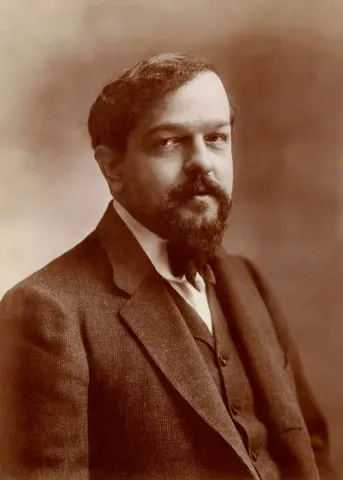
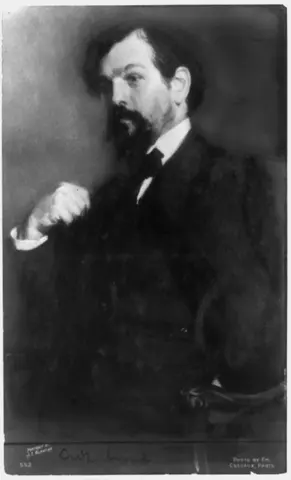
Wikimedia Commons でパブリックドメイン(または CC0)と確認した画像です。クリックで拡大。
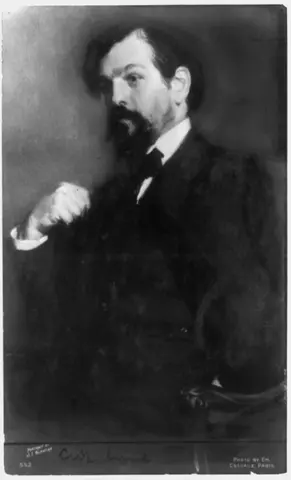
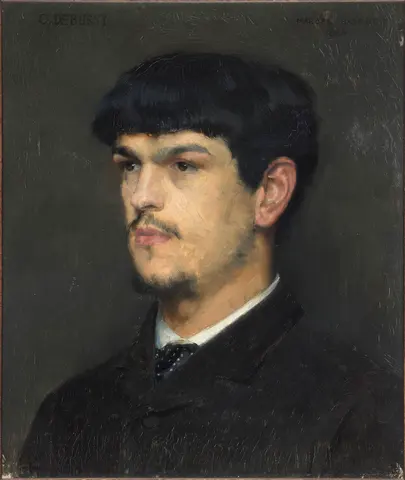
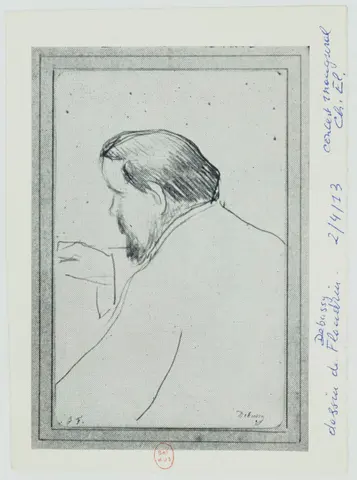
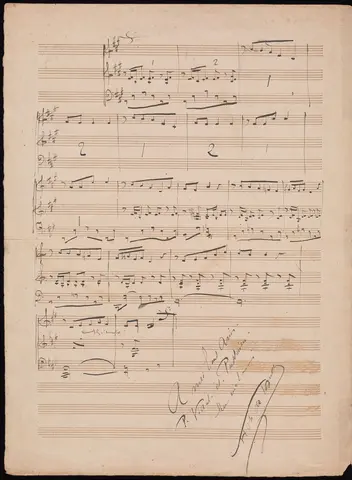
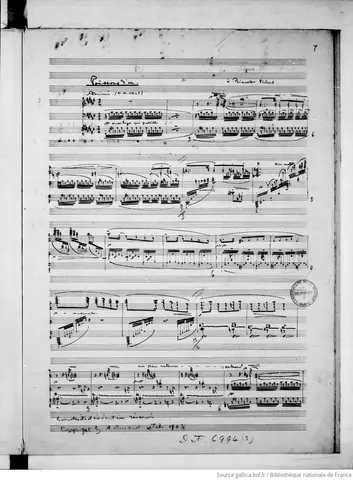
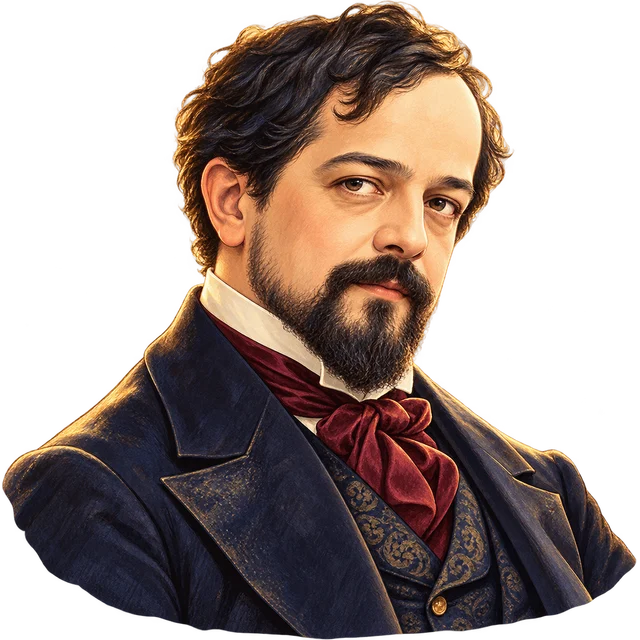
ページ上のイラストは、本物の肖像画をもとにこのサイトのために描いたものです。
 年表 Timeline
 ドビュッシーで覚える英単語 Words
 クイズに挑戦 Quiz
MORE COMPOSERS

 MP3