
カノン
Canon in D
パッヘルベル・c. 1680–1706
同じ8つの音が28回!なのに聴くたび胸がいっぱいになる曲。
カノンとジーグ ニ長調 より「カノン」のページへ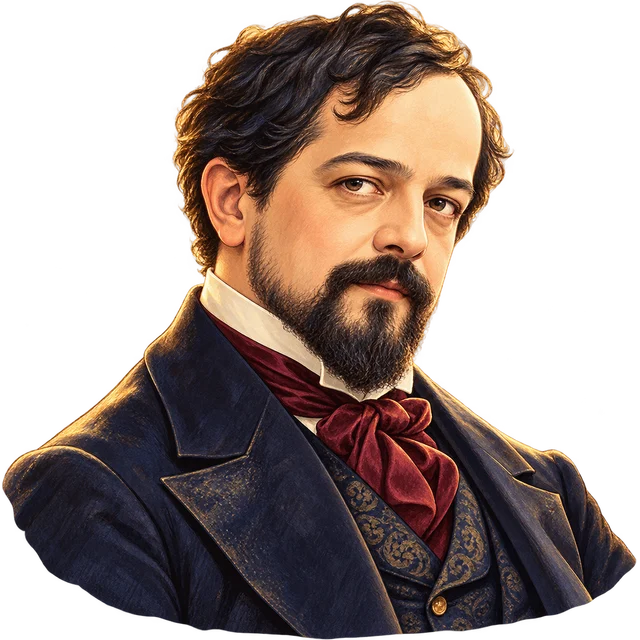
Piano · L. 100 · 1903
クロード・ドビュッシー(1862–1918)
ピアノから東洋のガムランがひびく!ドビュッシーの音の旅。A piano that rings like a gamelan: Debussy's journey to the East.
WATCH ON YOUTUBE
この曲は、権利の切れた高音質の録音がまだ見つからないため、YouTube の公式チャンネルなどの名演でお楽しみください(ダウンロードはできません)。YouTube でほかの演奏もさがす ↗
 Debussy: Estampes, CD 108: I. Pagodes
Daniel Barenboim - Topic(YouTube) YouTube で開く ↗
5 Minutes On... Debussy - Estampes 1. Pagodes | Daniel Barenboim [subtitulado]
Daniel Barenboim(YouTube) YouTube で開く ↗
Debussy Pagodes - Koto (LEO)
LEO(YouTube) YouTube で開く ↗

ホー!ドビュッシーは、エッフェル塔ができた年の万博でガムランを聴いたんだ。
 この曲のおはなし The Story
「塔」は、ドビュッシーが1903年に書いたピアノ曲集『版画』の1曲目です。題名の「パゴダ」とは、アジアの寺院にある何重にも屋根が重なった塔のこと。ピアノの黒い鍵盤の音を中心にした5つの音の音階(五音音階)を使い、鐘やどらが重なって鳴りひびくような、幾重にも重なるひびきをつくり出しています。Pagodas is the first piece in Estampes (Prints), a set of piano pieces Debussy wrote in 1903. A pagoda is a tall tower with many layers of roofs, found at temples in Asia. Using five-note pentatonic scales, much like the black keys of the piano, the music creates layers of sound, like bells and gongs ringing together.
ドビュッシーがこんな音を思いついたきっかけは、1889年のパリ万国博覧会です。エッフェル塔が建てられたこの万博で、彼はインドネシアのジャワ島の「ガムラン」という、たくさんの打楽器による合奏を聴いて、強い印象を受けました。この曲では、低い音がどらのようにひびき、高い音が金属の打楽器のように細かく重なっていきます。The idea came from the 1889 Paris World's Fair, the same fair for which the Eiffel Tower was built. There Debussy heard gamelan, an ensemble of many percussion instruments from the island of Java in Indonesia, and was deeply impressed. In this piece, low notes boom like gongs, while high notes layer on top like quickly struck metal percussion.
『版画』は1904年1月、スペイン出身のピアニスト、リカルド・ビニェスによってパリで初演されました。版画(エスタンプ)という題には、遠い国の景色を1枚の絵のように切りとる、という思いが感じられます。ドビュッシーは実際にはアジアを旅したことはありませんでした。音楽だけで東洋への旅を実現したのです。Estampes was first performed in Paris in January 1904 by the Spanish pianist Ricardo Viñes. The title, 'prints,' suggests capturing faraway places like pictures. Debussy never actually traveled to Asia. He made the journey through music alone.
A pagoda is a tall tower in Asia. This piano piece sounds like bells and gongs. Debussy heard music from Java at a big fair in Paris. He loved it very much. But he never went to Asia!パゴダは、アジアにある高い塔です。このピアノ曲は鐘やどらのように聞こえます。ドビュッシーはパリの大きな博覧会で、ジャワ島の音楽を聴きました。彼はそれが大好きになりました。でも、彼はアジアに行ったことがありませんでした!
 聴きどころ Listening Guide
 えっ!?ネタ Surprising Facts
 タップすると答えが開きます
1889年のパリ万博は、フランス革命100周年を記念したもので、エッフェル塔はこの万博のために建てられました。会場にはジャワ島の村が再現され、ガムランの演奏や踊りが披露されました。若いドビュッシーはそこで聴いた音にすっかり心をうばわれたと言われています。
The 1889 Paris World's Fair marked 100 years since the French Revolution, and the Eiffel Tower was built for it. A Javanese village was recreated there, with gamelan music and dancing. The young Debussy is said to have been completely captivated by what he heard.
ドビュッシーはのちに雑誌の記事で、ジャワの音楽のしくみをとても高く評価し、ヨーロッパの大作曲家パレストリーナの技法でさえ子どもの遊びに思えるほどだ、という意味のことを書きました。ヨーロッパの音楽がいちばん、と考える人が多かった時代に、ずいぶん大胆な意見でした。
Later, in a magazine article, Debussy praised Javanese music very highly. He wrote, in effect, that next to its counterpoint, even the techniques of the great European composer Palestrina seemed like child's play. At a time when many people thought European music was the best, that was a bold opinion.
ドビュッシーは楽譜に「ほとんど強弱の変化をつけずに」という意味の指示を書いています。ピアノの演奏では、ふつう音の強さを細かく変えて表情をつけます。でもこの曲では、ガムランのように一定のひびきを保つことで、東洋の音楽らしさを出そうとしたと考えられます。
Debussy marked the score 'almost without nuance,' meaning very little change in loudness. Pianists usually shape music by changing the volume all the time. Here, keeping the sound steady like a gamelan seems to be his way of capturing the feel of Eastern music.
この曲は五音音階でできていますが、じつは1種類だけではありません。いくつもの五音音階を切りかえて使い、色合いを少しずつ変えています。日本の「ヨナ抜き音階」も五音音階の仲間なので、日本人にはどこかなつかしく聞こえるかもしれません。
This piece is built on pentatonic scales, but not just one. Debussy switches between several of them, changing the color little by little. Japanese 'yonanuki' scales are also pentatonic, so the piece may sound a little familiar to Japanese ears.
ENGLISH × MASTERPIECE
 東と西の文化がまざり合うこと。料理やファッションの紹介でもよく見かける言い方です。
 この曲で覚える英単語 Words
 クイズに挑戦 Quiz
 著作権について Credits
MORE MASTERPIECES
パッヘルベル・c. 1680–1706
同じ8つの音が28回!なのに聴くたび胸がいっぱいになる曲。
カノンとジーグ ニ長調 より「カノン」のページへ
パーセル・1695
ブリテンが「オーケストラ入門」のテーマに選んだ、かっこいいメロディー。
劇音楽「アブデラザール」より ロンドのページへ
バッハ・c. 1703–1707 (?)
音楽の授業でおなじみ!4つの声が同じテーマで追いかけっこ。
小フーガ ト短調のページへバッハ・c. 1706–1713
足が弾く低いテーマが21回!重くて壮大な、オルガンの大建築。
パッサカリアとフーガ ハ短調のページへバッハ・c. 1707–1710 (?)
キラキラの駆け上がりで幕開け!若きバッハのはなやかな鍵盤ショー。
トッカータ ニ長調のページへ
ヴィヴァルディ・published 1711
2本のヴァイオリンが火花を散らす!バッハも編曲した熱い協奏曲。
協奏曲集『調和の霊感』第8番 イ短調(2つのヴァイオリンのための協奏曲)のページへバッハ・1713
2本のリコーダーがやさしく鳴る、のどかな牧場の歌。
カンタータ第208番より「羊は安らかに草を食み」のページへ
コレッリ・published 1714
聖なる夜のために。最後に羊飼いの笛のようなパストラーレが流れます。
合奏協奏曲 ト短調「クリスマス協奏曲」のページへ
 MP3