剣闘士の入場
Entrance of the Gladiators
フチーク・1897
聴けばピエロが浮かぶ!サーカスでおなじみの行進曲。
剣闘士の入場のページへLate Romantic & Modern · 1872–1916
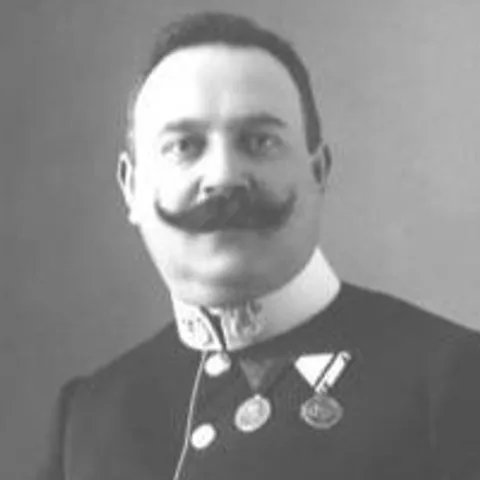
「ボヘミアのスーザ」The Bohemian Sousa
 プラハ(チェコ)
 ベルリン(ドイツ)2 曲を収録
サーカスでおなじみのあの行進曲は、軍楽隊長の作品でした。That famous circus tune was written by an army bandmaster.
 フチークの名曲を聴く
フチーク・1897
聴けばピエロが浮かぶ!サーカスでおなじみの行進曲。
剣闘士の入場のページへフチーク・1907(出版1908)
イタリアの花の都へ!ピッコロがさえずる、はなやかなマーチ。
フローレンティナー行進曲のページへ
ホー!フチークはドヴォルザークに作曲を習った、ファゴット吹きだったんだ。
 生涯 Life Story
ユリウス・フチークは1872年、今のチェコの首都プラハに生まれました。当時この地方はオーストリア=ハンガリー帝国の一部でした。プラハで、ファゴットとヴァイオリンを専門の先生に習い、打楽器もいろいろ身につけました。作曲は、「新世界より」で知られるあのドヴォルザークに教わっています。Julius Fučík was born in 1872 in Prague, now the capital of the Czech Republic but then part of the Austro-Hungarian Empire. In Prague he studied the bassoon and the violin with expert teachers, and he also learned to play many percussion instruments. For composition his teacher was none other than Antonín Dvořák, the composer of the 'New World' Symphony.
1891年、フチークは軍楽隊の音楽家として陸軍に入り、行進曲の名人ヨーゼフ・フランツ・ワーグナーのもとで演奏しました。いったん軍を離れてプラハの劇場でファゴットを吹いたあと、1897年に再び入隊し、サラエヴォの歩兵連隊の軍楽隊長になります。この年に書かれたのが、のちに世界中で知られる「剣闘士の入場」です。In 1891 Fučík joined the army as a military musician and played under Josef Franz Wagner, a famous writer of marches. He then left for a few years to play bassoon at a theatre in Prague. In 1897 he rejoined the army as bandmaster of an infantry regiment in Sarajevo. That same year he wrote 'Entrance of the Gladiators', the march that would later become known all over the world.
1900年に軍楽隊ごとブダペストへ移ると、ライバルの楽隊が多い中で腕をみがき、オーケストラ曲を吹奏楽用に編曲する仕事も増やしました。1907年にはブダペストで「フローレンティナー行進曲」を作曲します。1910年にはボヘミアのテレジーンの連隊の楽隊長になり、その楽隊は帝国でも指折りの名楽団として、プラハやベルリンで演奏旅行をしました。In 1900 his band moved to Budapest, where there was strong competition from other regimental bands. Fučík sharpened his skills and began arranging orchestral works for wind band. In Budapest in 1907 he wrote the 'Florentine March'. In 1910 he became bandmaster of a regiment in Terezín, in Bohemia. His band there was one of the finest in the empire and went on concert tours to Prague and Berlin.
1913年、フチークはベルリンに移り、自分の楽団を作りました。のちに作品を出すための楽譜出版社も始めます。ところが第一次世界大戦の苦しい時代に仕事はうまくいかず、体もこわしてしまいます。1916年、44歳の若さでベルリンで亡くなり、プラハの墓地にほうむられました。行進曲・ポルカ・ワルツなどをふくむ400曲以上の作品を残し、チェコでは今も愛国的な曲として演奏されています。In 1913 Fučík settled in Berlin and founded his own orchestra. Later he also set up a small company to publish his music. But the hard years of the First World War ruined the business, and his health declined. He died in Berlin in 1916, only 44 years old, and was buried in Prague. He left more than 400 works, including marches, polkas and waltzes, and in the Czech Republic his marches are still played as patriotic music.
Julius Fučík was born in Prague in 1872. He played the bassoon. He was the leader of an army band. He wrote more than 400 pieces, including many marches and dances. One of his marches is famous circus music. You hear it when clowns come out!ユリウス・フチークは1872年にプラハで生まれました。彼はファゴットを演奏しました。彼は軍楽隊のリーダーでした。行進曲や踊りの曲など、400曲以上を書きました。彼の行進曲のひとつは有名なサーカスの音楽です。ピエロが出てくるときに聞こえますよ!
 これだけは!鉄板情報 Must-Know Facts
 あっと驚くネタ Surprising Stories
 タップすると答えが開きます
「剣闘士の入場」は、はじめ「半音階大行進曲」という題名でした。半音ずつ上がり下がりするメロディーを使っているからです。のちに、古代ローマの歴史が好きだったフチークが、剣闘士の題名に変えました。
'Entrance of the Gladiators' was first called 'Grande Marche Chromatique', because it uses chromatic scales that move up and down in half steps. Fučík, who loved ancient Roman history, later renamed it after the gladiators.
1901年、アメリカの楽譜出版社カール・フィッシャーが、カナダの音楽家ローランドーによるアメリカの吹奏楽向けの編曲を、「雷と炎(Thunder and Blazes)」という題で出版しました。これがアメリカのサーカスで大人気になり、「ピエロの曲」のイメージが定着したのです。
In 1901 the American publisher Carl Fischer brought out an arrangement for American bands by the Canadian musician Louis-Philippe Laurendeau, titled 'Thunder and Blazes'. This version became a favourite in American circuses, and the tune has been linked with clowns ever since.
ファゴット奏者だったフチークは、1907年に「老いたる熊(老いた不平屋)」というファゴットのための難しいポルカを書きました。低い音でおじいさんがぶつぶつ言っているような、ユーモアたっぷりの名人芸の曲です。
As a bassoonist himself, Fučík wrote 'The Old Grumbler' (1907), a tricky virtuoso polka for bassoon. Its low, chuckling phrases sound like a grumpy old man muttering to himself.
作品のほとんどが軍楽隊(吹奏楽)のための曲だったので、アメリカの「マーチ王」スーザにたとえて「ボヘミアのスーザ」と呼ばれました。テレジーン時代の楽隊の演奏会には1万人以上が集まったこともあったと伝えられています。
Because most of his works were for military band, he was compared to America's 'March King', John Philip Sousa, and called 'the Bohemian Sousa'. Concerts by his band in the Terezín years are said to have drawn audiences of over 10,000.
 年表 Timeline
 フチークで覚える英単語 Words
 クイズに挑戦 Quiz
MORE COMPOSERS

 MP3