ピアノ・ソナタ第20番
Sonata No. 20
ベートーヴェン・c. 1795–1796
何世代ものピアノ学習者に親しまれてきた、かわいい2楽章のソナタ。
ピアノ・ソナタ第20番 ト長調のページへClassical · 1770–1827
「楽聖」The titan who bridged two eras
 ボン(ドイツ)
 ウィーン(オーストリア)38 曲を収録
耳が聞こえなくなっても、作曲をやめなかった音楽の巨人。He lost his hearing, but never stopped writing music.
 ベートーヴェンの名曲を聴く
ベートーヴェン・c. 1795–1796
何世代ものピアノ学習者に親しまれてきた、かわいい2楽章のソナタ。
ピアノ・ソナタ第20番 ト長調のページへベートーヴェン・c. 1798 (published 1805)
ヴァイオリンがうっとり歌う、ベートーヴェンの甘いメロディー。
ロマンス第2番 ヘ長調のページへベートーヴェン・1798–1799
重い和音の嵐と、心にしみる歌。20代のベートーヴェンの出世作。
ピアノ・ソナタ第8番 ハ短調「悲愴」のページへベートーヴェン・1799–1800
いきなり「ちがう調」から始まる!?29歳ベートーヴェンの挑戦状。
交響曲第1番 ハ長調のページへベートーヴェン・1795 (revised 1800)
第1番なのに2番目の協奏曲!?若きピアニストの華麗な名刺。
ピアノ協奏曲第1番 ハ長調のページへベートーヴェン・1799–1800
7つの楽器でワイワイ楽しい!ベートーヴェン生前の大ヒット曲。
七重奏曲 変ホ長調のページへベートーヴェン・1800
明るい曲に突然しのびよる「メランコリー」。気分のジェットコースター。
弦楽四重奏曲第6番 変ロ長調のページへベートーヴェン・1801
静かな月の光か、それとも嵐か。2つの顔を持つソナタ。
ピアノ・ソナタ第14番 嬰ハ短調「月光」のページへベートーヴェン・1801
のどかな低音にのって、心がいなかへ散歩に出るソナタ。
ピアノ・ソナタ第15番 ニ長調「田園」のページへベートーヴェン・1802
「シェイクスピアを読め」?なぞの言葉で名づけられた嵐のソナタ。
ピアノ・ソナタ第17番 ニ短調「テンペスト」のページへベートーヴェン・1801–1802
絶望のどん底で書いたのに、こんなに明るい!ふしぎな交響曲。
交響曲第2番 ニ長調のページへベートーヴェン・by 1802 (published 1803)
「ちょっとしたもの」なんてとんでもない!宝石みたいな小品集。
7つのバガテルのページへベートーヴェン・c. 1800–1803
初演の楽譜はほぼ白紙!?ハ短調で燃える協奏曲。
ピアノ協奏曲第3番 ハ短調のページへベートーヴェン・1802–1803
ピアノとヴァイオリンが真っ向勝負!協奏曲みたいな大迫力ソナタ。
ヴァイオリン・ソナタ第9番 イ長調「クロイツェル」のページへベートーヴェン・1803–1804
ナポレオンにささげるはずだった、長くて革命的な交響曲。
交響曲第3番 変ホ長調「英雄」のページへベートーヴェン・1803–1804
恩人にささげた、夜明けのように輝くピアノ・ソナタ。
ピアノ・ソナタ第21番 ハ長調「ワルトシュタイン」のページへベートーヴェン・1804–1805
ささやきから荒れくるう嵐へ。ベートーヴェン屈指のはげしいソナタ。
ピアノ・ソナタ第23番 ヘ短調「熱情」のページへベートーヴェン・1806
トン・トン・トン・トン。ティンパニから始まる気品の名曲。
ヴァイオリン協奏曲 ニ長調のページへベートーヴェン・1806
「英雄」と「運命」にはさまれた、ひそかに輝く名曲。
交響曲第4番 変ロ長調のページへベートーヴェン・1805–1806
ピアノのひとりごとから始まる、やさしく新しい協奏曲。
ピアノ協奏曲第4番 ト長調のページへベートーヴェン・1806
遠くから響くトランペットに鳥肌!オペラを丸ごと閉じこめた序曲。
レオノーレ序曲第3番のページへベートーヴェン・1807
怒りと愛のあいだでゆれる英雄の心を、短い序曲で描く。
『コリオラン』序曲のページへベートーヴェン・1804–1808
ジャジャジャジャーン!だれもが知る4つの音で始まる交響曲。
交響曲第5番 ハ短調「運命」のページへベートーヴェン・1807–1808
小川のせせらぎ、鳥の声、そして雷雨。いなかの一日を音で。
交響曲第6番 ヘ長調「田園」のページへベートーヴェン・1809
いきなりピアノが主役!堂々とした協奏曲の王さま。
ピアノ協奏曲第5番 変ホ長調「皇帝」のページへベートーヴェン・1810
ピアノを習う人のあこがれ。でも「エリーゼ」ってだれ?
エリーゼのために(バガテル イ短調)のページへベートーヴェン・1809–1810
自由のために立ち上がった英雄の物語。最後は勝利の大歓声!
『エグモント』序曲のページへベートーヴェン・1809–1810
「さようなら」「留守」「再会」。友との別れを3つの楽章で描くソナタ。
ピアノ・ソナタ第26番 変ホ長調「告別」のページへベートーヴェン・1811
遠くから近づき、また去っていく。にぎやかなトルコ風の軍楽隊。
トルコ行進曲(劇付随音楽『アテネの廃墟』より)のページへベートーヴェン・1811
王子さまにささげた、ピアノ三重奏曲を代表する気品あふれる名作。
ピアノ三重奏曲第7番 変ロ長調「大公」のページへベートーヴェン・1811–1812
ワーグナーいわく「舞踏の神格化」。リズムがおどる交響曲。
交響曲第7番 イ長調のページへベートーヴェン・1812
「小さな交響曲」なのに、弟子によれば本人は「こっちのほうがずっといい」!
交響曲第8番 ヘ長調のページへベートーヴェン・1814
4つめの序曲でついに決定版!ベートーヴェン唯一のオペラの幕開け。
歌劇『フィデリオ』序曲のページへベートーヴェン・1820
最後は変奏曲で歌いあげる、晩年ベートーヴェンの心の歌。
ピアノ・ソナタ第30番 ホ長調のページへベートーヴェン・1821–1822
なげきの歌からフーガで立ち上がる、心の復活のソナタ。
ピアノ・ソナタ第31番 変イ長調のページへベートーヴェン・1821–1822
嵐と祈りの2楽章だけ。ベートーヴェン最後のピアノ・ソナタ。
ピアノ・ソナタ第32番 ハ短調のページへベートーヴェン・1822–1824
最後に合唱が加わる、すべての人への「歓喜の歌」。
交響曲第9番 ニ短調「合唱付き」のページへベートーヴェン・c. 1795–1798 (published 1828)
なくした小銭にカンカン!?ドタバタ大さわぎのピアノ曲。
失われた小銭への怒り(ロンド・ア・カプリッチョ ト長調)のページへ
ホー!ベートーヴェンは引っこしを数十回もしたと言われているよ。
 生涯 Life Story
ベートーヴェンは1770年12月、ドイツのボンで生まれました。祖父も父も宮廷の歌手です。父ヨハンは息子を「第2のモーツァルト」にしようと、きびしく練習させました。1778年の初めての演奏会では、実際より若く見せるため、年を1つ若く宣伝したほどです。少年ベートーヴェンは先生ネーフェに学び、10代で宮廷のオルガン奏者として家計を支えました。Beethoven was born in Bonn, Germany, in December 1770. His grandfather and father were both singers at the court. His father, Johann, wanted to make him a second Mozart and forced him to practice hard. At his first public concert in 1778, his age was even advertised as younger than it really was. The boy studied with his teacher Neefe and, as a teenager, helped support his family by working as a court organist.
1792年、21歳のベートーヴェンは音楽の都ウィーンへ移り、ハイドンに学びます。まずは、即興演奏がすごいピアニストとして貴族たちの人気者になりました。やがて作曲家としても次々と傑作を発表します。「悲愴」「月光」などのピアノ・ソナタ、交響曲第3番「英雄」、第5番「運命」、第6番「田園」は、どれも新しい時代の音楽でした。In 1792, at the age of 21, Beethoven moved to Vienna, the capital of music, and studied with Haydn. At first he became a favorite of the nobles as a pianist with amazing improvising skills. Soon he also produced one masterpiece after another as a composer. His Pathétique and Moonlight sonatas and his Third, Fifth, and Sixth symphonies all sounded like the music of a new age.
ところが20代の後半から、音楽家にとって大切な耳が少しずつ聞こえにくくなります。1802年、絶望したベートーヴェンは「ハイリゲンシュタットの遺書」と呼ばれる手紙を書きますが、それでも芸術のために生きぬくと決意しました。恋もしましたが、結婚はしていません。死後に見つかった「不滅の恋人」への手紙の相手は、今もはっきりしていません。But from his late twenties, Beethoven slowly began to lose his hearing, the sense a musician needs most. In 1802, in despair, he wrote a letter now called the Heiligenstadt Testament, but he decided to keep living for the sake of his art. He fell in love more than once but never married. After his death, a love letter to his "Immortal Beloved" was found, and no one knows for sure who she was.
晩年にはほとんど耳が聞こえなくなり、人との会話は「会話帳」に書いてもらって行いました。それでも1824年、合唱つきの交響曲第9番を完成させ、初演は大成功します。1827年3月、ウィーンで56歳で亡くなりました。葬儀には1万人以上が集まったと言われます。「歓喜の歌」は今、ヨーロッパ連合(EU)の歌にもなっています。In his last years he was almost completely deaf, and people talked to him by writing in conversation books. Even so, in 1824 he finished his Ninth Symphony, with a chorus, and its premiere was a great success. He died in Vienna in March 1827, at the age of 56. More than 10,000 people are said to have come to his funeral. Today his "Ode to Joy" is the anthem of the European Union.
Beethoven was born in Germany in 1770. He moved to Vienna as a young man. Slowly, he lost his hearing. But he did not stop writing music. He wrote nine symphonies. The Ninth has the famous Ode to Joy.ベートーヴェンは1770年にドイツで生まれました。若いときにウィーンへ移りました。少しずつ、耳が聞こえなくなりました。それでも作曲をやめませんでした。交響曲を9曲書きました。第9番には有名な「歓喜の歌」があります。
 これだけは!鉄板情報 Must-Know Facts
 あっと驚くネタ Surprising Stories
 タップすると答えが開きます
ベートーヴェンはコーヒーが大好きで、1杯につき豆を60粒、きっちり数えてからいれた、という話が有名です。ただしこれは、秘書だったシンドラーが伝えた話。シンドラーは話を大げさにしたり作ったりしたことでも知られているので、本当かどうかはわかりません。
There is a famous story that Beethoven loved coffee and counted exactly 60 beans for each cup. But it comes from his secretary, Anton Schindler, who is known for exaggerating or even inventing stories. So no one knows if it is true.
交響曲第3番は、はじめナポレオンをたたえる気持ちで書かれました。ところがナポレオンが皇帝になったと聞いたベートーヴェンは激怒。弟子リースによると、表紙を破り捨てたそうです。残っている楽譜の写しにも、名前を消した跡があり、紙に穴があいています。
Beethoven first wrote his Third Symphony to honor Napoleon. But when he heard Napoleon had made himself emperor, he was furious. According to his pupil Ferdinand Ries, he tore up the title page. On a surviving copy of the score, Napoleon's name was scratched out so hard that the paper has a hole.
ベートーヴェンが亡くなったあと、机の引き出しから「不滅の恋人へ」と書かれた熱いラブレターが見つかりました。1812年に書かれたものとわかっていますが、相手の名前はありません。何人もの女性が候補にあがり、200年近くたった今もナゾのままです。
After Beethoven died, a passionate love letter addressed to his "Immortal Beloved" was found in his desk. It is known to date from 1812, but it does not name the woman. Several candidates have been suggested, and after about 200 years it is still a mystery.
1824年、交響曲第9番の初演で、ベートーヴェンは舞台に立って指揮者を手伝いました。曲が終わっても、耳の聞こえない彼は客席の大喝采に気づきません。そこで歌手の一人が彼をそっと客席の方へ向かせた、と伝えられています。
At the premiere of the Ninth Symphony in 1824, Beethoven stood on stage to help the conductor. When the music ended, he could not hear the huge applause. It is said that one of the singers gently turned him around to face the cheering audience.
2023年、イギリスなどの研究チームが、ベートーヴェンの髪の毛のDNAを調べた結果を発表しました。肝臓の病気になりやすい体質や、B型肝炎ウイルスへの感染がわかりました。また、有名だった髪の束の一つは、別人のものだったことも判明しています。
In 2023, an international research team led from Britain published a study of DNA from Beethoven's hair. It showed he had a high genetic risk of liver disease and had been infected with hepatitis B. It also showed that one famous lock of "Beethoven's hair" actually came from someone else.
ピアノ曲「エリーゼのために」は、ベートーヴェンが亡くなって40年ほどたった1867年に、初めて出版されました。元の手書きの楽譜は今は行方不明です。「エリーゼ」がだれなのかは、テレーゼという女性の名前の読みまちがいという説など、いくつもの説があります。
The piano piece Für Elise was first published in 1867, about 40 years after Beethoven's death. The original manuscript is now lost. No one knows who "Elise" was. One theory says the name was a misreading of "Therese," but there are several other ideas.
FAMOUS WORDS
“I will seize Fate by the throat; it shall certainly not bend and crush me completely.”運命ののどもとをつかんでやる。運命に完全に打ちのめされたりなど、決してしない。
— Ludwig van Beethoven(1801年、友人ヴェーゲラーへの手紙) 肖像画・写真・自筆譜 Gallery (Public Domain)
Wikimedia Commons でパブリックドメイン(または CC0)と確認した画像です。クリックで拡大。
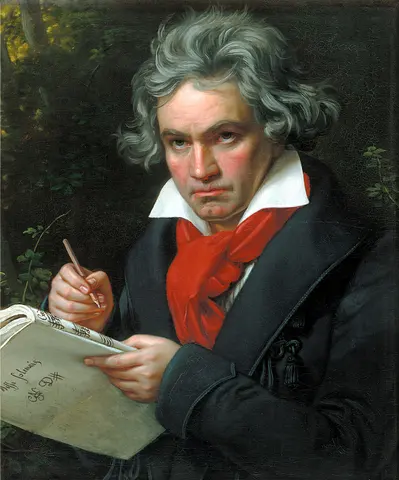
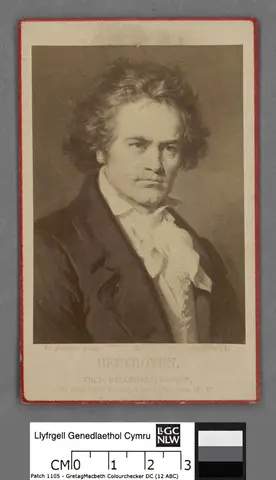
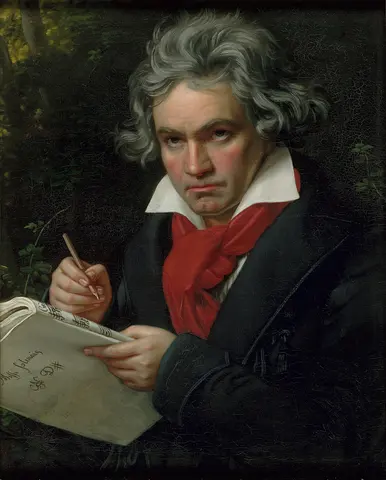
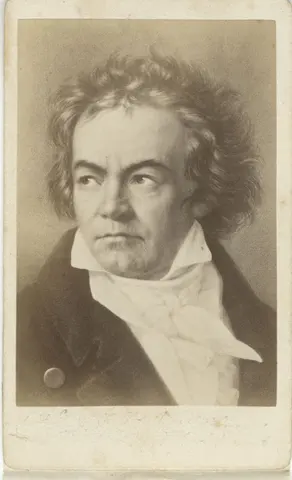
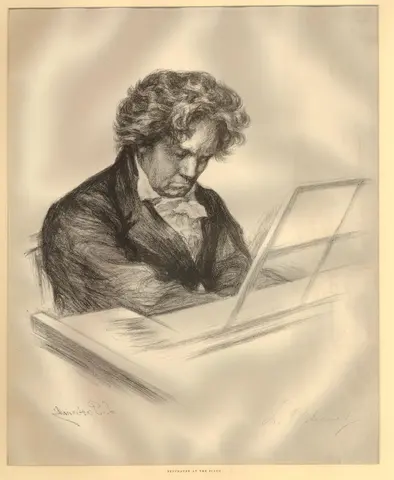
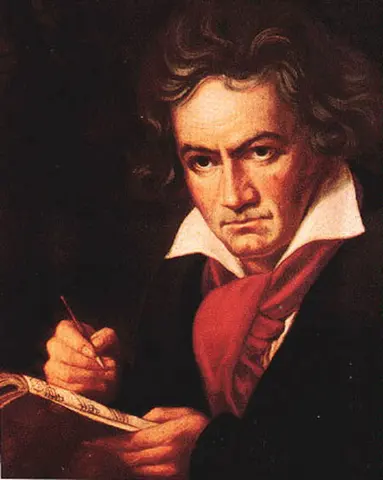
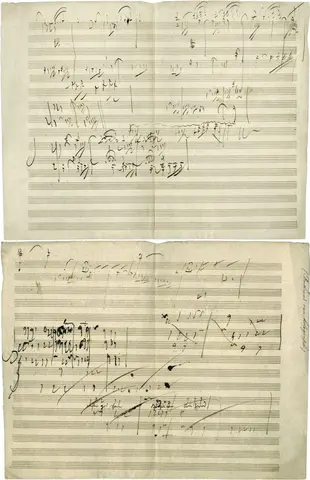
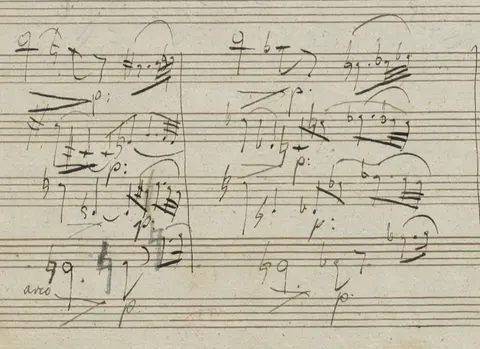
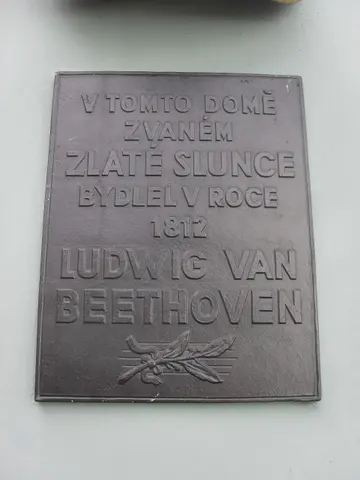
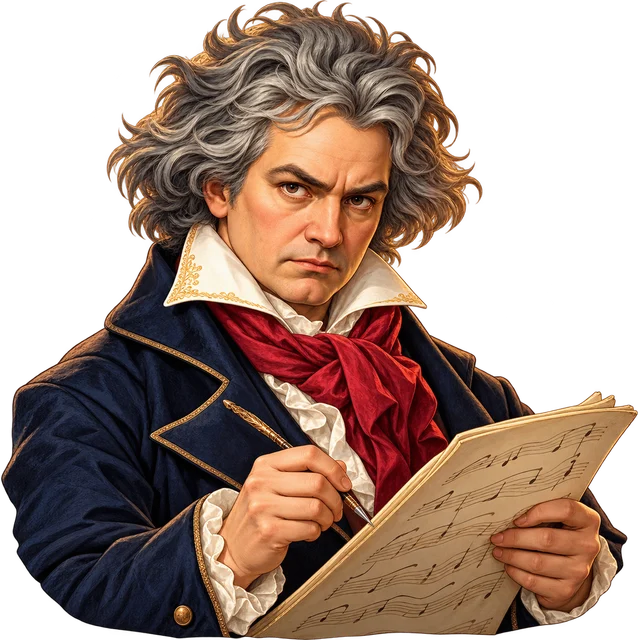
ページ上のイラストは、本物の肖像画をもとにこのサイトのために描いたものです。
 年表 Timeline
 ベートーヴェンで覚える英単語 Words
 クイズに挑戦 Quiz
MORE COMPOSERS

 MP3