
テ・デウム
Te Deum
シャルパンティエ・c. 1688–1698
パンパカパーン!ヨーロッパのテレビの幕開けを飾ってきた、ごうかな前奏曲。
テ・デウム ニ長調のページへ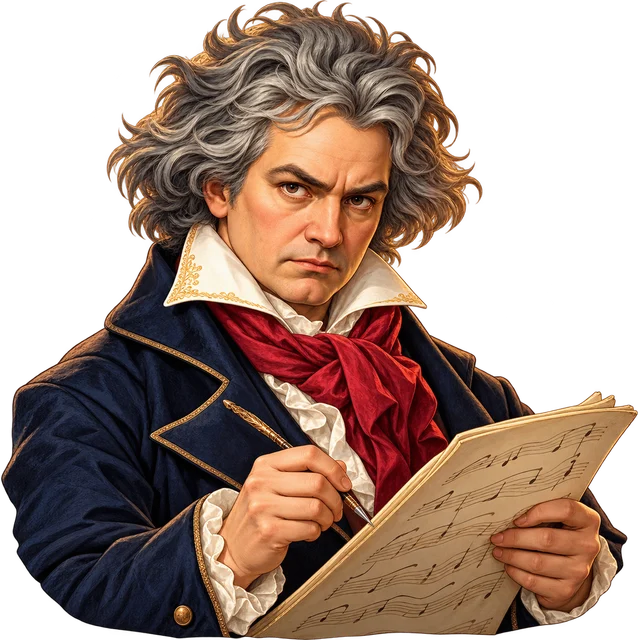
Symphony · Op. 67 · 1804–1808
ルートヴィヒ・ヴァン・ベートーヴェン(1770–1827)
ジャジャジャジャーン!だれもが知る4つの音で始まる交響曲。Da-da-da-DUM! A symphony that opens with four notes everyone knows.
PUBLIC DOMAIN RECORDING
PD / CC0 無料でダウンロードOK
 別の演奏で聴く 1:Omega13a
ANOTHER RECORDING 1
CC BY 4.0WATCH ON YOUTUBE
 Beethoven - Symphony No. 5
Kassia(YouTube) YouTube で開く ↗
Beethoven - Symphony No. 5 - Iván Fischer | Concertgebouworkest
Concertgebouworkest(YouTube) YouTube で開く ↗
左の音源は権利が切れた録音なのでダウンロードできます。右の動画は YouTube の公式の埋め込みで見るもので、ダウンロードはできません(動画の権利は各チャンネルにあります)。
 もっと名演を観る YouTube で何百万回も再生された人気の演奏
Beethoven: 5. Sinfonie ∙ hr-Sinfonieorchester ∙ Andrés Orozco-Estrada
hr-Sinfonieorchester – Frankfurt Radio Symphony(YouTube) YouTube で開く ↗
Beethoven: Symphony No. 5 Fate Symphony | Herbert Blomstedt and the Gewandhausorchester Leipzig
DW Classical Music(YouTube) YouTube で開く ↗
Beethoven's 5th Symphony
castout888(YouTube) YouTube で開く ↗
Beethoven - Symphony No. 5 (Proms 2012)
Mandetriens(YouTube) YouTube で開く ↗
ホー!この4つの音、楽譜では最初が『休符』なんだ。音のない一瞬から始まるんだよ。
 この曲のおはなし The Story
交響曲第5番は、ベートーヴェンが1804年ごろから書きはじめ、1808年に完成させた交響曲です。「タタタターン」という4つの音のかたまり(動機)が、第1楽章のほとんどすべての場面に、形を変えて現れます。日本では「運命」の名でよばれますが、これはベートーヴェン自身がつけた題名ではなく、海外ではふつう「交響曲第5番」とよばれます。Beethoven started his Fifth Symphony around 1804 and finished it in 1808. A tiny four-note idea, "da-da-da-DUM," appears in almost every part of the first movement, changing its shape again and again. In Japan it is called "Fate," but Beethoven did not give it that title, and in most countries it is simply called the Fifth Symphony.
このころベートーヴェンは耳の病気が悪くなり、1802年には遺書のような手紙(ハイリゲンシュタットの遺書)を書くほど苦しんでいました。曲は暗いハ短調で始まり、最後は明るいハ長調の勝利で終わります。第3楽章から第4楽章へは切れ目なく続き、暗いトンネルをぬけて光の中へ飛び出すような瞬間が訪れます。フィナーレでは、ピッコロやトロンボーンが加わって音がいっそう輝きます。During these years, Beethoven's hearing was getting worse. In 1802 he even wrote a letter like a will, now called the Heiligenstadt Testament. The symphony begins in dark C minor and ends in bright C major, like a victory. The third movement flows into the fourth without a break, as if the music bursts out of a dark tunnel into the light. In the finale, piccolo and trombones join in to make the sound even brighter.
初演は1808年12月22日、ウィーンのアン・デア・ウィーン劇場。交響曲第6番「田園」やピアノ協奏曲第4番なども一度に初演された、4時間ほどの長い演奏会でした。寒い会場で練習も足りず、大成功とはいえなかったようです。それでも1810年に作家E.T.A.ホフマンが熱い評論を書き、やがて交響曲の代表と言われるほどの曲になりました。The first performance took place on December 22, 1808, at the Theater an der Wien in Vienna. It was a very long concert, about four hours, where the Sixth Symphony and the Fourth Piano Concerto were also played for the first time. The hall was cold and there was not enough rehearsal, so it was not a great success. But in 1810 the writer E.T.A. Hoffmann praised it in a famous review, and it became one of the best-known symphonies ever.
This is one of the most famous symphonies in the world. It starts with four short, strong notes. Beethoven had trouble hearing when he wrote it. The music starts dark and ends bright and happy. In Japan, people call it "Fate."これは世界でいちばん有名な交響曲のひとつです。4つの短く強い音で始まります。ベートーヴェンはこの曲を書いたとき、耳がよく聞こえませんでした。音楽は暗く始まり、明るく楽しく終わります。日本では「運命」とよばれています。
 聴きどころ Listening Guide
 えっ!?ネタ Surprising Facts
 タップすると答えが開きます
「運命はこのように扉をたたく」とベートーヴェンが言ったという話は、秘書のシンドラーが伝えたものです。でもシンドラーは話を作ったり会話帳を書きかえたりしたことがわかっていて、本当に言ったかはとても疑わしいとされています。
The story that Beethoven said, "Thus fate knocks at the door," comes from his secretary, Anton Schindler. But Schindler is known to have made up stories and changed Beethoven's conversation books, so it is very doubtful that Beethoven really said it.
第二次世界大戦中、モールス信号の「V」(トン・トン・トン・ツー)が、この4つの音のリズムと同じだったことから、イギリスのBBC放送はこの音を「V=Victory(勝利)」の合図として使いました。
During World War II, the letter V in Morse code (dot-dot-dot-dash) had the same rhythm as these four notes. So the BBC in Britain used the opening as a sign of "V for Victory."
1977年に打ち上げられた探査機ボイジャーには、地球の音や音楽を記録した「ゴールデンレコード」が積まれています。その中にこの交響曲の第1楽章も入っていて、いまも宇宙のかなたを旅しています。
The Voyager space probes, launched in 1977, carry the "Golden Record" with sounds and music from Earth. The first movement of this symphony is on it, still traveling far out in space.
1808年の初演の演奏会では、第5番と第6番「田園」に加え、ピアノ協奏曲第4番や合唱幻想曲なども演奏されました。真冬の寒い劇場で、途中で合唱幻想曲の演奏がくずれてやり直す場面もあったと伝えられています。
At the 1808 premiere, the Fifth and Sixth Symphonies, the Fourth Piano Concerto, the Choral Fantasy and more were all performed. The theater was freezing cold, and it is said that the Choral Fantasy fell apart and had to be started again.
ENGLISH × MASTERPIECE
 drum A into B は『AをBに何度も言ってたたきこむ』。太鼓のようにくり返すイメージ。
 この曲で覚える英単語 Words
 クイズに挑戦 Quiz
 この録音について(著作権・出典) Credits
MORE MASTERPIECES
シャルパンティエ・c. 1688–1698
パンパカパーン!ヨーロッパのテレビの幕開けを飾ってきた、ごうかな前奏曲。
テ・デウム ニ長調のページへ
パーセル・1695
ブリテンが「オーケストラ入門」のテーマに選んだ、かっこいいメロディー。
劇音楽「アブデラザール」より ロンドのページへ
バッハ・c. 1704 (?)
タラリ〜!一度聴いたら忘れない、オルガンの大迫力の幕開け。
トッカータとフーガ ニ短調のページへバッハ・c. 1703–1707 (?)
音楽の授業でおなじみ!4つの声が同じテーマで追いかけっこ。
小フーガ ト短調のページへバッハ・c. 1706–1713
足が弾く低いテーマが21回!重くて壮大な、オルガンの大建築。
パッサカリアとフーガ ハ短調のページへバッハ・c. 1707–1710 (?)
キラキラの駆け上がりで幕開け!若きバッハのはなやかな鍵盤ショー。
トッカータ ニ長調のページへ
ヴィヴァルディ・published 1711
2本のヴァイオリンが火花を散らす!バッハも編曲した熱い協奏曲。
協奏曲集『調和の霊感』第8番 イ短調(2つのヴァイオリンのための協奏曲)のページへヴィヴァルディ・c. 1715
オクターブがぴょんぴょん跳ねる!喜びがはじける合唱の名曲。
グローリア ニ長調のページへ MP3