
アブデラザール
Abdelazer Rondeau
パーセル・1695
ブリテンが「オーケストラ入門」のテーマに選んだ、かっこいいメロディー。
劇音楽「アブデラザール」より ロンドのページへ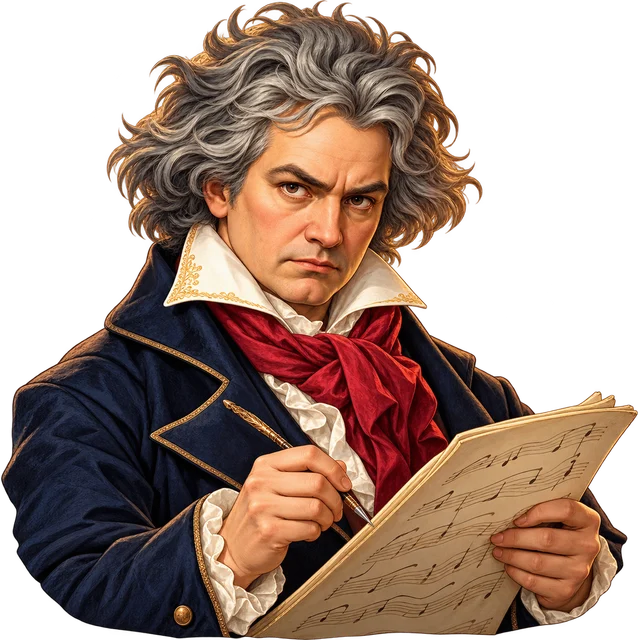
Orchestral · Op. 62 · 1807
ルートヴィヒ・ヴァン・ベートーヴェン(1770–1827)
怒りと愛のあいだでゆれる英雄の心を、短い序曲で描く。A short overture about a hero torn between anger and love.
PUBLIC DOMAIN RECORDING
PD / CC0 無料でダウンロードOK 別の演奏で聴く 1:Ludwig van Beethoven
ANOTHER RECORDING 1
PD / CC0WATCH ON YOUTUBE
 Beethoven: Coriolan Overture, Op. 62
Berliner Philharmoniker - Topic(YouTube) YouTube で開く ↗
Beethoven: Coriolan Overture / Karajan - Berliner Philharmoniker
Berliner Philharmoniker(YouTube) YouTube で開く ↗
左の音源は権利が切れた録音なのでダウンロードできます。右の動画は YouTube の公式の埋め込みで見るもので、ダウンロードはできません(動画の権利は各チャンネルにあります)。
 もっと名演を観る YouTube で何百万回も再生された人気の演奏
Beethoven: Coriolan-Ouvertüre ∙ hr-Sinfonieorchester ∙ Philippe Herreweghe
hr-Sinfonieorchester – Frankfurt Radio Symphony(YouTube) YouTube で開く ↗

ホー!シェイクスピアの劇ではなく、ウィーンの作家コリンの劇のための曲なんだ。
 この曲のおはなし The Story
『コリオラン』序曲は、ベートーヴェンが1807年に書いた、8分ほどの管弦楽曲です。古代ローマの英雄コリオランを主人公にした、ウィーンの作家コリンの劇のために作られました。ベートーヴェンが得意としたハ短調で書かれ、はげしい和音と、やさしく願うようなメロディーがぶつかり合います。The Coriolan Overture is an orchestral piece of about eight minutes that Beethoven wrote in 1807. It was written for a play about Coriolanus, a hero of ancient Rome, by the Viennese writer Heinrich Joseph von Collin. It is in C minor, a key Beethoven often used for dramatic music, and fierce chords clash with a gentle, pleading melody.
コリオランは、ローマを追放されたことを恨み、敵の軍をひきいて祖国ローマを攻めようとします。しかし母と妻に涙ながらに止められ、心がゆれ動きます。コリンの劇では、最後にコリオランはみずから命を絶ちます。序曲のはげしい部分はコリオランの怒りを、やさしいメロディーは母の願いを表していると、よく説明されます。Coriolanus is banished from Rome. In anger, he leads an enemy army against his own city. But his mother and wife beg him in tears to stop, and he is torn between anger and love. In Collin's play, he ends his own life. The fierce music is often said to stand for his anger, and the gentle melody for his mother's pleading.
初演は1807年3月、ベートーヴェンの後援者ロプコヴィッツ侯爵の邸宅での演奏会だったと考えられています。曲は最後、音がだんだん弱くなり、ぽつりぽつりと消えるように終わります。英雄の最期を思わせるこの終わり方は、明るく華やかに終わる当時の多くの序曲とは大きくちがうものでした。It was probably first performed in March 1807 at a concert in the palace of Prince Lobkowitz, one of Beethoven's supporters. At the end, the music grows softer and softer and fades away note by note. This ending, which suggests the hero's death, was very different from the bright, showy endings of many overtures of the time.
This music is about a Roman hero. He is angry, and he wants to attack Rome. His mother cries and asks him to stop. The music is strong and then gentle. At the end, it becomes very quiet.この音楽は、ローマの英雄についての曲です。彼は怒っていて、ローマを攻めたいと思っています。母親は泣いて、やめてとたのみます。音楽は力強く、そしてやさしくなります。最後は、とても静かになります。
 聴きどころ Listening Guide
 えっ!?ネタ Surprising Facts
 タップすると答えが開きます
コリオランの話はシェイクスピアの劇『コリオレイナス』でも有名ですが、ベートーヴェンが曲を書いたのは、ウィーンの作家コリンによる劇のためでした。ただ、シェイクスピアの劇を思いうかべて聴く人も多く、どちらの物語ともよく結びつけられています。
The story of Coriolanus is famous from Shakespeare's play, but Beethoven wrote this music for a play by the Viennese writer Collin. Still, many listeners think of Shakespeare's version, so the overture is often linked to both.
コリンの劇『コリオラン』は、今ではほとんど上演されることがありません。ところがベートーヴェンの序曲だけは演奏会の名曲として生き残り、劇の名前を今に伝えています。
Collin's play Coriolan is almost never performed today. But Beethoven's overture has survived as a concert favorite, keeping the play's name alive.
のちの大作曲家ワーグナーは、この序曲の内容を説明する文章を書いています。ワーグナーはこの曲を、怒りに燃えるコリオランと、彼を止めようとする母との心の戦いをえがいたものとして読み解きました。
The later composer Richard Wagner wrote an essay explaining this overture. He understood it as a struggle between the furious Coriolanus and his mother, who tries to stop him.
序曲の多くは、これから始まる劇を盛り上げるように華やかに終わります。ところがこの曲は、弦楽器がぽつりぽつりと弱く音を鳴らして、静かに消えるように終わります。主人公の死を思わせる、とても大胆な終わり方です。
Many overtures end brilliantly to get the audience excited for the play. But this one ends with the strings playing a few soft notes and fading into silence. It is a bold ending that suggests the hero's death.
ENGLISH × MASTERPIECE
 have second thoughts は『考え直す・ためらう』。二度目の考えが浮かぶイメージです。
 この曲で覚える英単語 Words
 クイズに挑戦 Quiz
 この録音について(著作権・出典) Credits
MORE MASTERPIECES
パーセル・1695
ブリテンが「オーケストラ入門」のテーマに選んだ、かっこいいメロディー。
劇音楽「アブデラザール」より ロンドのページへ
バッハ・c. 1704 (?)
タラリ〜!一度聴いたら忘れない、オルガンの大迫力の幕開け。
トッカータとフーガ ニ短調のページへバッハ・c. 1703–1707 (?)
音楽の授業でおなじみ!4つの声が同じテーマで追いかけっこ。
小フーガ ト短調のページへバッハ・c. 1706–1713
足が弾く低いテーマが21回!重くて壮大な、オルガンの大建築。
パッサカリアとフーガ ハ短調のページへバッハ・c. 1707–1710 (?)
キラキラの駆け上がりで幕開け!若きバッハのはなやかな鍵盤ショー。
トッカータ ニ長調のページへ
ヴィヴァルディ・published 1711
2本のヴァイオリンが火花を散らす!バッハも編曲した熱い協奏曲。
協奏曲集『調和の霊感』第8番 イ短調(2つのヴァイオリンのための協奏曲)のページへ
クープラン・published 1717
題名の意味はだれも知らない!やわらかく波打つ、なぞの名曲。
神秘的なバリケードのページへバッハ・c. 1720
チェロ1本だけで、こんなに豊かな世界が広がる!
無伴奏チェロ組曲 第1番 ト長調のページへ
 MP3