
パッヘルベルのジーグ
Pachelbel's Gigue
パッヘルベル・c. 1680–1706
あの「カノン」には、はずむ相棒がいた!知られざる後半戦。
カノンとジーグ ニ長調 より「ジーグ」のページへ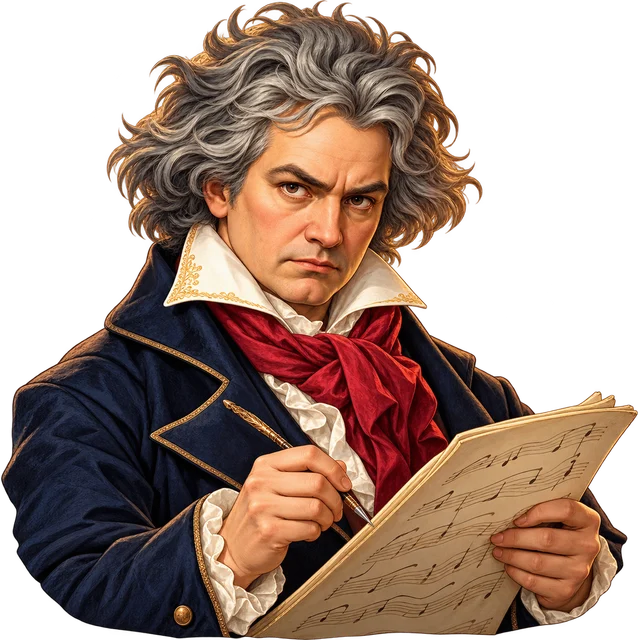
Orchestral · Op. 72 · 1814
ルートヴィヒ・ヴァン・ベートーヴェン(1770–1827)
4つめの序曲でついに決定版!ベートーヴェン唯一のオペラの幕開け。The fourth try at an overture for Beethoven's only opera.
WATCH ON YOUTUBE
この曲は、権利の切れた高音質の録音がまだ見つからないため、YouTube の公式チャンネルなどの名演でお楽しみください(ダウンロードはできません)。YouTube でほかの演奏もさがす ↗
 Beethoven: Fidelio, Op. 72: Overture
Berliner Philharmoniker - Topic(YouTube) YouTube で開く ↗
Beethoven: Fidelio, Op. 72: Overture
Berliner Philharmoniker - Topic(YouTube) YouTube で開く ↗
Beethoven: Fidelio Overture, Op. 72c
Wiener Philharmoniker - Topic(YouTube) YouTube で開く ↗

ホー!ベートーヴェンはこのオペラのために、序曲を4つも書いたんだ。
 この曲のおはなし The Story
『フィデリオ』は、ベートーヴェンが完成させたただ一つのオペラです。主人公レオノーレは、無実の罪で牢屋に閉じこめられた夫フロレスタンを救うため、男の人に変装し「フィデリオ」と名のって牢屋で働きます。この序曲は、1814年にオペラを大きく書き直したときに新しく作られた、明るく引きしまった幕開けの音楽です。Fidelio is the only opera Beethoven completed. Its heroine, Leonore, disguises herself as a young man named Fidelio and takes a job at a prison to rescue her husband, Florestan, who has been unjustly locked up. This overture was newly written in 1814, when Beethoven thoroughly revised the opera, and it is a bright, compact opening.
このオペラは、1805年の最初の上演でうまくいかず、1806年に手直ししてもまた短い上演で終わりました。そのあいだに序曲も作り直され、今「レオノーレ序曲第1番〜第3番」と呼ばれる3つの序曲が生まれました。そして3度目の版のために書かれたのが、この4つ目の『フィデリオ』序曲です。The opera did not succeed at its first run in 1805, and a revised version in 1806 also had only a few performances. Along the way, the overture was rewritten too, which gave us three overtures now called Leonore Overtures Nos. 1 to 3. This fourth one, the Fidelio Overture, was written for the third version of the opera.
1814年5月の新しい版の初演は大成功で、『フィデリオ』はやっとベートーヴェンの代表作の1つになりました。それまでの「レオノーレ」序曲、とくに第2番と第3番が長く劇的だったのに対し、この序曲はオペラの明るい最初の場面に自然につながるよう、短くまとめられています。今もオペラの上演では、ふつうこの序曲が使われます。The new version opened in May 1814 and was a great success, and Fidelio finally became one of Beethoven's major works. The earlier Leonore overtures, especially Nos. 2 and 3, were long and dramatic, but this one is short, so that it leads naturally into the light first scene of the opera. Today, it is the overture usually played in performances of the opera.
Beethoven wrote only one opera. In the story, a brave wife saves her husband from prison. Beethoven wrote four overtures for this opera! This is the last one. It is short and bright.ベートーヴェンはオペラを1つしか書きませんでした。物語では、勇かんな妻が、夫を牢屋から救い出します。ベートーヴェンは、このオペラのために序曲を4つも書きました!これは最後の序曲です。短くて明るい曲です。
 聴きどころ Listening Guide
 えっ!?ネタ Surprising Facts
 タップすると答えが開きます
1814年の初演の日、この新しい序曲は完成がまにあわず、別の序曲が代わりに演奏されたと伝えられています。『フィデリオ』序曲が初めてオペラの前に鳴りひびいたのは、数日後の2回目の上演でした。ぎりぎりまで手を入れ続ける、ベートーヴェンらしい話です。
It is said that on the opening night in 1814, the new overture was not ready, so a different overture was played instead. The Fidelio Overture was first heard before the opera at the second performance a few days later. It is a very Beethoven-like story of working until the last minute.
最初の版が初演された1805年11月、ウィーンはナポレオンのフランス軍に占領されたばかりでした。ベートーヴェンの支持者の多くは町を離れていて、客席にはドイツ語のわからないフランスの軍人が多かったと言われます。こうした事情も、初演がうまくいかなかった理由の1つと考えられています。
In November 1805, when the first version opened, Vienna had just been occupied by Napoleon's French army. Many of Beethoven's supporters had left the city, and it is said that much of the audience was French officers who did not understand German. This is thought to be one reason the first run did not go well.
このオペラは、フランスの作家ブイイの台本がもとになっていて、その話はフランス革命のころに実際にあった出来事をもとにしたとされています。妻の勇気が夫を救い、囚人たちが解放されるという筋は、自由と人間の尊さを大切にしたベートーヴェンの心にぴったりでした。
The opera is based on a French libretto by Jean-Nicolas Bouilly, whose story was said to come from a real event during the French Revolution. A wife's courage saves her husband, and prisoners are set free. This story of freedom and human dignity matched Beethoven's own beliefs.
ベートーヴェンは、このオペラの題を『レオノーレ』にしたかったと言われています。でも劇場は、同じ話をもとにしたほかのオペラと区別するため、『フィデリオ』の題を使いました。そのため、古い3つの序曲は「レオノーレ」、最後のものは「フィデリオ」と呼ばれているのです。
It is said that Beethoven wanted to call the opera Leonore. But the theater used the title Fidelio, partly to tell it apart from other operas based on the same story. That is why the three earlier overtures are called 'Leonore' and the last one is called 'Fidelio'.
ENGLISH × MASTERPIECE
 アメリカ英語でよく使います。イギリスでは Third time lucky. とも言います。
 この曲で覚える英単語 Words
 クイズに挑戦 Quiz
 著作権について Credits
MORE MASTERPIECES
パッヘルベル・c. 1680–1706
あの「カノン」には、はずむ相棒がいた!知られざる後半戦。
カノンとジーグ ニ長調 より「ジーグ」のページへシャルパンティエ・c. 1688–1698
パンパカパーン!ヨーロッパのテレビの幕開けを飾ってきた、ごうかな前奏曲。
テ・デウム ニ長調のページへ
パーセル・1695
ブリテンが「オーケストラ入門」のテーマに選んだ、かっこいいメロディー。
劇音楽「アブデラザール」より ロンドのページへクラーク・c. 1700
結婚式の大定番。でも作曲者は長いあいだ取りちがえられていた!
トランペット・ヴォランタリー(デンマーク王子の行進)のページへ
バッハ・c. 1704 (?)
タラリ〜!一度聴いたら忘れない、オルガンの大迫力の幕開け。
トッカータとフーガ ニ短調のページへバッハ・c. 1706–1713
足が弾く低いテーマが21回!重くて壮大な、オルガンの大建築。
パッサカリアとフーガ ハ短調のページへバッハ・c. 1707–1710 (?)
キラキラの駆け上がりで幕開け!若きバッハのはなやかな鍵盤ショー。
トッカータ ニ長調のページへ
ヴィヴァルディ・published 1711
2本のヴァイオリンが火花を散らす!バッハも編曲した熱い協奏曲。
協奏曲集『調和の霊感』第8番 イ短調(2つのヴァイオリンのための協奏曲)のページへ
 MP3