
テ・デウム
Te Deum
シャルパンティエ・c. 1688–1698
パンパカパーン!ヨーロッパのテレビの幕開けを飾ってきた、ごうかな前奏曲。
テ・デウム ニ長調のページへ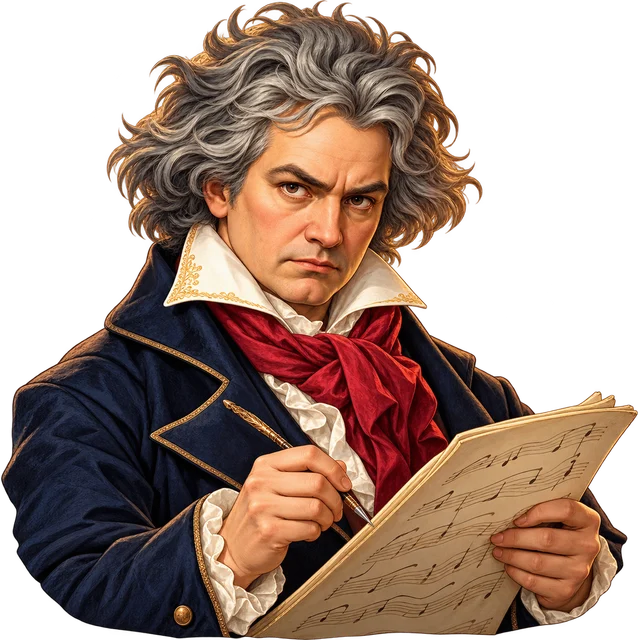
Concerto · Op. 73 · 1809
ルートヴィヒ・ヴァン・ベートーヴェン(1770–1827)
いきなりピアノが主役!堂々とした協奏曲の王さま。The piano takes center stage from the very first chord.
PUBLIC DOMAIN RECORDING
CC BY-SA 3.0 無料でダウンロードOK
WATCH ON YOUTUBE
 Beethoven: 5. Klavierkonzert ∙ hr-Sinfonieorchester ∙ Francesco Piemontesi ∙ Alain Altinoglu
hr-Sinfonieorchester – Frankfurt Radio Symphony(YouTube) YouTube で開く ↗
Beethoven: Piano Concerto No. 5 "Emperor" Op. 73 - Daniele & Maurizio Pollini - Sinfónica de Galicia
SinfonicadeGalicia(YouTube) YouTube で開く ↗
左の音源は権利が切れた録音なのでダウンロードできます。右の動画は YouTube の公式の埋め込みで見るもので、ダウンロードはできません(動画の権利は各チャンネルにあります)。
 もっと名演を観る YouTube で何百万回も再生された人気の演奏
Lang Lang BEETHOVEN Piano Concerto No 5 Emperor
Marina Madreperla(YouTube) YouTube で開く ↗
조성진│베토벤, 피아노 협주곡 5번 Op. 73 '황제' (L.v.Beethoven, Piano Concerto No.5 'Emperor') Pf. Seongjin Cho
TV예술무대(YouTube) YouTube で開く ↗
🎹임윤찬 BEETHOVEN Piano Concerto No. 5 in E-Flat Major, Op. 73 "EMPEROR" Yunchan Lim
coffeewitness (YouTube) YouTube で開く ↗
ホー!砲撃の音から耳を守るため、地下室でまくらを耳に当てていたそうだよ。
 この曲のおはなし The Story
ピアノ協奏曲第5番は、ベートーヴェンが1809年に書いた、最後のピアノ協奏曲です。オーケストラが力強い和音を3回鳴らし、そのたびにピアノが華やかなソロで答えて、最初から主役ぶりを見せつけます。堂々とした雰囲気から「皇帝」とよばれますが、この名前はベートーヴェンがつけたものではありません。Piano Concerto No. 5 was Beethoven's last piano concerto, written in 1809. The orchestra plays three strong chords, and after each one the piano answers with a brilliant solo, showing from the start that it is the star. Because of its grand, noble mood, it is called the "Emperor," but Beethoven did not give it that name.
1809年、ナポレオンのフランス軍がウィーンを砲撃しました。ベートーヴェンは弟の家の地下室にこもり、まくらで耳をおおって、残された聴力を砲撃の音から守っていたと伝えられています。そんな混乱の中で書かれたこの曲は、弟子で後援者でもあったルドルフ大公にささげられました。In 1809, Napoleon's French army attacked Vienna with cannons. It is said that Beethoven hid in the cellar of his brother's house, covering his ears with pillows to protect what was left of his hearing. The concerto, written in those troubled times, was dedicated to Archduke Rudolph, his pupil and patron.
1811年1月にウィーンの貴族の館でルドルフ大公が独奏したとされ、一般公開の初演は同年11月、ドイツのライプツィヒで行われました。耳の悪くなったベートーヴェンはもう人前でピアノを弾けず、ほかのピアニストが独奏しました。ウィーンでは翌年、弟子のチェルニーが弾いています。「皇帝」という愛称は英語圏で広まったものですが、だれがつけたのかははっきりしていません。Archduke Rudolph is said to have played it at a palace in Vienna in January 1811, and the first public performance took place in Leipzig, Germany, that November. Beethoven's hearing was so poor that he could no longer play in public, so another pianist played the solo. In Vienna, his pupil Carl Czerny played it the next year. The nickname "Emperor" spread in the English-speaking world, but no one knows for sure who gave it.
This is a big, grand piano concerto. The piano starts playing at the very beginning. People call it the "Emperor." But Beethoven did not choose that name. He wrote it during a war.これは大きくて堂々としたピアノ協奏曲です。ピアノはいちばん最初から弾きはじめます。人々はこの曲を「皇帝」とよびます。でも、その名前を選んだのはベートーヴェンではありません。彼は戦争のさなかにこの曲を書きました。
 聴きどころ Listening Guide
 えっ!?ネタ Surprising Facts
 タップすると答えが開きます
「皇帝」という愛称はベートーヴェンがつけたものではなく、だれが、なぜつけたのかははっきりしていません。堂々とした曲の雰囲気を表す名前だと考えられていますが、ナポレオンとは関係ありません。しかもこの曲が書かれたのは、ナポレオン軍がウィーンを攻撃していたころ。なんとも皮肉な組み合わせです。
Beethoven did not name it the "Emperor," and no one knows for sure who did or why. The name is often thought to reflect the music's grand mood, but it has nothing to do with Napoleon. In fact, the concerto was written while Napoleon's army was attacking Vienna. Quite an ironic match!
1809年のフランス軍の砲撃のとき、ベートーヴェンは弟の家の地下室で、まくらで耳をおおっていたと伝えられています。わずかに残った聴力を、大きな音から守ろうとしたのでしょう。
During the French attack in 1809, Beethoven is said to have covered his ears with pillows in his brother's cellar. He was probably trying to protect the little hearing he had left from the loud noise.
協奏曲では、独奏者が腕前を見せる「カデンツァ」を即興で弾くのがふつうでした。ところがベートーヴェンはこの曲の第1楽章に「カデンツァは弾かず、すぐ次へ進むこと」と書き、自分の書いた音楽どおりに弾くよう求めました。
In concertos, soloists usually made up a showy solo called a cadenza. But in the first movement of this concerto, Beethoven wrote, "Do not play a cadenza, but go straight on," asking players to stick to the music he had written.
ベートーヴェンはそれまで、自分のピアノ協奏曲を自分で弾いて初演してきました。しかしこの第5番は、耳の病気のため人前で弾くことができず、ライプツィヒでの初演はフリードリヒ・シュナイダーが独奏しました。
Beethoven had played the premieres of his earlier piano concertos himself. But because of his hearing loss, he could not perform this one in public. At the Leipzig premiere, Friedrich Schneider played the solo.
ENGLISH × MASTERPIECE
 fit for a king で「王様にふさわしいほどりっぱな」。ごちそうをほめるときにも使います。
 この曲で覚える英単語 Words
 クイズに挑戦 Quiz
 この録音について(著作権・出典) Credits
MORE MASTERPIECES
シャルパンティエ・c. 1688–1698
パンパカパーン!ヨーロッパのテレビの幕開けを飾ってきた、ごうかな前奏曲。
テ・デウム ニ長調のページへ
パーセル・1695
ブリテンが「オーケストラ入門」のテーマに選んだ、かっこいいメロディー。
劇音楽「アブデラザール」より ロンドのページへ
バッハ・c. 1703–1707 (?)
音楽の授業でおなじみ!4つの声が同じテーマで追いかけっこ。
小フーガ ト短調のページへバッハ・c. 1706–1713
足が弾く低いテーマが21回!重くて壮大な、オルガンの大建築。
パッサカリアとフーガ ハ短調のページへバッハ・c. 1707–1710 (?)
キラキラの駆け上がりで幕開け!若きバッハのはなやかな鍵盤ショー。
トッカータ ニ長調のページへ
ヴィヴァルディ・published 1711
2本のヴァイオリンが火花を散らす!バッハも編曲した熱い協奏曲。
協奏曲集『調和の霊感』第8番 イ短調(2つのヴァイオリンのための協奏曲)のページへヴィヴァルディ・c. 1715
オクターブがぴょんぴょん跳ねる!喜びがはじける合唱の名曲。
グローリア ニ長調のページへ
テレマン・c. 1710–1720 (?)
バルブのないラッパで高音をきらり!バロックのトランペットの晴れ舞台。
トランペット協奏曲 ニ長調のページへ MP3