
テ・デウム
Te Deum
シャルパンティエ・c. 1688–1698
パンパカパーン!ヨーロッパのテレビの幕開けを飾ってきた、ごうかな前奏曲。
テ・デウム ニ長調のページへ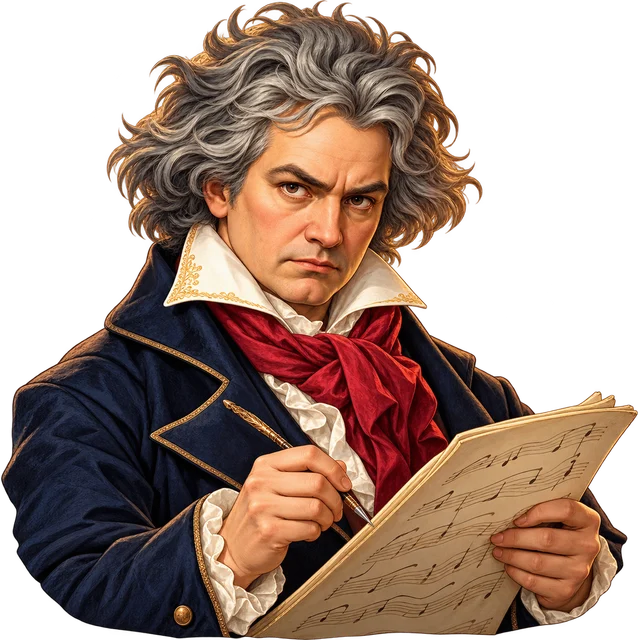
Symphony · Op. 125 · 1822–1824
ルートヴィヒ・ヴァン・ベートーヴェン(1770–1827)
最後に合唱が加わる、すべての人への「歓喜の歌」。A symphony that ends with a mighty song of joy for everyone.
PUBLIC DOMAIN RECORDING
PD / CC0 無料でダウンロードOK 別の演奏で聴く 1:Lyrics: Henry van Dyke; United States Air Force Band of the Rockies, Concert Band; Recording: United States Air Force
ANOTHER RECORDING 1
PD / CC0WATCH ON YOUTUBE
 Ludwig van Beethoven: Symphony No 9 'Ode to Joy' // Sir Antonio Pappano & London Symphony Orchestra
London Symphony Orchestra(YouTube) YouTube で開く ↗
From the archives / Beethoven's Symphony No. 9 / Klaus Mäkelä / Oslo Philharmonic
Oslo Philharmonic(YouTube) YouTube で開く ↗
左の音源は権利が切れた録音なのでダウンロードできます。右の動画は YouTube の公式の埋め込みで見るもので、ダウンロードはできません(動画の権利は各チャンネルにあります)。
 もっと名演を観る YouTube で何百万回も再生された人気の演奏
Beethoven: 9. Sinfonie ∙ hr-Sinfonieorchester ∙ MDR Rundfunkchor ∙ Solisten ∙ Andrés Orozco-Estrada
hr-Sinfonieorchester – Frankfurt Radio Symphony(YouTube) YouTube で開く ↗
Muti Conducts Beethoven 9
Chicago Symphony(YouTube) YouTube で開く ↗
Beethoven: Symphony No. 9 | Daniel Barenboim & the West-Eastern Divan Orchestra (complete symphony)
DW Classical Music(YouTube) YouTube で開く ↗
ホー!初演のとき、耳の聞こえないベートーヴェンは拍手に気づかなかったと伝えられているよ。
 この曲のおはなし The Story
交響曲第9番は、ベートーヴェンが完成させた最後の交響曲で、1824年に完成しました。全部で約70分もある大作で、最後の第4楽章では、オーケストラに独唱者4人と合唱が加わり、詩人シラーの詩「歓喜に寄す」を歌います。交響曲に歌声を入れるのは当時とてもめずらしく、その大胆さは人々をおどろかせました。The Ninth Symphony is the last symphony Beethoven completed. He finished it in 1824. It lasts about 70 minutes, and in the fourth movement four solo singers and a choir join the orchestra to sing "Ode to Joy," a poem by Friedrich Schiller. Putting voices in a symphony was very unusual at the time, and the bold idea amazed people.
ベートーヴェンは若いころからシラーの詩に曲をつけたいと考えていて、30年ほどもその思いをあたため続けたことになります。第4楽章では、それまでの楽章のメロディーが少しずつ思い出されては打ち消され、バリトン歌手が「おお友よ、このような音ではない!」と歌い出します。この言葉はベートーヴェン自身が書き加えたもの。「すべての人々は兄弟になる」という願いが、曲の中心にあります。Beethoven had wanted to set Schiller's poem to music since he was a young man, so he carried the idea for about 30 years. In the finale, short bits of the earlier movements come back, but each one is pushed away. Then a baritone sings, "O friends, not these sounds!" Beethoven wrote these first words himself. At the heart of the music is the hope that all people will become brothers.
初演は1824年5月7日、ウィーンのケルントナートーア劇場。耳がほとんど聞こえなかったベートーヴェンも舞台に立ち、演奏が終わったあと、歌手が彼の体を客席のほうへ向けて、大きな拍手に気づかせたと伝えられています。「歓喜の歌」のメロディーは、今ではヨーロッパ連合(EU)の歌としても使われています。The first performance was on May 7, 1824, at the Kärntnertor Theater in Vienna. Beethoven, who could hardly hear, was on stage too. It is said that after the music ended, one of the singers turned him around so he could see the audience cheering. Today the "Ode to Joy" melody is also used as the anthem of the European Union.
This is Beethoven's last symphony. At the end, a big choir sings a song of joy. The song says all people can be friends. Beethoven could not hear when he wrote it. In Japan, many people sing it in December.これはベートーヴェンの最後の交響曲です。最後に、大きな合唱が喜びの歌を歌います。歌は、すべての人は友だちになれると言っています。ベートーヴェンはこの曲を書いたとき、耳が聞こえませんでした。日本では、12月にたくさんの人がこの曲を歌います。
 聴きどころ Listening Guide
 えっ!?ネタ Surprising Facts
 タップすると答えが開きます
第九が日本で初めて全曲演奏されたのは1918年。徳島県鳴門市にあった板東俘虜収容所で、第一次世界大戦で捕虜になったドイツ兵たちが演奏しました。今も鳴門市では、これを記念した演奏会が開かれています。
The first complete performance of the Ninth in Japan was in 1918, at the Bando prisoner-of-war camp in what is now Naruto, Tokushima. German soldiers captured in World War I played it. Naruto still holds concerts to remember this.
CDの収録時間が約74分になったのは「第九が1枚に収まるように」という理由だった、という話が有名です。ただし、これは開発にかかわった会社の人の話として伝わるもので、技術的な理由もあったと言われています。
There is a famous story that CDs hold about 74 minutes so that the whole Ninth could fit on one disc. But this story comes from people at the companies involved, and technical reasons are also said to have played a part.
ベルリン国立図書館などにある第九の自筆楽譜は、2001年にユネスコの「世界の記憶(記憶遺産)」に登録されました。楽譜がこのリストに登録されたのは、これが初めてだったと言われています。
Beethoven's handwritten score of the Ninth, kept mainly at the Berlin State Library, was added to UNESCO's Memory of the World Register in 2001. It is said to have been the first musical score on the list.
日本では12月になると、全国で第九の演奏会が開かれます。プロのオーケストラだけでなく、大阪の「1万人の第九」のように、一般の人が何千人も集まって歌う催しもあります。これほど年末に第九を歌う国はめずらしいと言われています。
In Japan, concerts of the Ninth are held all over the country in December. Besides professional orchestras, there are events like Osaka's "10,000-Person Ninth," where thousands of ordinary people sing together. Few other countries sing it so much at the end of the year.
ENGLISH × MASTERPIECE
 chime in は『話に加わる・口をはさむ』。鐘(chime)が鳴り出すイメージです。
 この曲で覚える英単語 Words
 クイズに挑戦 Quiz
 この録音について(著作権・出典) Credits
MORE MASTERPIECES
シャルパンティエ・c. 1688–1698
パンパカパーン!ヨーロッパのテレビの幕開けを飾ってきた、ごうかな前奏曲。
テ・デウム ニ長調のページへクラーク・c. 1700
結婚式の大定番。でも作曲者は長いあいだ取りちがえられていた!
トランペット・ヴォランタリー(デンマーク王子の行進)のページへ
バッハ・c. 1707–1710 (?)
キラキラの駆け上がりで幕開け!若きバッハのはなやかな鍵盤ショー。
トッカータ ニ長調のページへ
ヴィヴァルディ・published 1711
2本のヴァイオリンが火花を散らす!バッハも編曲した熱い協奏曲。
協奏曲集『調和の霊感』第8番 イ短調(2つのヴァイオリンのための協奏曲)のページへ
コレッリ・published 1714
聖なる夜のために。最後に羊飼いの笛のようなパストラーレが流れます。
合奏協奏曲 ト短調「クリスマス協奏曲」のページへヴィヴァルディ・c. 1715
オクターブがぴょんぴょん跳ねる!喜びがはじける合唱の名曲。
グローリア ニ長調のページへ
テレマン・c. 1710–1720 (?)
バルブのないラッパで高音をきらり!バロックのトランペットの晴れ舞台。
トランペット協奏曲 ニ長調のページへ
ヘンデル・1717
テムズ川の船の上で国王のために!夏の夜の水上コンサート。
水上の音楽のページへ
 MP3