
カノン
Canon in D
パッヘルベル・c. 1680–1706
同じ8つの音が28回!なのに聴くたび胸がいっぱいになる曲。
カノンとジーグ ニ長調 より「カノン」のページへ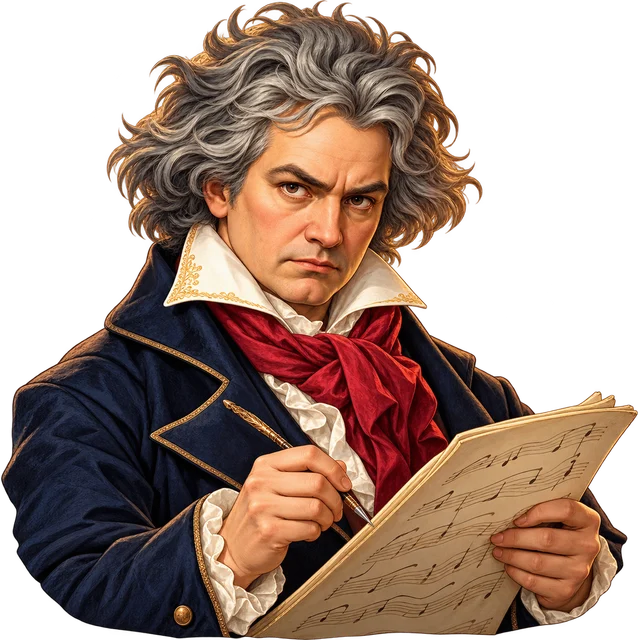
Concerto · Op. 58 · 1805–1806
ルートヴィヒ・ヴァン・ベートーヴェン(1770–1827)
ピアノのひとりごとから始まる、やさしく新しい協奏曲。A concerto that begins with the piano whispering alone.
PUBLIC DOMAIN RECORDING
CC BY-SA 2.0 無料でダウンロードOKWATCH ON YOUTUBE
 Beethoven - Piano Concerto No. 4 in G major, Op. 58 (Daniel Barenboim, Staatskapelle Berlin)
EuroArtsChannel(YouTube) YouTube で開く ↗
Beethoven, Piano Concerto No. 4
Daniil Trifonov Fan(YouTube) YouTube で開く ↗
左の音源は権利が切れた録音なのでダウンロードできます。右の動画は YouTube の公式の埋め込みで見るもので、ダウンロードはできません(動画の権利は各チャンネルにあります)。
 もっと名演を観る YouTube で何百万回も再生された人気の演奏
Beethoven: 4. Klavierkonzert ∙ hr-Sinfonieorchester ∙ Javier Perianes ∙ Andrés Orozco-Estrada
hr-Sinfonieorchester – Frankfurt Radio Symphony(YouTube) YouTube で開く ↗
Hélène Grimaud: Beethoven - Piano Concerto No. 4, Op. 58 (Orchestre de Paris, Christoph Eschenbach)
wocomoMUSIC(YouTube) YouTube で開く ↗

ホー!協奏曲なのにピアノが先にひとりで弾きだす。当時はびっくりだったんだ。
 この曲のおはなし The Story
「ピアノ協奏曲第4番」は、ベートーヴェンが1805年から1806年にかけて書いた、ト長調の協奏曲です。それまでの協奏曲の決まりをやぶって、オーケストラではなくピアノがひとりで、静かな和音をそっと弾いて始まります。全体に詩的でやさしく、5曲のピアノ協奏曲の中でも特に美しい曲として愛されています。Piano Concerto No. 4 in G major was written by Beethoven in 1805 and 1806. Breaking the rules of earlier concertos, it begins not with the orchestra but with the piano alone, softly playing quiet chords. The whole work is poetic and gentle, and many people love it as one of the most beautiful of his five piano concertos.
ピアノの5小節のあと、オーケストラがまったくちがう調の響きで答え、聴く人をはっとさせます。第2楽章は、きびしく強いオーケストラと、静かに祈るようなピアノとの対話です。ピアノの歌に、オーケストラがだんだんおだやかになっていきます。休まず続く第3楽章は、明るくはずむロンドです。After five bars of piano, the orchestra answers in a completely different key, which surprises the listener. The second movement is a dialogue between a stern, loud orchestra and a quiet, prayerful piano. Little by little, the orchestra is calmed by the piano's song. The third movement follows without a break and is a bright, bouncing rondo.
1807年3月にロプコヴィッツ侯爵の屋敷で非公開で初演されたあと、1808年12月22日、ウィーンでの大演奏会で一般に初めて披露されました。この日は交響曲第5番と第6番も初演された、4時間にもおよぶ伝説的な演奏会です。ベートーヴェンが協奏曲のソリストとして人前で弾いたのは、これが最後になりました。After a private first performance at Prince Lobkowitz's palace in March 1807, it was played in public for the first time at a huge concert in Vienna on December 22, 1808. At that legendary concert, which lasted about four hours, the Fifth and Sixth Symphonies were also premiered. It was Beethoven's last public appearance as a soloist in a concerto.
This is a piano concerto by Beethoven. Most concertos start with the orchestra. But this one starts with the piano, very quietly! In the second part, the orchestra is loud and angry. The soft piano makes it calm.これはベートーヴェンのピアノ協奏曲です。たいていの協奏曲はオーケストラから始まります。でもこの曲は、ピアノがとても静かに始めるのです!第2楽章では、オーケストラが大きな音で怒っています。やさしいピアノが、それをしずめていきます。
 聴きどころ Listening Guide
 えっ!?ネタ Surprising Facts
 タップすると答えが開きます
モーツァルトの時代の協奏曲は、まずオーケストラが長い前置きを演奏し、そのあとにピアノが登場するのがふつうでした。この曲ではピアノが最初にひとりで弾きはじめます。だれかがそっと話を切りだすような、とても新しい始まり方でした。
In Mozart's time, a concerto usually began with a long orchestral introduction before the piano came in. In this concerto, the piano plays alone first. It was a very new way to begin, like someone quietly starting a conversation.
第2楽章の、こわいオーケストラと静かなピアノのやりとりは、のちの評論家たちによって、ギリシャ神話のオルフェウスが歌で地獄の番人たちをしずめる場面にたとえられてきました。ベートーヴェン自身がそう言った記録はありませんが、ぴったりのたとえとして有名です。
Later writers compared the dialogue in the second movement, between the frightening orchestra and the calm piano, to Orpheus from Greek myth calming the guards of the underworld with his song. There is no record that Beethoven said this himself, but it is a famous and fitting image.
1808年12月の大演奏会について、聴きに来ていた作曲家ライヒャルトは、新曲ばかりで練習が足りず、会場がとても寒かったと書きのこしています。そんな中で、交響曲第5番や第6番『田園』、そしてこの協奏曲の公開初演が行われたのです。
The composer Johann Friedrich Reichardt, who was in the audience, wrote that the December 1808 concert had too little rehearsal for so many new works, and that the hall was bitterly cold. Under those conditions, the Fifth and Sixth Symphonies and this concerto were presented to the public.
耳の病気が進んだベートーヴェンは、この演奏会のあと、協奏曲のソリストとして人前に立つことはありませんでした。次の第5番『皇帝』の初演では、別のピアニストが独奏をつとめています。第4番は、ピアニスト・ベートーヴェンの最後の晴れ舞台となったのです。
As his hearing got worse, Beethoven never again appeared in public as a concerto soloist after this concert. At the premiere of his next concerto, No. 5, the 'Emperor', another pianist played the solo. No. 4 was the last great stage for Beethoven the pianist.
ENGLISH × MASTERPIECE
 音楽の tone(音色・調子)から。会議やイベントの最初にも使います。
 この曲で覚える英単語 Words
 クイズに挑戦 Quiz
 この録音について(著作権・出典) Credits
MORE MASTERPIECES
パッヘルベル・c. 1680–1706
同じ8つの音が28回!なのに聴くたび胸がいっぱいになる曲。
カノンとジーグ ニ長調 より「カノン」のページへ
バッハ・c. 1706–1713
足が弾く低いテーマが21回!重くて壮大な、オルガンの大建築。
パッサカリアとフーガ ハ短調のページへ
ヘンデル・1711
「泣かせてください」と歌う、深い悲しみに満ちた名アリア。
私を泣かせてください(歌劇『リナルド』より)のページへバッハ・1713
2本のリコーダーがやさしく鳴る、のどかな牧場の歌。
カンタータ第208番より「羊は安らかに草を食み」のページへ
コレッリ・published 1714
聖なる夜のために。最後に羊飼いの笛のようなパストラーレが流れます。
合奏協奏曲 ト短調「クリスマス協奏曲」のページへ
クープラン・published 1717
題名の意味はだれも知らない!やわらかく波打つ、なぞの名曲。
神秘的なバリケードのページへ
マルチェッロ・published c. 1717
胸にしみるアダージョ!バッハも編曲したオーボエの名曲。
オーボエ協奏曲 ニ短調のページへバッハ・c. 1720
チェロ1本だけで、こんなに豊かな世界が広がる!
無伴奏チェロ組曲 第1番 ト長調のページへ
 MP3