
ダイドーの嘆き
Dido's Lament
パーセル・by 1689
「わたしを覚えていて」。くり返す低音にのせた、胸をうつ別れの歌。
歌劇「ダイドーとエネアス」より「ダイドーの嘆き」のページへ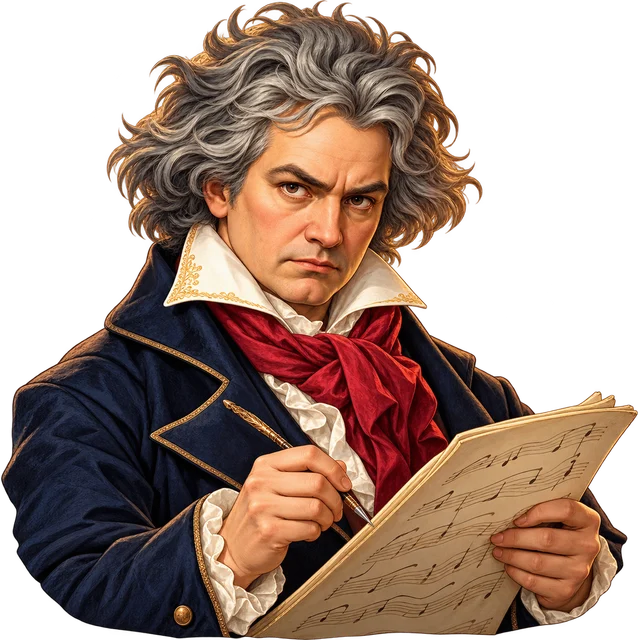
Piano · Op. 110 · 1821–1822
ルートヴィヒ・ヴァン・ベートーヴェン(1770–1827)
なげきの歌からフーガで立ち上がる、心の復活のソナタ。From a song of sorrow to a fugue of new life.
PUBLIC DOMAIN RECORDING
PD / CC0 無料でダウンロードOK
WATCH ON YOUTUBE
 Barenboim: Beethoven - Sonata No. 31 in A-flat major, Op. 110
EuroArtsChannel(YouTube) YouTube で開く ↗
Sviatoslav Richter plays Beethoven Piano Sonata no. 31 op. 110 - video 1991
ADGO(YouTube) YouTube で開く ↗
左の音源は権利が切れた録音なのでダウンロードできます。右の動画は YouTube の公式の埋め込みで見るもので、ダウンロードはできません(動画の権利は各チャンネルにあります)。
 もっと名演を観る YouTube で何百万回も再生された人気の演奏
Beethoven: Piano Sonata No. 31 (Op. 110) | Richard Goode
DW Classical Music(YouTube) YouTube で開く ↗

ホー!楽譜に「疲れはてて、なげきながら」なんて書きこみがあるんだよ。
 この曲のおはなし The Story
「ピアノ・ソナタ第31番」は、ベートーヴェンが1821年から1822年にかけて書いたピアノ曲です。最後の3つのソナタの2つ目で、自筆の楽譜には1821年12月25日、つまりクリスマスの日付が書かれています。やさしく歌うように始まり、最後は大きな喜びにたどりつく、全体が一つの物語のような曲です。Piano Sonata No. 31 in A-flat major was written by Beethoven in 1821 and 1822. It is the second of his last three sonatas, and his manuscript is dated December 25, 1821: Christmas Day. It begins gently, like a song, and ends in great joy, so the whole piece feels like one story.
第2楽章は短くておどけた速い音楽で、当時の民謡のメロディーが使われているという説があります。最後の楽章がこの曲の中心です。「なげきの歌」と書かれた悲しいメロディーのあと、フーガ(同じメロディーを次々に重ねていく音楽)が始まります。ところが途中でまた「なげきの歌」にもどり、そこから少しずつ力をとりもどしていきます。The second movement is short, fast and humorous, and some scholars believe it uses popular folk songs of the time. The final movement is the center of the piece. After a sad melody marked 'song of lament', a fugue begins, built from one melody that enters again and again. But the lament comes back, and then the music slowly finds its strength again.
このころのベートーヴェンは、病気や、甥カールをめぐる心配ごと、お金の苦労をかかえていました。曲は1822年に出版されました。悲しみから立ち直っていくような流れは、多くの人に「ベートーヴェン自身の心の物語」と受けとめられ、今もピアニストにとって特別な1曲です。At this time, Beethoven was struggling with illness, worries about his nephew Karl, and money problems. The sonata was published in 1822. Many listeners hear its journey from sadness to recovery as Beethoven's own inner story, and it remains a very special piece for pianists.
This is a piano sonata by Beethoven. The last part has a very sad song. Then a strong fugue starts. The sad song comes back, but the music gets stronger again. At the end, it is full of joy.これはベートーヴェンのピアノ・ソナタです。最後の楽章には、とても悲しい歌があります。そのあと、力強いフーガが始まります。悲しい歌はもう一度もどってきますが、音楽はまた強くなっていきます。最後は喜びでいっぱいになります。
 聴きどころ Listening Guide
 えっ!?ネタ Surprising Facts
 タップすると答えが開きます
自筆譜には「1821年12月25日」の日付があります。ただし、ベートーヴェンはそのあと1822年に入ってからも、最後の楽章を手直ししたと考えられています。クリスマスに完成したと言い切ることはできませんが、ちょっと特別な日付ですね。
The manuscript is dated December 25, 1821. But Beethoven probably kept revising the final movement into early 1822. So we can't say it was finished on Christmas Day, but it is a special date all the same.
第2楽章には、「うちのネコが子ネコを産んだ」「おれはだらしない、おまえもだらしない」という、当時の民謡が使われているという説があります。深刻なソナタの真ん中に、こんなおどけた歌がまぎれこんでいるとしたら、おもしろいですね。
Some scholars believe the second movement uses two popular folk songs of the time: 'Our cat has had kittens' and 'I'm a slob, you're a slob'. It is fun to imagine such silly songs hiding in the middle of a serious sonata.
なげきの歌が2回目に出てくるところで、ベートーヴェンはドイツ語で「疲れはてて、なげきながら」と書いています。そして2回目のフーガには「少しずつ元気をとりもどして」という意味の言葉を書きました。言葉が、音楽の物語をそのまま教えてくれます。
When the lament returns, Beethoven wrote in German 'exhausted, lamenting'. Then, at the second fugue, he wrote words meaning 'little by little coming back to life'. His words tell us the story of the music.
2回目のフーガでは、1回目のフーガのメロディーが上下さかさま(上がるところが下がる)の形で出てきます。この「反行形」という技は、バッハのような昔の作曲家が得意とした書き方です。晩年のベートーヴェンは、バッハの技を自分の表現に生かしました。
In the second fugue, the melody of the first fugue appears upside down: where it went up, it now goes down. This trick, called inversion, was loved by older composers like Bach. In his last years, Beethoven used such skills in his own personal way.
ENGLISH × MASTERPIECE
 病気・失敗・落ちこみなどから回復するときに使います。
 この曲で覚える英単語 Words
 クイズに挑戦 Quiz
 この録音について(著作権・出典) Credits
MORE MASTERPIECES
パーセル・by 1689
「わたしを覚えていて」。くり返す低音にのせた、胸をうつ別れの歌。
歌劇「ダイドーとエネアス」より「ダイドーの嘆き」のページへ
パッヘルベル・c. 1680–1706
同じ8つの音が28回!なのに聴くたび胸がいっぱいになる曲。
カノンとジーグ ニ長調 より「カノン」のページへパーセル・1695
ブリテンが「オーケストラ入門」のテーマに選んだ、かっこいいメロディー。
劇音楽「アブデラザール」より ロンドのページへ
バッハ・c. 1703–1707 (?)
音楽の授業でおなじみ!4つの声が同じテーマで追いかけっこ。
小フーガ ト短調のページへバッハ・c. 1706–1713
足が弾く低いテーマが21回!重くて壮大な、オルガンの大建築。
パッサカリアとフーガ ハ短調のページへバッハ・c. 1707–1710 (?)
キラキラの駆け上がりで幕開け!若きバッハのはなやかな鍵盤ショー。
トッカータ ニ長調のページへ
ヴィヴァルディ・published 1711
2本のヴァイオリンが火花を散らす!バッハも編曲した熱い協奏曲。
協奏曲集『調和の霊感』第8番 イ短調(2つのヴァイオリンのための協奏曲)のページへ
ヘンデル・1711
「泣かせてください」と歌う、深い悲しみに満ちた名アリア。
私を泣かせてください(歌劇『リナルド』より)のページへ MP3