
テ・デウム
Te Deum
シャルパンティエ・c. 1688–1698
パンパカパーン!ヨーロッパのテレビの幕開けを飾ってきた、ごうかな前奏曲。
テ・デウム ニ長調のページへ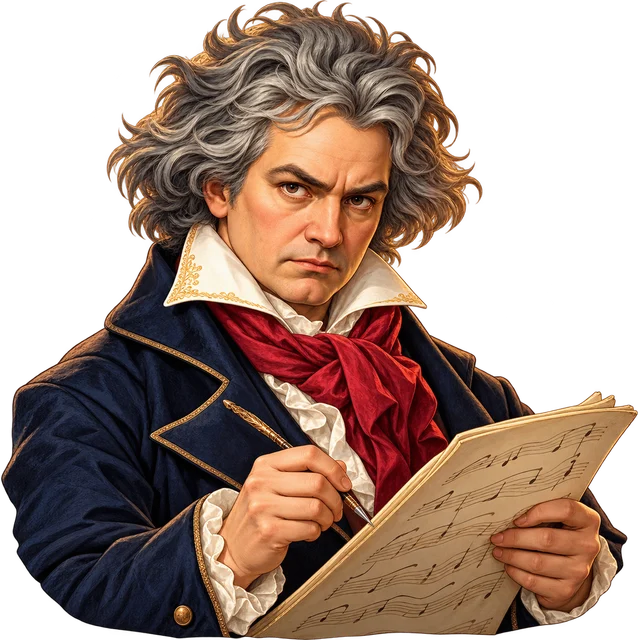
Concerto · Op. 37 · c. 1800–1803
ルートヴィヒ・ヴァン・ベートーヴェン(1770–1827)
初演の楽譜はほぼ白紙!?ハ短調で燃える協奏曲。A blank page at the premiere? A fiery concerto in C minor.
PUBLIC DOMAIN RECORDING
PD / CC0 無料でダウンロードOKWATCH ON YOUTUBE
 Beethoven - Piano Concerto No. 3 in C Minor Op. 37 (Daniel Barenboim & West-Eastern Divan Orchestra)
EuroArtsChannel(YouTube) YouTube で開く ↗
Seong-Jin Cho - Beethoven: Piano Concerto No. 3 in C Minor, Op. 37: I. Allegro con brio
Deutsche Grammophon - DG(YouTube) YouTube で開く ↗
左の音源は権利が切れた録音なのでダウンロードできます。右の動画は YouTube の公式の埋め込みで見るもので、ダウンロードはできません(動画の権利は各チャンネルにあります)。
 もっと名演を観る YouTube で何百万回も再生された人気の演奏
Yunchan Lim 임윤찬 – BEETHOVEN Piano Concerto No. 3 in C Minor, op. 37 – 2022 Cliburn Competition
The Cliburn(YouTube) YouTube で開く ↗
Beethoven: Piano Concerto No. 3 | Daniel Barenboim, Zubin Mehta & the Staatskapelle Berlin
DW Classical Music(YouTube) YouTube で開く ↗
Beethoven Piano Concerto No 3 Filharmonie Bohuslava Martinů / Robert Kružík Olga Scheps Piano live
Olga Scheps(YouTube) YouTube で開く ↗
Beethoven: Piano Concerto No.3 Op.37 - Maya Oganyan, Eduard Topchjan, Armenian National Philarmonic
Maya Oganyan(YouTube) YouTube で開く ↗
ホー!初演のとき、ピアノの楽譜はほとんど何も書いてなかったらしいよ。
 この曲のおはなし The Story
「ピアノ協奏曲第3番」は、ベートーヴェンがハ短調で書いた、ピアノとオーケストラのための協奏曲です。1800年ごろに本格的に書きはじめ、1803年に初演されました。ハ短調は、のちの『運命』交響曲と同じ調で、ベートーヴェンが情熱やたたかいを表すときによく使いました。前の2曲よりも、ずっとドラマチックな作品です。Piano Concerto No. 3 in C minor is a concerto for piano and orchestra. Beethoven worked on it seriously from around 1800, and it was first performed in 1803. C minor is the key of his later Fifth Symphony, and he often used it to express passion and struggle. This concerto is much more dramatic than the first two.
この曲は、ベートーヴェンが尊敬していたモーツァルトのハ短調の協奏曲(第24番)の影響を受けたと言われています。第1楽章は、オーケストラが静かでするどいテーマを示してから、ピアノが力強く登場します。第2楽章はホ長調という遠い調のおだやかな歌、第3楽章はハ短調のロンドで始まり、最後はハ長調で明るくかけぬけます。It is said to have been influenced by Mozart's Piano Concerto No. 24, also in C minor, which Beethoven admired. In the first movement, the orchestra presents a quiet but sharp theme before the piano enters powerfully. The second movement is a peaceful song in the distant key of E major. The third begins as a rondo in C minor and races to a bright finish in C major.
初演は1803年4月5日、ウィーンのアン・デア・ウィーン劇場で、ベートーヴェン自身がピアノを弾きました。同じ演奏会では交響曲第2番やオラトリオ『オリーヴ山上のキリスト』も初演され、とても長い演奏会になりました。協奏曲は1804年に出版され、プロイセンのルイ・フェルディナント王子にささげられました。The premiere took place on April 5, 1803, at the Theater an der Wien in Vienna, with Beethoven himself at the piano. The Second Symphony and the oratorio Christ on the Mount of Olives were also premiered at the same concert, so it was a very long evening. The concerto was published in 1804 and dedicated to Prince Louis Ferdinand of Prussia.
This is a piano concerto by Beethoven. It is dark and dramatic at first. At the first concert, Beethoven played the piano. But most of his piano part was not written down! He played most of it from memory. At the end, the music becomes bright.これはベートーヴェンのピアノ協奏曲です。始めは暗くてドラマチックです。最初の演奏会では、ベートーヴェンがピアノを弾きました。でも、ピアノのパートは、ほとんど楽譜に書かれていませんでした!ほとんどを頭の中の音楽で弾いたのです。最後は、音楽が明るくなります。
 聴きどころ Listening Guide
 えっ!?ネタ Surprising Facts
 タップすると答えが開きます
初演で楽譜めくりを手伝ったザイフリートによると、ピアノの楽譜はほとんど白紙で、ところどころに本人にしか読めないなぞの記号が書いてあるだけだったそうです。ベートーヴェンは書きこむ時間がなかったため、ほとんどを頭の中の音楽で弾き、ザイフリートはめくるタイミングにとても苦労したと伝えています。
Ignaz von Seyfried, who turned the pages at the premiere, said the piano part was almost blank, with only a few strange marks that only Beethoven could read. According to Seyfried, Beethoven played most of the solo part from memory because he had not had time to write it all down, and it was very hard to know when to turn the page.
弟子のリースによると、初演のためのリハーサルは朝8時に始まり、新曲ばかりの長い練習でみんながへとへとになったそうです。見かねた後援者のリヒノフスキー侯爵が、パンや冷たい肉、ワインを大きなかごで差し入れたと伝えられています。
According to his pupil Ferdinand Ries, the rehearsal for the premiere began at 8 a.m., and everyone was exhausted after a long practice of all the new works. Prince Lichnowsky, a supporter, is said to have sent in big baskets of bread, cold meat and wine.
ベートーヴェンはモーツァルトのハ短調の協奏曲(第24番)を聴いて、ピアニストのクラーマーに「ぼくたちには、あんな曲はとても書けないだろう」と言った、という話が伝えられています。本当かどうかはわかりませんが、この第3番にはその曲へのあこがれが感じられると言われます。
There is a story that after hearing Mozart's C minor concerto, Beethoven told the pianist Johann Baptist Cramer, 'We shall never be able to do anything like that!' We can't be sure it is true, but many people feel this concerto shows his admiration for Mozart's work.
第1楽章がハ短調なのに、第2楽章はホ長調という、ハ短調からはとても遠い調で始まります。ピアノがひとりで弾く最初の和音を聴くと、まるで別の世界にワープしたように感じられます。当時としては、とても大胆な選択でした。
The first movement is in C minor, but the second movement is in E major, a key very far from C minor. When the piano plays its first chords alone, it feels like we have jumped into another world. It was a very bold choice for its time.
ENGLISH × MASTERPIECE
 役者が舞台袖(wings)でせりふを覚えて出たことから、と言われます。
 この曲で覚える英単語 Words
 クイズに挑戦 Quiz
 この録音について(著作権・出典) Credits
MORE MASTERPIECES
シャルパンティエ・c. 1688–1698
パンパカパーン!ヨーロッパのテレビの幕開けを飾ってきた、ごうかな前奏曲。
テ・デウム ニ長調のページへ
パーセル・1695
ブリテンが「オーケストラ入門」のテーマに選んだ、かっこいいメロディー。
劇音楽「アブデラザール」より ロンドのページへ
バッハ・c. 1704 (?)
タラリ〜!一度聴いたら忘れない、オルガンの大迫力の幕開け。
トッカータとフーガ ニ短調のページへバッハ・c. 1703–1707 (?)
音楽の授業でおなじみ!4つの声が同じテーマで追いかけっこ。
小フーガ ト短調のページへバッハ・c. 1706–1713
足が弾く低いテーマが21回!重くて壮大な、オルガンの大建築。
パッサカリアとフーガ ハ短調のページへバッハ・c. 1707–1710 (?)
キラキラの駆け上がりで幕開け!若きバッハのはなやかな鍵盤ショー。
トッカータ ニ長調のページへ
ヴィヴァルディ・published 1711
2本のヴァイオリンが火花を散らす!バッハも編曲した熱い協奏曲。
協奏曲集『調和の霊感』第8番 イ短調(2つのヴァイオリンのための協奏曲)のページへヴィヴァルディ・c. 1715
オクターブがぴょんぴょん跳ねる!喜びがはじける合唱の名曲。
グローリア ニ長調のページへ
 MP3