
ダイドーの嘆き
Dido's Lament
パーセル・by 1689
「わたしを覚えていて」。くり返す低音にのせた、胸をうつ別れの歌。
歌劇「ダイドーとエネアス」より「ダイドーの嘆き」のページへ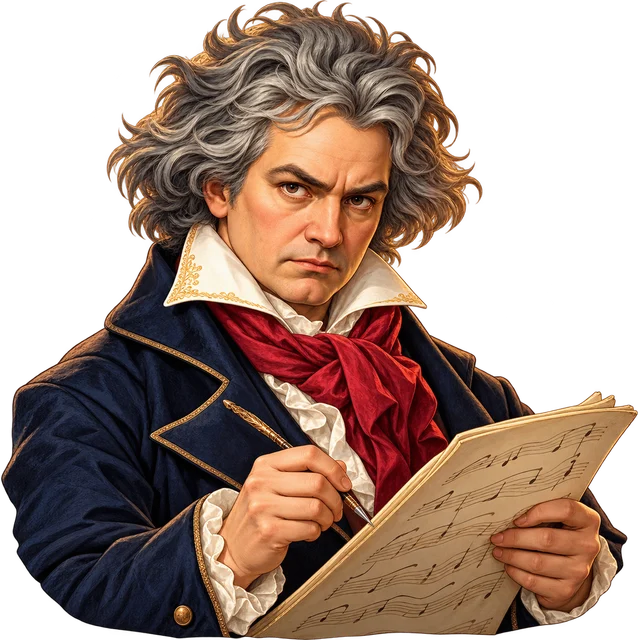
Piano · Op. 111 · 1821–1822
ルートヴィヒ・ヴァン・ベートーヴェン(1770–1827)
嵐と祈りの2楽章だけ。ベートーヴェン最後のピアノ・ソナタ。Just two movements, storm and prayer: Beethoven's last piano sonata.
PUBLIC DOMAIN RECORDING
CC BY-SA 2.0 無料でダウンロードOK 別の演奏で聴く 1:Daniel Veesey
ANOTHER RECORDING 1
PD / CC0WATCH ON YOUTUBE
 Barenboim: Beethoven - Sonata No. 32 in C minor, Op. 111
EuroArtsChannel(YouTube) YouTube で開く ↗
Sviatoslav Richter plays Beethoven Piano Sonata no. 32, op. 111 - video 1975 best quality
ADGO(YouTube) YouTube で開く ↗
左の音源は権利が切れた録音なのでダウンロードできます。右の動画は YouTube の公式の埋め込みで見るもので、ダウンロードはできません(動画の権利は各チャンネルにあります)。
 もっと名演を観る YouTube で何百万回も再生された人気の演奏
Ludwig van Beethoven - Sonata No. 32 in C minor, Op. 111
Minsoo Sohn(YouTube) YouTube で開く ↗

ホー!楽章は2つだけ。「なぜ3つ目がないの?」は、昔からのなぞなんだ。
 この曲のおはなし The Story
「ピアノ・ソナタ第32番」は、ベートーヴェンが書いた32曲のピアノ・ソナタのうち、最後の作品です。1821年から1822年にかけて書かれ、1823年に出版されました。大きなソナタには3つか4つの楽章をもつものが多いのに、この曲には2つの楽章しかありません。はげしいハ短調の第1楽章と、静かなハ長調の第2楽章が、光と影のように向かい合っています。Piano Sonata No. 32 in C minor is the last of Beethoven's 32 piano sonatas. He wrote it in 1821 and 1822, and it was published in 1823. Large sonatas often have three or four movements, but this one has only two. The fierce first movement in C minor and the calm second movement in C major face each other like shadow and light.
第1楽章は重々しい序奏のあと、嵐のようにはげしい音楽になります。ハ短調は『運命』交響曲や『悲愴』ソナタと同じ、ベートーヴェンにとって特別な調です。第2楽章は「アリエッタ(小さな歌)」と名づけられた素朴なテーマと、その変奏です。変奏が進むにつれてリズムがどんどん細かくなり、最後は長いトリルの中で、音楽が天にのぼっていくように聞こえます。The first movement opens with a heavy introduction and then breaks into stormy music. C minor was a special key for Beethoven, the key of his Fifth Symphony and the 'Pathétique' Sonata. The second movement is a simple theme called 'Arietta', meaning 'little song', followed by variations. As the variations go on, the rhythm gets finer and finer, and in the end, long trills make the music seem to rise into the sky.
この曲は、ベートーヴェンの弟子で後援者でもあったルドルフ大公にささげられました。20世紀になると、作家トーマス・マンが小説『ファウストゥス博士』の中でこの曲について長く語り、作曲家プロコフィエフはこの2楽章の形を手本に交響曲第2番を書きました。ピアニストにとって、いつかは挑みたい「山の頂上」のような作品です。The sonata was dedicated to Archduke Rudolph, Beethoven's pupil and supporter. In the 20th century, Thomas Mann wrote about it at length in his novel Doctor Faustus, and Prokofiev used its two-movement plan as a model for his Second Symphony. For pianists, it is like a mountaintop they hope to climb one day.
This is Beethoven's last piano sonata. It has only two parts. The first part is like a big storm. The second part is a quiet, simple song. Some people say one part of it sounds like jazz!これはベートーヴェンの最後のピアノ・ソナタです。楽章は2つしかありません。第1楽章は大きな嵐のようです。第2楽章は、静かで素朴な歌です。その中の一部分はジャズみたいに聞こえる、と言う人もいます!
 聴きどころ Listening Guide
 えっ!?ネタ Surprising Facts
 タップすると答えが開きます
秘書のシンドラーによると、「なぜ第3楽章がないのか」とたずねたところ、ベートーヴェンは「時間がなかった」と答えたそうです。ただ、シンドラーは話を作ることが多かった人なので、本当かどうかは疑わしいとされています。2楽章で十分に完成している、と考える人がほとんどです。
According to his secretary Schindler, when he asked Beethoven why there was no third movement, Beethoven said he had no time. But Schindler often made up stories, so this is doubtful. Most people feel the sonata is complete with two movements.
第2楽章の3つ目の変奏は、はずむような付点のリズムがくり返され、「まるでジャズかブギウギのようだ」とよく言われます。もちろんベートーヴェンがジャズを知っていたわけではありません。でも、今の人が聴いてもびっくりするほどノリのよい部分です。
The third variation of the second movement has bouncy dotted rhythms, and people often say it sounds like jazz or boogie-woogie. Of course, Beethoven knew nothing about jazz. But even today, listeners are surprised by how much it swings.
ドイツの作家トーマス・マンの小説『ファウストゥス博士』(1947年)には、登場人物がこのソナタについて講義をする場面があります。なぜ第3楽章がないのかを語り、ソナタという形そのものへの「別れ」だと説明します。小説の中で1曲がここまで語られるのはめずらしいことです。
In Thomas Mann's novel Doctor Faustus (1947), a character gives a lecture about this sonata. He explains why there is no third movement and calls it a farewell to the sonata form itself. It is rare for a novel to discuss one piece of music in such detail.
この曲のあと、ベートーヴェンは亡くなるまでの約5年間、ピアノ・ソナタを1曲も書きませんでした。そのかわりに『ディアベリ変奏曲』や小品のバガテル、そして弦楽四重奏曲に力を注ぎました。第32番は、ソナタというジャンルへの「さようなら」になったのです。
After this piece, Beethoven did not write another piano sonata in the five years before his death. Instead, he put his energy into the Diabelli Variations, short bagatelles and string quartets. No. 32 became his goodbye to the piano sonata.
ENGLISH × MASTERPIECE
 おじぎ(bow)をして舞台を去る様子から。引退や辞退するときに使います。
 この曲で覚える英単語 Words
 クイズに挑戦 Quiz
 この録音について(著作権・出典) Credits
MORE MASTERPIECES
パーセル・by 1689
「わたしを覚えていて」。くり返す低音にのせた、胸をうつ別れの歌。
歌劇「ダイドーとエネアス」より「ダイドーの嘆き」のページへ
パッヘルベル・c. 1680–1706
同じ8つの音が28回!なのに聴くたび胸がいっぱいになる曲。
カノンとジーグ ニ長調 より「カノン」のページへパーセル・1695
ブリテンが「オーケストラ入門」のテーマに選んだ、かっこいいメロディー。
劇音楽「アブデラザール」より ロンドのページへ
バッハ・c. 1704 (?)
タラリ〜!一度聴いたら忘れない、オルガンの大迫力の幕開け。
トッカータとフーガ ニ短調のページへバッハ・c. 1703–1707 (?)
音楽の授業でおなじみ!4つの声が同じテーマで追いかけっこ。
小フーガ ト短調のページへバッハ・c. 1706–1713
足が弾く低いテーマが21回!重くて壮大な、オルガンの大建築。
パッサカリアとフーガ ハ短調のページへバッハ・c. 1707–1710 (?)
キラキラの駆け上がりで幕開け!若きバッハのはなやかな鍵盤ショー。
トッカータ ニ長調のページへ
ヴィヴァルディ・published 1711
2本のヴァイオリンが火花を散らす!バッハも編曲した熱い協奏曲。
協奏曲集『調和の霊感』第8番 イ短調(2つのヴァイオリンのための協奏曲)のページへ
 MP3