
パッヘルベルのジーグ
Pachelbel's Gigue
パッヘルベル・c. 1680–1706
あの「カノン」には、はずむ相棒がいた!知られざる後半戦。
カノンとジーグ ニ長調 より「ジーグ」のページへ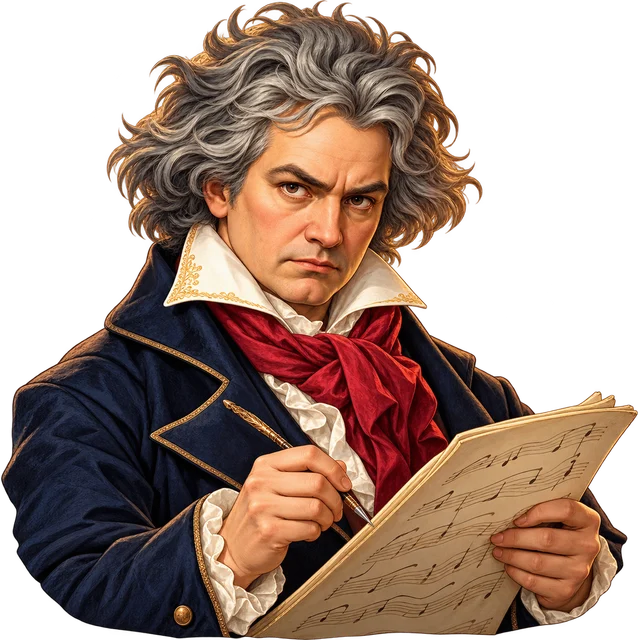
Concerto · Op. 15 · 1795 (revised 1800)
ルートヴィヒ・ヴァン・ベートーヴェン(1770–1827)
第1番なのに2番目の協奏曲!?若きピアニストの華麗な名刺。Number 1, but really his second: a young star's dazzling calling card.
PUBLIC DOMAIN RECORDING
PD / CC0 無料でダウンロードOK
WATCH ON YOUTUBE
 Daniel Barenboim: Beethoven - Piano Concerto No. 1 in C major, Op. 15 (with Staatskapelle Berlin)
EuroArtsChannel(YouTube) YouTube で開く ↗
L.V.BEETHOVEN: piano concerto no°1 - Krystian ZIMERMAN;WIENER PHILHARMONIKER
Sandro da Rimini(YouTube) YouTube で開く ↗
左の音源は権利が切れた録音なのでダウンロードできます。右の動画は YouTube の公式の埋め込みで見るもので、ダウンロードはできません(動画の権利は各チャンネルにあります)。
 もっと名演を観る YouTube で何百万回も再生された人気の演奏
Beethoven: 1. Klavierkonzert ∙ hr-Sinfonieorchester ∙ Louis Schwizgebel ∙ Ben Gernon
hr-Sinfonieorchester – Frankfurt Radio Symphony(YouTube) YouTube で開く ↗
Beethoven: Piano Concerto No. 1 | Margarita Höhenrieder, Staatskapelle Dresden & Fabio Luisi
DW Classical Music(YouTube) YouTube で開く ↗

ホー!第1楽章のカデンツァ、ベートーヴェンは3種類も書きのこしたんだよ。
 この曲のおはなし The Story
「ピアノ協奏曲第1番」は、ピアノとオーケストラのためのハ長調の協奏曲です。ベートーヴェンが20代半ばの1795年ごろに書き、のちに手直しをしました。当時のベートーヴェンは、ウィーンで評判のピアニストで、自分で弾くための協奏曲を作って腕前を見せていました。明るく堂々とした、若さあふれる作品です。Piano Concerto No. 1 in C major is a concerto for piano and orchestra. Beethoven wrote it around 1795, in his mid-twenties, and later revised it. At that time he was a famous pianist in Vienna, and he wrote concertos to play himself and show off his skill. It is a bright, grand work full of youthful energy.
じつは「第2番」として知られる協奏曲のほうが先に作られていて、こちらは2番目に書かれました。先に出版されたので「第1番」になったのです。第1楽章は行進曲のような力強い音楽、第2楽章はクラリネットとピアノが歌いかわすゆったりした音楽、第3楽章ははずむようなリズムのロンドです。In fact, the concerto known as No. 2 was written earlier, and this one came second. It became No. 1 because it was published first. The first movement is strong, like a march. The second movement is slow, with the clarinet and piano singing to each other. The third movement is a rondo with bouncing rhythms.
この協奏曲は1801年に出版され、ベートーヴェンの弟子でもあったオデスカルキ侯爵夫人にささげられました。先生だったハイドンや、尊敬していたモーツァルトの影響を感じさせながらも、大胆な転調や力強さに、ベートーヴェンらしさがすでにあらわれています。The concerto was published in 1801 and dedicated to Princess Odescalchi, who had been Beethoven's pupil. You can hear the influence of Haydn, his teacher, and Mozart, whom he admired. But its bold key changes and power already show Beethoven's own voice.
This is a piano concerto by Beethoven. A concerto is music for a soloist and an orchestra. Beethoven played the piano part himself. It is called 'No. 1', but he wrote it second! It is bright and full of energy.これはベートーヴェンのピアノ協奏曲です。協奏曲は、ソリストとオーケストラのための音楽です。ベートーヴェンは自分でピアノを弾きました。「第1番」と呼ばれていますが、書いたのは2番目です!明るくて元気いっぱいの曲です。
 聴きどころ Listening Guide
 えっ!?ネタ Surprising Facts
 タップすると答えが開きます
ベートーヴェンのピアノ協奏曲は、出版された順に番号がついています。「第2番」はボンにいたころから手がけていた曲で、こちらより先に作られていました。番号だけで作曲の順番を決めると、まちがえてしまうよい例です。
Beethoven's piano concertos are numbered by order of publication. No. 2 was begun while he still lived in Bonn, before this one. It is a good example of why numbers don't always show the order of composition.
カデンツァとは、協奏曲の中でオーケストラが止まり、ソリストがひとりで技を見せる部分です。ベートーヴェンは後年、第1楽章のためのカデンツァを3つ書きのこしました。中でも3つ目はとても長く、まるで1つの曲のようです。どれを弾くかはピアニストの楽しい選択です。
A cadenza is a part of a concerto where the orchestra stops and the soloist shows off alone. Later in life, Beethoven wrote three cadenzas for the first movement. The third is very long, almost like a piece of its own. Pianists can choose which one to play.
献呈されたオデスカルキ侯爵夫人は、結婚前はケグレヴィチ伯爵令嬢といい、ベートーヴェンにピアノを習っていました。ベートーヴェンは彼女に、ピアノ・ソナタ第4番(作品7)もささげています。この教え子をとても大切にしていたことがわかります。
Princess Odescalchi was born Countess Babette Keglevics, and she studied piano with Beethoven. He also dedicated his Piano Sonata No. 4, Op. 7, to her. It shows how much he valued this pupil.
このころのウィーンでは、作曲家が自分で協奏曲を弾いて名をあげるのが、成功への近道でした。モーツァルトもそうでした。ベートーヴェンも自作の協奏曲を演奏会で弾き、作曲家とピアニストの両方として評判を高めていったのです。
In Vienna at that time, playing your own concertos was a fast way to become famous. Mozart had done the same. Beethoven also played his own concertos at concerts and built his fame as both a composer and a pianist.
ENGLISH × MASTERPIECE
 先に来た人から順にサービスを受ける、ということ。先着順を表す決まり文句です。
 この曲で覚える英単語 Words
 クイズに挑戦 Quiz
 この録音について(著作権・出典) Credits
MORE MASTERPIECES
パッヘルベル・c. 1680–1706
あの「カノン」には、はずむ相棒がいた!知られざる後半戦。
カノンとジーグ ニ長調 より「ジーグ」のページへシャルパンティエ・c. 1688–1698
パンパカパーン!ヨーロッパのテレビの幕開けを飾ってきた、ごうかな前奏曲。
テ・デウム ニ長調のページへクラーク・c. 1700
結婚式の大定番。でも作曲者は長いあいだ取りちがえられていた!
トランペット・ヴォランタリー(デンマーク王子の行進)のページへ
バッハ・c. 1707–1710 (?)
キラキラの駆け上がりで幕開け!若きバッハのはなやかな鍵盤ショー。
トッカータ ニ長調のページへ
ヴィヴァルディ・published 1711
2本のヴァイオリンが火花を散らす!バッハも編曲した熱い協奏曲。
協奏曲集『調和の霊感』第8番 イ短調(2つのヴァイオリンのための協奏曲)のページへヴィヴァルディ・c. 1715
オクターブがぴょんぴょん跳ねる!喜びがはじける合唱の名曲。
グローリア ニ長調のページへ
テレマン・c. 1710–1720 (?)
バルブのないラッパで高音をきらり!バロックのトランペットの晴れ舞台。
トランペット協奏曲 ニ長調のページへ
ヘンデル・1717
テムズ川の船の上で国王のために!夏の夜の水上コンサート。
水上の音楽のページへ MP3