
テ・デウム
Te Deum
シャルパンティエ・c. 1688–1698
パンパカパーン!ヨーロッパのテレビの幕開けを飾ってきた、ごうかな前奏曲。
テ・デウム ニ長調のページへ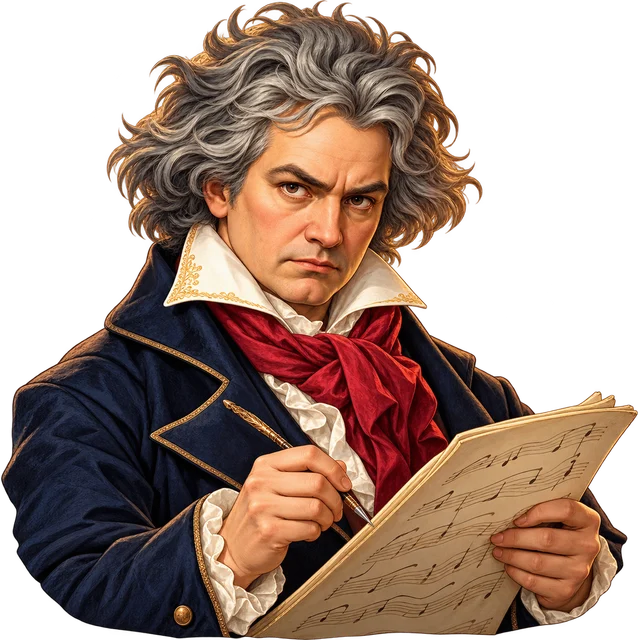
Orchestral · Op. 72b · 1806
ルートヴィヒ・ヴァン・ベートーヴェン(1770–1827)
遠くから響くトランペットに鳥肌!オペラを丸ごと閉じこめた序曲。A distant trumpet call in an overture that holds a whole opera.
WATCH ON YOUTUBE
この曲は、権利の切れた高音質の録音がまだ見つからないため、YouTube の公式チャンネルなどの名演でお楽しみください(ダウンロードはできません)。YouTube でほかの演奏もさがす ↗
 Beethoven: Leonore Overture No. 3, Op. 72b
Berliner Philharmoniker - Topic(YouTube) YouTube で開く ↗
Beethoven: Leonore Overture III / Steffens · Berliner Philharmoniker
Berliner Philharmoniker(YouTube) YouTube で開く ↗
Ludwig van Beethoven: Overture, Leonore No 3 // Gianandrea Noseda and the London Symphony Orchestra
London Symphony Orchestra(YouTube) YouTube で開く ↗
Bernstein Beethoven Leonore Overture Nº3
Farookhq17(YouTube) YouTube で開く ↗
ホー!舞台の外から鳴るトランペット、どこから聴こえるか耳をすませてみて。
 この曲のおはなし The Story
「レオノーレ序曲第3番」は、ベートーヴェンのオペラ『フィデリオ』のために書かれた序曲の1つです。1806年、オペラを書き直して上演したときに作られました。暗い牢屋を思わせる静かな始まりから、救いのトランペット、そして喜びの大爆発まで、オペラの物語がまるごと1曲に入っていると言われる、迫力ある名曲です。Leonore Overture No. 3 is one of the overtures Beethoven wrote for his opera Fidelio. He composed it in 1806, when the revised opera was staged. From a quiet opening that suggests a dark prison, to a trumpet call of rescue, to a great explosion of joy, it is often said to hold the whole story of the opera in one piece.
始まりのゆっくりした部分には、牢屋につながれたフロレスタンが歌うアリアのメロディーが使われています。速い部分に入って音楽が高まったところで、舞台裏から遠くトランペットが鳴りひびきます。これはオペラの中で、悪い刑務所長がフロレスタンを手にかけようとするまさにその時、大臣の到着を知らせる合図です。The slow introduction uses the melody of the aria sung by Florestan in his prison cell. When the fast section builds up, a trumpet sounds from far offstage. In the opera, this is the signal that a government minister has arrived, at the very moment the evil prison governor is about to kill Florestan.
ところがベートーヴェンは、1814年の最終版ではこの序曲を使わず、新しく短い『フィデリオ』序曲を書きました。オペラの前に置くには劇的すぎて、物語の山場を先に見せてしまうからだと考えられています。そのかわり、今では演奏会用の序曲として大人気で、オペラの第2幕の途中で演奏される習慣もあります。However, for the final version in 1814, Beethoven did not use this overture and wrote a new, shorter Fidelio Overture instead. It is thought that this one was too dramatic to open the opera, because it gives away the story's climax in advance. Instead, it has become very popular as a concert overture, and there is also a custom of playing it during Act 2 of the opera.
This music was written for Beethoven's opera. It starts dark and quiet. Then we hear a trumpet far away, from behind the stage. In the story, this sound saves a man in prison! At the end, the music is very happy and strong.この音楽は、ベートーヴェンのオペラのために書かれました。暗く静かに始まります。そして、舞台のうらの遠くから、トランペットが聞こえてきます。物語では、この音が牢屋の男の人を救うのです!最後は、音楽がとても楽しく力強くなります。
 聴きどころ Listening Guide
 えっ!?ネタ Surprising Facts
 タップすると答えが開きます
この序曲のトランペットの合図は、オーケストラの中ではなく、舞台裏など客席から見えないところで演奏するよう指定されています。遠くから聞こえる音が、牢屋の外の世界から救いがやってくる感じを伝えます。合図は2回鳴りひびきます。
The trumpet call in this overture is marked to be played not in the orchestra but offstage, out of the audience's sight. The distant sound makes us feel that rescue is coming from the world outside the prison. The call sounds twice.
オペラ『フィデリオ』の第2幕の終わり近く、場面転換のあいだにこの序曲を演奏する習慣があります。作曲家で指揮者のマーラーが広めたと言われています。ただ、「オペラの流れが止まる」という反対の声もあり、今は演奏しない上演も多くあります。
There is a custom of playing this overture during the scene change near the end of Act 2 of Fidelio. It is said that the composer and conductor Gustav Mahler made this popular. But some people feel it stops the flow of the opera, and many productions today leave it out.
レオノーレ序曲は第1番から第3番までありますが、作られた順番は番号どおりではありません。1805年の初演に使われたのが第2番、1806年の再演に使われたのがこの第3番です。第1番は、1807年ごろ計画されたプラハでの上演のために書かれたと考えられています。
There are three Leonore Overtures, but they were not written in the order of their numbers. No. 2 was used at the 1805 premiere, and No. 3 at the 1806 revival. No. 1 is thought to have been written around 1807 for a planned performance in Prague.
この序曲は、ふつうのオペラの序曲よりずっと長く、ソナタ形式(テーマを出して発展させる形)をしっかり使った、交響曲の1つの楽章のような作品です。そのため「オペラからはみ出してしまった序曲」とも言われ、交響曲と並んで演奏会のプログラムによくのります。
This overture is much longer than most opera overtures, and it uses sonata form so fully that it is like a movement of a symphony. So it is sometimes called an overture that outgrew its opera, and it often appears on concert programs next to symphonies.
ENGLISH × MASTERPIECE
 最後の瞬間にまにあうこと。just in time よりも強い言い方です。
 この曲で覚える英単語 Words
 クイズに挑戦 Quiz
 著作権について Credits
MORE MASTERPIECES
シャルパンティエ・c. 1688–1698
パンパカパーン!ヨーロッパのテレビの幕開けを飾ってきた、ごうかな前奏曲。
テ・デウム ニ長調のページへ
パーセル・1695
ブリテンが「オーケストラ入門」のテーマに選んだ、かっこいいメロディー。
劇音楽「アブデラザール」より ロンドのページへ
バッハ・c. 1704 (?)
タラリ〜!一度聴いたら忘れない、オルガンの大迫力の幕開け。
トッカータとフーガ ニ短調のページへバッハ・c. 1703–1707 (?)
音楽の授業でおなじみ!4つの声が同じテーマで追いかけっこ。
小フーガ ト短調のページへバッハ・c. 1706–1713
足が弾く低いテーマが21回!重くて壮大な、オルガンの大建築。
パッサカリアとフーガ ハ短調のページへバッハ・c. 1707–1710 (?)
キラキラの駆け上がりで幕開け!若きバッハのはなやかな鍵盤ショー。
トッカータ ニ長調のページへ
ヴィヴァルディ・published 1711
2本のヴァイオリンが火花を散らす!バッハも編曲した熱い協奏曲。
協奏曲集『調和の霊感』第8番 イ短調(2つのヴァイオリンのための協奏曲)のページへヴィヴァルディ・c. 1715
オクターブがぴょんぴょん跳ねる!喜びがはじける合唱の名曲。
グローリア ニ長調のページへ
 MP3