
ダイドーの嘆き
Dido's Lament
パーセル・by 1689
「わたしを覚えていて」。くり返す低音にのせた、胸をうつ別れの歌。
歌劇「ダイドーとエネアス」より「ダイドーの嘆き」のページへ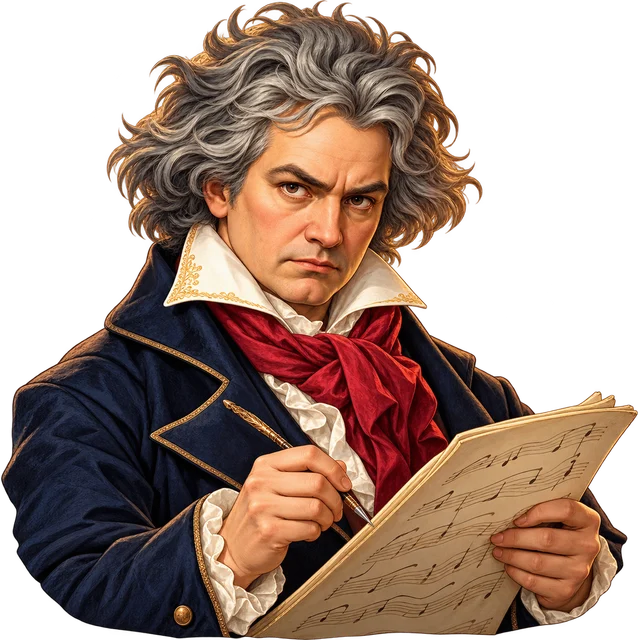
Piano · Op. 109 · 1820
ルートヴィヒ・ヴァン・ベートーヴェン(1770–1827)
最後は変奏曲で歌いあげる、晩年ベートーヴェンの心の歌。A late sonata that ends with a song and six variations.
WATCH ON YOUTUBE
この曲は、権利の切れた高音質の録音がまだ見つからないため、YouTube の公式チャンネルなどの名演でお楽しみください(ダウンロードはできません)。YouTube でほかの演奏もさがす ↗
 Beethoven: Piano Sonata No. 30 in E Major, Op. 109: III. Andante molto cantabile ed espressivo
Víkingur Ólafsson - Topic(YouTube) YouTube で開く ↗
Barenboim: Beethoven - Sonata No. 30 in E major, Op. 109
EuroArtsChannel(YouTube) YouTube で開く ↗
Ludwig van Beethoven - Sonata No. 30 in E major, Op. 109
Minsoo Sohn(YouTube) YouTube で開く ↗
Beethoven: Sonata No.30 in E Major, Op.109 (Goode, Levit)
Ashish Xiangyi Kumar(YouTube) YouTube で開く ↗

ホー!いちばん長いのは最後の楽章。主役が最後にくる、ふしぎな形のソナタなんだ。
 この曲のおはなし The Story
「ピアノ・ソナタ第30番」は、ベートーヴェンが1820年に書いた、ホ長調のピアノ曲です。ほとんど耳が聞こえなくなっていた50歳ごろの作品で、最後の3つのピアノ・ソナタ(第30〜32番)の1つ目にあたります。3つの楽章でできていて、短い2つの楽章のあと、いちばん大切な長い楽章が最後にやってきます。Piano Sonata No. 30 in E major is a piano piece Beethoven wrote in 1820. He was about 50 and almost completely deaf. It is the first of his last three piano sonatas, Nos. 30 to 32. It has three movements: two short ones, and then a long final movement that is the heart of the whole work.
第1楽章は、軽やかに流れる速い音楽と、ゆっくり語りかけるような音楽が、何度も入れかわります。第2楽章はホ短調のはげしく速い音楽。そして第3楽章は、ドイツ語で「歌うように、心の底からの思いをこめて」と書かれたおだやかなテーマと、6つの変奏(同じメロディーをいろいろに形を変えていくこと)でできています。In the first movement, light, flowing music alternates with slow passages that sound like someone speaking. The second movement is fast and fierce, in E minor. The third movement is a calm theme that Beethoven marked, in German, to be played 'songfully, with the deepest feeling'. Six variations follow, each one changing the melody in a new way.
この曲は1821年にベルリンの出版社シュレジンガーから出版され、友人アントーニエ・ブレンターノの娘マクシミリアーネにささげられました。ベートーヴェンは彼女に、この献呈についての心のこもった手紙も書いています。今では、晩年のベートーヴェンの深い世界に入る「入り口」として、多くのピアニストが大切に弾いています。The sonata was published in 1821 by Schlesinger in Berlin and dedicated to Maximiliane Brentano, the daughter of Beethoven's friend Antonie Brentano. Beethoven also wrote her a warm letter about the dedication. Today many pianists treasure it as a doorway into the deep world of Beethoven's last years.
This is a piano sonata by Beethoven. He wrote it when he was about 50. He could not hear well then. The last part starts with a quiet song. The song changes six times, and at the end, the first song comes back.これはベートーヴェンのピアノ・ソナタです。50歳ごろに書きました。そのころ、彼は耳がよく聞こえませんでした。最後の楽章は、静かな歌で始まります。その歌が6回すがたを変え、最後に最初の歌がもどってきます。
 聴きどころ Listening Guide
 えっ!?ネタ Surprising Facts
 タップすると答えが開きます
古典派の多くのソナタでは、第1楽章が音楽のいちばん大きな役わりを受けもちます。ところがこの曲では、第3楽章の変奏曲が、ほかの2つの楽章を合わせたよりも長くなるのがふつうです。最後に向かって心が深まっていく、晩年のベートーヴェンらしい、めずらしい形です。
In many Classical-period sonatas, the first movement carries most of the musical weight. But here, the variations of the third movement usually last longer than the other two movements put together. The music grows deeper toward the end, an unusual shape typical of late Beethoven.
このソナタが書かれた1820年ごろ、ベートーヴェンは大きなミサ曲『ミサ・ソレムニス』に取り組んでいました。その数年後には『第九』も完成させます。巨大な作品のあいまに、ピアノ1台のための、ひとりごとのように親密な曲を書いていたのです。
Around 1820, when he wrote this sonata, Beethoven was also working on his huge Mass, the Missa solemnis. A few years later, he finished the Ninth Symphony. Between these giant works, he was writing personal, private music for just one piano.
献呈されたマクシミリアーネは、ベートーヴェンが長く親しくしていたブレンターノ家の娘です。1812年には、まだ子どもだった彼女のために小さなピアノ三重奏曲も書いています。母のアントーニエを、ベートーヴェンの「不滅の恋人」の有力な候補とする説もあります。
Maximiliane came from the Brentano family, whom Beethoven had known well for years. In 1812, when she was still a child, he wrote a short piano trio for her. Some scholars believe her mother, Antonie, was Beethoven's mysterious 'Immortal Beloved'.
最後の第6変奏では、トリル(2つの音をすばやく行き来する飾り)がきらきらとふるえ続けます。そして曲の終わりに、最初のテーマがほとんどそのままの形で静かにもどってきます。長い旅をして、ふるさとに帰ってきたような終わり方です。
In the sixth and last variation, long trills shimmer on and on. Then, at the very end, the original theme returns almost exactly as it was at the start. It feels like coming home after a long journey.
ENGLISH × MASTERPIECE
 いちばんよいことはまだこれから、という意味。はげましやワクワクを伝えるときに。
 この曲で覚える英単語 Words
 クイズに挑戦 Quiz
 著作権について Credits
MORE MASTERPIECES
パーセル・by 1689
「わたしを覚えていて」。くり返す低音にのせた、胸をうつ別れの歌。
歌劇「ダイドーとエネアス」より「ダイドーの嘆き」のページへ
パッヘルベル・c. 1680–1706
同じ8つの音が28回!なのに聴くたび胸がいっぱいになる曲。
カノンとジーグ ニ長調 より「カノン」のページへ
バッハ・c. 1703–1707 (?)
音楽の授業でおなじみ!4つの声が同じテーマで追いかけっこ。
小フーガ ト短調のページへ
ヴィヴァルディ・published 1711
2本のヴァイオリンが火花を散らす!バッハも編曲した熱い協奏曲。
協奏曲集『調和の霊感』第8番 イ短調(2つのヴァイオリンのための協奏曲)のページへ
ヘンデル・1711
「泣かせてください」と歌う、深い悲しみに満ちた名アリア。
私を泣かせてください(歌劇『リナルド』より)のページへバッハ・1713
2本のリコーダーがやさしく鳴る、のどかな牧場の歌。
カンタータ第208番より「羊は安らかに草を食み」のページへ
コレッリ・published 1714
聖なる夜のために。最後に羊飼いの笛のようなパストラーレが流れます。
合奏協奏曲 ト短調「クリスマス協奏曲」のページへ
クープラン・published 1717
題名の意味はだれも知らない!やわらかく波打つ、なぞの名曲。
神秘的なバリケードのページへ
 MP3