
パッヘルベルのジーグ
Pachelbel's Gigue
パッヘルベル・c. 1680–1706
あの「カノン」には、はずむ相棒がいた!知られざる後半戦。
カノンとジーグ ニ長調 より「ジーグ」のページへ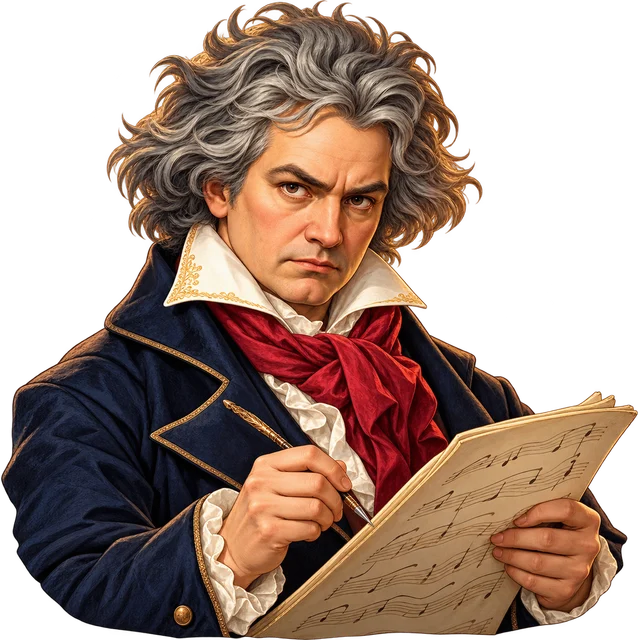
Piano · Op. 53 · 1803–1804
ルートヴィヒ・ヴァン・ベートーヴェン(1770–1827)
恩人にささげた、夜明けのように輝くピアノ・ソナタ。A sonata as bright as sunrise, written for a kind patron.
PUBLIC DOMAIN RECORDING
PD / CC0 無料でダウンロードOK
 別の演奏で聴く 1:Michael Hawley
ANOTHER RECORDING 1
PD / CC0WATCH ON YOUTUBE
 Beethoven Sonata 21 Op. 53 "Waldstein" Valentina Lisitsa
Valentina Lisitsa QOR Records Official channel(YouTube) YouTube で開く ↗
Martha Argerich Beethoven Sonata Op. 53 "Waldstein"
martha argerich(YouTube) YouTube で開く ↗
左の音源は権利が切れた録音なのでダウンロードできます。右の動画は YouTube の公式の埋め込みで見るもので、ダウンロードはできません(動画の権利は各チャンネルにあります)。
 もっと名演を観る YouTube で何百万回も再生された人気の演奏
Beethoven – Sonata No.21 Waldstein 1st Movement
Kassia(YouTube) YouTube で開く ↗
Beethoven: Sonata No.21 in C Major, "Waldstein" (Pletnev)
Ashish Xiangyi Kumar(YouTube) YouTube で開く ↗
Beethoven Sonata N° 21 'Waldstein' Daniel Barenboim
Ahmed Barod(YouTube) YouTube で開く ↗

ホー!最初は真ん中にもっと長い楽章があったけど、外されてしまったんだ。
 この曲のおはなし The Story
ピアノ・ソナタ第21番は、ベートーヴェンが1803年から1804年にかけて書いたピアノ曲です。低い音で静かに、細かく刻まれる和音から始まり、明るいハ長調の世界が広がっていきます。とても演奏がむずかしく、ピアノの力を思いきり引き出した、30代のベートーヴェンの代表作のひとつです。Beethoven wrote Piano Sonata No. 21 in 1803 and 1804. It begins with quiet, quickly repeated chords low on the keyboard, and then opens into a bright world of C major. It is very difficult to play, and it is one of the great works of Beethoven's thirties, pushing the piano to its limits.
この曲は、ボン時代からベートーヴェンを支えたワルトシュタイン伯爵にささげられました。1792年、ベートーヴェンがウィーンへ旅立つとき、伯爵は記念帳に「たゆまぬ努力によって、ハイドンの手からモーツァルトの精神を受け取るでしょう」と書いてはげましました。また1803年、ベートーヴェンはパリのエラール社の、音域の広い新しいピアノを手に入れていて、この曲にも影響したと言われています。The sonata is dedicated to Count Ferdinand von Waldstein, who had supported Beethoven since his days in Bonn. In 1792, when Beethoven left for Vienna, the count wrote in his album: "Through constant hard work, you will receive Mozart's spirit from Haydn's hands." In 1803, Beethoven also got a new piano with a wider range from the Érard company in Paris, and it is said to have influenced this sonata.
最初、この曲には長くゆっくりした第2楽章がありました。ところが友人に「長すぎる」と言われ、ベートーヴェンはそれを外して短い「序奏」に書きかえたと、弟子のリースが伝えています。外された楽章は『アンダンテ・ファヴォリ』として別に出版されました。フランス語では「ローロール(夜明け)」ともよばれますが、ベートーヴェン自身がつけた名前ではありません。At first, the sonata had a long, slow middle movement. But according to Beethoven's pupil Ferdinand Ries, a friend said the sonata was too long, so Beethoven took it out and wrote a short introduction instead. The removed movement was published separately as the Andante favori. In French it is also called "L'Aurore" (The Dawn), but Beethoven did not give it that name.
Beethoven wrote this piano music for a kind friend. The friend was Count Waldstein. He helped young Beethoven a lot. The music is bright, like the morning sun. It is very hard to play!ベートーヴェンは、やさしい友人のためにこのピアノ曲を書きました。その友人はワルトシュタイン伯爵です。伯爵は若いベートーヴェンをたくさん助けました。音楽は朝日のように明るいです。弾くのはとてもむずかしいですよ!
 聴きどころ Listening Guide
 えっ!?ネタ Surprising Facts
 タップすると答えが開きます
もともとの第2楽章は、友人から「長すぎる」と言われて外されました。その楽章は『アンダンテ・ファヴォリ(お気に入りのアンダンテ)』という題で別に出版され、今もピアノの名曲としてよく演奏されています。
The original middle movement was removed after a friend said the sonata was too long. It was published on its own as the Andante favori ("favorite Andante"), and it is still often played today.
ベートーヴェンがウィーンへ旅立つ1792年、ワルトシュタイン伯爵は「たゆまぬ努力によって、ハイドンの手からモーツァルトの精神を受け取るでしょう」と書きました。10年以上たって、その恩人にこの大作が贈られたのです。
In 1792, as Beethoven left for Vienna, Count Waldstein wrote: "Through constant hard work, you will receive Mozart's spirit from Haydn's hands." More than ten years later, Beethoven gave this great sonata to that same friend.
1803年、ベートーヴェンはパリのピアノ会社エラールの新しいピアノを手に入れました。それまでのピアノより音域が広く、この曲の高い音の使い方や力強いひびきに影響したと考えられています。
In 1803, Beethoven got a new piano made by the Érard company in Paris. It had a wider range than his earlier pianos, and it is thought to have influenced the high notes and powerful sound of this sonata.
最終楽章には、オクターヴの形のまま鍵盤の上を指ですべらせる「オクターヴ・グリッサンド」が出てきます。鍵盤が軽かった当時のピアノとちがい、今の重い鍵盤ではとても難しく、両手で分けて弾くピアニストも多い難所です。
The finale has octave glissandos, where the player slides across the keys while holding an octave. This was easier on the light keys of Beethoven's pianos, but on today's heavier keys it is very hard, so many pianists split it between their hands.
ENGLISH × MASTERPIECE
 return the favor は『恩返しをする・お返しをする』。favor は親切・好意のこと。
 この曲で覚える英単語 Words
 クイズに挑戦 Quiz
 この録音について(著作権・出典) Credits
MORE MASTERPIECES
パッヘルベル・c. 1680–1706
あの「カノン」には、はずむ相棒がいた!知られざる後半戦。
カノンとジーグ ニ長調 より「ジーグ」のページへシャルパンティエ・c. 1688–1698
パンパカパーン!ヨーロッパのテレビの幕開けを飾ってきた、ごうかな前奏曲。
テ・デウム ニ長調のページへ
パーセル・1695
ブリテンが「オーケストラ入門」のテーマに選んだ、かっこいいメロディー。
劇音楽「アブデラザール」より ロンドのページへクラーク・c. 1700
結婚式の大定番。でも作曲者は長いあいだ取りちがえられていた!
トランペット・ヴォランタリー(デンマーク王子の行進)のページへ
バッハ・c. 1703–1707 (?)
音楽の授業でおなじみ!4つの声が同じテーマで追いかけっこ。
小フーガ ト短調のページへバッハ・c. 1706–1713
足が弾く低いテーマが21回!重くて壮大な、オルガンの大建築。
パッサカリアとフーガ ハ短調のページへバッハ・c. 1707–1710 (?)
キラキラの駆け上がりで幕開け!若きバッハのはなやかな鍵盤ショー。
トッカータ ニ長調のページへ
ヴィヴァルディ・published 1711
2本のヴァイオリンが火花を散らす!バッハも編曲した熱い協奏曲。
協奏曲集『調和の霊感』第8番 イ短調(2つのヴァイオリンのための協奏曲)のページへ MP3