メヌエット
Minuet
ボッケリーニ・1771
宮廷のダンスがそのまま音楽に。世界でとくに有名なメヌエット。
弦楽五重奏曲 ホ長調 より「メヌエット」のページへClassical · 1743–1805
「チェロの名手」The cello virtuoso of the Classical era
 ルッカ(イタリア)
 マドリード(スペイン)1 曲を収録
優雅な「メヌエット」で知られる、チェロの名手。The cello master famous for his graceful Minuet.
 ボッケリーニの名曲を聴く
ボッケリーニ・1771
宮廷のダンスがそのまま音楽に。世界でとくに有名なメヌエット。
弦楽五重奏曲 ホ長調 より「メヌエット」のページへ
ホー!ボッケリーニは、チェロ2本の弦楽五重奏曲を100曲以上も書いたんだ。
 生涯 Life Story
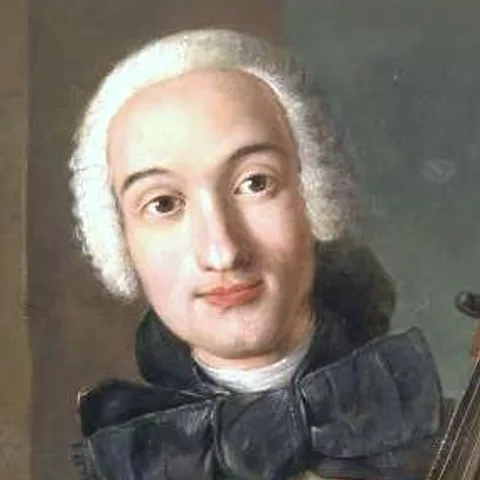
ボッケリーニは1743年、イタリアの町ルッカで生まれました。父レオポルドはチェロやコントラバスの奏者で、ルイジは5歳ごろから父にチェロを習います。13歳になるとローマへ勉強に出され、腕をみがきました。1757年には父とともにウィーンへ行き、宮廷の劇場の楽団で演奏します。少年のころから、すでにプロの演奏家だったのです。Boccherini was born in 1743 in the Italian town of Lucca. His father, Leopoldo, played the cello and double bass, and Luigi began learning the cello from him at about five. At thirteen he was sent to Rome to study further. In 1757 he went to Vienna with his father and played in the orchestra of the court theater. He was already a professional musician as a boy.
1768年、ボッケリーニはスペインのマドリードへ移り、1770年から国王カルロス3世の弟ルイス王子に仕えます。王子が宮廷を離れて田舎のアレナス・デ・サン・ペドロに住むようになると、ボッケリーニも一緒に移りました。静かな土地で、彼はチェロを2本使う「弦楽五重奏曲」という新しい編成の曲を、次々と生み出していきます。In 1768, Boccherini moved to Madrid, and from 1770 he served Prince Luis, the younger brother of King Charles III of Spain. When the prince left the royal court to live in the countryside at Arenas de San Pedro, Boccherini went with him. In that quiet place, he wrote one string quintet after another, using a new lineup with two cellos.
1785年、大切な主人だったルイス王子が亡くなり、ボッケリーニの暮らしは不安定になります。その後、チェロ好きのプロイセン王フリードリヒ・ヴィルヘルム2世の宮廷作曲家になり、スペインにいながら作品を送り続けました。けれども1785年と1805年に2人の妻を、1790年代から1800年代には4人の娘を亡くすという、つらい出来事が続きます。In 1785, his dear patron Prince Luis died, and Boccherini's life became uncertain. He then became court composer to King Frederick William II of Prussia, a keen cellist, and he kept sending him new works while still living in Spain. But sorrow followed. He lost his first wife in 1785 and his second in 1805, and four of his daughters died between the 1790s and the early 1800s.
晩年はナポレオンの弟リュシアン・ボナパルトなどの支援を受けましたが、暮らしは苦しかったと言われます。1805年、マドリードで62歳で亡くなりました。遺骨は1927年、ふるさとルッカの教会に移されています。弦楽五重奏曲を100曲以上、弦楽四重奏曲を100曲近く残し、今では古典派の室内楽を支えた大作曲家として見直されています。In his later years he received support from patrons such as Lucien Bonaparte, Napoleon's brother, but his life is said to have been hard. He died in Madrid in 1805 at the age of 62. In 1927 his remains were moved to a church in his hometown of Lucca. He left more than 100 string quintets and nearly 100 string quartets, and today he is valued as a major composer of Classical chamber music.
Boccherini was born in Lucca, Italy. He played the cello very well. He moved to Spain and worked for a prince. He wrote more than 100 quintets. His Minuet is very famous. You can hear it in old movies.ボッケリーニはイタリアのルッカで生まれました。チェロをとても上手にひきました。スペインに移り、王子に仕えました。五重奏曲を100曲以上書きました。彼の「メヌエット」はとても有名です。古い映画で聴くことができます。
 これだけは!鉄板情報 Must-Know Facts
 あっと驚くネタ Surprising Stories
 タップすると答えが開きます
1955年のイギリス映画「マダムと泥棒」では、どろぼうの一味が弦楽五重奏団のふりをして、下宿の部屋にあつまります。そのとき、レコードで流してごまかす曲が、ボッケリーニの「メヌエット」なのです。名曲がコメディの小道具になりました。
In the 1955 British comedy The Ladykillers, a gang of crooks pretend to be a string quintet while they plan a robbery. To fool their landlady, they play a record of Boccherini's Minuet. The famous tune became a funny movie prop.
2003年の映画「マスター・アンド・コマンダー」では、船長と軍医がヴァイオリンとチェロで合奏する場面があり、ボッケリーニの「マドリードの通りの夜の音楽」が使われています。この音楽が、映画の場面に生き生きとしたスペインの色どりをそえています。
In the 2003 film Master and Commander, the captain and the ship's doctor play music together on violin and cello. The film uses Boccherini's Night Music of the Streets of Madrid, which adds a lively Spanish color to the scene.
スペイン国王カルロス3世が、ボッケリーニの新しい曲の一部が気に入らず「直すように」と言ったところ、ボッケリーニは直すどころかその部分をくり返して2倍の長さにした、という逸話が伝わっています。そのせいで国王の機嫌をそこねた、とも言われます。
There is a story that King Charles III of Spain disliked a passage in one of Boccherini's new pieces and told him to change it. Instead, Boccherini repeated the passage, making it twice as long. It is said that this cost him the king's favor.
スペインで長く暮らしたボッケリーニは、スペインの踊りの音楽も取り入れました。ギター五重奏曲第4番の終楽章「ファンダンゴ」は、カスタネットを加えて演奏されることがよくあります。ただし作曲者の自筆譜は失われていて、カスタネットの使い方については専門家の意見が分かれています。
After living in Spain for many years, Boccherini used Spanish dance music in his works. Performers often add castanets to the Fandango finale of his Guitar Quintet No. 4. However, the composer's own manuscript is lost, and experts disagree about how he meant the castanets to be used.
プロイセン国王フリードリヒ・ヴィルヘルム2世は、自分でもチェロを弾く音楽好きでした。ボッケリーニはこの王の宮廷作曲家になりましたが、ドイツへは引っこさず、スペインから新しい曲を送り続けたのです。今でいう「リモートワーク」のような働き方でした。
King Frederick William II of Prussia loved music and played the cello himself. Boccherini became his court composer, but he did not move to Germany. He kept sending new works from Spain, a bit like working remotely today.
ボッケリーニの音楽はハイドンに似ているけれど、もっとやさしい、ということから、ヴァイオリン奏者ジュゼッペ・プッポが「ボッケリーニはハイドンの奥さんだ」と言ったと伝えられています。ただし今では、彼は独自の個性をもつ作曲家として高く評価されています。
Because Boccherini's music sounded like Haydn's but gentler, the violinist Giuseppe Puppo is said to have called him "Haydn's wife." Today, however, he is highly valued as a composer with his own unique style.
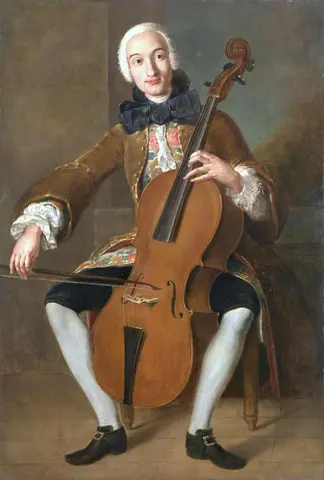
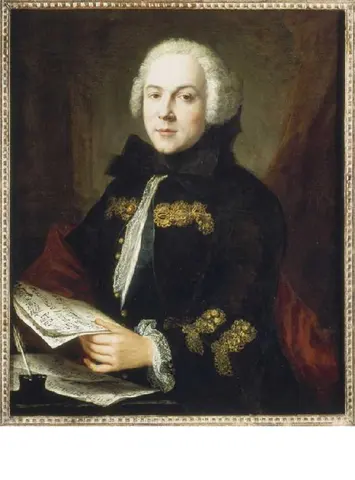
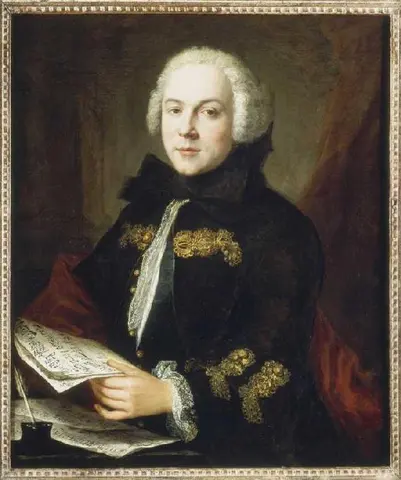
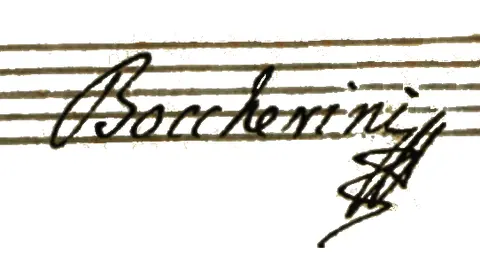
 肖像画・写真・自筆譜 Gallery (Public Domain)
Wikimedia Commons でパブリックドメイン(または CC0)と確認した画像です。クリックで拡大。
 年表 Timeline
 ボッケリーニで覚える英単語 Words
 クイズに挑戦 Quiz
MORE COMPOSERS

 MP3