
テ・デウム
Te Deum
シャルパンティエ・c. 1688–1698
パンパカパーン!ヨーロッパのテレビの幕開けを飾ってきた、ごうかな前奏曲。
テ・デウム ニ長調のページへ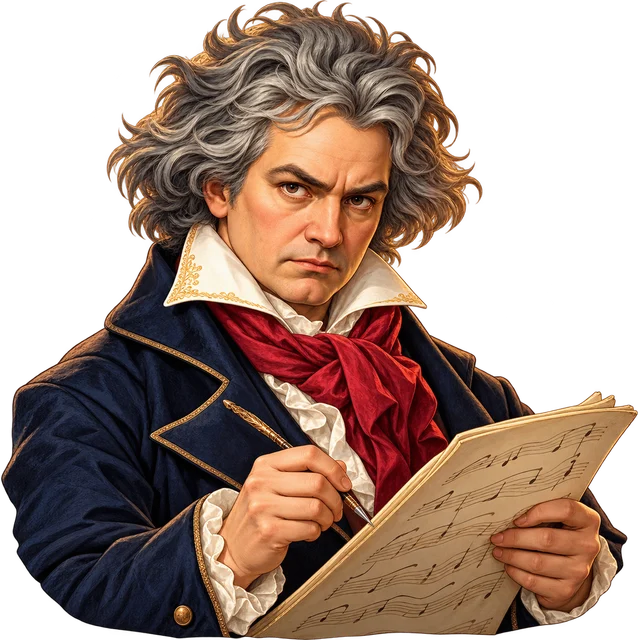
Orchestral · Op. 84 · 1809–1810
ルートヴィヒ・ヴァン・ベートーヴェン(1770–1827)
自由のために立ち上がった英雄の物語。最後は勝利の大歓声!A hero stands up for freedom, and the music ends in victory.
PUBLIC DOMAIN RECORDING
PD / CC0 無料でダウンロードOK 別の演奏で聴く 1:Ludwig van Beethoven
ANOTHER RECORDING 1
PD / CC0 別の演奏で聴く 2:Kevin MacLeodANOTHER RECORDING 2
CC BY 3.0WATCH ON YOUTUBE
 Beethoven: Egmont, Op. 84: Overture
Berliner Philharmoniker - Topic(YouTube) YouTube で開く ↗
Stage@Seven: Beethoven: Egmont (Ouverture) – Andrés Orozco-Estrada
hr-Sinfonieorchester – Frankfurt Radio Symphony(YouTube) YouTube で開く ↗
左の音源は権利が切れた録音なのでダウンロードできます。右の動画は YouTube の公式の埋め込みで見るもので、ダウンロードはできません(動画の権利は各チャンネルにあります)。
 もっと名演を観る YouTube で何百万回も再生された人気の演奏
Beethoven - Egmont-Ouvertüre | Andrés Orozco-Estrada | WDR Sinfonieorchester
ARD Klassik(YouTube) YouTube で開く ↗
Ludwig Van Beethoven - Egmont Overture
ᛏᚤᚱᚠᛁᚾᚷᚱ(YouTube) YouTube で開く ↗
ホー!ベートーヴェンは、劇を書いたゲーテを心から尊敬していたんだ。
 この曲のおはなし The Story
『エグモント』序曲は、ドイツの大作家ゲーテの劇『エグモント』のために、ベートーヴェンが1809年から1810年にかけて書いた音楽の最初の曲です。序曲とは、劇やオペラの幕が開く前に演奏される曲のこと。重々しい和音で始まり、緊張がどんどん高まって、最後は明るく輝かしい勝利の音楽で終わります。The Egmont Overture is the opening piece of the music Beethoven wrote in 1809 and 1810 for Egmont, a play by the great German writer Goethe. An overture is a piece played before the curtain rises on a play or opera. It begins with heavy chords, the tension keeps rising, and it ends with bright, shining music of victory.
エグモントは16世紀に実在したネーデルラント(今のベルギーやオランダ)の貴族で、スペインの支配に反対し、処刑された人物です。ゲーテの劇でも、エグモントは自由のために命をささげ、最後に勝利を予言します。序曲の最後の部分は、劇の終わりの「勝利の交響曲」と同じ音楽です。Egmont was a real nobleman of the 16th century in the Low Countries, today's Belgium and the Netherlands. He opposed Spanish rule and was executed. In Goethe's play, Egmont gives his life for freedom and, at the end, foresees victory. The last part of the overture uses the same music as the "Victory Symphony" at the end of the play.
劇の音楽は、序曲をふくめて全部で10曲。1810年6月、ウィーンのブルク劇場での上演で初めて演奏されました。ベートーヴェンは1812年、温泉地テプリッツでついにゲーテと会うことができました。今では劇そのものが上演されることは少なくなりましたが、序曲は演奏会の人気曲として愛されています。The music for the play has ten pieces in all, including the overture. It was first performed at the Burgtheater in Vienna in June 1810. In 1812, Beethoven finally met Goethe at the spa town of Teplitz. Today the play itself is rarely performed, but the overture is a favorite at concerts.
This music tells the story of a brave hero. His name is Egmont. He fights for freedom. The music starts dark and heavy. At the end, it becomes bright and happy, like a big victory!この音楽は、勇かんな英雄の物語を語ります。彼の名前はエグモント。自由のために戦います。音楽は暗く重々しく始まります。最後は、大きな勝利のように明るく楽しくなります!
 聴きどころ Listening Guide
 えっ!?ネタ Surprising Facts
 タップすると答えが開きます
エグモント伯は16世紀のネーデルラント(今のオランダ・ベルギーのあたり)の貴族です。スペイン王に忠実でしたが、王のきびしい政策には反対し、反逆の罪に問われて1568年にブリュッセルで処刑されました。その死は、オランダがスペインから独立しようとする長い戦いの始まりと重なる、大きな事件でした。
Count Egmont was a 16th-century nobleman in the Netherlands. He stayed loyal to the Spanish king but opposed some of his harsh policies. Accused of treason, he was executed in Brussels in 1568. His death was a major event near the start of the long war in which the Dutch fought for independence from Spain.
1812年、テプリッツでベートーヴェンとゲーテは出会いました。散歩中に皇族の一行と出会ったとき、ゲーテは道をゆずったのに、ベートーヴェンは堂々と通りすぎた、という有名な話がありますが、これは疑わしい言い伝えとされています。
Beethoven and Goethe met in Teplitz in 1812. There is a famous story that when they met the imperial family on a walk, Goethe stepped aside and bowed, but Beethoven marched straight through. However, this story is considered doubtful.
冒頭のゆっくりした部分の、重く引きずるような3拍子のリズムは、スペインの古いおどり「サラバンド」に似ていると言われます。エグモントの国を苦しめるスペインの支配を表している、と考える人もいます。
The heavy, dragging rhythm in three beats at the slow opening is said to resemble the sarabande, an old Spanish dance. Some think it stands for the harsh Spanish rule over Egmont's land.
序曲の終わりのはなやかな部分は、劇のラストで流れる「勝利の交響曲」と同じ音楽です。つまり、幕が開く前の序曲の中で、劇の結末を先にこっそり聴かせてしまっているのです。
The brilliant end of the overture is the same music as the "Victory Symphony" played at the very end of the play. In other words, the overture lets you hear the ending before the play even begins.
ENGLISH × MASTERPIECE
 resonate with ~ は『~と共鳴する・心にひびく』。音が共鳴するイメージです。
 この曲で覚える英単語 Words
 クイズに挑戦 Quiz
 この録音について(著作権・出典) Credits
MORE MASTERPIECES
シャルパンティエ・c. 1688–1698
パンパカパーン!ヨーロッパのテレビの幕開けを飾ってきた、ごうかな前奏曲。
テ・デウム ニ長調のページへ
パーセル・1695
ブリテンが「オーケストラ入門」のテーマに選んだ、かっこいいメロディー。
劇音楽「アブデラザール」より ロンドのページへ
バッハ・c. 1704 (?)
タラリ〜!一度聴いたら忘れない、オルガンの大迫力の幕開け。
トッカータとフーガ ニ短調のページへバッハ・c. 1703–1707 (?)
音楽の授業でおなじみ!4つの声が同じテーマで追いかけっこ。
小フーガ ト短調のページへバッハ・c. 1706–1713
足が弾く低いテーマが21回!重くて壮大な、オルガンの大建築。
パッサカリアとフーガ ハ短調のページへバッハ・c. 1707–1710 (?)
キラキラの駆け上がりで幕開け!若きバッハのはなやかな鍵盤ショー。
トッカータ ニ長調のページへ
ヴィヴァルディ・published 1711
2本のヴァイオリンが火花を散らす!バッハも編曲した熱い協奏曲。
協奏曲集『調和の霊感』第8番 イ短調(2つのヴァイオリンのための協奏曲)のページへヴィヴァルディ・c. 1715
オクターブがぴょんぴょん跳ねる!喜びがはじける合唱の名曲。
グローリア ニ長調のページへ
 MP3