衣装をつけろ
Vesti la giubba
レオンカヴァッロ・1892
心で泣いて、顔で笑え。道化師の悲しい叫び。
歌劇「道化師」より「衣装をつけろ」のページへLate Romantic & Modern · 1857–1919
「オペラ「道化師」の作曲家」The composer of Pagliacci
 ナポリ(イタリア)
 モンテカティーニ・テルメ(イタリア)1 曲を収録
笑顔の道化師が心で泣く――涙のオペラを書いた人。He gave the world the clown who laughs on the outside and weeps inside.
 レオンカヴァッロの名曲を聴く
レオンカヴァッロ・1892
心で泣いて、顔で笑え。道化師の悲しい叫び。
歌劇「道化師」より「衣装をつけろ」のページへ
ホー!レオンカヴァッロは、オペラの台本も自分で書いたんだよ。
 生涯 Life Story
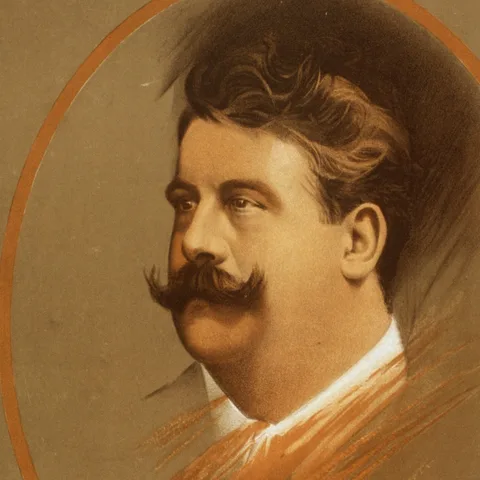
ルッジェーロ・レオンカヴァッロは1857年、イタリア南部のナポリに生まれました。父は判事で、裁判所の仕事をしていました。地元のサン・ピエトロ・ア・マイエッラ音楽院で音楽を学んだあと、ボローニャ大学で有名な詩人カルドゥッチに文学を習いました。この文学の勉強が、のちに自分でオペラの台本を書く力になります。Ruggero Leoncavallo was born in Naples, in southern Italy, in 1857. His father was a magistrate. After studying music at the San Pietro a Majella Conservatory in Naples, he studied literature at the University of Bologna under the famous poet Giosuè Carducci. This training in literature later allowed him to write the words for his own operas.
1879年、おじのすすめでエジプトのカイロへ渡り、有力者のおかかえ音楽家になりました。ところが1882年、エジプトで反乱が起こり、フランスへ逃げることになります。パリではモンマルトルに住み、カフェなどで歌手の伴奏をしたり、音楽を教えたりして暮らしました。ここで出会った歌手ベルトとは、のちに結婚しています。In 1879, on his uncle's advice, he went to Cairo, where he became the private musician of a powerful official. But in 1882 a revolt broke out in Egypt, and he had to flee to France. In Paris he lived in Montmartre, earning a living as an accompanist and teacher, often playing in cafés. There he met the singer Berthe Rambaud, whom he later married.
マスカーニの「カヴァレリア・ルスティカーナ」の大成功に刺激され、レオンカヴァッロは自分で台本を書いたオペラ「道化師」を作ります。旅回りの芝居一座の座長が、舞台の上で本当の嫉妬に狂ってしまう物語です。1892年5月21日、ミラノのダル・ヴェルメ劇場で、若きトスカニーニの指揮で初演され、大成功をおさめました。本人は、父が担当した実際の事件がもとだと語っています。Inspired by the huge success of Mascagni's Cavalleria rusticana, Leoncavallo wrote Pagliacci, setting his own libretto. It tells of the leader of a travelling theatre troupe whose real-life jealousy takes over during a comedy on stage. It was premiered at the Teatro Dal Verme in Milan on 21 May 1892, conducted by the young Arturo Toscanini, and was a triumph. Leoncavallo claimed the story came from a real case his father had judged.
その後はプッチーニの「マノン・レスコー」の台本づくりも手伝いましたが、同じ物語でオペラ「ラ・ボエーム」を書いたことで、プッチーニとはライバルになります。1897年に初演された彼の「ボエーム」は、前年のプッチーニ版の人気に負けてしまいました。1919年、トスカーナの温泉町モンテカティーニ・テルメで62歳で亡くなります。「道化師」は今も「カヴァレリア」と2本立てでよく上演されます。He also helped write the libretto of Puccini's Manon Lescaut, but the two became rivals when both wrote operas called La bohème. Leoncavallo's version, premiered in 1897, was overshadowed by Puccini's, which had appeared the year before. He died in 1919 in the Tuscan spa town of Montecatini Terme, aged 62. Pagliacci is still often staged together with Cavalleria rusticana as a famous double bill.
Ruggero Leoncavallo was born in Naples, Italy, in 1857. He lived in Egypt and in Paris. He wrote an opera called Pagliacci. It is about a sad clown. He also wrote the words for his opera. It is still very popular today.ルッジェーロ・レオンカヴァッロは1857年にイタリアのナポリで生まれました。彼はエジプトやパリで暮らしました。彼は「道化師」というオペラを書きました。悲しいピエロのお話です。彼はオペラの言葉も自分で書きました。今もとても人気があります。
 これだけは!鉄板情報 Must-Know Facts
 あっと驚くネタ Surprising Stories
 タップすると答えが開きます
若いころ、レオンカヴァッロはエジプトのカイロで有力者のおかかえ音楽家をしていました。ところが1882年に反乱が起こり、急いでフランスへ逃げることになりました。パリでは、カフェで歌手の伴奏をしたり音楽を教えたりして暮らしました。
As a young man, Leoncavallo worked in Cairo as the private musician of a powerful official. When a revolt broke out in 1882, he had to escape to France. In Paris he made a living by accompanying singers in cafés and teaching music.
レオンカヴァッロ本人は、「道化師」の物語は判事だった父が担当した、南イタリアの町モンタルト・ウッフーゴでの実際の事件がもとだと語っています。ただし、ほかの劇からヒントを得たのではないかという声もありました。
Leoncavallo said that the story of Pagliacci came from a real case in the southern Italian town of Montalto Uffugo, which his father had judged as a magistrate. Others, however, suggested that he had borrowed ideas from an earlier play.
多くの作曲家は台本作家に物語を書いてもらいますが、レオンカヴァッロは大学で詩人カルドゥッチに文学を学んだ文学青年でした。「道化師」はもちろん、プッチーニの「マノン・レスコー」の台本づくりも手伝っています。
Most opera composers needed a librettist, but Leoncavallo had studied literature with the poet Carducci. He wrote his own words for Pagliacci, and he even helped with the libretto of Puccini's Manon Lescaut.
レオンカヴァッロとプッチーニは、同じ小説をもとにオペラ「ラ・ボエーム」を書くことになり、仲がこじれたと言われています。1896年のプッチーニ版が先に大ヒットし、1897年のレオンカヴァッロ版はかすんでしまいました。
Leoncavallo and Puccini both decided to write an opera called La bohème on the same novel, and their friendship is said to have suffered. Puccini's version came first in 1896 and was a hit, so Leoncavallo's 1897 version was overshadowed.
歌曲「マッティナータ」は、レコード会社グラモフォンのために、名テノールのカルーソーの声を思いうかべて書かれました。1904年4月8日の録音では、レオンカヴァッロ本人がピアノ伴奏をつとめています。
His song 'Mattinata' was written for the Gramophone Company with Enrico Caruso's voice in mind. When Caruso recorded it on 8 April 1904, Leoncavallo himself played the piano.
カルーソーが歌った「道化師」の「衣装をつけろ」のレコードは、世界で初めて100万枚売れたレコードの一つと言われることがあります。ただし、何度か録音された別のバージョンを合計した数字だろうとも考えられています。
Caruso's recording of 'Vesti la giubba' is sometimes called one of the first records ever to sell a million copies. However, that figure probably adds together several different versions he recorded.
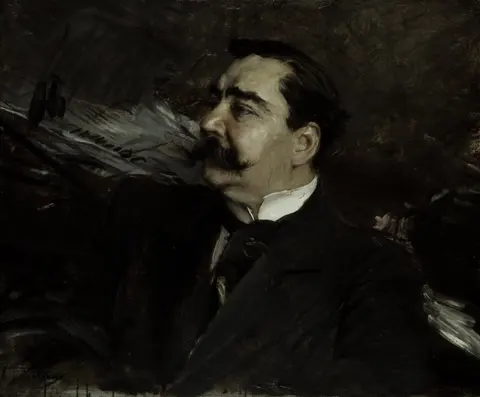
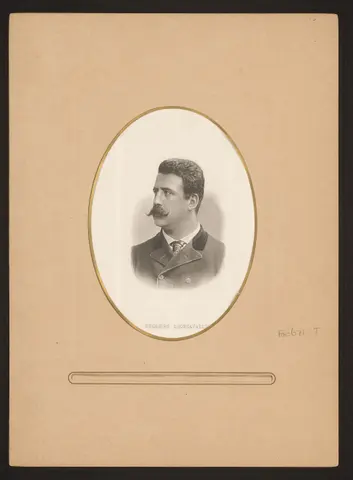
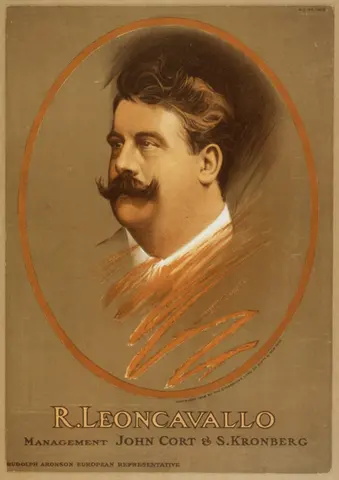
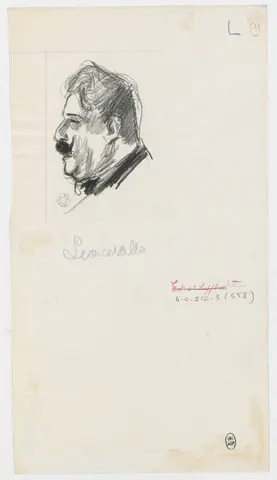
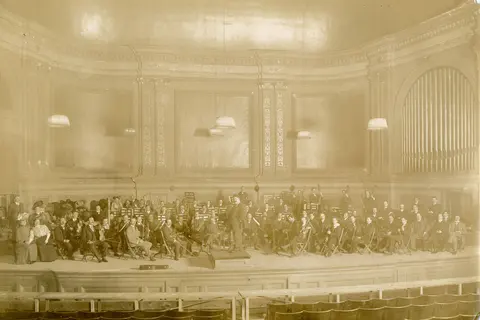
 肖像画・写真・自筆譜 Gallery (Public Domain)
Wikimedia Commons でパブリックドメイン(または CC0)と確認した画像です。クリックで拡大。
 年表 Timeline
 レオンカヴァッロで覚える英単語 Words
 クイズに挑戦 Quiz
MORE COMPOSERS

 MP3