売られた花嫁 序曲
The Bartered Bride Overture
スメタナ・1863
弦楽器が全速力で追いかけっこ!チェコ喜劇オペラの大爆走序曲。
歌劇「売られた花嫁」序曲のページへRomantic · 1824–1884
「チェコ国民音楽の父」The father of Czech music
 リトミシュル(チェコ)
 プラハ(チェコ)3 曲を収録
川の流れを音にした!『モルダウ』でチェコの心を歌った人。He turned a river into music and gave the Czech people their musical voice.
 スメタナの名曲を聴く
スメタナ・1863
弦楽器が全速力で追いかけっこ!チェコ喜劇オペラの大爆走序曲。
歌劇「売られた花嫁」序曲のページへスメタナ・1874
2つの小さな泉が大河になって、プラハへ流れていく音の旅。
連作交響詩「わが祖国」より モルダウのページへスメタナ・1875
耳が聞こえない作曲家が描いた、チェコの森の音と村の踊り。
連作交響詩「わが祖国」より ボヘミアの森と草原からのページへ
ホー!スメタナは耳が聞こえなくなってから『モルダウ』を書き上げたんだ。
 生涯 Life Story
スメタナは1824年、ボヘミア(いまのチェコ)の町リトミシュルで、ビール醸造家の家に生まれました。音楽好きの父からバイオリンを習い、6歳で初めて人前でピアノを弾いて、神童ぶりを見せました。当時のボヘミアはオーストリア帝国の一部で、学校でも上流の家庭でもドイツ語が中心でした。じつはスメタナが文章を書けるほどチェコ語をしっかり学んだのは、大人になってからのことです。Smetana was born in 1824 in Litomyšl, in Bohemia, which is now part of the Czech Republic. His father was a brewer who loved music and taught him the violin. At the age of six, Bedřich gave his first public piano performance. Bohemia then belonged to the Austrian Empire, and German was the main language of schools and well-off families. In fact, Smetana only learned to write Czech properly as an adult.
1839年にプラハの学校へ進み、プルゼニで学校を終えると、1843年に再びプラハへ出てプロクシュに作曲を学びました。1848年には自分の音楽学校を開きます。このころ大ピアニストのリストに手紙で助けを求め、作品の出版を手伝ってもらっています。1856年からはスウェーデンのヨーテボリで指揮者・ピアノ教師として約5年間活躍しました。帰国後はチェコ語のオペラに力を注ぎ、1866年に初演された喜劇オペラ『売られた花嫁』が、やがてチェコを代表する人気作になりました。In 1839 he went to Prague to attend secondary school. After finishing school in Plzeň, he returned to Prague in 1843 to study composition with Josef Proksch, and in 1848 he opened his own music school. Around this time he wrote to the great pianist Franz Liszt for help, and Liszt helped him get his music published. From 1856 he spent about five years in Gothenburg, Sweden, working as a conductor and piano teacher. Back home, he threw himself into Czech-language opera. His comic opera The Bartered Bride, first staged in 1866, went on to become a Czech national favorite.
私生活では悲しみが続きました。最初の妻カテジナとの間に生まれた4人の娘のうち3人を幼くして亡くし、妻も1859年に病気で亡くなります。そして1874年、病気のため両耳がまったく聞こえなくなり、劇場の指揮者を辞めました。それでも作曲はやめず、6曲からなる交響詩『わが祖国』や、自分の人生を描いた弦楽四重奏曲第1番『わが生涯より』を書き上げたのです。His private life was full of sorrow. Three of the four daughters he had with his first wife, Kateřina, died young, and Kateřina herself died of illness in 1859. Then in 1874 an illness left him completely deaf, and he had to give up his job as a theater conductor. Even so, he kept composing. He finished Má vlast (My Homeland), a cycle of six symphonic poems, and his String Quartet No. 1, From My Life, which tells the story of his own life.
晩年は心と体の病気がさらに重くなり、1884年5月12日、プラハの病院で60歳で亡くなりました。プラハのヴィシェフラド墓地に眠っています。チェコの歴史や自然を音楽にした彼は、チェコ音楽の土台を作った人として深く尊敬されています。毎年5月12日、彼の命日に始まる音楽祭「プラハの春」では、オープニングで『わが祖国』を演奏するのが伝統になっています。In his last years his mental and physical health grew worse, and he died in a Prague hospital on 12 May 1884, aged 60. He is buried in Vyšehrad Cemetery in Prague. By turning Czech history and landscapes into music, he laid the foundations of Czech music, and he is deeply honored for it. The Prague Spring music festival begins every year on 12 May, the day he died, and by tradition it opens with Má vlast.
Smetana was born in 1824 in a small Bohemian town that is now in the Czech Republic. He loved his country very much. Later in life, he could not hear at all. But he still wrote great music. His piece The Moldau is about a big river.スメタナは1824年、いまのチェコにあるボヘミアの小さな町で生まれました。彼は自分の国が大好きでした。人生の後半、耳がまったく聞こえなくなりました。それでもすばらしい音楽を書きました。曲『モルダウ』は大きな川のお話です。
 これだけは!鉄板情報 Must-Know Facts
 あっと驚くネタ Surprising Stories
 タップすると答えが開きます
スメタナが育ったころ、ボヘミアの学校や上流の家庭ではドイツ語が中心でした。そのため彼は日記や手紙を長くドイツ語で書いていて、チェコ語の文法をきちんと勉強したのは大人になってから。チェコ語で歌うオペラを作るために、書きことばのチェコ語をきちんと身につけ直した努力の人だったのです。
When Smetana was young, German was the main language of schools and educated families in Bohemia. For years he wrote his diaries and letters in German, and he only studied Czech grammar properly as an adult. To write operas in Czech, he worked hard to master the written language as well.
弦楽四重奏曲『わが生涯より』の最後の楽章では、明るい音楽が急に止まり、第1バイオリンが高い「ミ」の音を長くのばします。スメタナ自身の説明によると、これは耳が聞こえなくなる前に彼を苦しめた、甲高い耳鳴りを表しているのです。
In the last movement of his quartet From My Life, the happy music suddenly stops and the first violin holds a very high E. According to Smetana's own explanation, this note stands for the piercing ringing in his ears that came before he lost his hearing.
『モルダウ』の冒頭、2本のフルートがさらさらと流れるような音型を重ねます。スメタナが付けた説明では、これは冷たい泉と温かい泉、2つの源流です。小さな流れが合わさって大河となり、森や村の結婚式、月夜の妖精たちのそばを通ってプラハへ流れていきます。
At the start of The Moldau, two flutes trickle over each other. In Smetana's own description, these are two springs, one cold and one warm. The streams join to become a great river that flows past forests, a village wedding and moonlit water nymphs on its way to Prague.
スメタナは小さいころから天才ぶりを発揮し、6歳のとき、生まれた町リトミシュルで初めて人前でピアノを演奏しました。曲はオペラの序曲をピアノ用にしたものだったと言われます。父は息子が音楽家になることには反対でしたが、その才能はおさえきれませんでした。
Smetana showed his talent early. At six he gave his first public piano performance in his hometown of Litomyšl, reportedly playing a piano version of an opera overture. His father did not want him to become a professional musician, but the boy's gift could not be held back.
1856年、スメタナは故郷を離れ、スウェーデンの港町ヨーテボリに移りました。そこで指揮者やピアノ教師として人気者になり、交響詩もいくつか書いています。遠い北の国で暮らしたことで、かえって故郷チェコへの思いが強くなり、帰国後のチェコ語オペラにつながっていきました。
In 1856 Smetana left home for the Swedish port city of Gothenburg. There he became popular as a conductor and piano teacher, and he wrote several symphonic poems. Living so far north made his love for his homeland even stronger, and it led to the Czech operas he wrote after returning.
若いころお金に困っていたスメタナは、音楽学校を開くために、あこがれの大ピアニスト、リストへ助けを求める手紙を送りました。リストはお金は出しませんでしたが、彼の作品『6つの性格的小品』の献呈を受け入れ、出版社を見つけて応援してくれたのです。
As a struggling young man, Smetana wrote to his hero Franz Liszt, asking for help to open a music school. Liszt did not send money, but he accepted the dedication of Smetana's Six Characteristic Pieces and found a publisher for them.
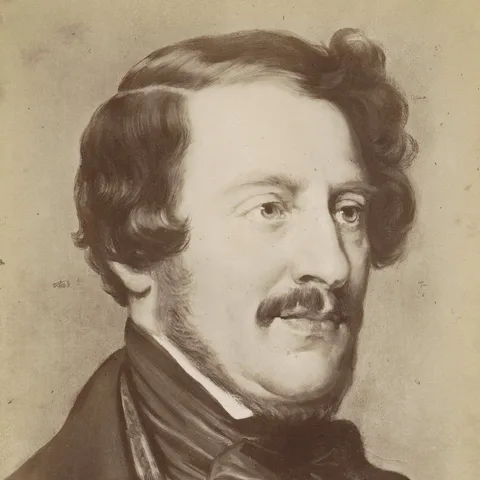
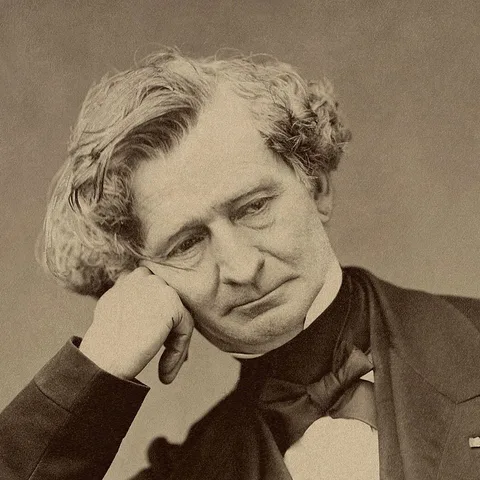
 肖像画・写真・自筆譜 Gallery (Public Domain)
Wikimedia Commons でパブリックドメイン(または CC0)と確認した画像です。クリックで拡大。
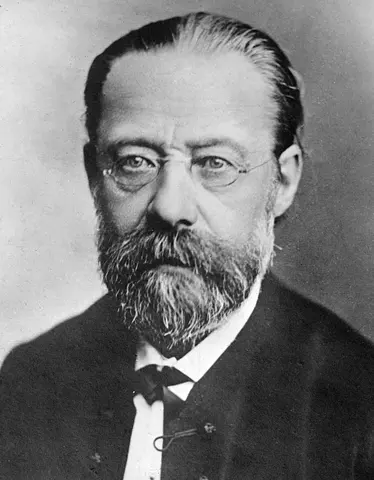
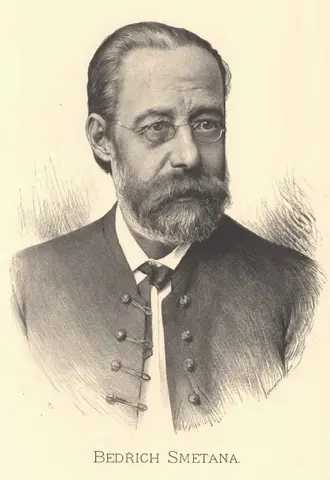
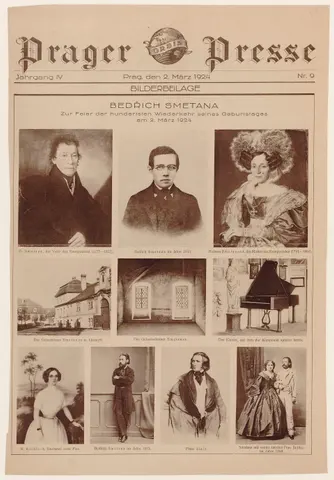
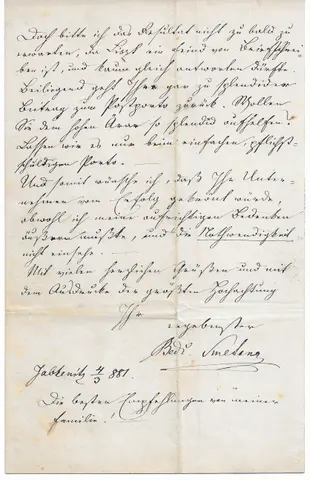
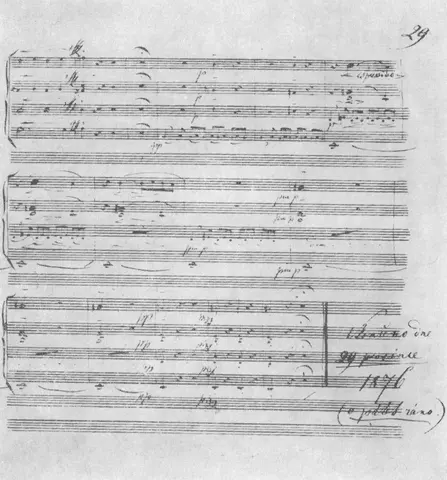
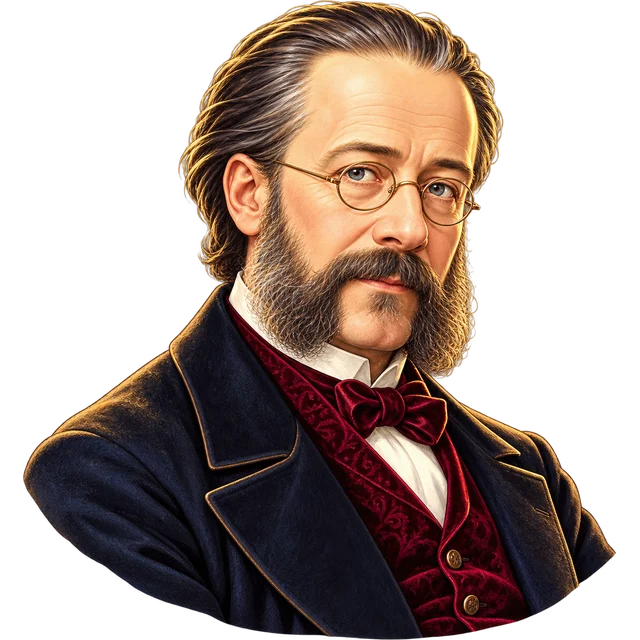
ページ上のイラストは、本物の肖像画をもとにこのサイトのために描いたものです。
 年表 Timeline
 スメタナで覚える英単語 Words
 クイズに挑戦 Quiz
MORE COMPOSERS





 MP3