
テ・デウム
Te Deum
シャルパンティエ・c. 1688–1698
パンパカパーン!ヨーロッパのテレビの幕開けを飾ってきた、ごうかな前奏曲。
テ・デウム ニ長調のページへ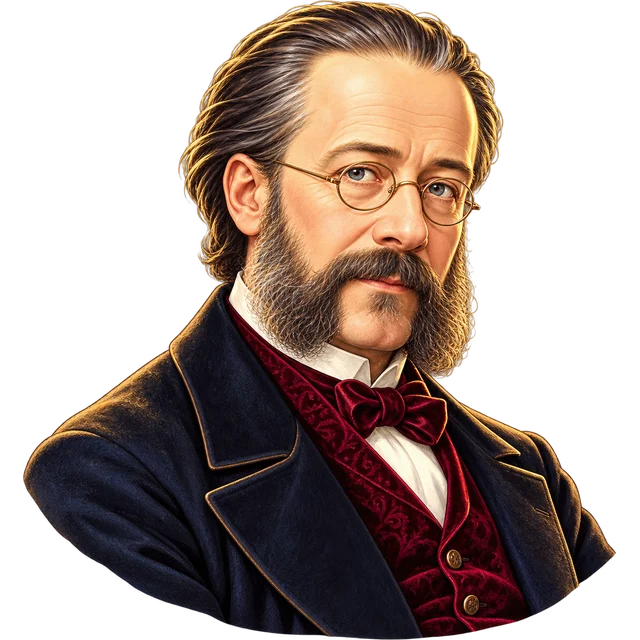
Opera · · 1863
ベドルジハ・スメタナ(1824–1884)
弦楽器が全速力で追いかけっこ!チェコ喜劇オペラの大爆走序曲。Strings racing at full speed! The madcap overture to a Czech comic opera.
WATCH ON YOUTUBE
この曲は、権利の切れた高音質の録音がまだ見つからないため、YouTube の公式チャンネルなどの名演でお楽しみください(ダウンロードはできません)。YouTube でほかの演奏もさがす ↗
 Smetana: Overture to "The Bartered Bride" / Jansons · Berliner Philharmoniker
Berliner Philharmoniker(YouTube) YouTube で開く ↗
B. Smetana: Prodaná nevěsta (předehra) • The Bartered Bride (Overture)
Česká filharmonie(YouTube) YouTube で開く ↗
The Bartered Bride: Overture
Gewandhausorchester - Topic(YouTube) YouTube で開く ↗
ホー!この序曲は、オペラの他の部分よりも先に作られたんだ。めずらしいよね。
 この曲のおはなし The Story
「売られた花嫁」は、スメタナが書いたチェコ語の喜劇オペラです。チェコの村を舞台に、愛し合うマジェンカとイェニークが、お金めあての結婚の仲介人ケツァルの計画を知恵で切りぬけ、めでたく結ばれるまでを描きます。この序曲は、オペラが始まる前に演奏される曲で、ものすごい速さで弦楽器がかけまわる、元気いっぱいの音楽です。The Bartered Bride is a comic opera in Czech by Smetana. Set in a Czech village, it tells how two lovers, Mařenka and Jeník, outwit Kecal, a marriage broker who plans a match for money, and finally get married. The overture is played before the opera begins, and it is full of energy, with the strings racing along at amazing speed.
めずらしいことに、この序曲は、オペラのほかの音楽がほとんどできる前に作られました。最初にオーケストラ全体が力強く鳴ったあと、第2ヴァイオリンから始まって、弦楽器が次々に同じ速いメロディーで追いかけっこをします。これは「フーガ」に似た書き方で、村のにぎやかなおしゃべりや、お祭りのさわぎを思わせます。Unusually, this overture was written before almost any of the other music in the opera. After the full orchestra plays a few strong opening notes, the second violins start a fast melody, and the other strings join in one after another, as if chasing each other. This fugue-like writing suggests the busy chatter and excitement of a village festival.
オペラは1866年5月、プラハの仮劇場で初演されましたが、戦争が近づく不安な時期で、はじめはあまり成功しませんでした。スメタナはその後何度も手を入れ、1870年に今の形ができました。1892年、ウィーンの国際音楽演劇博覧会でプラハの国民劇場が上演すると大評判になり、チェコのオペラとして初めて世界的な人気を得ました。The opera was first performed in May 1866 at the Provisional Theatre in Prague, but it was a worrying time with war approaching, and at first it was not a great success. Smetana revised it several times, and the final version was ready in 1870. In 1892, when Prague's National Theatre performed it at an international music and theater exhibition in Vienna, it caused a sensation and became the first Czech opera to win worldwide fame.
This is the opening music of a funny opera. Two young people love each other. A man tries to make the young woman marry someone else. But the young man has a clever idea! The strings play very, very fast.これは、楽しいオペラの始まりの音楽です。2人の若者が愛し合っています。ある男は、その娘を別の男性と結婚させようとします。でも、若者にはかしこい作戦があるのです!弦楽器がとても、とても速く演奏します。
 聴きどころ Listening Guide
 えっ!?ネタ Surprising Facts
 タップすると答えが開きます
ふつう、オペラの序曲は全体ができてから最後に書かれることが多いのですが、この序曲は、オペラのほかの音楽がほとんどできる前に作られました。台本もまだそろっていない段階で、スメタナはこの明るく勢いのある音楽で、オペラ全体の雰囲気を決めてしまったのです。
Opera overtures are often written last, after the rest is done. But this one was written before almost any of the other music. Even before the libretto was complete, Smetana set the mood of the whole opera with this bright, energetic music.
題名はびっくりですが、本当に花嫁を売る話ではありません。イェニークは「マジェンカは、ミーハの息子と結婚する」という条件つきで、仲介人からお金を受け取ります。じつはイェニーク自身がミーハの前妻の息子だったので、結局は自分と結婚することになる、という知恵の勝利の物語です。
The title sounds shocking, but no bride is really sold. Jeník takes money from the marriage broker on one condition: Mařenka must marry Mícha's son. In fact, Jeník himself is Mícha's son from his first marriage, so in the end she marries him. It is a story of clever thinking winning the day.
序曲の速いメロディーは、まず第2ヴァイオリンだけで始まります。ほかの楽器の支えがほとんどない中、細かい音をものすごい速さで正確に弾かなければならないため、オーケストラのオーディションでもよく使われる、むずかしい曲として知られています。
The fast melody of the overture begins with the second violins alone. With almost no support from other instruments, they must play tiny notes at top speed and perfectly in time. It is known as a difficult passage and is often used in orchestra auditions.
初演のときはあまり成功しなかったこのオペラですが、1892年にウィーンで開かれた国際音楽演劇博覧会で、プラハの国民劇場が上演すると大評判になりました。これをきっかけに世界各地で上演されるようになり、チェコを代表するオペラになりました。
This opera was not a big success at first, but in 1892, when Prague's National Theatre performed it at an international exhibition of music and theater in Vienna, it was a sensation. After that, it was staged around the world and became the best-known Czech opera.
ENGLISH × MASTERPIECE
 bargain は「取り引き」。自分に有利な条件を強く求めることを言います。
 この曲で覚える英単語 Words
 クイズに挑戦 Quiz
 著作権について Credits
MORE MASTERPIECES
シャルパンティエ・c. 1688–1698
パンパカパーン!ヨーロッパのテレビの幕開けを飾ってきた、ごうかな前奏曲。
テ・デウム ニ長調のページへクラーク・c. 1700
結婚式の大定番。でも作曲者は長いあいだ取りちがえられていた!
トランペット・ヴォランタリー(デンマーク王子の行進)のページへ
バッハ・c. 1707–1710 (?)
キラキラの駆け上がりで幕開け!若きバッハのはなやかな鍵盤ショー。
トッカータ ニ長調のページへ
ヴィヴァルディ・published 1711
2本のヴァイオリンが火花を散らす!バッハも編曲した熱い協奏曲。
協奏曲集『調和の霊感』第8番 イ短調(2つのヴァイオリンのための協奏曲)のページへヴィヴァルディ・c. 1715
オクターブがぴょんぴょん跳ねる!喜びがはじける合唱の名曲。
グローリア ニ長調のページへ
テレマン・c. 1710–1720 (?)
バルブのないラッパで高音をきらり!バロックのトランペットの晴れ舞台。
トランペット協奏曲 ニ長調のページへ
ヘンデル・1717
テムズ川の船の上で国王のために!夏の夜の水上コンサート。
水上の音楽のページへバッハ・1720
止まらない!キラキラ走る、ヴァイオリン1本の大はしゃぎ。
無伴奏ヴァイオリン・パルティータ第3番 ホ長調より「プレリュード」のページへ
 MP3