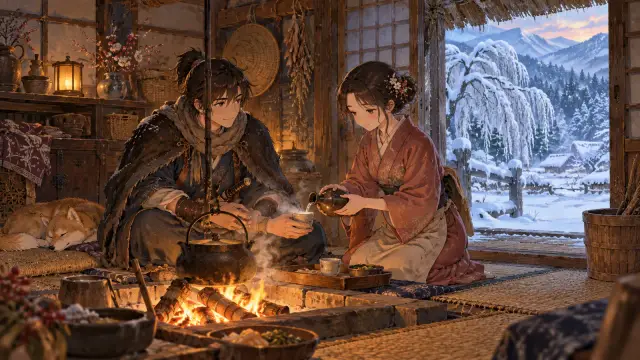
Self-Control, which was universally required of samurai.
克己。侍の誰にも求められたものである。
The discipline of fortitude on the one hand, inculcating endurance without a groan, and the teaching of politeness on the other, requiring us not to mar the pleasure or serenity of another by manifestations of our own sorrow or pain, combined to engender a stoical turn of mind, and eventually to confirm it into a national trait of apparent stoicism. I say apparent stoicism, because I do not believe that true stoicism can ever become the characteristic of a whole nation, and also because some of our national manners and customs may seem to a foreign observer hard-hearted. Yet we are really as susceptible to tender emotion as any race under the sky.
一方には、うめき声一つ立てずに耐えよと教える、忍耐の鍛錬があった。もう一方には、礼の教えがあった。自分の悲しみや痛みを表に出して、人の楽しみや心の平穏をこわしてはならない、というのである。この二つが合わさって、苦痛や感情を表に出さずに耐える、ストア派のような気質が生まれた。そしてついには、それが見かけの上でのストア主義として、国民の特徴にまでなった。「見かけの上での」と言うのは、本当のストア主義が国民全体の特徴になることなどありえないと思うからである。また、わが国の風俗や習慣の中には、外国の人の目には冷たく見えるものもあるからである。だが実際には、私たちも、天の下のどの民族にも劣らず、やさしい感情に動かされやすいのである。
I am inclined to think that in one sense we have to feel more than others—yes, doubly more—since the very attempt to restrain natural promptings entails suffering. Imagine boys—and girls too—brought up not to resort to the shedding of a tear or the uttering of a groan for the relief of their feelings,—and there is a physiological problem whether such effort steels their nerves or makes them more sensitive.
ある意味では、私たちはほかの人々よりも多く感じなければならない、それも二倍も多く感じなければならない、と私は思う。自然にわき上がる気持ちを抑えようとすること自体が、苦しみをともなうからである。考えてもみてほしい。男の子も、女の子も、気持ちを晴らすために涙を流したり、うめき声を上げたりしてはならないと言われて育つのである。そうした努力が神経を鋼のように強くするのか、それともかえって敏感にするのか。これは生理学の問題である。
It was considered unmanly for a samurai to betray his emotions on his face. "He shows no sign of joy or anger," was a phrase used in describing a strong character. The most natural affections were kept under control. A father could embrace his son only at the expense of his dignity; a husband would not kiss his wife,—no, not in the presence of other people, whatever he might do in private! There may be some truth in the remark of a witty youth when he said, "American husbands kiss their wives in public and beat them in private; Japanese husbands beat theirs in public and kiss them in private."
侍が感情を顔に出すのは、男らしくないとされた。「喜怒を色に表さず」というのは、人格の強い人をほめる言葉であった。ごく自然な愛情さえ、抑えなければならなかった。父親が息子を抱きしめれば、威厳がそこなわれた。夫は妻に口づけをしなかった。いや、二人きりのときには何をしていたか知らないが、人前ではしなかったのである。ある気のきいた若者が、こんなことを言った。「アメリカの夫は人前で妻に口づけし、家の中で妻を殴る。日本の夫は人前で妻を殴り、家の中で妻に口づけする。」これにも、いくらかの真実があるかもしれない。
Calmness of behavior, composure of mind, should not be disturbed by passion of any kind. I remember when, during the late war with China, a regiment left a certain town, a large concourse of people flocked to the station to bid farewell to the general and his army. On this occasion an American resident resorted to the place, expecting to witness loud demonstrations, as the nation itself was highly excited and there were fathers, mothers, and sweethearts of the soldiers in the crowd. The American was strangely disappointed; for as the whistle blew and the train began to move, the hats of thousands of people were silently taken off and their heads bowed in reverential farewell; no waving of handkerchiefs, no word uttered, but deep silence in which only an attentive ear could catch a few broken sobs. In domestic life, too, I know of a father who spent whole nights listening to the breathing of a sick child, standing behind the door that he might not be caught in such an act of parental weakness! I know of a mother who, in her last moments, refrained from sending for her son, that he might not be disturbed in his studies. Our history and everyday life are replete with examples of heroic matrons who can well bear comparison with some of the most touching pages of Plutarch. Among our peasantry an Ian Maclaren would be sure to find many a Marget Howe.
ふるまいは冷静に、心は落ち着いて。それがどんな激しい感情にも乱されてはならなかった。こんなことを覚えている。先ごろの清との戦争のとき、ある連隊がある町を出発することになった。将軍と兵士たちに別れを告げようと、大勢の人々が駅に押し寄せた。そこへ、その町に住む一人のアメリカ人もやって来た。国中が大変興奮していたし、群衆の中には兵士の父や母や恋人たちもいた。だから、さぞにぎやかに騒ぐのだろうと思っていたのである。ところが、アメリカ人は妙に拍子抜けした。汽笛が鳴って列車が動き出すと、何千という人々が黙って帽子を取り、うやうやしく頭を下げて見送ったのである。ハンカチを振る者もなく、声を上げる者もない。ただ深い沈黙があるばかりで、耳をすませば、とぎれとぎれのすすり泣きがわずかに聞こえるだけだった。家庭の中でも、こんな父親を私は知っている。病気の子どもの寝息に耳をすませて、幾晩も過ごした。しかも、親としての弱さを見られないように、戸の陰に立っていたのである。また、こんな母親も知っている。死に際に、息子を呼び寄せるのをやめた。息子の勉強の邪魔をしたくなかったのである。わが国の歴史にも日々の暮らしにも、こうした英雄的な女性の例があふれている。プルタルコスの英雄伝のもっとも感動的なページと比べても、まったく引けをとらない。イアン・マクラレンがわが国の農村を訪ねたら、マーゲット・ハウのような女性を、きっと何人も見つけることだろう。
It is the same discipline of self-restraint which is accountable for the absence of more frequent revivals in the Christian churches of Japan. When a man or woman feels his or her soul stirred, the first instinct is to quietly suppress any indication of it. In rare instances is the tongue set free by an irresistible spirit, when we have eloquence of sincerity and fervor. It is putting a premium upon a breach of the third commandment to encourage speaking lightly of spiritual experience. It is truly jarring to Japanese ears to hear the most sacred words, the most secret heart experiences, thrown out in promiscuous audiences. "Dost thou feel the soil of thy soul stirred with tender thoughts? It is time for seeds to sprout. Disturb it not with speech; but let it work alone in quietness and secrecy,"—writes a young samurai in his diary.
日本のキリスト教会で、信仰の燃え上がる「リバイバル」があまり起こらないのも、この同じ自制の鍛錬のせいである。男でも女でも、自分の魂が揺さぶられるのを感じたとき、まず本能的に、そのそぶりを静かに押し隠そうとする。抑えきれない霊の力で舌がほどけ、真心と熱情のこもった雄弁がほとばしることは、めったにない。心の体験を軽々しく語るようすすめるのは、十戒の第三の戒め、「神の名をみだりに唱えてはならない」を破るのを奨励するようなものである。もっとも神聖な言葉や、心のもっとも秘めた体験が、誰とも知れない聴衆の前で投げ出されるのを聞くと、日本人の耳には実に不快に響く。ある若い侍は、日記にこう書いている。「魂の土がやさしい思いに揺り動かされるのを感じるか。それは種が芽を出す時である。言葉でそれをかき乱してはならない。静かに、ひそかに、ひとりでに育つのに任せよ。」
To give in so many articulate words one's inmost thoughts and feelings—notably the religious—is taken among us as an unmistakable sign that they are neither very profound nor very sincere. "Only a pomegranate is he"—so runs a popular saying—"who, when he gapes his mouth, displays the contents of his heart."
心の奥の思いや感情、とりわけ宗教にかかわるものを、いちいち言葉にして並べたてる。私たちのあいだでは、それはその思いや感情があまり深くもなく、あまり誠実でもない、まぎれもないしるしと受け取られる。世間でよく言われることわざに、こういうものがある。「口を開けて腹の中を見せるのは、ざくろだけだ。」
It is not altogether perverseness of oriental minds that the instant our emotions are moved we try to guard our lips in order to hide them. Speech is very often with us, as the Frenchman defined it, "the art of concealing thought."
感情が動いたとたんに、それを隠そうと口を閉ざす。これは、東洋人の心がひねくれているからとばかりは言えない。私たちにとって言葉とは、あるフランス人が定義したように、「考えを隠す技」であることがとても多いのである。
Call upon a Japanese friend in time of deepest affliction and he will invariably receive you laughing, with red eyes or moist cheeks. At first you may think him hysterical. Press him for explanation and you will get a few broken commonplaces—"Human life has sorrow;" "They who meet must part;" "He that is born must die;" "It is foolish to count the years of a child that is gone, but a woman's heart will indulge in follies;" and the like. So the noble words of a noble Hohenzollern—"Lerne zu leiden ohne Klagen"—had found many responsive minds among us, long before they were uttered.
深い悲しみの中にいる日本人の友を訪ねてみるとよい。友は目を赤くし、頬をぬらしながらも、決まって笑顔であなたを迎えるだろう。初めは、取り乱しているのかと思うかもしれない。わけを聞けば、ありふれた言葉がとぎれとぎれに返ってくるだろう。「人の世には悲しみがつきものです」「会うは別れの始めと申します」「生まれた者は、いつかは死ぬものです」「死んだ子の年を数えるのは愚かなことですが、女心というものは、つい愚かなことをしてしまうものでして」。ホーエンツォレルン家のある気高い人は、「嘆かずに苦しむことを学べ」という気高い言葉を残した。だがこの言葉は、それが語られるずっと前から、私たちのあいだに、それにうなずく心をたくさん見いだしていたのである。
Indeed, the Japanese have recourse to risibility whenever the frailties of human nature are put to severest test. I think we possess a better reason than Democritus himself for our Abderian tendency; for laughter with us oftenest veils an effort to regain balance of temper, when disturbed by any untoward circumstance. It is a counterpoise of sorrow or rage.
実際、日本人は、人間の弱さがもっとも厳しく試されるとき、いつも笑いに頼る。デモクリトスは「笑う哲学者」と呼ばれたアブデラの人だが、私たちがアブデラ人のようによく笑うのには、デモクリトスその人よりも、もっともな理由があると思う。私たちの笑いは、たいてい、思いがけない不幸で乱された心の釣り合いを取り戻そうとする努力を、包み隠しているのである。笑いは、悲しみや怒りと釣り合いをとるためのおもりなのである。
The suppression of feelings being thus steadily insisted upon, they find their safety-valve in poetical aphorism. A poet of the tenth century writes, "In Japan and China as well, humanity, when moved by sorrow, tells its bitter grief in verse." A mother who tries to console her broken heart by fancying her departed child absent on his wonted chase after the dragon-fly, hums,
このように、感情を抑えることがいつも求められたので、感情は詩の短い言葉の中に、逃げ道を見いだした。十世紀のある歌人は書いている。「日本でも中国でも、人は悲しみに心を動かされると、そのつらい嘆きを歌に詠む。」亡くした子は、いつものようにとんぼを追いかけて出かけているだけなのだ。そう思うことで、張り裂けた心をなぐさめようとする母親が、こう口ずさむ。
"How far to-day in chase, I wonder, Has gone my hunter of the dragon-fly!"
とんぼ釣り 今日はどこまで行ったやら
I refrain from quoting other examples, for I know I could do only scant justice to the pearly gems of our literature, were I to render into a foreign tongue the thoughts which were wrung drop by drop from bleeding hearts and threaded into beads of rarest value. I hope I have in a measure shown that inner working of our minds which often presents an appearance of callousness or of an hysterical mixture of laughter and dejection, and whose sanity is sometimes called in question.
ほかの例を引くのはやめておこう。これらの句は、血を流す心から一滴一滴しぼり出され、このうえなく貴い玉として糸に通された思いである。それを外国の言葉に移せば、わが国の文学の真珠のような宝を、とても正しくは伝えられないと分かっているからである。私たちの心の内側の働きは、しばしば冷たく見えたり、笑いと落胆がおかしな具合に入りまじったように見えたりする。ときには、正気かどうか疑われることさえある。そういう心の働きを、いくらかは示すことができたのではないかと思う。
It has also been suggested that our endurance of pain and indifference to death are due to less sensitive nerves. This is plausible as far as it goes. The next question is,—Why are our nerves less tightly strung? It may be our climate is not so stimulating as the American. It may be our monarchical form of government does not excite us as much as the Republic does the Frenchman. It may be that we do not read Sartor Resartus as zealously as the Englishman. Personally, I believe it was our very excitability and sensitiveness which made it a necessity to recognize and enforce constant self-repression; but whatever may be the explanation, without taking into account long years of discipline in self-control, none can be correct.
私たちが痛みに耐え、死を恐れないのは、神経が鈍いからだという説もある。それはそれで、一応もっともらしい。では次に、なぜ私たちの神経はそれほど張りつめていないのか、という問題になる。わが国の気候が、アメリカほど刺激が強くないからかもしれない。君主をいただくわが国の政治の形が、共和制がフランス人をかき立てるほどには、私たちをかき立てないからかもしれない。私たちがイギリス人ほど熱心に『衣服哲学』を読まないからかもしれない。私自身は、こう信じている。私たちはまさに興奮しやすく、感じやすかった。だからこそ、絶えず自分を抑えることを認め、それを守らせる必要があったのだ、と。だが、どう説明するにせよ、長年にわたる克己の鍛錬を考えに入れないかぎり、正しい説明にはならないだろう。
Discipline in self-control can easily go too far. It can well repress the genial current of the soul. It can force pliant natures into distortions and monstrosities. It can beget bigotry, breed hypocrisy or hebetate affections. Be a virtue never so noble, it has its counterpart and counterfeit. We must recognize in each virtue its own positive excellence and follow its positive ideal, and the ideal of self-restraint is to keep our mind level—as our expression is—or, to borrow a Greek term, attain the state of euthymia, which Democritus called the highest good.
克己の鍛錬は、たやすく行き過ぎになる。魂の温かい流れを、せき止めてしまうこともある。しなやかな性質を、無理にねじ曲げ、怪物のようなものにしてしまうこともある。かたくなな心を生み、偽善を育て、愛情を鈍らせることもある。どれほど気高い徳にも、裏の顔があり、偽物がある。私たちは、それぞれの徳の本当のよさを見きわめ、そのよさがめざす理想に従わなければならない。克己の理想とは、私たちの言い方で言えば「心を平らに保つ」ことである。ギリシャ語を借りれば、デモクリトスが最高の善と呼んだ「エウテュミア」、つまり晴れやかで穏やかな心の状態に達することである。
The acme of self-control is reached and best illustrated in the first of the two institutions which we shall now bring to view; namely, the Institutions of Suicide and Redress, of which (the former known as hara-kiri and the latter as kataki-uchi) many foreign writers have treated more or less fully.
克己がその頂点に達し、もっともよく表れているのは、これから取り上げる二つの制度のうちの第一のものである。その二つとは、自殺と仇討ちの制度である。前者は「腹切り」、後者は「敵討ち」として知られ、多くの外国の著述家が、多かれ少なかれくわしく論じてきた。