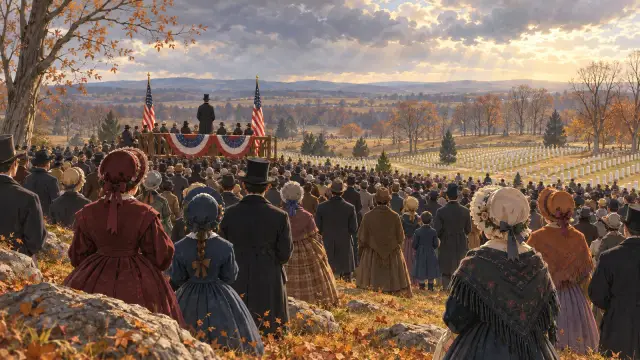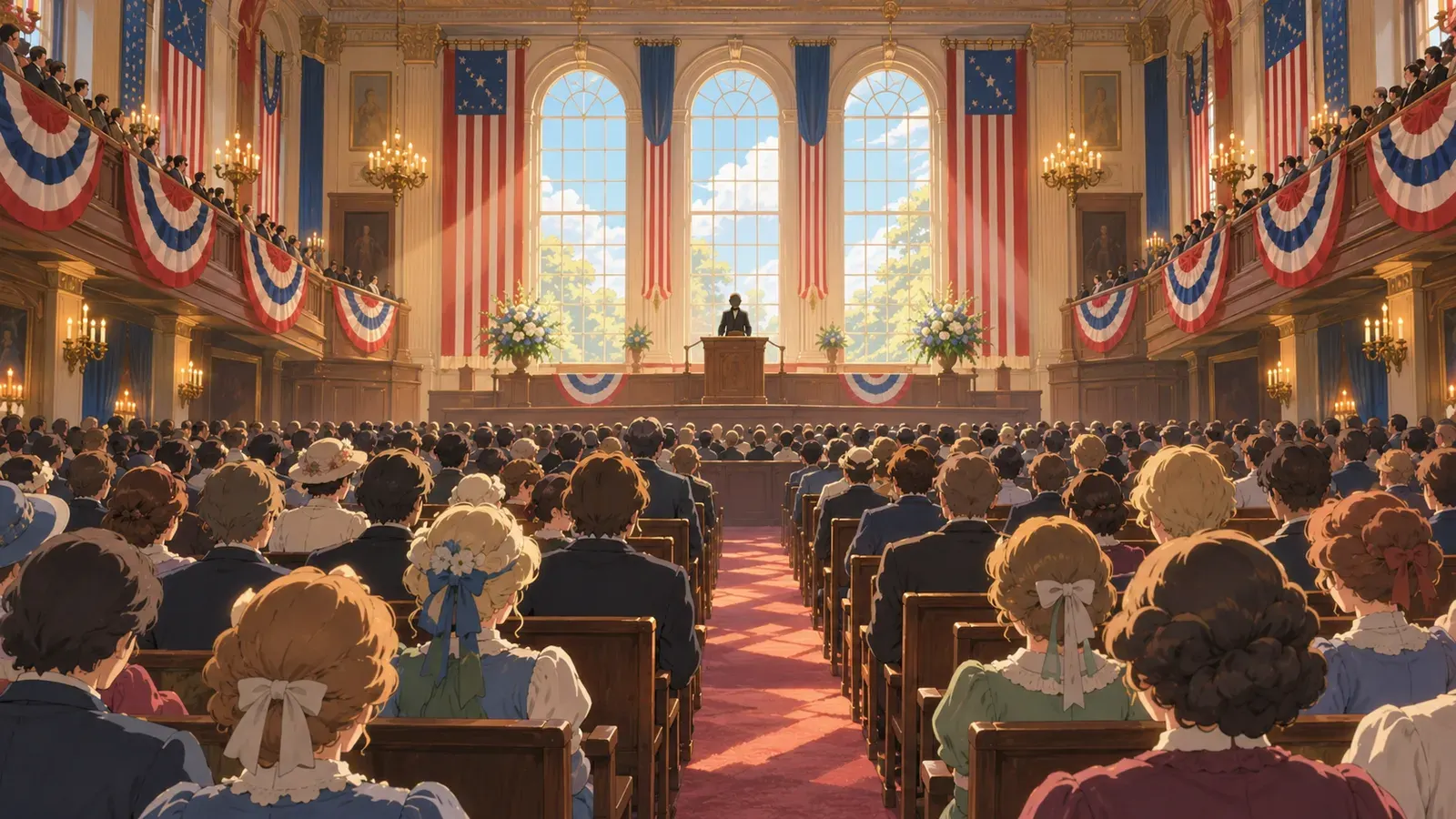
Fellow-Citizens—Pardon me, and allow me to ask, why am I called upon to speak here to-day? What have I, or those I represent, to do with your national independence? Are the great principles of political freedom and of natural justice, embodied in that Declaration of Independence, extended to us? and am I, therefore, called upon to bring our humble offering to the national altar, and to confess the benefits, and express devout gratitude for the blessings, resulting from your independence to us?
市民のみなさん。失礼ですが、お尋ねさせてください。なぜ私が、今日ここで話すよう招かれたのでしょうか。私や、私が代表している人々が、あなたがたの国の独立と、いったい何の関係があるのでしょうか。あの独立宣言には、政治的自由と、自然の正義という偉大な原理がうたわれています。その原理は、私たちにも及んでいるのでしょうか。だからこそ私は、国の祭壇にささやかな捧げ物を持ってくるよう求められたのでしょうか。あなたがたの独立が私たちにもたらした恩恵を認め、その恵みに心から感謝を表すようにと。
Would to God, both for your sakes and ours, that an affirmative answer could be truthfully returned to these questions! Then would my task be light, and my burden easy and delightful. For who is there so cold that a nation’s sympathy could not warm him? Who so obdurate and dead to the claims of gratitude, that would not thankfully acknowledge such priceless benefits? Who so stolid and selfish, that would not give his voice to swell the hallelujahs of a nation’s jubilee, when the chains of servitude had been torn from his limbs? I am not that man. In a case like that, the dumb might eloquently speak, and the “lame man leap as an hart.”
あなたがたのためにも、私たちのためにも、この問いに偽りなく「はい」と答えられたら、どんなによかったでしょう。そうであれば、私の務めは軽く、私の重荷はたやすく、うれしいものだったはずです。一つの国の人々から温かい思いを寄せられて、心が温まらないほど冷たい人がいるでしょうか。これほどかけがえのない恩恵を受けて、ありがたく思わないほどかたくなで、恩を感じる心を失った人がいるでしょうか。手足から隷属の鎖を引きちぎってもらいながら、国を挙げての祝いの「ハレルヤ」に、自分も声を合わせようとしないほど、鈍く身勝手な人がいるでしょうか。私はそのような人間ではありません。もしそうであったなら、口のきけない者でさえ雄弁に語り、「足の不自由な者も鹿のように跳ねる」でしょう。
But, such is not the state of the case. I say it with a sad sense of the disparity between us. I am not included within the pale of this glorious anniversary! Your high independence only reveals the immeasurable distance between us. The blessings in which you this day rejoice, are not enjoyed in common. The rich inheritance of justice, liberty, prosperity, and independence, bequeathed by your fathers, is shared by you, not by me. The sunlight that brought life and healing to you, has brought stripes and death to me. This Fourth of July is yours, not mine. You may rejoice, I must mourn. To drag a man in fetters into the grand illuminated temple of liberty, and call upon him to join you in joyous anthems, were inhuman mockery and sacrilegious irony. Do you mean, citizens, to mock me, by asking me to speak to-day? If so, there is a parallel to your conduct. And let me warn you that it is dangerous to copy the example of a nation whose crimes, towering up to heaven, were thrown down by the breath of the Almighty, burying that nation in irrecoverable ruin! I can to-day take up the plaintive lament of a peeled and woe-smitten people.
しかし、実際はそうではありません。私たちのあいだの隔たりを悲しく思いながら、申し上げます。私は、この輝かしい記念日の輪の中に入っていないのです! あなたがたの誇り高い独立は、私たちのあいだにある、はかり知れない距離を浮かび上がらせるだけです。あなたがたが今日喜んでいる恵みを、私たちは共に味わってはいません。あなたがたの父祖が残した、正義と自由と繁栄と独立という豊かな遺産を受け継いでいるのは、あなたがたです。私ではありません。あなたがたに命といやしをもたらした日の光は、私には、むちの傷あとと死をもたらしました。この七月四日はあなたがたのものであって、私のものではありません。あなたがたは喜んでいい。しかし私は嘆かなければなりません。足かせをはめた人間を、光り輝く壮大な自由の神殿に引きずりこみ、さあ、いっしょに喜びの賛歌を歌えと言う。それは人の道に外れたあざけりであり、神をけがす皮肉です。市民のみなさん、今日私に話をさせるのは、私をあざけるためなのですか。もしそうなら、あなたがたのふるまいには、よく似た前例があります。警告させてください。かつて、天にとどくほど罪を積み上げた国がありました。その国は全能の神のひと吹きで打ち倒され、二度と立ち直れない廃墟に埋もれたのです。その国のまねをするのは、危険なことです! 今日の私には、すべてをはぎ取られ、悲しみに打ちひしがれた民の嘆きの歌を、そのまま口にすることができます。
“By the rivers of Babylon, there we sat down. Yea! we wept when we remembered Zion. We hanged our harps upon the willows in the midst thereof. For there, they that carried us away captive, required of us a song; and they who wasted us required of us mirth, saying, Sing us one of the songs of Zion. How can we sing the Lord’s song in a strange land? If I forget thee, O Jerusalem, let my right hand forget her cunning. If I do not remember thee, let my tongue cleave to the roof of my mouth.”
「バビロンの川のほとりに、われらは座った。ああ、シオンを思い出して、われらは泣いた。その中の柳に、われらは琴をかけた。われらを捕らえて連れ去った者たちが、そこで歌を求めたからだ。われらを荒らした者たちが、楽しみを求めて言った。『シオンの歌を一つ歌え』と。異国の地で、どうして主の歌が歌えようか。エルサレムよ、もしわたしがあなたを忘れるなら、わが右手はその技を忘れるがよい。もしわたしがあなたを思い出さないなら、わが舌は上あごに張りつくがよい」
Fellow-citizens, above your national, tumultous joy, I hear the mournful wail of millions, whose chains, heavy and grievous yesterday, are to-day rendered more intolerable by the jubilant shouts that reach them. If I do forget, if I do not faithfully remember those bleeding children of sorrow this day, “may my right hand forget her cunning, and may my tongue cleave to the roof of my mouth!” To forget them, to pass lightly over their wrongs, and to chime in with the popular theme, would be treason most scandalous and shocking, and would make me a reproach before God and the world. My subject, then, fellow-citizens, is AMERICAN SLAVERY. I shall see this day and its popular characteristics from the slave’s point of view. Standing there, identified with the American bondman, making his wrongs mine, I do not hesitate to declare, with all my soul, that the character and conduct of this nation never looked blacker to me than on this Fourth of July. Whether we turn to the declarations of the past, or to the professions of the present, the conduct of the nation seems equally hideous and revolting. America is false to the past, false to the present, and solemnly binds herself to be false to the future. Standing with God and the crushed and bleeding slave on this occasion, I will, in the name of humanity which is outraged, in the name of liberty which is fettered, in the name of the constitution and the bible, which are disregarded and trampled upon, dare to call in question and to denounce, with all the emphasis I can command, everything that serves to perpetuate slavery—the great sin and shame of America! “I will not equivocate; I will not excuse;” I will use the severest language I can command; and yet not one word shall escape me that any man, whose judgment is not blinded by prejudice, or who is not at heart a slaveholder, shall not confess to be right and just.
市民のみなさん。国を挙げての騒がしい喜びの声の上に、私は何百万もの人々の悲しい泣き声を聞きます。その人々の鎖は、昨日も重く苦しいものでした。それが今日は、耳に届く歓呼の叫びのせいで、いっそう耐えがたいものになっています。もし私が忘れるなら、今日この日に、血を流している悲しみの子らを心から思い起こさないなら、「わが右手はその技を忘れ、わが舌は上あごに張りつくがよい!」 あの人々を忘れ、その受けている不正を軽く見過ごして、世間でもてはやされる話題に調子を合わせる。それは、このうえなく恥ずべき、恐ろしい裏切りです。そんなことをすれば、私は神と世界の前で恥をさらすことになるでしょう。ですから、市民のみなさん、私の話の題は「アメリカの奴隷制」です。私は今日という日と、それを世間がどう祝っているかを、奴隷の立場から見ることにします。アメリカの奴隷と一つになり、その受けている不正をわが身のものとして、その立場に立って、私はためらわず、魂のすべてをこめて言います。この国の性格とふるまいが、この七月四日ほど黒く見えたことは、これまでありません。過去の宣言を見ても、現在かかげている主張を見ても、この国のふるまいは同じようにおぞましく、胸が悪くなります。アメリカは過去を裏切り、現在を裏切り、さらに未来をも裏切ることを、おごそかに誓っているのです。この場に私は、神と、打ちのめされ血を流している奴隷とともに立っています。踏みにじられた人間性の名において、足かせをはめられた自由の名において、無視され踏みつけにされた憲法と聖書の名において、私はあえて問いただし、力のかぎり強い言葉で告発します。奴隷制を生きながらえさせている、ありとあらゆるものをです。奴隷制こそ、アメリカの大きな罪であり、恥なのです! 「私はごまかさない。言い訳もしない」。私は、使えるかぎり最も厳しい言葉を使います。それでも、偏見に目をくらまされていない人、心の底で奴隷の持ち主になっていない人なら、誰でも正しく公正だと認めるはずの言葉しか、ひと言も口にしません。
But I fancy I hear some one of my audience say, it is just in this circumstance that you and your brother abolitionists fail to make a favorable impression on the public mind. Would you argue more, and denounce less, would you persuade more and rebuke less, your cause would be much more likely to succeed. But, I submit, where all is plain there is nothing to be argued. What point in the anti-slavery creed would you have me argue? On what branch of the subject do the people of this country need light? Must I undertake to prove that the slave is a man? That point is conceded already. Nobody doubts it. The slaveholders themselves acknowledge it in the enactment of laws for their government. They acknowledge it when they punish disobedience on the part of the slave. There are seventy-two crimes in the state of Virginia, which, if committed by a black man (no matter how ignorant he be), subject him to the punishment of death; while only two of these same crimes will subject a white man to the like punishment. What is this but the acknowledgement that the slave is a moral, intellectual, and responsible being. The manhood of the slave is conceded. It is admitted in the fact that southern statute books are covered with enactments forbidding, under severe fines and penalties, the teaching of the slave to read or write. When you can point to any such laws, in reference to the beasts of the field, then I may consent to argue the manhood of the slave. When the dogs in your streets, when the fowls of the air, when the cattle on your hills, when the fish of the sea, and the reptiles that crawl, shall be unable to distinguish the slave from a brute, then will I argue with you that the slave is a man!
しかし、聴衆のどなたかが、こう言うのが聞こえるような気がします。「まさにそこなんですよ。あなたやあなたの仲間の奴隷制廃止論者が、世間からよく思われないのは。非難するより、もっと筋道を立てて論じたらどうです。とがめるより、もっと説得したらどうです。そうすれば、あなたがたの運動はずっとうまくいくでしょうに」。しかし、あえて申し上げます。何もかもはっきりしていることについて、論じることなど何もありません。奴隷制反対の主張のうち、どの点を論じろとおっしゃるのですか。この国の人々は、この問題のどこについて、まだ光を当ててもらう必要があるというのですか。奴隷が人間であることを、私が証明しなければならないのですか。それはもう認められています。誰も疑っていません。奴隷の持ち主たち自身が、奴隷を取り締まる法律をつくることで、それを認めています。奴隷が言いつけに背いたときに罰することで、それを認めています。バージニア州には、黒人が犯せば、どれほど無知な者であっても死刑になる罪が、七十二もあります。ところが、同じ罪を白人が犯して死刑になるのは、そのうちの二つだけです。これは、奴隷が善悪をわきまえ、知性を持ち、責任を負える存在だと認めていることにほかなりません。奴隷が人間であることは、認められているのです。南部の法令集には、奴隷に読み書きを教えることを禁じ、重い罰金や刑罰を科す条文がびっしり並んでいます。それもまた、奴隷が人間だと認めているしるしです。野の獣について、そんな法律が一つでもあるというなら、見せてください。そうしたら、奴隷が人間かどうかを論じることにしましょう。通りの犬や、空の鳥や、丘の牛や、海の魚や、地をはう生き物が、奴隷と獣の区別もつかなくなったなら、そのときこそ、奴隷は人間だということを、あなたがたと論じましょう!
For the present, it is enough to affirm the equal manhood of the Negro race. Is it not astonishing that, while we are plowing, planting, and reaping, using all kinds of mechanical tools, erecting houses, constructing bridges, building ships, working in metals of brass, iron, copper, silver, and gold; that, while we are reading, writing, and cyphering, acting as clerks, merchants, and secretaries, having among us lawyers, doctors, ministers, poets, authors, editors, orators, and teachers; that, while we are engaged in all manner of enterprises common to other men—digging gold in California, capturing the whale in the Pacific, feeding sheep and cattle on the hillside, living, moving, acting, thinking, planning, living in families as husbands, wives, and children, and, above all, confessing and worshiping the Christian’s God, and looking hopefully for life and immortality beyond the grave—we are called upon to prove that we are men!
今のところは、黒人もまったく同じ人間だと断言すれば十分です。驚くべきことではありませんか。私たちは畑を耕し、種をまき、刈り入れています。あらゆる機械や道具を使い、家を建て、橋をかけ、船を造り、真鍮や鉄や銅や銀や金を細工しています。読み書きや計算をし、事務員や商人や秘書として働いています。私たちの中には、弁護士も、医者も、牧師も、詩人も、作家も、編集者も、演説家も、教師もいます。カリフォルニアで金を掘り、太平洋で鯨をとり、丘で羊や牛を育てています。生き、動き、働き、考え、計画を立て、夫として、妻として、子として家族と暮らしています。そして何よりも、キリスト教の神を信じて礼拝し、墓の向こうにある命と不死を、希望をもって待ち望んでいます。ほかの人々と同じことを、何もかもしているのです。それなのに、私たちは、自分が人間であることを証明しろと言われているのです!
Would you have me argue that man is entitled to liberty? that he is the rightful owner of his own body? You have already declared it. Must I argue the wrongfulness of slavery? Is that a question for republicans? Is it to be settled by the rules of logic and argumentation, as a matter beset with great difficulty, involving a doubtful application of the principle of justice, hard to be understood? How should I look to-day in the presence of Americans, dividing and subdividing a discourse, to show that men have a natural right to freedom, speaking of it relatively and positively, negatively and affirmatively? To do so, would be to make myself ridiculous, and to offer an insult to your understanding. There is not a man beneath the canopy of heaven that does not know that slavery is wrong for him.
人間には自由である権利がある。自分の体の正当な持ち主は自分自身である。そんなことを私に論じろというのですか。それは、あなたがた自身がすでに宣言していることです。奴隷制が悪であることを、私が論じなければならないのですか。共和国の民にとって、それが問題になるのでしょうか。それは、正義の原理をどう当てはめればよいかもはっきりしない、理解しにくい難問なのでしょうか。論理と議論の規則にのっとって決着をつけなければならないような問題なのでしょうか。今日、アメリカ人の前で、人間には生まれながらに自由の権利があることを示そうと、話をこまかく区切り、相対的に、絶対的に、否定的に、肯定的に、とあれこれ論じたとしたら、私はどう見えるでしょうか。そんなことをすれば、自分で自分を笑いものにし、あなたがたの理解力を侮辱することになるでしょう。この空の下に、自分が奴隷にされるのは悪だとわからない人など、一人もいないのです。
What! am I to argue that it is wrong to make men brutes, to rob them of their liberty, to work them without wages, to keep them ignorant of their relations to their fellow-men, to beat them with sticks, to flay their flesh with the lash, to load their limbs with irons, to hunt them with dogs, to sell them at auction, to sunder their families, to knock out their teeth, to burn their flesh, to starve them into obedience and submission to their masters? Must I argue that a system, thus marked with blood and stained with pollution, is wrong? No; I will not. I have better employment for my time and strength than such arguments would imply.
なんですって! 人を獣のように扱うこと。自由を奪うこと。賃金も払わずに働かせること。仲間の人間とのつながりも知らせずに、無知のままにしておくこと。棒でなぐり、むちで肉を裂き、手足に鉄の枷をはめること。犬を使って追い回し、競売にかけて売り飛ばし、家族を引き裂くこと。歯をたたき折り、肉を焼き、飢えさせて主人の言いなりにさせること。そうしたことが悪だと、私に論じろというのですか。これほど血にまみれ、汚れにまみれた制度が悪であると、論じなければならないのですか。いいえ、論じません。そんな議論に使うより、私の時間と力には、もっとましな使い道があります。
What, then, remains to be argued? Is it that slavery is not divine; that God did not establish it; that our doctors of divinity are mistaken? There is blasphemy in the thought. That which is inhuman cannot be divine. Who can reason on such a proposition! They that can, may! I cannot. The time for such argument is past.
では、ほかに何を論じればよいのでしょう。奴隷制は神の定めたものではない。神が奴隷制を打ち立てたのではない。神学博士たちは間違っている。そういうことでしょうか。奴隷制が神の定めたものだと考えること自体が、神への冒涜です。人の道に外れたものが、神聖であるはずがありません。そんなことを、誰が理屈で論じられるでしょう! できる人はどうぞ! 私にはできません。そんな議論をする時代は、もう過ぎたのです。
At a time like this, scorching irony, not convincing argument, is needed. Oh! had I the ability, and could I reach the nation’s ear, I would to-day pour out a fiery stream of biting ridicule, blasting reproach, withering sarcasm, and stern rebuke. For it is not light that is needed, but fire; it is not the gentle shower, but thunder. We need the storm, the whirlwind, and the earthquake. The feeling of the nation must be quickened; the conscience of the nation must be roused; the propriety of the nation must be startled; the hypocrisy of the nation must be exposed; and its crimes against God and man must be proclaimed and denounced.
このようなときに必要なのは、人を納得させる議論ではありません。焼けつくような皮肉です。ああ! もし私にその力があり、この国の人々の耳に声を届けられるなら、今日、私は、かみつくようなあざけりと、打ちのめすような非難と、相手をしおれさせる皮肉と、厳しい叱責とを、燃える流れのように浴びせかけるでしょう。今必要なのは、光ではなく火です。やさしい雨ではなく、雷です。私たちには、嵐が、つむじ風が、地震が必要なのです。この国の感情を、目覚めさせなければなりません。この国の良心を、揺り起こさなければなりません。この国の上品ぶった体裁に、衝撃を与えなければなりません。この国の偽善を、暴かなければなりません。そして、神と人に対してこの国が犯している罪を、はっきりと世に告げ、告発しなければならないのです。
What to the American slave is your Fourth of July? I answer, a day that reveals to him, more than all other days in the year, the gross injustice and cruelty to which he is the constant victim. To him, your celebration is a sham; your boasted liberty, an unholy license; your national greatness, swelling vanity; your sounds of rejoicing are empty and heartless; your denunciations of tyrants, brass-fronted impudence; your shouts of liberty and equality, hollow mockery; your prayers and hymns, your sermons and thanksgivings, with all your religious parade and solemnity, are to him mere bombast, fraud, deception, impiety, and hypocrisy—a thin veil to cover up crimes which would disgrace a nation of savages. There is not a nation on the earth guilty of practices more shocking and bloody, than are the people of these United States, at this very hour.
アメリカの奴隷にとって、あなたがたの七月四日とは何でしょうか。お答えしましょう。一年のほかのどの日にもまして、自分がいつも受けているひどい不正と残酷さを、思い知らされる日です。奴隷にとって、あなたがたの祝典はまやかしです。あなたがたの自慢の自由は、罪深い身勝手です。あなたがたの国の偉大さは、ふくれあがった見栄です。あなたがたの喜びの声は、むなしく、心がこもっていません。あなたがたが暴君を非難するのは、恥知らずな厚かましさです。自由と平等を叫ぶ声は、うつろなあざけりです。あなたがたの祈りも賛美歌も、説教も感謝祭も、宗教の行列やおごそかな儀式も、すべて奴隷にとっては、ただの大言壮語であり、ごまかしであり、うそであり、神への不敬であり、偽善です。野蛮人の国でさえ恥じるような罪を覆い隠す、薄いベールにすぎないのです。今この時に、この合衆国の人々ほど、ぞっとするような血なまぐさい行いを重ねている国は、地上のどこにもありません。
Go where you may, search where you will, roam through all the monarchies and despotisms of the old world, travel through South America, search out every abuse, and when you have found the last, lay your facts by the side of the every-day practices of this nation, and you will say with me, that, for revolting barbarity and shameless hypocrisy, America reigns without a rival.
どこへでも行ってごらんなさい。どこでも探してごらんなさい。旧世界のあらゆる王国や専制国家を歩き回り、南アメリカを旅して、ありとあらゆる悪弊を探し出してごらんなさい。そして最後の一つまで見つけたら、その事実を、この国で毎日行われていることと並べてみてください。そうすれば、あなたがたも私と同じように言うはずです。胸の悪くなるような野蛮さと、恥知らずな偽善にかけては、アメリカの右に出る国はない、と。
 ▶