お月見おつきみ
otsukimi
moon viewing in autumn
月にいるのはウサギ。しかも餅をついている。欧米の「男の顔」と対になる話。
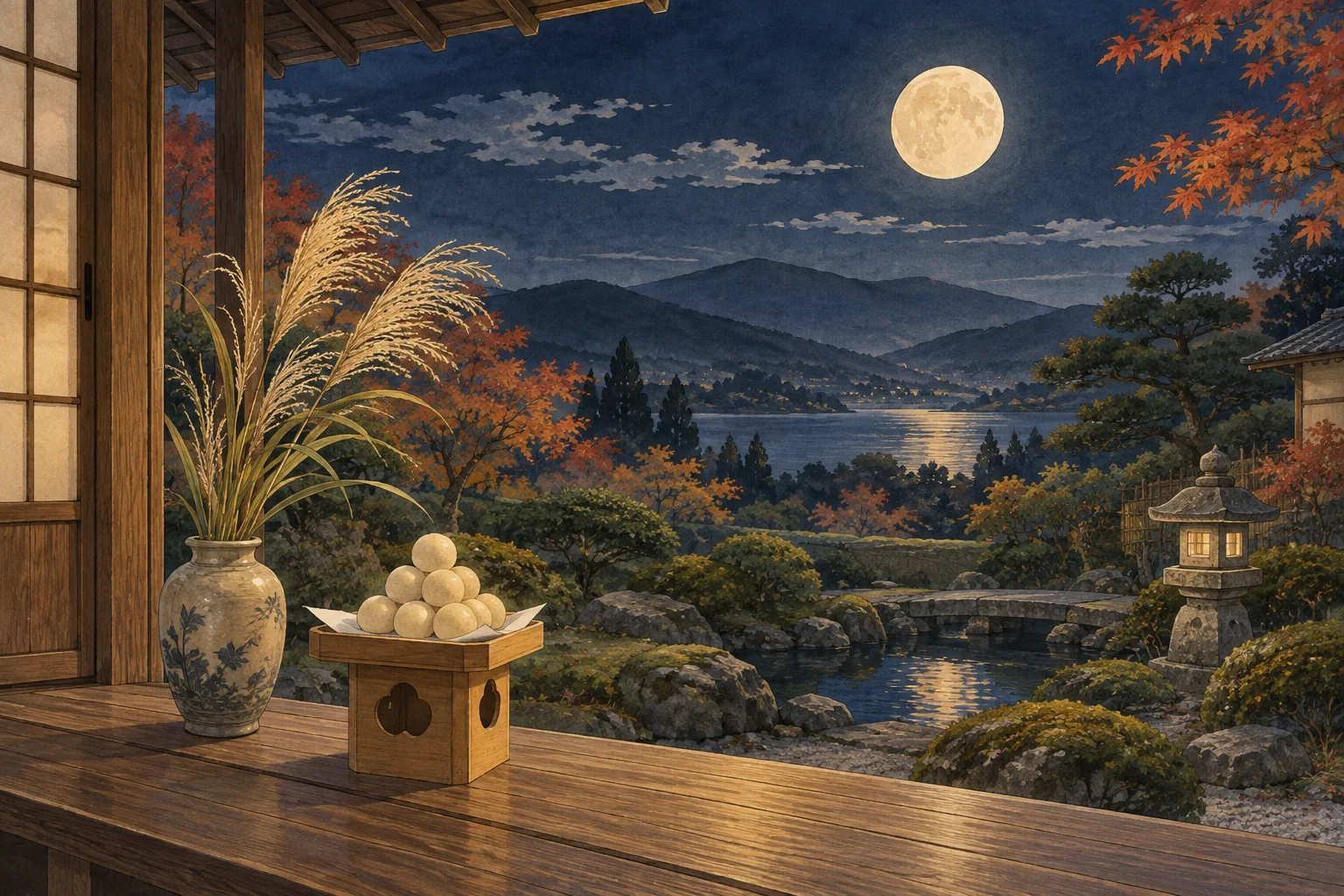
一言で言うと
これだけ覚えれば最低限伝わる一文
Otsukimi is the autumn custom of looking at the full moon and offering rice dumplings and pampas grass.
お月見とは、秋の満月を眺め、月見団子とすすきを供える習わしです。
30秒で説明する
外国人に説明するときの標準サイズ
On the fifteenth night of the eighth month of the old calendar, which falls in September or early October, people view the full moon. Households set out round white dumplings stacked in a pyramid, pampas grass, and seasonal produce. In Japan the markings on the moon are seen as a rabbit pounding rice cakes rather than a face.
旧暦8月15日、新暦では9月から10月初めにあたる夜に、満月を眺めます。家では丸い白い団子を積み上げ、すすきと季節の実りを供えます。日本では月の模様は、顔ではなく餅をつくウサギに見えます。
スピーチ・英作文
通訳案内士の二次口述・大学入試の自由英作文に
Otsukimi is moon viewing, held on the fifteenth night of the eighth month of the old calendar, which in the modern calendar lands somewhere in September or early October. Families put out an offering by a window facing the moon: round white rice dumplings stacked into a small pyramid, pampas grass, and whatever the season has produced, traditionally taro and chestnuts.
The grass is there partly because it resembles rice stalks, so the whole offering is a harvest thanksgiving as much as an appreciation of the moon. The detail visitors enjoy most is the rabbit.
Where English speakers see a man in the moon, Japanese people see a rabbit pounding rice cakes with a mallet, and once it is pointed out it is very hard to unsee. The story behind it is a Buddhist tale in which a rabbit offers its own body to a starving traveler, and is placed in the moon in recognition.
お月見は月を眺める行事で、旧暦8月15日の夜に行います。現在の暦では、9月から10月初めのどこかにあたります。家では月の見える窓辺に供え物を置きます。丸い白い団子を小さなピラミッドに積み、すすきを立て、その季節の実り、伝統的には里芋と栗を添えます。
すすきがあるのは、稲穂に似ているからでもあります。つまりこの供えは、月を愛でると同時に、収穫への感謝でもあるのです。訪日の方がいちばん喜ぶのはウサギの話です。英語圏の人が月に男の顔を見るところに、日本人は杵で餅をつくウサギを見ます。
一度言われると、もう他には見えなくなります。その背景には仏教の説話があります。飢えた旅人に、ウサギが自分の身を差し出し、その行いを称えて月に上げられた、という話です。
こう聞かれたら
外国人から実際にされる質問と、その答え方。
Why a rabbit?
どうして兎なのですか。
The dark patches happen to form that shape, and a Buddhist tale explains it: a rabbit threw itself into a fire to feed a starving traveler, and was placed in the moon as a record of the act.
模様がその形に見えることに加え、仏教の説話が説明を与えています。飢えた旅人のためにウサギが火に身を投じ、その行いを残すために月に上げられた、という話です。
Is the date the same every year?
日付は毎年同じですか。
No. It follows the old lunar calendar, so it moves between mid-September and early October. Confusingly, the fifteenth night is not always the astronomically full moon.
毎年変わります。旧暦に従うため、9月中旬から10月初めのあいだを動きます。ややこしいことに、十五夜が天文学上の満月とは限りません。
Is there a second one?
二回目もあるのですか。
Yes. The thirteenth night of the ninth old-calendar month is also viewed, in October or November. Viewing only one of the two was traditionally considered unlucky and had a name.
あります。旧暦9月13日の十三夜で、10月から11月にあたります。片方だけ見ることは「片見月」と呼ばれ、縁起が悪いとされました。
そのまま使えるフレーズ
- We see a rabbit pounding rice cakes.月には餅をつくウサギが見えます。
- The dumplings are stacked in a pyramid.団子はピラミッドのように積みます。
- The grass stands in for rice stalks.すすきは稲穂に見立てたものです。
- The date moves with the old calendar.日付は旧暦に従って動きます。
- There's a second viewing night in October.10月にも十三夜という月見があります。
説明に使う語句
- full moon満月
- dumpling団子
- pampas grassすすき
- harvest収穫、実り
- offering供え物
動画で見る
YouTube より豆知識
旧暦8月15日の月を「中秋の名月」と呼ぶ。中国から伝わった観月の風習が、日本古来の収穫祭と結びついたものとされる。月見団子は関東では丸い団子を積むのが一般的だが、関西では里芋の形に似せた細長い団子にあんを巻く形が多い。旧暦8月の名月を「芋名月」、旧暦9月13日の十三夜を「栗名月」「豆名月」と呼ぶのは、供える作物の違いによる。十五夜と十三夜の片方だけを見るのを「片見月」として避ける言い方が江戸時代にあった。月の模様をウサギと見るのは東アジアに共通する見立てで、インドの仏教説話に由来し『今昔物語集』にも収められた、ウサギが身を捧げる話が背景にある。なお十五夜が満月と一致しない年は珍しくない。
