紅葉こうよう
koyo
autumn leaves, and going to look at them
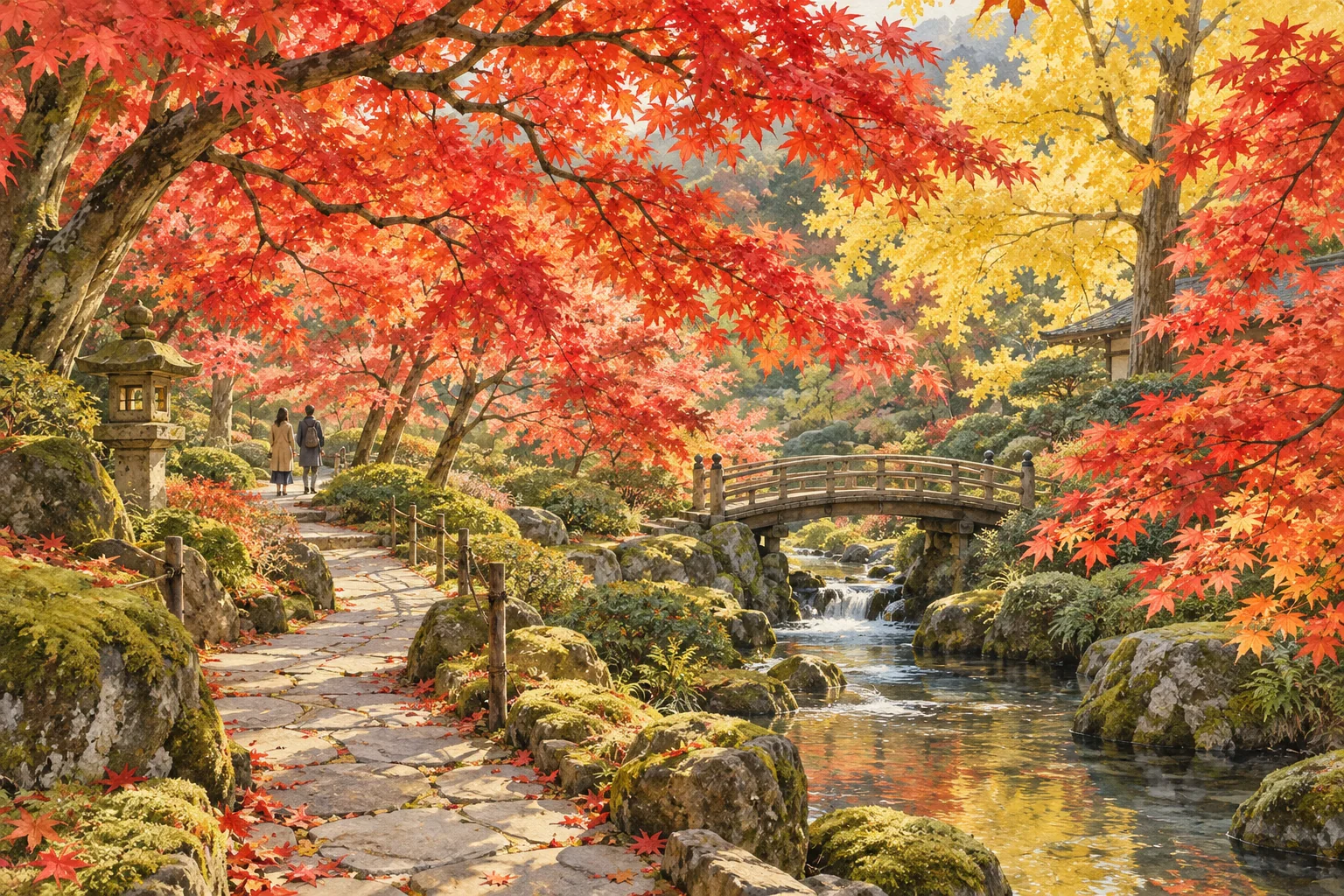
「紅葉狩り」という言葉がある。狩らないのに、なぜ狩りなのか。
一言で言うと
これだけ覚えれば最低限伝わる一文
Koyo is the turning of the autumn leaves, and going to see them is an event in itself.
紅葉とは秋に木の葉が色づくことで、それを見に行くこと自体がひとつの行事です。
30秒で説明する
外国人に説明するときの標準サイズ
From late September in the north to early December in the south, Japanese maples and other trees turn red and yellow, and people travel specifically to see them. Forecasts track the front moving south, mirroring the cherry blossom front in spring. The activity has its own word, momijigari, literally maple hunting, although nothing is hunted.
北は9月下旬から、南は12月初めにかけて、もみじなどの木が赤や黄に色づき、それを見るために人が旅をします。予報は南下する紅葉前線を追い、春の桜前線と対になります。この行為には「紅葉狩り」という専用の語があり、文字どおりには狩りですが、何も狩りません。
スピーチ・英作文
通訳案内士の二次口述・大学入試の自由英作文に
In autumn, Japanese maples turn a deep red and ginkgo trees turn bright yellow, and people travel across the country to look at them. This is called koyo, and going to see it has its own verb phrase, momijigari, which literally means maple hunting.
Nobody hunts anything; the word is thought to come from an older use of hunting to mean going out to gather or enjoy something from nature. The front moves the opposite way from the cherry blossoms, starting in the mountains of Hokkaido in late September and reaching Kyushu in early December, and it is forecast in the same way.
The colors are best where days are warm and nights are cold, so mountain valleys and temple gardens are the classic places. Unlike cherry blossom, which lasts about a week, koyo holds for several weeks, so it is a much less stressful thing to plan a trip around.
秋になると、もみじは深い赤に、いちょうは鮮やかな黄色に変わり、人々はそれを見るために各地へ出かけます。これを紅葉といい、見に行くことには「紅葉狩り」という言い方があります。文字どおりには狩りですが、誰も何も狩りません。
自然のものを採りに、あるいは楽しみに出かけることを「狩り」と言った古い用法に由来すると考えられています。前線は桜と逆向きに進み、9月下旬の北海道の山から始まって12月初めに九州へ届き、桜と同じように予報されます。
色づきが良いのは日中が暖かく夜が冷える場所なので、山あいの谷や寺の庭が定番です。一週間ほどで終わる桜と違い、紅葉は数週間もつので、旅行の計画はずっと楽です。
こう聞かれたら
外国人から実際にされる質問と、その答え方。
Why is it called hunting?
どうして「狩り」と言うのですか。
The old verb for hunting was also used for going out to gather things from nature, like mushroom picking or grape picking. Momijigari kept that older sense.
「狩り」は昔、自然のものを採りに出かけることにも使われました。きのこ狩りやぶどう狩りと同じ用法で、紅葉狩りはその古い意味を残しています。
Where are the best places?
どこが良い場所ですか。
Anywhere with cold nights and warm days: mountain valleys, and temple gardens designed for it. Kyoto is the famous choice and is correspondingly crowded, so smaller local temples are often a better experience.
夜が冷えて日中が暖かい場所なら、どこでも良く色づきます。山あいの谷、そしてそのために設計された寺の庭。京都が有名でその分混むので、地元の小さな寺のほうが良い体験になることも多いです。
Is there an evening version?
夜に見るものもありますか。
Yes. Many temples and gardens light the trees up after dark in autumn, which is called raito appu, and it is worth doing at least once.
あります。秋には多くの寺や庭園が夜間にライトアップを行います。一度は見る価値があります。
そのまま使えるフレーズ
- The leaves are at their best next weekend.来週末が見ごろだそうです。
- We call going to see them momijigari.見に行くことを紅葉狩りと言います。
- It moves from north to south, the opposite of the cherry blossoms.桜とは逆に、北から南へ移ります。
- They light the trees up in the evening.夜はライトアップされます。
- It lasts several weeks, unlike cherry blossom.桜と違って、数週間もちます。
説明に使う語句
- autumn leaves紅葉
- mapleもみじ、かえで
- ginkgoいちょう
- turn color色づく
- illuminate / light upライトアップする
動画で見る
YouTube より豆知識
「紅葉(こうよう)」は葉が赤や黄に色づく現象全般を指し、「もみじ」と読むとカエデ類そのものを指すことが多い。語源は、草木が色づくことを表す古語「もみつ」にさかのぼる。「紅葉狩り」の「狩り」は、獣を追う意味から転じて、自然のものを求めて出かける意味に広がった用法で、潮干狩り・いちご狩りも同じ系統。赤くなるのはアントシアニン、黄色くなるのはカロテノイドによるもので、昼夜の寒暖差が大きいほど色が鮮やかになる。気象庁は長くかえで・いちょうの紅葉日を観測してきた(生物季節観測)。紅葉の名所として知られる京都の寺社では、夜間特別拝観として境内をライトアップする例が多い。
