花火大会はなびたいかい
hanabi taikai
the summer fireworks festival
何万発も上がるのに、観客はシートに座って静かに見ている。そこが驚かれる。
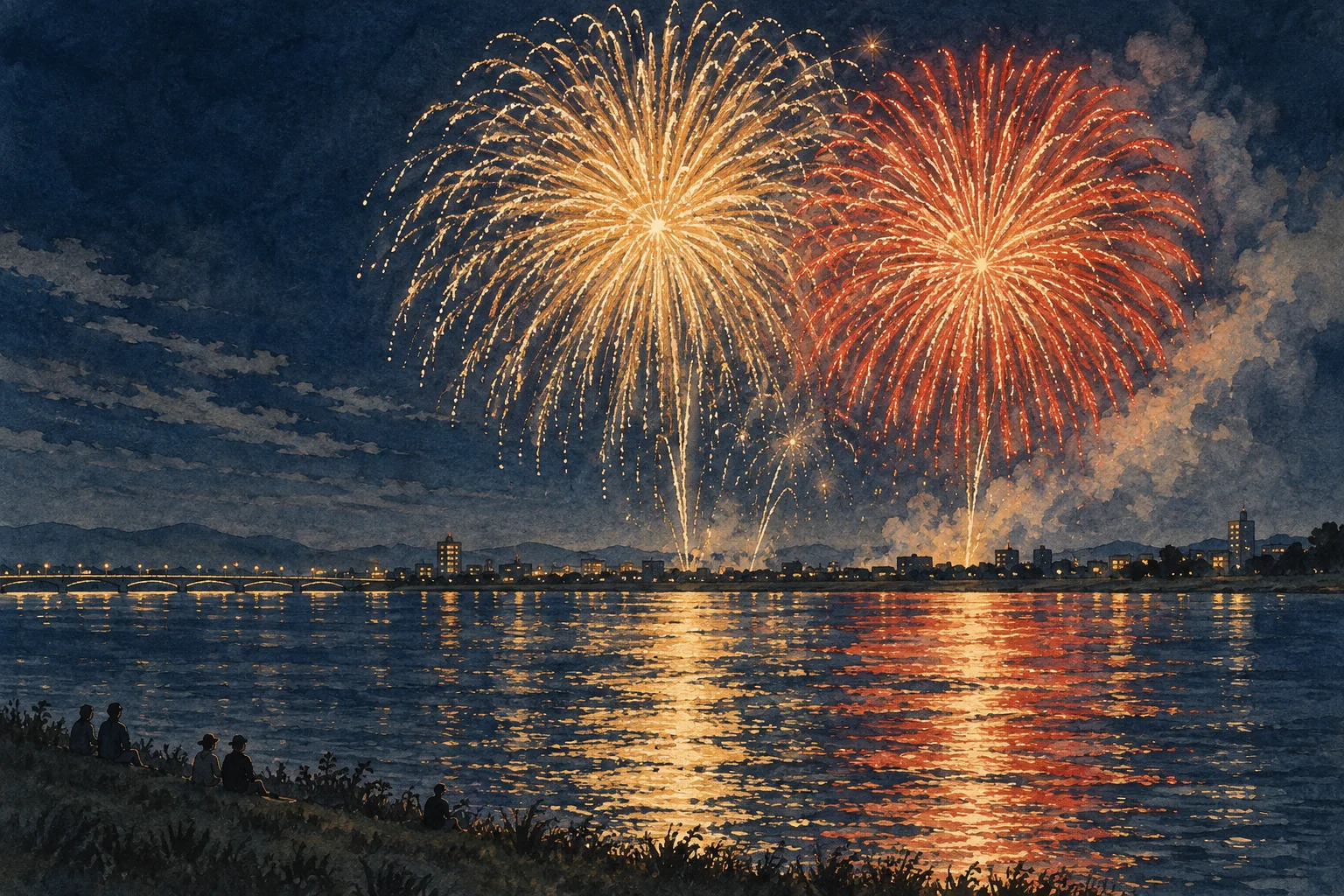
一言で言うと
これだけ覚えれば最低限伝わる一文
A hanabi taikai is a summer fireworks festival, often watched from a riverbank by people in yukata.
花火大会は夏の花火の催しで、浴衣姿の人も多く、河原などから眺めます。
30秒で説明する
外国人に説明するときの標準サイズ
Through July and August, towns and cities hold fireworks displays, often over a river. Some launch tens of thousands of shells over two hours. People arrive early with mats, eat from festival stalls, and many wear a yukata. Unlike fireworks tied to a national holiday elsewhere, these are summer events in their own right, and every region has its own.
7月から8月にかけて、各地で花火大会が開かれます。多くは川の上に上がります。2時間で何万発も打ち上げる大会もあります。人々は早めにシートを持って集まり、屋台の食べものを食べ、浴衣を着る人も多くいます。他国のように国の祝日に結びついた花火ではなく、夏そのものの行事で、地域ごとに独自の大会があります。
スピーチ・英作文
通訳案内士の二次口述・大学入試の自由英作文に
Japanese fireworks festivals are held through July and August, usually over a river, and the big ones launch tens of thousands of shells across a couple of hours. What surprises visitors is the atmosphere.
People arrive hours early to claim a spot on the riverbank, spread out a mat, buy food from stalls, and many wear a yukata. Then, when the fireworks start, the crowd mostly watches quietly, and some people still call out tamaya at the good ones, an old cry named after a famous fireworks maker.
Japanese fireworks are also technically distinctive: the classic shell is designed to open as a perfect sphere, visible from any angle, which is not how fireworks are built everywhere. The tradition is usually traced to the Sumida River in the eighteenth century, when fireworks were set off after a famine and an epidemic, as a memorial and a prayer.
日本の花火大会は7月と8月に開かれ、多くは川の上に上がります。大きな大会では2時間ほどで何万発も打ち上げます。外国の方が驚くのは雰囲気です。人々は何時間も前から河原に場所を取り、シートを広げ、屋台で食べものを買い、多くが浴衣を着ています。
そして花火が始まると、観客はおおむね静かに見上げ、良い花火に「たまやー」と声をかける人も今もいます。有名な花火師の屋号に由来する古い掛け声です。日本の花火は技術的にも特徴があります。
伝統的な玉は、どの角度から見ても真円に開くよう設計されています。これは世界共通の作り方ではありません。始まりは18世紀の隅田川とされ、飢饉と疫病のあとに、供養と祈りとして打ち上げられたと伝えられます。
こう聞かれたら
外国人から実際にされる質問と、その答え方。
Why does everyone sit down to watch?
どうしてみんな座って見るのですか。
Because displays run for one or two hours. Standing for that long is not practical, so people bring mats and food and settle in, which turns it into a picnic in the dark.
1〜2時間続くからです。その間立ち続けるのは無理なので、シートと食べものを持ち込んで腰を落ち着けます。結果として、暗がりのピクニックになります。
What does "tamaya" mean?
「たまや」とはどういう意味ですか。
It was the name of a fireworks workshop in Edo. Spectators would shout the name of whichever workshop had made the shell they liked, and the call survived long after the business did.
江戸の花火師の屋号です。良い花火を上げた店の名を観客が呼んだのが始まりで、店がなくなったあとも掛け声だけが残りました。
How early should I get there?
どれくらい早く行けばいいですか。
For a major display, two to three hours, and expect the trains home to be extremely crowded. Many people leave slightly before the end to avoid the crush.
大きな大会なら2〜3時間前です。帰りの電車は相当混みます。混雑を避けて終了前に帰る人も多いです。
そのまま使えるフレーズ
- Shall we go to the fireworks this weekend?今週末、花火大会に行きませんか。
- We should get there early for a spot.場所を取るために早めに行きましょう。
- A lot of people wear yukata to it.浴衣で来る人が多いです。
- The trains afterwards are packed.帰りの電車はかなり混みます。
- Japanese shells are built to open as a perfect circle.日本の花火は、真円に開くように作られています。
説明に使う語句
- fireworks display花火大会
- riverbank河原、川岸
- food stall屋台
- set off / launch打ち上げる
- crowd (noun)人出、人ごみ
動画で見る
YouTube より豆知識
隅田川の花火の起源は、1733年に江戸で行われた「両国の川開き」とされる。前年の享保の大飢饉と疫病による死者の供養と悪疫退散を祈って行われたと伝えられる。「たまや」「かぎや」は江戸の花火師、玉屋と鍵屋の屋号で、鍵屋は現在も続いている。日本の打ち上げ花火は、玉の中に星を球状に配置することで、どこから見ても円形に開くよう作られている。これは日本の花火の大きな特徴とされる。新潟県の長岡まつり大花火大会は、長岡空襲の犠牲者の慰霊と復興への願いを込めて行われ、秋田県の大曲の花火は花火師の技術を競う競技大会として知られる。
