浴衣ゆかた
yukata
a light cotton kimono for summer
着物より簡単で、安くて、洗える。夏祭りの浴衣と旅館の浴衣は別物。
一言で言うと
これだけ覚えれば最低限伝わる一文
A yukata is a light cotton robe worn in summer and at hot spring inns.
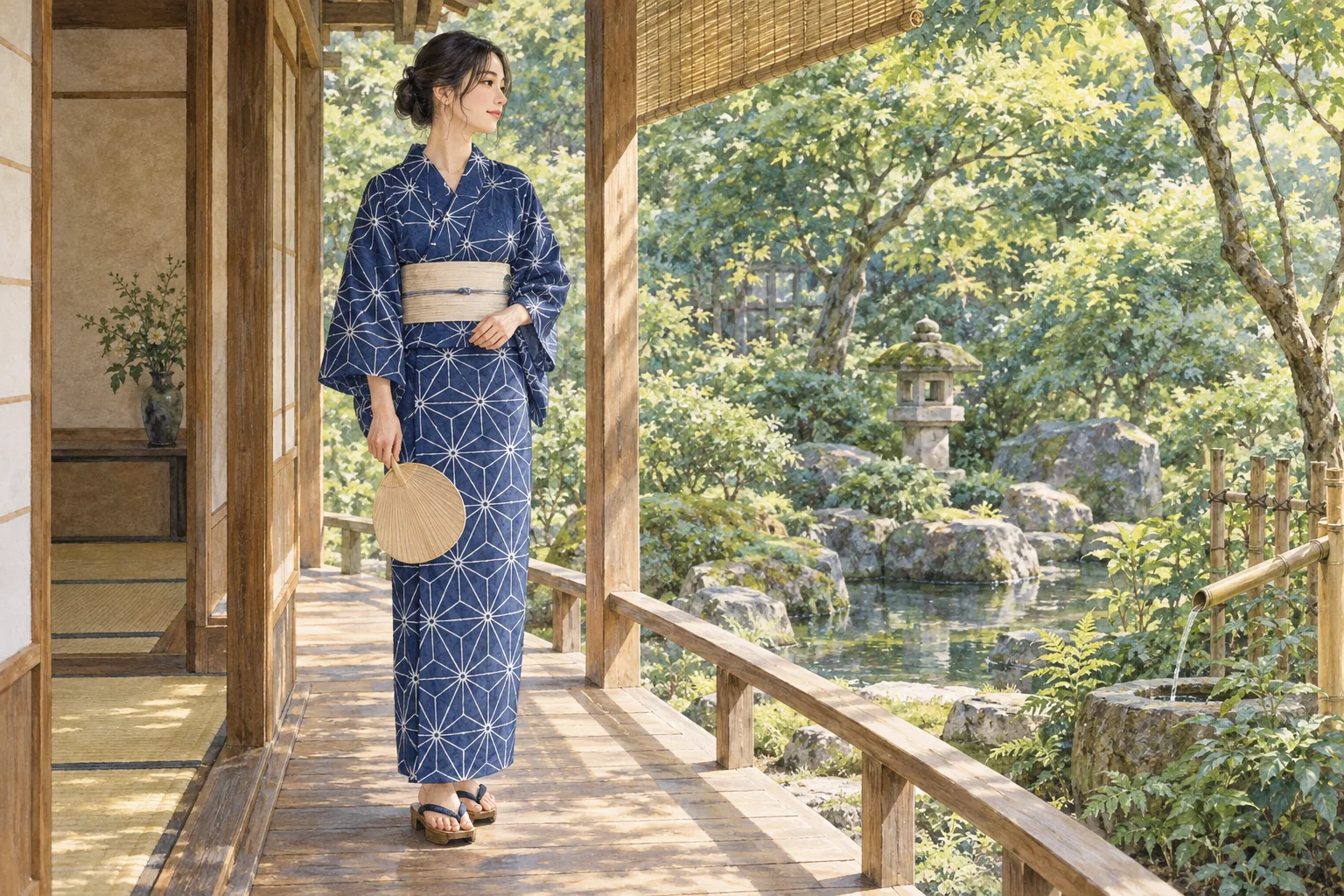
浴衣とは、夏や温泉宿で着る、木綿の軽い着物のことです。
30秒で説明する
外国人に説明するときの標準サイズ
A yukata is an unlined cotton kimono. It has no lining, no silk and far fewer layers, so it is much easier to put on than a formal kimono and can go in the washing machine. People wear them to summer festivals and fireworks displays, and inns provide them to guests to wear around the building. Always fold the left side over the right.
浴衣は裏地のない木綿の着物です。裏地も絹もなく、重ねる枚数もずっと少ないので、正式な着物よりはるかに着やすく、洗濯機で洗えます。夏祭りや花火大会に着ていき、旅館では館内着として客に用意されます。合わせは必ず左が上です。
スピーチ・英作文
通訳案内士の二次口述・大学入試の自由英作文に
A yukata is the easy version of a kimono. It is a single layer of cotton, with no lining and no silk, so it is light, cheap and washable. You see them in two places.
The first is summer: people wear yukata to festivals and fireworks displays, and for many young Japanese people that is the one time a year they wear traditional clothes at all. The second is at a hot spring inn, where the yukata is provided and you wear it all evening, to dinner and to the bath.
There is one rule that genuinely matters. The left side goes over the right. The other way round is how a body is dressed for a funeral, so people notice immediately. Beyond that, a yukata is about as relaxed as Japanese clothing gets.
浴衣は、着物の簡単版です。裏地も絹もない木綿一枚なので、軽く、安く、洗えます。見かける場面は二つあります。一つは夏。祭りや花火大会に浴衣を着ていきます。
多くの若い日本人にとって、伝統的な衣服を着るのは年にこの一度だけです。もう一つは温泉宿で、浴衣が用意され、夕食にも風呂にも着たまま行きます。本当に大事な決まりが一つあります。
左が上、右が下です。逆は亡くなった方に着せる合わせ方なので、すぐに気づかれます。それさえ守れば、浴衣は日本の衣服のなかでもっとも気楽なものです。
こう聞かれたら
外国人から実際にされる質問と、その答え方。
What's the difference from a kimono?
着物とはどう違うのですか。
A yukata has no lining, is made of cotton, is worn without the under-layers, and needs far less equipment. A formal kimono is silk, layered, and usually needs someone else's help to put on.
浴衣は裏地がなく木綿で、下に重ねる肌着類も少なく、必要な道具がずっと少ないです。正式な着物は絹で重ね着をし、たいてい人の手を借りないと着られません。
Which side goes over which?
どちらを上に合わせるのですか。
Left over right, always. Right over left is only used when dressing the dead, so it is a mistake people spot instantly, and it is the one thing to get right.
必ず左が上です。右が上は亡くなった方に着せるときだけなので、すぐに気づかれます。ここだけは間違えないでください。
Can I wear the inn's yukata outside?
宿の浴衣のまま外へ出てもいいですか。
In a hot spring town, yes, and people walk the streets and visit shops in them. Outside such towns it would look like wearing pajamas in public.
温泉街ならそのまま通りを歩き、店にも入ります。温泉街以外では、寝間着で外出しているように見えます。
そのまま使えるフレーズ
- Left side over the right — always that way round.左を上に合わせます。必ずこの向きです。
- Yukata are cotton, so you can wash them at home.浴衣は木綿なので、家で洗えます。
- People wear them to summer festivals and fireworks.夏祭りや花火大会に着ていきます。
- The inn will lend you one.旅館が貸してくれます。
- In a hot spring town you can wear it in the street.温泉街なら、そのまま外を歩けます。
説明に使う語句
- cotton robe浴衣
- sash / belt帯
- unlined裏地のない
- summer festival夏祭り
- fireworks display花火大会
動画で見る
YouTube より豆知識
浴衣は「湯帷子(ゆかたびら)」が語源で、もとは平安時代の貴族が蒸し風呂に入るときに着た麻の単衣だった。江戸時代に銭湯が広まると、湯上がりに着る木綿の衣として庶民に定着し、やがて夏の外出着になった。旅館で配られる浴衣は館内着で、夏祭りに着る浴衣より生地も仕立ても簡素なことが多い。合わせを「右前(自分から見て右を先に肌につける=左が上)」にするのは奈良時代の法令に由来するという説が知られている。逆の「左前」は死装束の合わせ方で、そこから「左前になる」は経営が傾く意味の慣用句にもなった。
