草履ぞうり
zori
flat thonged sandals
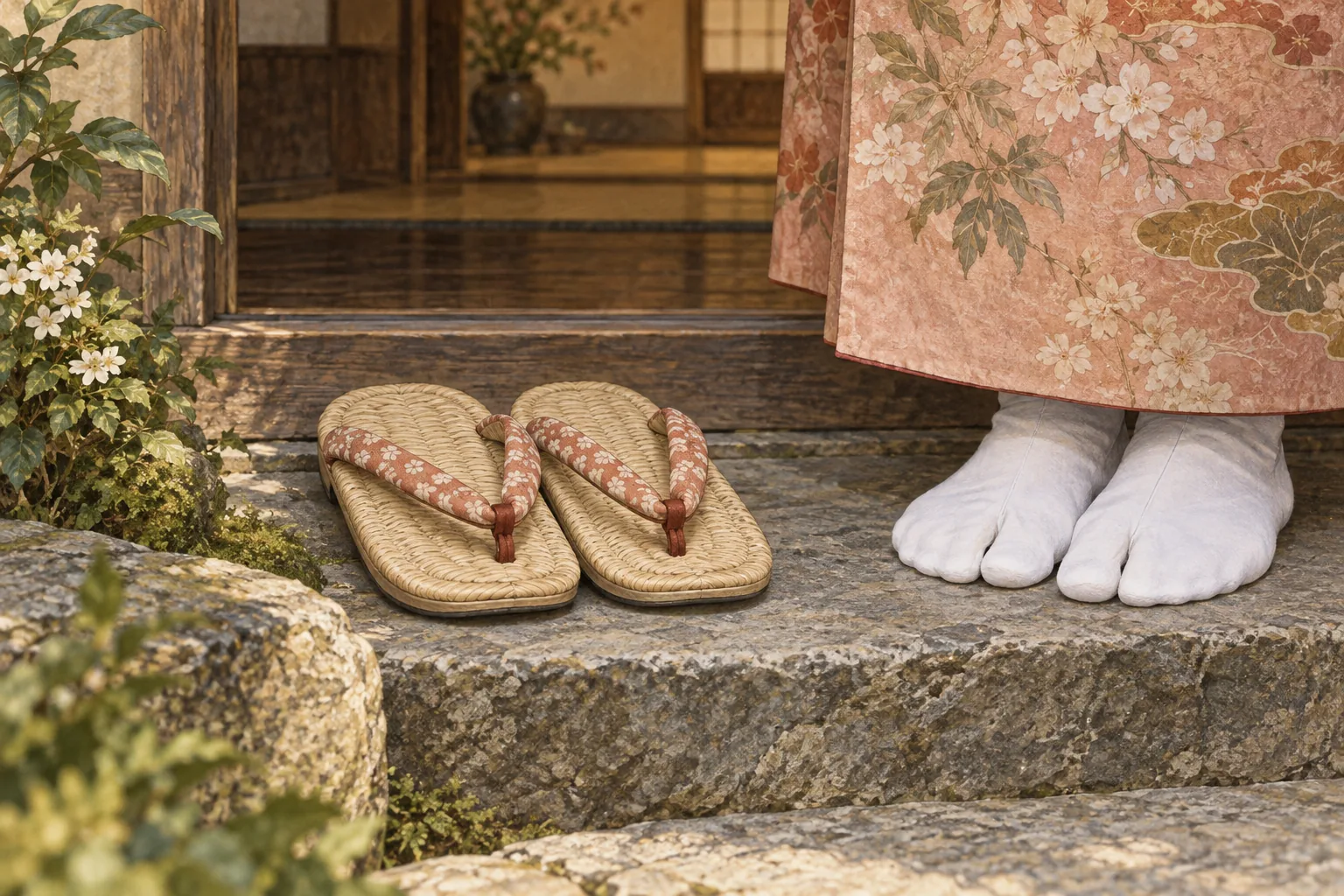
下駄とは別もの。歯がなく平らで、こちらが礼装用。
一言で言うと
これだけ覚えれば最低限伝わる一文
Zori are flat thonged sandals worn with kimono, and they are more formal than wooden geta.
草履とは着物に合わせる平らな鼻緒の履物で、木の下駄より格が上です。
30秒で説明する
外国人に説明するときの標準サイズ
Zori are flat sandals held on by a thong, worn with tabi socks and kimono. Unlike geta, which are wooden and raised on teeth, zori have a flat sole and can be made of straw, leather, vinyl or cloth. They are the formal choice: geta belong with a summer yukata, zori with a proper kimono. Heel height signals formality.
草履は鼻緒で留める平らな履物で、足袋と着物に合わせます。木製で歯のある下駄と違い、草履は底が平らで、藁、革、ビニール、布などで作られます。格が上なのはこちらで、下駄は夏の浴衣に、草履はきちんとした着物に合わせます。台の高さが格を表します。
スピーチ・英作文
通訳案内士の二次口述・大学入試の自由英作文に
Zori and geta are both Japanese sandals held on by a thong, but they are not interchangeable. Geta are wooden and stand on two raised teeth, which makes a sound when you walk and keeps you above wet ground.
Zori are flat, made of woven straw, leather, brocade or modern vinyl, and they are the formal footwear worn with tabi socks and a proper kimono. Within zori, formality goes up with the thickness of the sole and with the material: a plain straw one is everyday, a covered one matching the obi is for a wedding.
There are two things worth knowing if you try them. The thong should sit between the toes with the heel slightly over the back edge of the sole, which looks wrong to foreigners but is correct. And a new thong can rub, so walk in small steps and keep an adhesive bandage in your bag.
草履も下駄も鼻緒で留める日本の履物ですが、取り替えのきくものではありません。下駄は木でできていて二枚の歯の上に立ち、歩くと音がし、濡れた地面から足を高く保ちます。草履は平らで、編んだ藁、革、織物、今ならビニールなどで作られ、足袋ときちんとした着物に合わせる礼装の履物です。
草履の中でも、台が厚いほど、また素材が上等なほど格が上がります。素朴な藁のものはふだん着、帯と合わせた張りのあるものは婚礼用です。履いてみるなら知っておくとよいことが二つあります。
鼻緒は指の間に来て、かかとは台の後ろから少しはみ出すのが正しく、外国の人には間違って見えますが、それで合っています。もうひとつ、おろしたての鼻緒は擦れるので、歩幅を小さくし、鞄に絆創膏を入れておいてください。
こう聞かれたら
外国人から実際にされる質問と、その答え方。
Should my heel hang off the back?
かかとは後ろからはみ出していいのですか。
Yes, by about a centimeter or two. Zori are meant to be slightly small, and a foot that sits entirely on the sole looks oversized. This is the opposite of how western shoes are fitted, so it feels wrong at first.
はい、1、2センチほど出るのが正しいです。草履はやや小さめに履くもので、足が台に完全に収まっていると大きすぎて見えます。西洋の靴の合わせ方とは逆なので、最初は落ち着きません。
When would I wear geta instead?
下駄を履くのはどんなときですか。
With a yukata in summer, at a festival or around a hot spring town, and with bare feet rather than tabi. Geta are casual. Wearing them with a formal kimono would be like wearing sandals with a suit.
夏に浴衣を着るとき、祭りや温泉街で、足袋ではなく素足に履きます。下駄はふだん着の履物です。礼装の着物に合わせるのは、背広にサンダルを履くようなものです。
そのまま使えるフレーズ
- Zori are flat. Geta have wooden teeth.草履は平らで、下駄には歯があります。
- Your heel should hang off slightly.かかとは少し出るくらいがいいです。
- These go with tabi socks.これは足袋と合わせます。
- New thongs can rub. Take small steps.おろしたての鼻緒は擦れるので、小さく歩いてください。
説明に使う語句
- sandal履物
- sole / base台
- thong鼻緒
- formality格
動画で見る
YouTube より豆知識
草履の格は、台の高さと素材、鼻緒の生地で決まります。婚礼や式典では、帯と共布の布地を張った高めの台のものを履きます。かかとが少し出る履き方は、着物の裾さばきを美しく見せるためとも言われます。鼻緒がきついと感じたら、履く前に指で押し広げて緩めておくとよいとされます。雨の日にはつま先に覆いをつけた「雨草履」や、下駄に爪革をかけたものが使われました。稲藁で編んだ草履は、かつては自家製の日用品でした。
