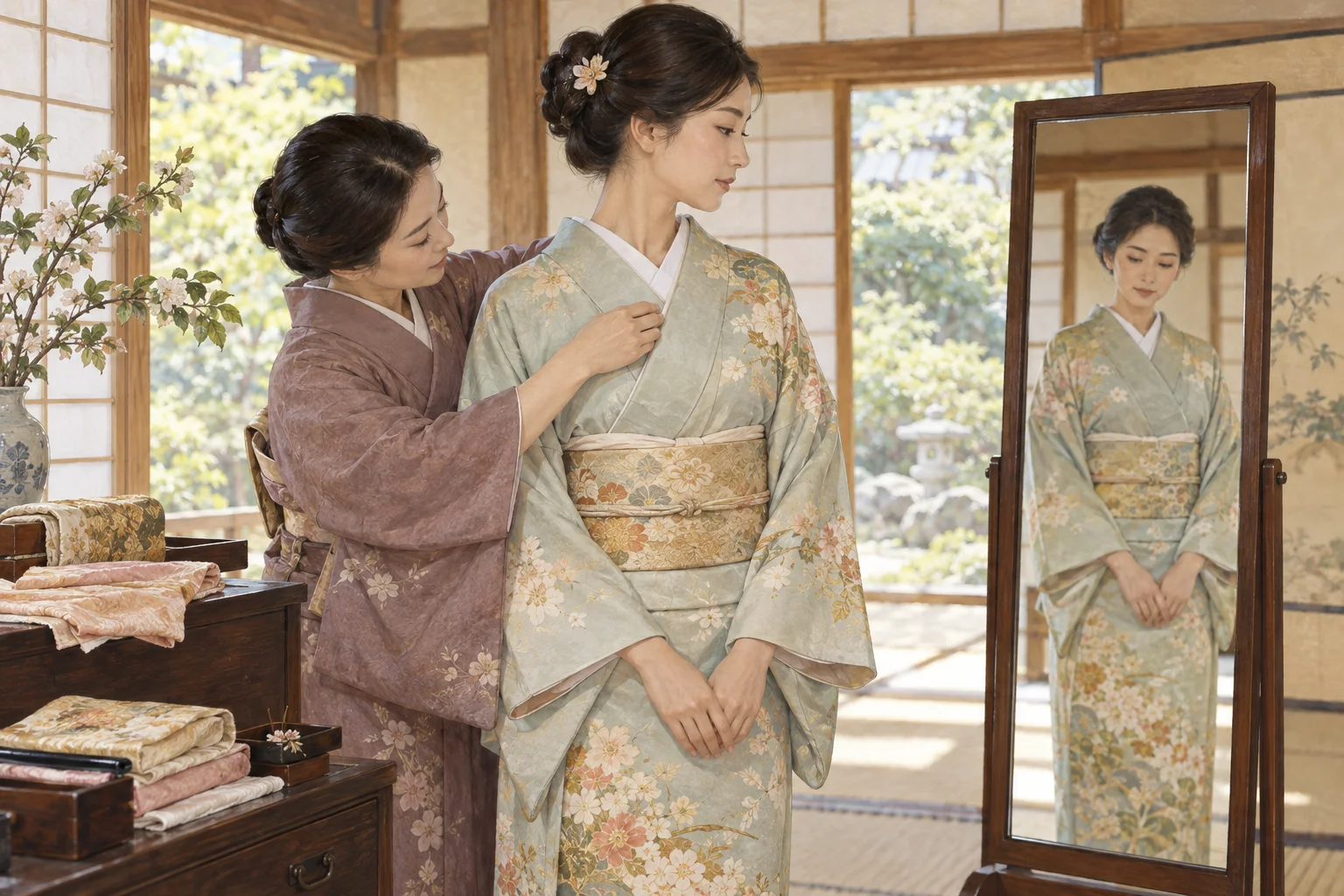
着物の右前きもののみぎまえ
migimae
wearing a kimono with the left side over the right
浴衣の合わせを逆にすると「死装束」。男女とも同じ向きで着る。
一言で言うと
これだけ覚えれば最低限伝わる一文
Migimae, the left-over-right wrap, is how every kimono is worn, by men and women alike.
着物の右前とは、左の身ごろを右の上に重ねる着方で、男女とも必ずこう着ます。
30秒で説明する
外国人に説明するときの標準サイズ
When you put on a kimono or yukata, you wrap the right side against your body first and then cross the left side over it. This is called migimae. The opposite way, hidarimae, is used only to dress the dead for a funeral, so getting it wrong is a well-known mistake. The rule is the same for men and women, unlike Western shirts and jackets.
着物や浴衣を着るときは、まず右の身ごろを体に当て、その上に左の身ごろを重ねます。これを右前といいます。逆の左前は、葬儀で亡くなった人に着せるときだけの着方なので、間違えるとよく知られた失敗になります。洋服のシャツや上着と違って、この決まりは男女で同じです。
スピーチ・英作文
通訳案内士の二次口述・大学入試の自由英作文に
One of the most common mistakes visitors make in a yukata is crossing it the wrong way. In Japan, both men and women wear a kimono with the left side over the right. Confusingly, this is called migimae, which sounds like "right in front."
The "mae" here means "earlier," so the right side goes on first, closest to the body. The reverse, hidarimae, is how the dead are dressed for a funeral, which is why people will quickly fix it for you. The custom goes back a long way.
A court order in 719 told ordinary people to wear their clothes this way, reportedly following the style of Tang China. An easy check is to see whether you can slip your right hand into the front of the collar. If you can, you're wearing it correctly.
訪日客が浴衣を着るときに最もよくある間違いのひとつが、合わせを逆にすることです。日本では、男性も女性も着物を左の身ごろが右の上に来るように着ます。まぎらわしいことに、これを右前といい、「右が前」のように聞こえます。
この「前」は「先」という意味で、右側を先に、体に近いほうに着るということです。逆の左前は、葬儀で亡くなった人に着せる着方なので、間違えているとすぐに直してもらえます。
この習慣の歴史は古く、719年の朝廷の命令で、一般の人々もこの着方をするよう定められました。唐の服装にならったものといわれます。簡単な確かめ方は、右手を襟元から懐に入れられるかどうかです。入れば、正しく着られています。
こう聞かれたら
外国人から実際にされる質問と、その答え方。
Why is it called "right front" when the left side is on top?
左が上なのに、なぜ「右前」というのですか。
Here "mae" means "earlier," not "on top." The right side goes on first, so it ends up underneath.
ここでの「前」は「上」ではなく「先」という意味です。右側を先に着るので、右が下になります。
Is it different for women, like buttons on Western clothes?
洋服のボタンのように、女性は逆なのですか。
No, men and women cross it the same way. That surprises many visitors who are used to Western clothing.
いいえ、男女とも同じ向きに重ねます。洋服に慣れた訪日客は、これによく驚きます。
What happens if I wear it the wrong way?
逆に着てしまったらどうなりますか。
Nothing serious, but people will notice because it looks like funeral dress. Someone may politely point it out, so just rewrap it.
大ごとにはなりませんが、死装束のように見えるので気づかれます。誰かがそっと教えてくれるかもしれないので、着直せば大丈夫です。
誤解されやすい
MYTHWomen wear kimono crossed the opposite way from men, like Western buttons.
洋服のボタンのように、女性の着物は男性と逆向きに合わせる。
FACTBoth men and women wear the left side over the right. Only the dead are dressed the other way.
男女とも左の身ごろを右の上に重ねます。逆に着せるのは亡くなった人だけです。
そのまま使えるフレーズ
- Left over right, please.左を上にしてください。
- Your yukata is crossed the other way.浴衣の合わせが逆になっています。
- The other way is only for funerals.逆の着方はお葬式のときだけです。
- It's the same for men and women.男女とも同じです。
- If your right hand slips in easily, you've got it right.右手がすっと入れば、正しく着られています。
説明に使う語句
- left side over right右前(左の身ごろが上)
- to cross (the front panels)(前を)合わせる
- collar襟
- funeral clothing for the dead死装束
- front panel身ごろ
動画で見る
YouTube より豆知識
右前の由来としてよく挙げられるのが、『続日本紀』に記された719年(養老3年)の命令で、一般の人々に襟を右にして着るよう定めたとされる。遣唐使が持ち帰った唐の服装にならったものといわれる。それ以前は左前の着方も見られたとされる。亡くなった人に左前で着せるのは、あの世はこの世とあべこべだという考えによると説明されることが多いが、由来には諸説ある。右手を懐に入れやすく、財布などを出し入れしやすいという実用上の理由を挙げる人もいる。
