お葬式おそうしき
osoushiki
a Japanese funeral
黒い服、香典、焼香、そして骨を箸で拾う。参列するなら知っておきたい作法。
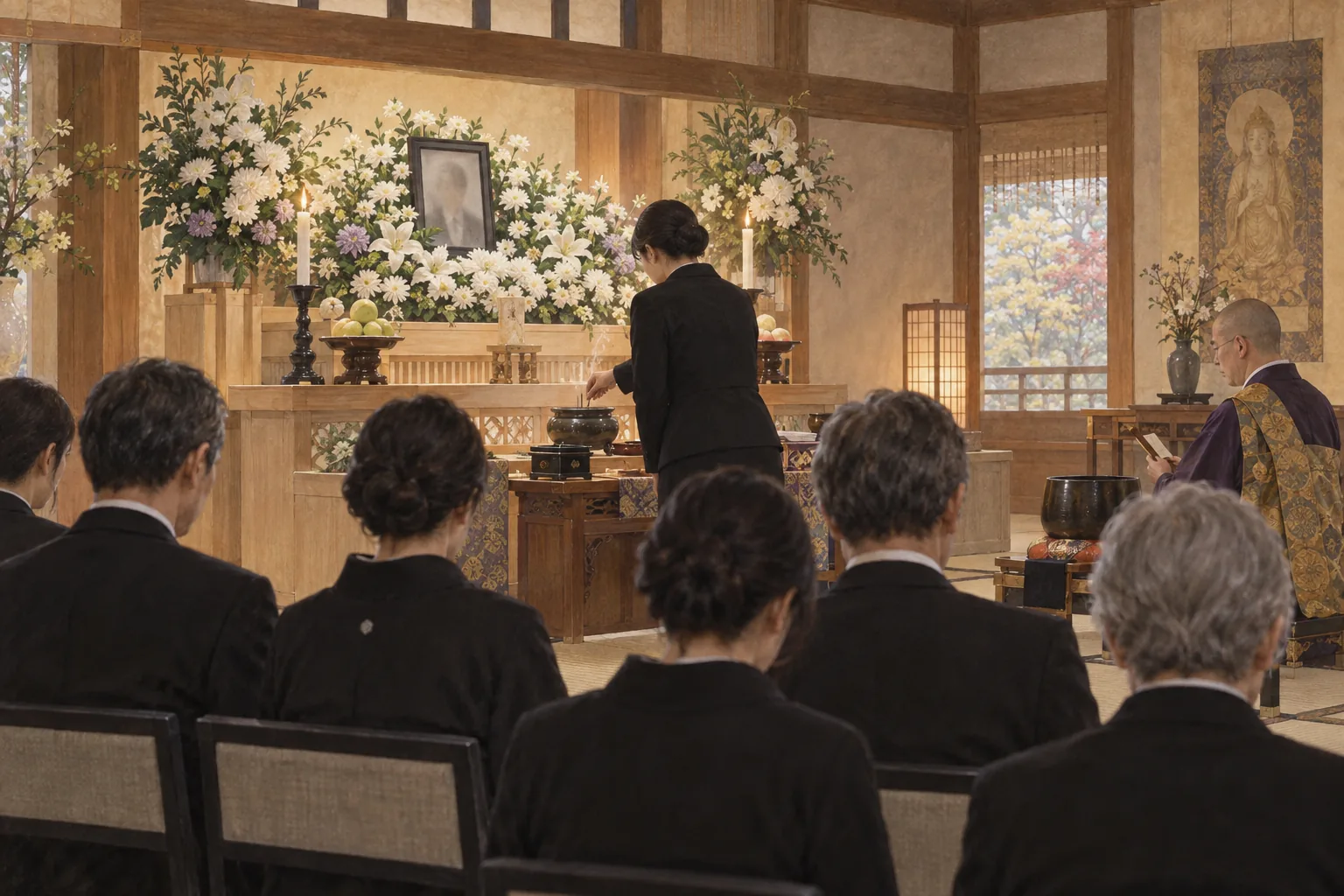
一言で言うと
これだけ覚えれば最低限伝わる一文
Osoushiki, or a Japanese funeral, is usually a Buddhist ceremony with offerings of incense, followed by cremation.
お葬式とは、たいてい仏式で焼香を行い、そのあと火葬をする日本の葬儀です。
30秒で説明する
外国人に説明するときの標準サイズ
The great majority of funerals in Japan are Buddhist, even for families who are otherwise not religious. Guests wear black, bring condolence money in a special envelope, and offer incense at the altar. Cremation follows, and afterwards close family transfer the bones to an urn using chopsticks, passing them from person to person.
日本の葬儀は大半が仏式で、ふだん信仰を持たない家でもそうです。参列者は黒い服を着て、香典を専用の袋で包み、祭壇で焼香をします。そのあと火葬が行われ、近親者が箸で骨を骨壺へ納め、人から人へ渡していきます。
スピーチ・英作文
通訳案内士の二次口述・大学入試の自由英作文に
A Japanese funeral is usually Buddhist, even when the family has no active religious practice. The dead person receives a posthumous Buddhist name. Guests wear plain black, and bring condolence money in a special black-and-silver envelope, giving it at the reception desk on arrival.
The central act for a guest is offering incense: you take a pinch, raise it, drop it in the burner, put your hands together, and bow. Cremation follows, and this is the part visitors find hardest. Afterwards the close family gather around the remains and transfer the bones into an urn using long chopsticks, often two people holding one bone together.
This is why passing food chopstick to chopstick at the table is taboo: it belongs to this moment and to no other. It is not gruesome to the people doing it. It is the last physical act of care a family performs.
日本の葬儀はたいてい仏式です。家族に信仰の実践がなくてもそうです。亡くなった人には戒名が授けられます。参列者は地味な黒い服を着て、黒白や銀の水引の袋に香典を包み、受付で渡します。参列者にとって中心となる所作は焼香です。
抹香をつまみ、目の高さに上げ、香炉に落とし、手を合わせて礼をします。そのあと火葬が行われ、外国の方がいちばん受け止めにくいのがここからです。火葬のあと、近親者が遺骨を囲み、長い箸で骨を骨壺へ納めます。
二人で一つの骨を一緒に持つこともあります。食卓で箸から箸へ食べ物を渡すのがタブーなのは、この所作がこの場だけのものだからです。行う人にとって、これは陰惨なことではありません。家族が行う、最後の手による世話なのです。
こう聞かれたら
外国人から実際にされる質問と、その答え方。
What do I wear and bring?
服装と持ち物はどうすればいいですか。
Plain black, minimal jewelry, no bright accessories. Bring condolence money in a proper envelope; the amount depends on your relationship, and stationery shops sell the envelopes with guidance printed on them.
地味な黒、装飾は最小限、明るい小物は避けます。香典は不祝儀袋に入れて持参します。金額は関係の近さによります。袋は文具店で買え、目安が書かれています。
Should the notes be new or old?
お札は新しいものですか、使い古しですか。
Old, or at least folded once. Crisp new notes suggest you prepared in advance for the death, which is the opposite of the intended message. For weddings, the rule is reversed.
古札か、一度折った札にします。新札は死を見越して用意していた印象になり、伝えたい気持ちと逆になります。結婚式では逆の決まりです。
Why chopsticks for the bones?
どうして箸で骨を拾うのですか。
The act of passing something from chopstick to chopstick is a ritual of transfer, understood as helping the person cross over. Because it belongs to this ceremony, doing it with food is taboo.
箸から箸へ渡す所作は、橋渡しの儀礼とされ、故人が渡ることを助ける意味があると説明されます。この儀式に属する所作だからこそ、食事で行うのはタブーなのです。
誤解されやすい
MYTHJapanese funerals are austere and unemotional.
日本の葬儀は簡素で感情を表さないと思われがちです。
FACTThey are formal, and public weeping is less common than in some cultures, but they are not emotionless. The formality is a structure that carries people through the days rather than a suppression of feeling.
形式が整っているだけで、感情がないわけではありません。人前で泣くことは他の文化より少なくても、その形式は、感情を抑えるためではなく、その数日を運ぶための構えなのです。
そのまま使えるフレーズ
- Wear plain black with no bright accessories.地味な黒で、明るい小物は避けてください。
- Condolence money goes in a special envelope.香典は不祝儀袋に入れます。
- Use old notes, not new ones.新札ではなく、古いお札を使います。
- You offer incense at the altar.祭壇で焼香をします。
- Most funerals here are Buddhist.日本の葬儀は大半が仏式です。
説明に使う語句
- funeral葬儀
- condolence money香典
- cremation火葬
- urn骨壺
- mourner会葬者、弔問客
動画で見る
YouTube より豆知識
日本の火葬率は99.9%を超え、世界で最も高い水準にある。通夜は本来、遺族が夜通し付き添う儀式だったが、現在は夕方から数時間の「半通夜」が一般的。戒名は宗派によって「法名」「法号」とも呼ばれ、浄土真宗では法名を用いる。香典の金額は友人で5千円から1万円が目安とされ、4と9のつく金額は「死」「苦」に通じるとして避けられる。骨上げでは二人一組で一つの骨を箸で拾う「箸渡し」が行われ、最後に喉仏を納めるのが慣例。近年は家族葬や直葬が増え、通夜・告別式を省略する形も広がっている。
