大晦日おおみそか
omisoka
New Year's Eve in Japan
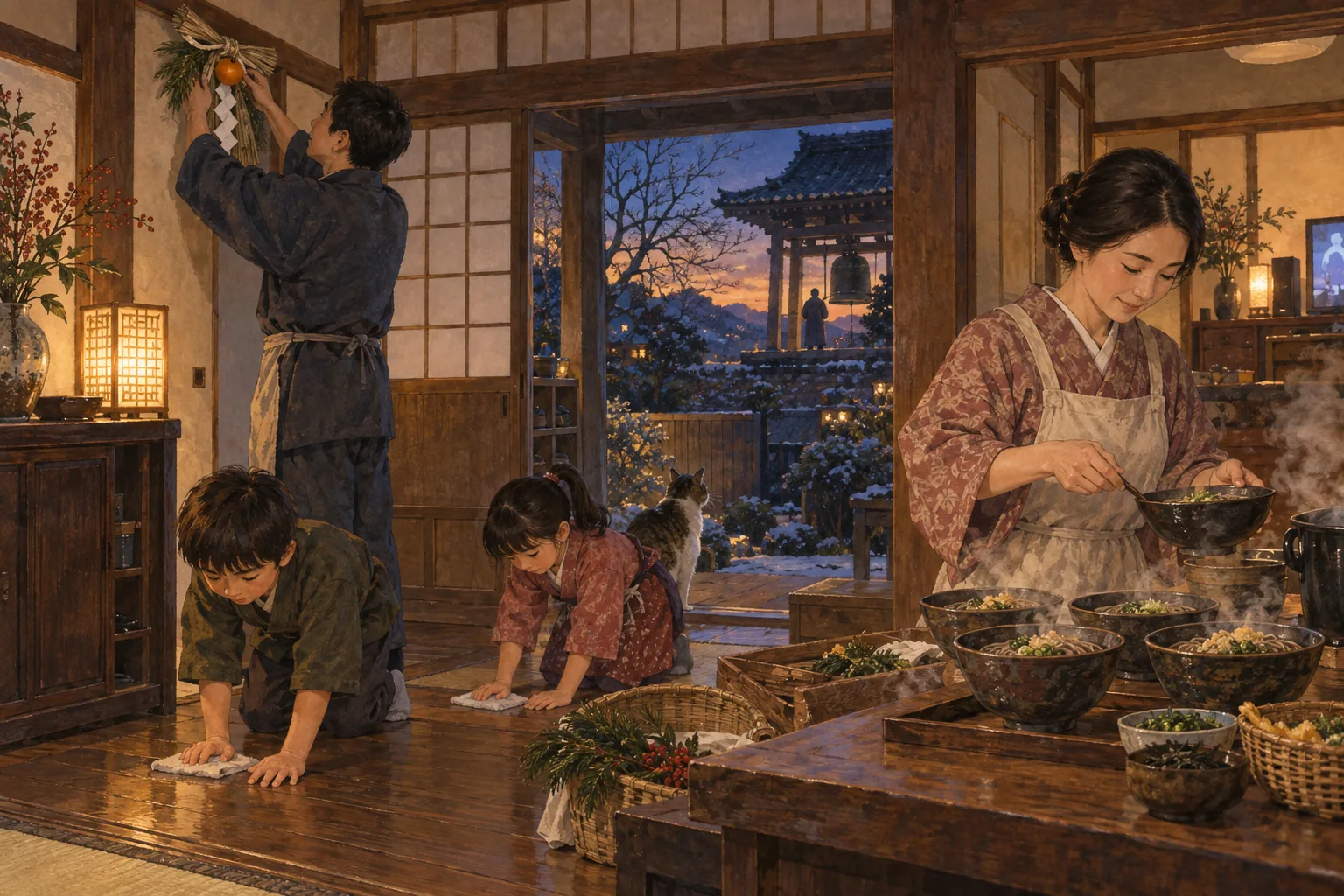
カウントダウンで騒ぐ国と、そばをすすってテレビを見る国がある。日本は後者が多数派。
一言で言うと
これだけ覚えれば最低限伝わる一文
Omisoka is New Year's Eve, which many Japanese spend quietly at home with family.
大晦日は12月31日。日本では、家族と家で静かに過ごす人が多い夜です。
30秒で説明する
外国人に説明するときの標準サイズ
Omisoka is December 31st. Unlike the loud countdown parties in many countries, the typical Japanese version is quiet and domestic. Families finish cleaning the house, eat buckwheat noodles called toshikoshi soba, and watch a long music program on television. Around midnight, temples ring their bells 108 times, and some people head straight out to a shrine.
大晦日は12月31日です。多くの国の賑やかなカウントダウンとは違い、日本の大晦日はたいてい静かで家庭的です。家族は大掃除を終え、年越しそばを食べ、長時間の音楽番組をテレビで見ます。年越しをはさんで寺が108回鐘を鳴らし、そのまま神社へ向かう人もいます。
スピーチ・英作文
通訳案内士の二次口述・大学入試の自由英作文に
New Year's Eve in Japan is called omisoka, and it is probably quieter than you would expect. There are no big countdown parties for most families. Instead, people finish cleaning the whole house, because you are supposed to start the year without last year's dust.
In the evening the family eats buckwheat noodles. The noodles are long and thin and cut easily, which is said to mean cutting off the troubles of the old year. Then everyone sits in front of the television and watches a music show that runs for more than four hours.
Just before midnight, temples begin ringing their bells one hundred and eight times, once for each of the earthly desires said to trouble us. It is a strange and very calm way to end a year, and I would not change it.
日本の大晦日は、想像より静かかもしれません。多くの家庭では大きなカウントダウンはしません。かわりに家じゅうの大掃除を終わらせます。去年のほこりを残したまま年を始めない、という考え方です。
夜には家族でそばを食べます。細く長く、切れやすいそばは、古い年の苦労を断ち切ることを意味するとされます。それからみんなでテレビの前に座り、4時間以上続く音楽番組を見ます。
真夜中の直前、寺が鐘を108回つきはじめます。人を悩ませるとされる煩悩の数だけ鳴らすのです。年の終わり方としては不思議なほど穏やかですが、私はこれを変えたいとは思いません。
こう聞かれたら
外国人から実際にされる質問と、その答え方。
Why 108 bell strikes?
どうして鐘を108回つくのですか。
In Buddhism, 108 is the number of bonno, the desires and attachments that cause suffering. Each strike is said to clear one of them before the new year starts.
仏教では108は煩悩の数とされます。苦しみのもとになる欲や執着を、新年の前に一つずつ払う、という意味です。
Is nobody out partying?
外で騒いでいる人はいないのですか。
Young people in cities do go out, and Shibuya gets crowded. But the standard image of omisoka is a family at home in front of the television, and a great many households still spend it that way.
都市の若い人は出かけますし、渋谷は混みます。ただ大晦日の標準的な姿は、家族が家でテレビを見ていることで、今もそうして過ごす家庭は多いです。
What do people eat on New Year's Day itself?
元日そのものには何を食べるのですか。
Osechi, a set of small dishes packed in stacked lacquer boxes, and ozoni, a soup with rice cake. Many dishes in osechi carry a meaning built on wordplay, like herring roe, kazunoko, whose name suggests "many children."
重箱に詰めたおせち料理と、餅の入った雑煮です。おせちの多くは語呂合わせで、たとえば数の子は「子孫繁栄」といった意味を持ちます。
そのまま使えるフレーズ
- We always eat soba on New Year's Eve.大晦日はいつもそばを食べます。
- The long noodles stand for a long life.長いそばは長寿を表します。
- The temple bell rings 108 times around midnight.年越しをはさんで、寺の鐘が108回鳴ります。
- We clean the whole house before the year ends.年内に家じゅうを大掃除します。
- Happy New Year — we say it after midnight, not before.「あけましておめでとう」は、年が明けてから言います。
説明に使う語句
- New Year's Eve大晦日
- buckwheat noodlesそば
- temple bell寺の鐘
- year-end cleaning大掃除
- worldly desires煩悩
動画で見る
YouTube より豆知識
「晦日(みそか)」はもともと月の最終日を指す言葉で、その年の最後の晦日だから「大晦日」という。年越しそばの由来には諸説あり、細く長いので長寿を願うという説、切れやすいので苦労や厄を断ち切るという説、金銀細工師がそば粉で金粉を集めたことから金運を願うという説などがある。テレビの『紅白歌合戦』は1951年にラジオで始まり、最高視聴率は1963年の81.4%。除夜の鐘は107回を年内に、最後の1回を年が明けてからつく寺が多い。近年は騒音を理由に中止や昼間の実施に切り替える寺も出ている。
