初詣はつもうで
hatsumode
the first shrine visit of the year
「無宗教」と答える人が多い一方、正月には多くの人が神社や寺に参る。
一言で言うと
これだけ覚えれば最低限伝わる一文
Hatsumode is the first visit to a shrine or temple in the new year.
初詣とは、新年になって初めて神社やお寺にお参りすることです。
30秒で説明する
外国人に説明するときの標準サイズ
Hatsumode is the first shrine or temple visit of the year, usually made in the first three days of January. People pray for a good year, buy a new lucky charm, and draw a paper fortune. Famous shrines get millions of visitors, and the lines can take hours, so many people go to a small neighborhood shrine instead.
初詣は、その年初めて神社やお寺にお参りすることで、たいてい1月1日から3日の間に行きます。人々は良い一年を祈り、新しいお守りを買い、おみくじを引きます。有名な神社には何百万人も訪れ、数時間並ぶこともあるため、近所の小さな神社で済ませる人も多いです。
スピーチ・英作文
通訳案内士の二次口述・大学入試の自由英作文に
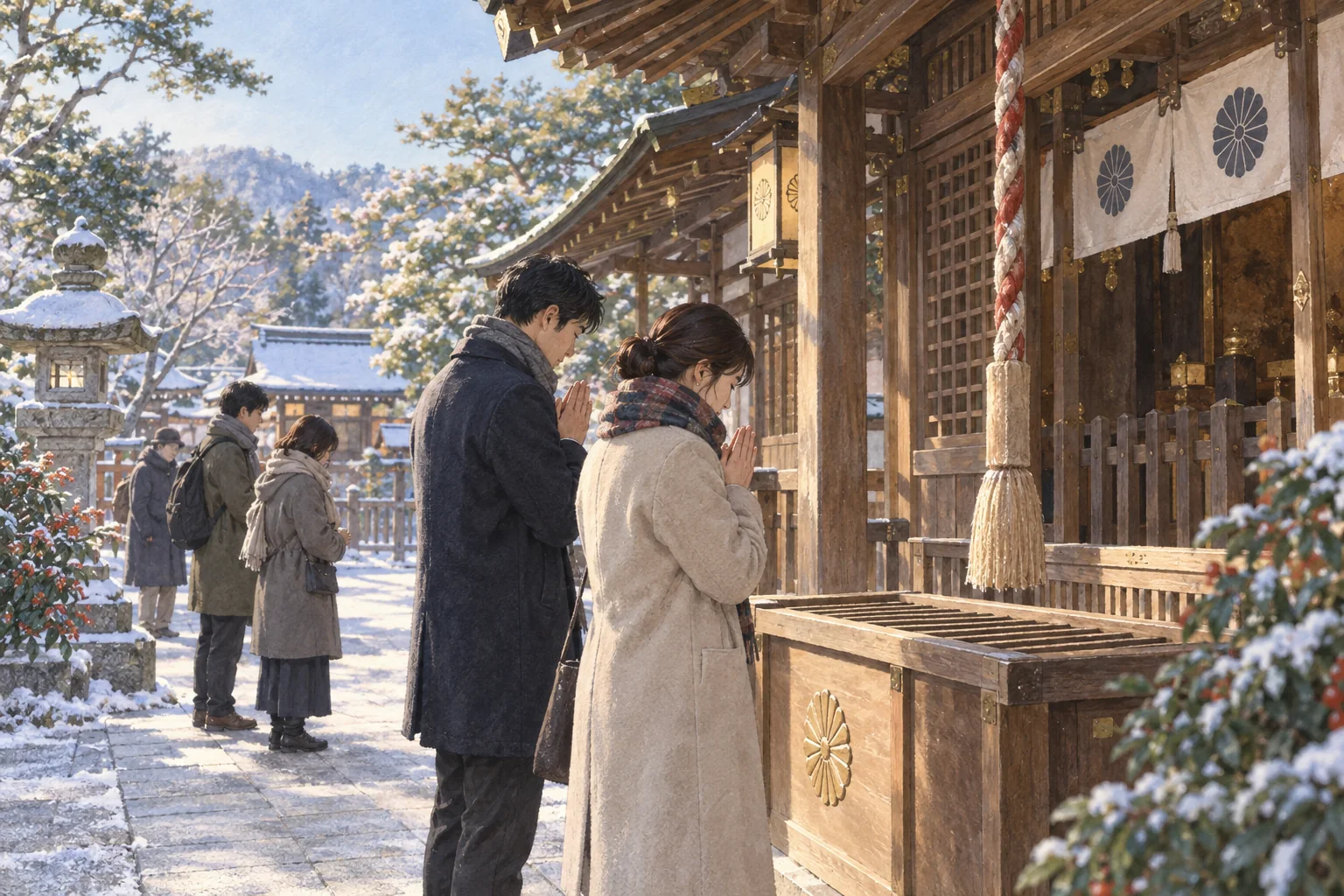
In the first few days of January, a great many Japanese people visit a shrine or a temple. This is called hatsumode, the first visit of the year. At a shrine, people throw a coin into an offering box, bow twice, clap twice, make a wish, and bow once more.
Then they buy a charm for safety or success and draw a fortune slip to see what kind of year is coming. What surprises visitors is that many of these people do not consider themselves religious.
For us, hatsumode is less about belief and more about marking a beginning. It is a way of drawing a line between the year that ended and the year that starts, together with our family, in a place that has stood there for a very long time.
1月のはじめの数日、非常に多くの日本人が神社やお寺を訪れます。これを初詣、その年最初のお参りと言います。神社では、賽銭箱にお金を入れ、二度おじぎをし、二度手を打ち、願い事をして、もう一度おじぎをします。
それから交通安全や合格のお守りを買い、おみくじを引いてその年の運勢を見ます。外国の方が驚くのは、この人たちの多くが自分を信仰深いとは思っていないことです。
私たちにとって初詣は、信仰というより「始まりの区切り」です。長いあいだそこに立ち続けてきた場所で、家族と一緒に、終わった年と始まる年のあいだに線を引く行為なのです。
こう聞かれたら
外国人から実際にされる質問と、その答え方。
So are Japanese people religious or not?
結局、日本人は信仰を持っているのですか、いないのですか。
Most say no, yet a large share of people still go to hatsumode. Japanese religion tends to be about actions and occasions rather than belief and membership. You do the ritual because it is the right thing to do at that time of year, not because you signed up to a faith.
多くの人は「無宗教」と答えますが、それでも初詣に行く人はかなりの割合にのぼります。日本の宗教は、信条や所属より、行為と機会に結びついています。信仰を選んだからではなく、その時期にはそうするものだから、儀式を行うのです。
Shrine or temple — does it matter which one?
神社と寺、どちらに行くかは重要ですか。
Not much, in practice. Shrines are Shinto and temples are Buddhist, but for hatsumode plenty of people go to whichever is closest or most famous nearby. Some families go to both.
実際にはあまり気にしません。神社は神道、お寺は仏教ですが、初詣ではいちばん近い所や有名な所に行く人が多く、両方行く家庭もあります。
What happens if I draw a bad fortune?
凶を引いたらどうすればいいですか。
Many people tie it to the rack provided at the shrine and leave the bad luck behind. Good fortunes you can take home in your wallet.
境内の結び所に結びつけ、悪い運を置いて帰る人が多いです。良いおみくじは財布などに入れて持ち帰ります。
そのまま使えるフレーズ
- Shall we go to the shrine for hatsumode?初詣に行きませんか。
- Throw in a coin, bow twice, clap twice, then bow once more.お金を入れて、二礼二拍手一礼です。
- I drew "great luck" this year.今年は大吉でした。
- If you get a bad one, you tie it up over there.悪いのが出たら、あそこに結んでいきます。
- The line at the big shrines can be two hours long.大きな神社だと2時間並ぶこともあります。
説明に使う語句
- offering box賽銭箱
- lucky charmお守り
- fortune slipおみくじ
- shrine grounds境内
- bow twice, clap twice, bow once二礼二拍手一礼
動画で見る
YouTube より豆知識
初詣が今の形になったのは、実はそれほど古くない。江戸時代までは、その年の恵方(縁起のよい方角)の社寺に参る「恵方詣り」や、大晦日から元日にかけて氏神の社にこもる習慣が中心だった。現在のように「有名な社寺に正月三が日に参る」形が広まったのは明治以降で、鉄道会社が初詣客を運ぶ臨時列車を走らせ、参拝先を宣伝したことが大きいとされる。つまり初詣は、古代からの伝統というより、鉄道の時代に育った行事である。おみくじの「大吉・中吉・小吉・凶」の割合は社寺ごとに決めていて、凶を多めに入れている所もある。
