お守りおまもり
omamori
a protective charm from a shrine or temple
開けてはいけない。そして1年で返す。お土産として渡すなら、これを伝えて。
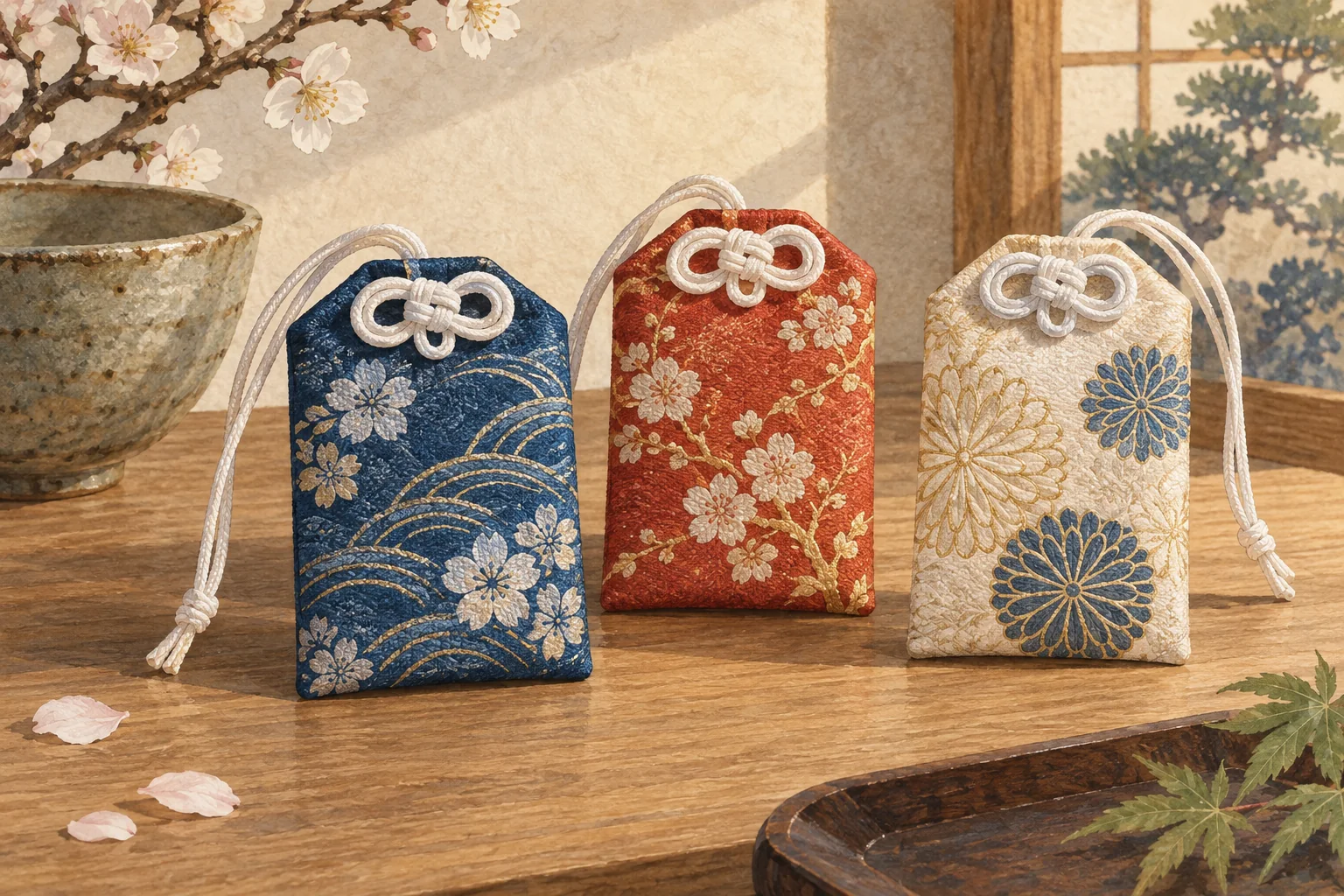
一言で言うと
これだけ覚えれば最低限伝わる一文
An omamori is a small cloth charm from a shrine or temple, bought for a specific kind of luck.
お守りとは、神社やお寺で授かる、目的の決まった布製の小さな護符です。
30秒で説明する
外国人に説明するときの標準サイズ
An omamori is a small brocade bag sold at shrines and temples. Each one is for something specific: safe driving, passing an exam, safe childbirth, good health, finding a partner. You keep it with you, in a bag or on a phone, and you do not open it. Traditionally you return it to a shrine after a year and get a new one.
お守りは、神社やお寺で授与される錦の小袋です。それぞれ目的が決まっています。交通安全、合格祈願、安産、健康、縁結び。カバンやスマホにつけて持ち歩き、中を開けません。1年たったら神社に返し、新しいものを受けるのが習わしです。
スピーチ・英作文
通訳案内士の二次口述・大学入試の自由英作文に
An omamori is a small cloth charm you can get at most shrines and many temples, and it makes a good souvenir if you explain it properly. Each one is for one specific thing. There are charms for safe driving, for passing exams, for safe childbirth, for good health, for finding love, and famous shrines have their own specialities.
Two rules come with it. First, you do not open it. Inside is a piece of wood or paper with words written on it, and opening the bag is said to let the protection out. Second, it has a limited life.
You are meant to bring it back to a shrine after about a year, where it is burned in a ceremony, and receive a new one. That is part of why shrines are so busy in early January. And strictly speaking you do not buy an omamori; the word used is closer to receiving one.
お守りは、多くの神社やお寺で受けられる布製の小さな護符で、きちんと説明して渡せばよい土産になります。一つにつき目的が一つです。交通安全、合格祈願、安産、健康、縁結び。
有名な神社にはそれぞれ得意分野があります。お守りには二つの決まりがついてきます。一つ、開けないこと。中には文字を記した木や紙が入っており、袋を開けると力が抜けると言われます。二つ、期限があること。
1年ほどで神社に返し、お焚き上げしてもらって新しいものを受けます。1月はじめに神社が混む理由の一つはそれです。そして厳密には、お守りは「買う」ものではなく「受ける」ものと言います。
こう聞かれたら
外国人から実際にされる質問と、その答え方。
What happens if I open it?
開けてしまったらどうなりますか。
Nothing physical, obviously. But the understanding is that the charm loses its effect, and most Japanese people genuinely do not open them. It is like asking whether you can unwrap a gift you were told not to.
物理的には何も起きません。ただ、効き目がなくなると理解されており、たいていの日本人は本当に開けません。開けるなと言われた贈り物を開けてよいか、と聞くのに近い話です。
Can I keep it longer than a year?
一年を過ぎても持っていていいですか。
People do, especially ones with sentimental value. The one-year rule is a custom rather than a law, and nobody is keeping track.
思い入れのあるものを持ち続ける人はいます。1年というのは習わしであって規則ではなく、誰も数えていません。
Can I return it at a different shrine from where I got it?
受けた神社と別の神社に返してもいいですか。
Generally yes, most shrines accept charms from elsewhere. A charm from a temple should ideally go back to a temple, though, since they are different traditions.
たいていの神社は他所のお守りも受け付けます。ただ寺のお守りは寺に返すのが望ましいとされます。別の伝統だからです。
そのまま使えるフレーズ
- Each charm is for one specific thing.お守りは一つにつき目的が一つです。
- Please don't open it.中は開けないでください。
- You bring it back after about a year.1年ほどで返しにいきます。
- This one is for passing exams.これは合格祈願のお守りです。
- We say we receive one, not buy one.「買う」ではなく「受ける」と言います。
説明に使う語句
- charm / amuletお守り、護符
- ward off(災いを)退ける
- traffic safety交通安全
- safe childbirth安産
- burn ceremoniallyお焚き上げする
動画で見る
YouTube より豆知識
お守りの中身は「内符」と呼ばれ、神札を小さくしたものや、神名を記した木片・紙片が納められている。1年で返すのは、神の力は時とともに弱まり、新しい年には新しい力を受けるという考え方による。返されたお守りは「お焚き上げ」で焼かれ、1月15日ごろの「どんど焼き」で正月飾りとともに焚かれる地域も多い。現代ではランドセルにつける交通安全、スマートフォンに貼るタイプ、IT企業がIT祈願で知られる神社に社運を祈るなど、形も目的も広がっている。なお授与所で扱う金額は「初穂料」「お納め」と呼び、「値段」とは言わない。
