祭りまつり
matsuri
a local festival
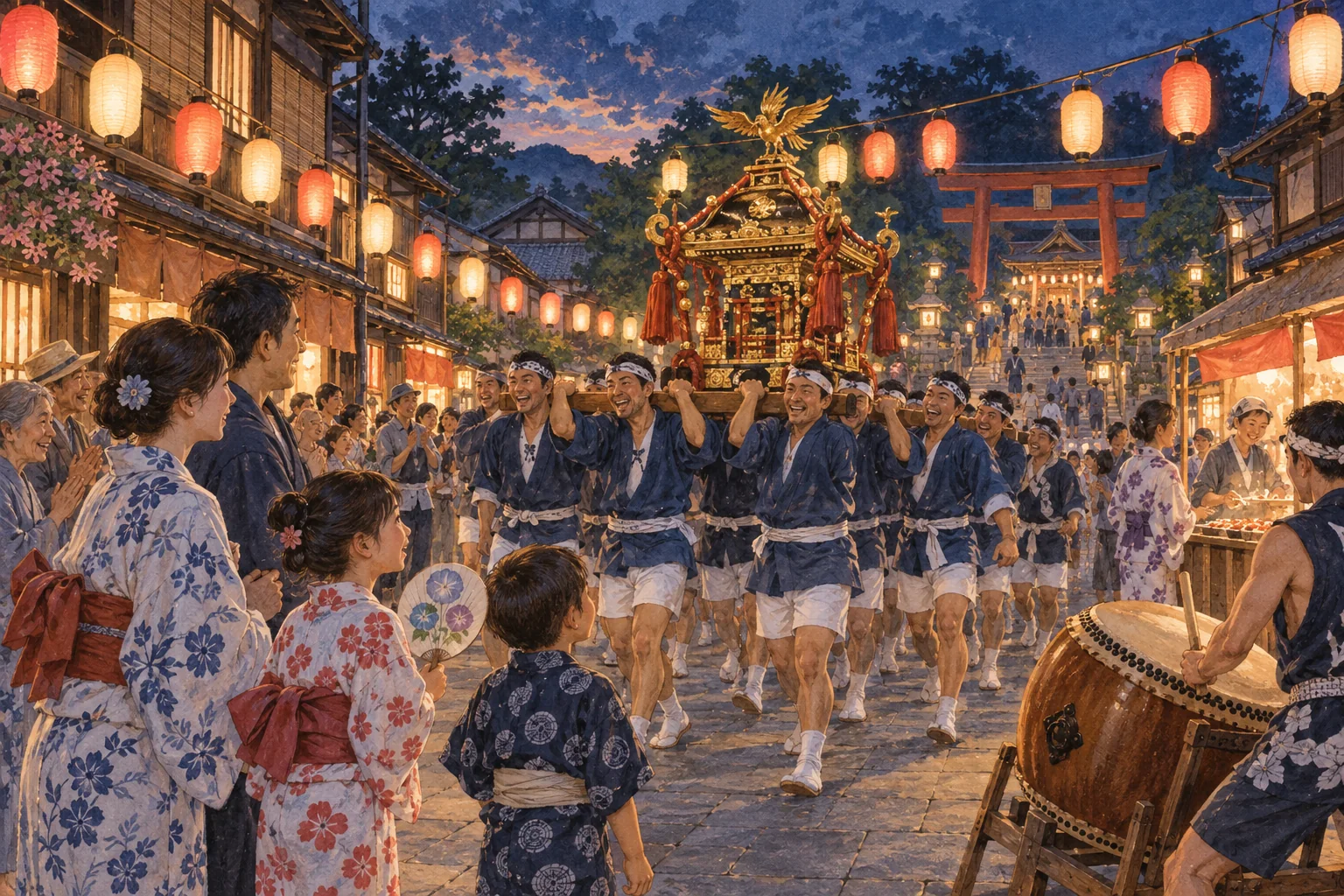
観光イベントではなく、神社の行事。神輿の中には神様が乗っている。
一言で言うと
これだけ覚えれば最低限伝わる一文
A matsuri is a local festival, usually held by a shrine, in which a deity is carried through the neighborhood.
祭りとは、たいてい神社が行う地域の行事で、神を神輿に乗せて町を回ります。
30秒で説明する
外国人に説明するときの標準サイズ
A matsuri is a festival run by a local shrine for the neighborhood it serves. The central act is carrying a portable shrine, a mikoshi, through the streets: the deity is understood to be inside it, visiting the area. Around that there are food stalls, drums, dancing and games. Every region has its own, and the big ones draw crowds in the millions.
祭りは、地元の神社がその氏子地域のために行う行事です。中心にあるのは神輿を担いで町を回ることで、その中には神が乗り、地域を巡っていると理解されています。周りには屋台、太鼓、踊り、遊びがあります。地域ごとに独自の祭りがあり、大きなものは数百万人を集めます。
スピーチ・英作文
通訳案内士の二次口述・大学入試の自由英作文に
A matsuri is a local festival, and it is worth explaining that it is not primarily entertainment. Most matsuri belong to a shrine and are held for the area that shrine serves. The central event is the mikoshi, a portable shrine carried on the shoulders of dozens of people, often shouted along and deliberately shaken.
The deity of the shrine is understood to be riding inside it, going out to visit the neighborhood. Around that there are food stalls selling grilled squid and shaved ice, drum performances, and children's games.
Some festivals are enormous: Aomori's Nebuta, Kyoto's Gion Matsuri, Osaka's Tenjin Matsuri. But the ordinary local one, held on a hot evening at a small shrine with two hundred people, is closer to what the word actually means. If you are invited to help carry the mikoshi, say yes.
祭りは地域の行事ですが、まず説明しておきたいのは、これが主に娯楽ではないということです。ほとんどの祭りは神社のもので、その神社が担う地域のために行われます。
中心にあるのは神輿で、何十人もが肩に担ぎ、掛け声をかけ、わざと揺らします。その中には神社の神が乗っていて、地域を見て回っていると理解されています。周囲にはイカ焼きやかき氷の屋台、太鼓の演奏、子どもの遊びがあります。
巨大な祭りもあります。青森のねぶた、京都の祇園祭、大阪の天神祭。ただ、暑い夜に小さな神社で二百人ほどが集まる普通の地元の祭りのほうが、この言葉の意味には近いです。神輿を担がないかと誘われたら、ぜひ受けてください。
こう聞かれたら
外国人から実際にされる質問と、その答え方。
Why do they shake the portable shrine?
どうして神輿を揺らすのですか。
One common explanation is that the movement rouses the deity's power and spreads it through the area. The energy of the crowd is part of the offering, not a distraction from it.
揺らすことで神の力が高まり、地域に行き渡るという説明がよくされます。担ぎ手の熱気そのものが奉納の一部であって、余興ではありません。
Can visitors join in?
旅行者も担がせてもらえますか。
Sometimes. Some neighborhoods welcome outside carriers, especially now that fewer young people live locally. Ask at the shrine or the local community office in advance rather than on the day.
場合によります。地元の若い人が減っているため、外部の担ぎ手を歓迎する町会もあります。当日ではなく、事前に神社や町会に相談してください。
What are the men in loincloths about?
ふんどし姿の男たちは何をしているのですか。
That is traditional festival dress for carriers at some shrines, not a spectacle. Several famous festivals involve it, and it is treated as formal clothing for the role.
一部の神社で担ぎ手が着る伝統的な祭りの装束で、見世物ではありません。有名な祭りのいくつかで用いられ、その役の正装として扱われます。
そのまま使えるフレーズ
- The deity is believed to be riding inside the mikoshi.神輿には神様が乗っていると考えられています。
- It belongs to the local shrine.地元の神社の行事です。
- There are food stalls all along the street.通り沿いに屋台が並びます。
- If they invite you to carry it, say yes.担がないかと誘われたら、ぜひ受けてください。
- Every region has its own festival.地域ごとに独自の祭りがあります。
説明に使う語句
- festival祭り
- portable shrine神輿
- float (parade)山車
- chant (verb)掛け声をかける
- parade through練り歩く
動画で見る
YouTube より豆知識
神輿の語源は「御輿」で、貴人の乗り物である輿に敬称をつけたもの。神が乗る乗り物という意味である。日本三大祭りは京都の祇園祭、大阪の天神祭、東京の神田祭とされることが多い。祇園祭は869年に疫病退散を祈って行われた御霊会が起源とされ、7月の一か月を通じて行われる。近年は担ぎ手の高齢化と人口減少で祭りの存続が難しくなる地域が増え、外部の担ぎ手を募る「助っ人」の受け入れや、神輿の小型化といった対応がとられている。屋台で売られるものは地域差が大きく、関西のイカ焼きや広島のはしまきなど、その土地でしか見ないものもある。
