バレンタインデーばれんたいんでー
barentain de
the day women give chocolate, and the day men return it
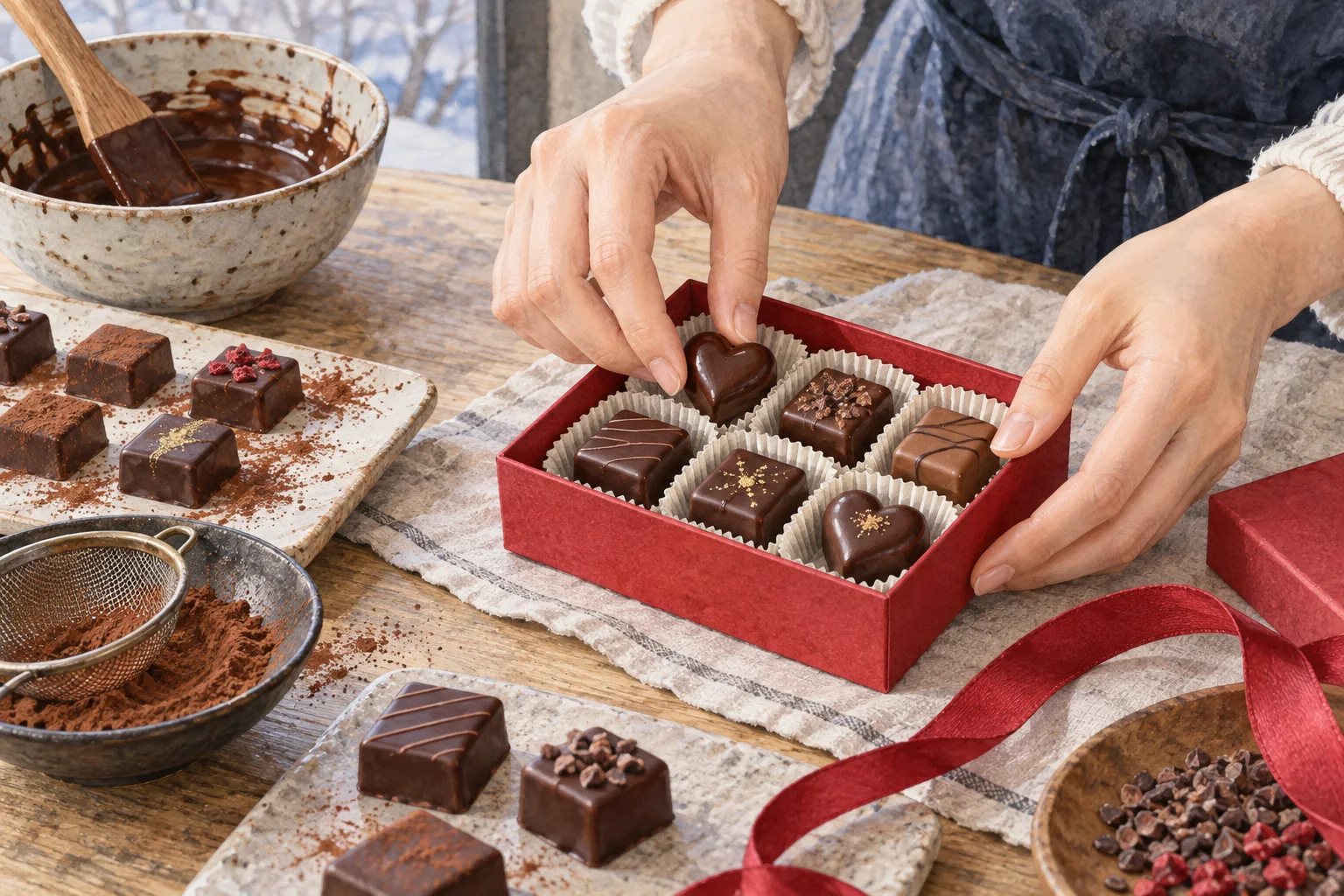
女性が男性にチョコを贈る国。しかも1か月後にお返しの日がある。
一言で言うと
これだけ覚えれば最低限伝わる一文
In Japan, Valentine's Day is when women give chocolate to men, and men return the gift a month later.
日本のバレンタインデーは女性が男性にチョコレートを贈る日で、男性は1か月後にお返しをします。
30秒で説明する
外国人に説明するときの標準サイズ
February 14th in Japan reverses the Western pattern: women give and men receive, and the gift is specifically chocolate. Then on March 14th, White Day, men who received something are expected to give a return gift. The chocolate industry built both days, and workplace obligation chocolate has been in sharp decline.
日本の2月14日は欧米と逆です。女性が贈り、男性が受け取り、贈り物は特にチョコレートと決まっています。そして3月14日のホワイトデーに、受け取った男性がお返しをします。どちらの日も菓子業界が作ったもので、職場の義理チョコは大きく減っています。
スピーチ・英作文
通訳案内士の二次口述・大学入試の自由英作文に
Valentine's Day in Japan works differently from almost everywhere else. Women give and men receive, and what is given is chocolate, specifically. Then exactly one month later, on March 14th, there is White Day, when men who received chocolate are expected to give something back, conventionally of greater value. Both of these were built by the confectionery industry.
Japanese chocolate companies promoted the February custom from the 1950s onward, and White Day was created by the industry in the late 1970s. The vocabulary that grew up around it is revealing: honmei-choco for the person you actually like, giri-choco for obligation chocolate given to male colleagues, tomo-choco for friends.
That middle category has been collapsing. Many workplaces have dropped or discouraged it as a source of pressure, and marketing has shifted toward buying good chocolate for yourself, which is probably the healthiest version of the whole thing.
日本のバレンタインデーは、ほかのほとんどの国と違う働き方をします。女性が贈り、男性が受け取る。そして贈るのは、特にチョコレートです。それからちょうど1か月後の3月14日にホワイトデーがあり、チョコをもらった男性がお返しをすることになっています。
慣例では、より高価なものを。どちらも菓子業界が作りました。日本の製菓会社は1950年代以降、2月の習慣を売り込み、ホワイトデーは1970年代後半に業界が生み出したものです。そこから育った語彙が、実態をよく表しています。
本命チョコ、職場の男性に配る義理チョコ、友人同士の友チョコ。その真ん中の分類が崩れつつあります。職場の負担になるとして、やめたり控えるよう求めたりする職場も多く、売り方も「自分のために良いチョコを買う」方向へ移りました。おそらく、これがいちばん健全な形です。
こう聞かれたら
外国人から実際にされる質問と、その答え方。
Why chocolate and not flowers?
どうして花ではなくチョコレートなのですか。
Because the Japanese version was created by chocolate companies. Campaigns from the 1950s tied the day to chocolate specifically, and the association has never loosened.
日本の形をチョコレート会社が作ったからです。1950年代以降の販促がこの日をチョコレートに結びつけ、その結びつきは今も解けていません。
What is White Day?
ホワイトデーとは何ですか。
March 14th, when men return the gift. It was created by the Japanese confectionery industry in the late 1970s, and the convention is that the return gift should be worth more.
3月14日で、男性がお返しをする日です。1970年代後半に日本の菓子業界が作ったもので、お返しはより高価なものを、という慣習があります。
Is obligation chocolate still given?
義理チョコはいまも配られていますか。
Much less. Many workplaces have stopped it, and one major chocolate brand ran a newspaper advertisement in 2018 calling for Japan to abandon the practice.
だいぶ減りました。やめた職場も多く、2018年には大手のチョコレートブランドが「日本は、義理チョコをやめよう」という新聞広告を出しました。
誤解されやすい
MYTHJapan's Valentine custom is an old imported tradition.
日本のバレンタインは古くから輸入された伝統だと思われがちです。
FACTIt is a commercial construction. Chocolate companies promoted the February custom from the 1950s, and White Day was invented by the confectionery industry in the late 1970s.
商業的に作られたものです。2月の習慣は1950年代以降に製菓会社が売り込み、ホワイトデーは1970年代後半に菓子業界が生み出しました。
そのまま使えるフレーズ
- Here, women give and men receive.日本では女性が贈り、男性が受け取ります。
- The return gift comes a month later.お返しは1か月後です。
- Obligation chocolate is dying out.義理チョコは減っています。
- It was created by chocolate companies.チョコレート会社が作った習慣です。
- A lot of people just buy good chocolate for themselves now.今は自分用に良いチョコを買う人も多いです。
説明に使う語句
- return giftお返し
- obligation義理
- confectionery industry菓子業界
- commercial campaign販促キャンペーン
- die out廃れる
動画で見る
YouTube より豆知識
日本のバレンタインにチョコレートを贈る習慣は、1950年代から製菓各社が販促を行ったことで広まったとされ、どの社が最初かについては複数の説がある。ホワイトデーは1970年代後半、全国飴菓子工業協同組合などが提唱し、1980年に第1回が実施されたとされる。「本命チョコ」「義理チョコ」「友チョコ」「自分チョコ」といった語が定着している。2018年、ゴディバジャパンが日本経済新聞に「日本は、義理チョコをやめよう。」と題した広告を出し、大きな反響を呼んだ。近年は職場での配布を禁止・自粛する企業が増え、百貨店の売り場も自家消費用の高級チョコレートに重心を移している。
